

An RPG with a ton of potential that is a little too rough around the edges to be a classic.
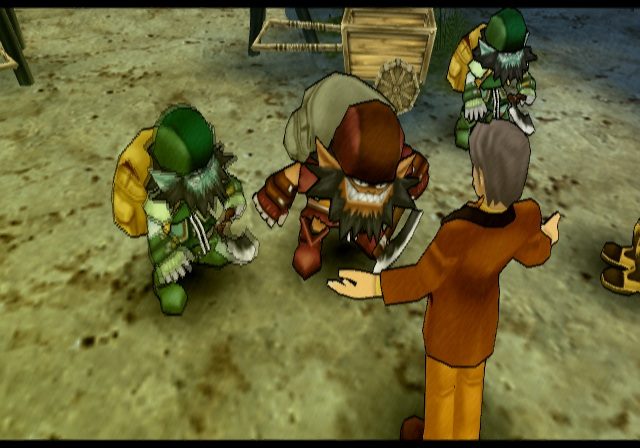 In the late 1990s, I played Wild Arms for the PlayStation and was instantly blown away by the charming graphics, innovative gameplay, and engaging story. I replayed it in 2011 and remember the game to this day because it has aged so well and went into Wild Arms 3 in 2021 with high hopes.
Like the first two games, the 3rd installment takes place in a setting similar to the American Old West, once again, in the world of Filgaia. Like the first game, the music does a great job of setting the tone. Sadly, the entire world is barren, to the point where even the vast seas have dried up and consist of just sand. I understand, storywise, why this is the case; of course, I won’t ruin that for those new to the game. Nonetheless, it makes navigating and exploring the world of Filgaia a bland experience.
On your journey are four drifters: Virginia, Jet, Clive, and Gallows. Like the first game, you can choose any of the four characters, eventually playing out short scenarios for all four. These mini introductions are interesting because you get to see what your characters are capable of, as well as get used to their tools. Each character starts with one tool but eventually gains two extra. They’re used to solve puzzles throughout the world, mostly in dungeons.
You also get an introduction to each character via intriguing backstories. There is Jet, my least favorite, who, all too often, plays up the JRPG trope of the silent protagonist, sulking in the corner, only to make himself heard at random times to be polemic or difficult, or to voice the fact that he does not care. He has some kind of memory issues which might explain why he is such a jerk. Virginia is a young woman who is searching for her father; Clive is an established family man with a dark past that torments him, which is introduced early and is indeed sad. Finally, there is Gallows, a young tribal man who isn’t content to follow his roots and would rather be a cheap bandit. He has no issue hitting up his grandma for ideas on what to do when in a fix; however, she is only too eager to berate him. Together, the four make up a party of drifters, brought together by circumstance, moments into starting a new game.
There are plenty of antagonists in Wild Arms 3, and the game doesn’t hold back in throwing you into constant battles with them. The rival drifter group is the most common. I really got sick of them by the second chapter, and they kept coming back, like an annoying mosquito buzzing just out of reach of your swinging hand.
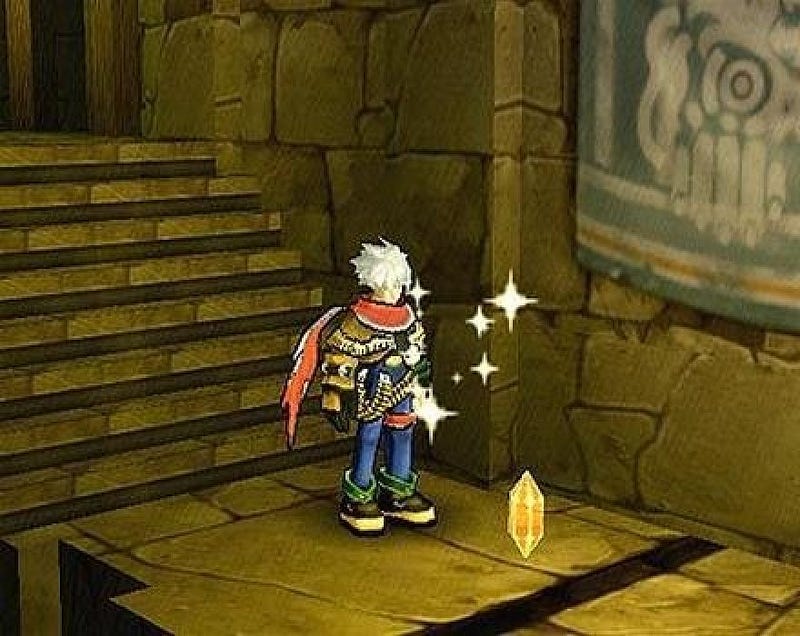 The graphics in this game are unique, similar in style to Rogue Galaxy, and I enjoyed looking at the colorful, cell-shaded characters. However, as mentioned before, the world is too bland, and though there are tons of dungeons, many have the same dull, dark colors. Eventually, they get pretty boring to explore. At the very least, each dungeon has a generous amount of interesting puzzles. They are an awesome balance of not being too hard, but still requiring some thoughtfulness. As mentioned before, really becoming familiar with how each tool works will be the recipe for success. Sadly, some of the tools, especially the last four, were, in my opinion, introduced too late, and thus, not utilized nearly as much as they could have been.
What also requires some thought and planning from anyone feeling ready to tackle this for the first time is item management. I was shocked at how generous healing item drops were in the first chapter of the game, as well as plentiful chests filled with healing berries. This dries up around the start of Chapter 2. No problem, go to the store, right? The issue is, there is no store. Instead, it is a traveling salesman who may, or more likely, may not appear in town; he randomly appears in various towns around the world. This requires frequent exits and entries into the town before he finally shows up. That’s ok, finally some healing berries, right? Not quite. Though they sell a ton of items, mostly status healing, there are no HP and MP healing items to be found! In place of traditional healing purchases at shops, the developers decided to implement an “optional” gardening sidequest. Optional being, very clearly, the imperative word. Because this quest doesn’t show up directly after the four-character introductions, as it likely should, but well past the time when most players reach the teens in levels, perhaps even passing 20! But long after consistent healing drops.
So just garden? If only it were that simple. The quest opens up late enough in the game where many players may be counting their healing supplies on two hands, perhaps even one. The generous gardener who continues the quest gives you ten berries and sends you on your way to beat a dungeon that is a shocking difficulty spike. Shocking because, not only are the times of consistent healing drops long gone, but some of the enemies in this “optional” dungeon can one-shot kill you with an instant death attack. But most will press on because, well, healing items are kind of needed. Beating this dungeon allows players to garden for the berries. What starts slow, with careful, frequent effort to return and harvest and sow, eventually leads to an embarrassment of riches by the end of the game, more than one could ever need. Great, but I’d much rather have a steady flow of items throughout the game, even if it means having a slightly smaller amount by end game. After all, healing is mandatory! This was an innovation I did not care for, but I faithfully returned to this secret garden every chance I got, just the same.
Another “innovation” I did not care for was having to use a scanner to find, well, everything, on the huge, bland world map. For sidequests, sure, sounds fun; even hidden items were worth scanning for! But having to roam around trying to scan for towns and other important locations to the plot quickly proved cumbersome. Townspeople will give hints, sometimes obvious, which was at least good. But it got old quickly, having to play hide-and-seek to advance the plot against the backdrop of exclamation marks, which I will get to shortly. Now, sometimes, if you knew the general area of a location, you could go there, scan, and find it. However, the game was not always consistent with this. Sometimes, you could just find a place. Other times, even if you went to the exact location and scanned, it would not pop up unless you triggered something in a conversation in some town. At one point, the game even requires reading a random book in a fairly large library to learn about a place and its coordinates.
Save the scanning business for, as I mentioned, hidden items and sidequests. On the other hand, I had a blast uncovering the 20-millennium puzzles throughout the game. These locations, as the name suggests, are puzzles scattered throughout Filgaia that vary in difficulty, from 1 to 5 stars, and, upon completion, offer various useful rewards. Although a blast, my one gripe is that it’s very easy to accidentally run off the side, which results in having to start the entire puzzle again. Imagine my disgust when, on the verge of solving a four-star puzzle and in a bit of a rush, when trying to grab one of the last blocks near the edge, I was a little off-center from the block and ran off the edge. Yes, the same button used to grab a block is also the button to run, a bad design choice. But why is it even possible to run off the edge of the puzzle, effectively canceling out your progress, oftentimes accidentally? Simply assign a button that, when pushed, opens a dialogue box that asks if you want to restart the puzzle, with no option highlighted by default, so one can safeguard against accidental restart. Or, at least have walls around the edges of the puzzle and not an endless abyss.
Other sidequests include destroying many hard-to-find towers (again, exactly what the sonar should have been used for, not to find important plot locations), helping a girl locate her mom at various stages of the game, collecting different chapters of a longer book, several optional bosses, and a small arena. These range from standard, like the girl, to mind-bogglingly arduous, like the towers. Like the 20 puzzles, simply locating them allows them to show on the map. However, there are no colors to signify ones that have been completed, or beaten, and ones that have not. Imagine my confusion when all 15 towers appeared on my map, and I could not progress the side story. Only to find that even unbeaten towers, or puzzles, appear on the map, and there is no discernible difference between the two on the map. So I had to go from tower to tower to see what was up, before finally finding 11 that I had not beaten. Color codes on the lists of towers and puzzles would have gone a long way, or even asterisks next to the ones you solved.
The game seems to do things like that, that punish the player for even wanting to partake in the sidequests. A glitch makes the tower quest impossible to finish if you don’t adhere to certain triggers by chapter 4. Or, finding all 320 treasures, if you missed a few, can be a huge pain. Again, a simple color code could have gone a long way in helping players, without making it too easy. My easy idea: Simply go to the highlighted dungeon on the map screen (via select); even just an asterisk next to it could display that everything has been found there. But no, if the player is dedicated to finding all 320 treasures but falls short, aimless wandering across the many dungeons is the only solution.
That is not to say this game is without charm. While I did not like the lack of healing items at shops, it was nice, for a change, to not have to worry about constant armor upgrades. Instead of that, you simply spend money on each character’s “arms”, or guns. Upgrading different stats changes stats like attack power, aim, the number of bullets fired, and critical hits. Early in the game, characters get different mediums. The flexibility allowed with these mediums is impressive, and that flexibility only improves as the game advances. There are still things to equip, just not your characters. Enemies drop, and chests have different items with a multitude of different effects that you can equip on each medium, up to five. Effects that prevent status ailments, improve defense against elements, improve attack, increase gella or experience, and so much more. With the proper setup, it is possible to become so powerful by the end of the game that you can one-shot bosses. That was, actually, a little disappointing, because, without much effort, you can breeze through the second half of the game. This is a pity because the medium system had so much potential. You have to be careful with how you equip each one because, for no real reason, there is no unequip; instead, just delete. So once you equip something, keep it because once you replace it with another item, it’s gone forever! The game could have been even clearer about this.
The game also has the migrant system and ECN system, which work in tandem to allow players, theoretically, to avoid random encounters. The higher the migrant level, the stronger the enemies you can avoid. Stronger enemies take more points off of your ECN meter, however, which starts at 10 and can go as high as 50 by the end game. But this system was puzzling to me, because even when my ECN was full, 40/40, with a migrant level of 18, sometimes when I was re-exploring an early dungeon in my attempt (that eventually succeeded) to find all 320 chests with weak enemies, a green exclamation mark appeared above my head; even quickly and rapidly pushing the circle button would not always work. This would lead to having to fight against boring, weak enemies; what a waste of time. Part of my disdain for this game is how tedious some sidequests are, should you choose to do them, and, admittedly, it hurt my overall perception of the game. Plus, I never understood why I sometimes got into these easier battles with the full ECN and high migrant level.
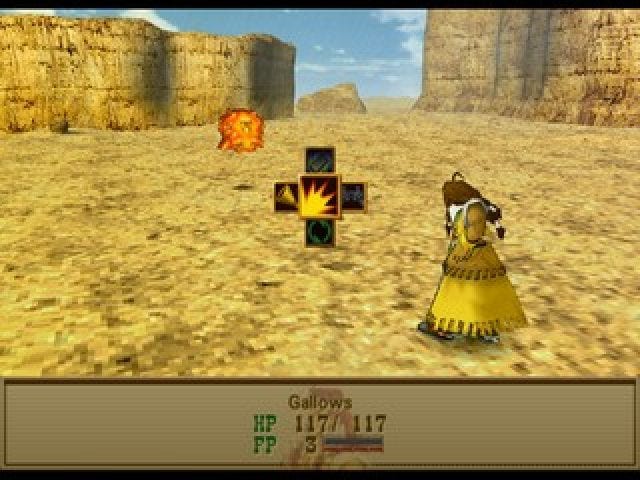 After writing this review, it later came to my attention, via a walkthrough, that canceling easier battles required just one button press. By rapidly pushing the button, I was, in effect, canceling my attempt to cancel the battle and, thus, getting into those undesirable easy battles. In this case, only the first press should have been registered, in my opinion, and double-tapping the “O” button was forcing me into these easy battles. Just tap once! I admit, my mistake!
As an important note: The game is excessive with negative status effects, so it is important to keep on top of those by having tons of different items, as well as hopefully finding items to equip on the mediums that help to minimize status effects because, especially late game, these can be exceptionally annoying if one is not prepared.
It might seem like I am a bit harsh with this game, but it is only because, with a few minor tweaks, this really could have been a legendary game. It should take most people 40–60 hours depending on sidequest completion. I did everything possible except for the Abyss, which I stopped after the 30th floor, and I did not bother with Arioch either. Overall, this is a game that, if remastered and its rough edges smoothed out with care and time, could be very good. But, as it stands, it is a game that is solid.
Wayback Wednesday Volume 1: Final Fantasy 7 and Chrono Trigger.
Wayback Wednesday Volume 2: Super Metroid and Castlevania: Symphony of the Night.
Wayback Wednesday Volume 3: The Legend of Zelda: A Link to the Past and Lunar: Silver Star Story Complete
Wayback Wednesday Volume 4: Secret of Mana and Wild Arms
Wayback Wednesday Volume 5: Illusion of Gaia and Grandia
Wayback Wednesday Volume 6: Breath of Fire 3 and X-Men Legends
Wayback Wednesday Volume 7: Star Ocean: The Second Story and Super Mario RPG
Wayback Wednesday Volume 8: Demon's Crest and Dragon Quest VI
Wayback Wednesday Volume 9: Suikoden I and Jeanne d'Arc
Wayback Wednesday Volume 10: Ranking the first 6 Final Fantasy games
Wayback Wednesday Volume 11: Earthbound and Valkyrie Profile
Wayback Wednesday Volume 12: Legend of Legaia and Secret of Evermore
Wayback Wednesday Volume 13: Threads of Fate and Soulblazer
Wayback Wednesday Volume 14: Radiata Stories and Robotrek
Wayback Wednesday Volume 15: Rogue Galaxy and Vandal Hearts
Wayback Wednesday Volume 16: Chrono Cross and Muramasa: The Demon Blade
Wayback Wednesday Volume 17: Okami and Legend of Mana
Wayback Wednesday Volume 18: Paper Mario and Terranigma
Wayback Wednesday Volume 19: Dragon Quest VIII and Atelier Iris 2: The Azoth of Destiny
Wayback Wednesday Volume 20: Ranking the 6 console Final Fantasy games from the PS1 and 2
Wayback Wednesday Volume 21: Eternal Sonata and Actraiser
Wayback Wednesday Volume 22: Persona: Revelations and Tales of Destiny
Wayback Wednesday Volume 23: Shadow Hearts: Covenant and Dragon View
Wayback Wednesday Volume 24: Ken Griffey Jr. Presents Major League Baseball and Lunar: Eternal Blue
Wayback Wednesday Volume 25: Suikoden II and Xenogears
Wayback Wednesday Volume 26: Azure Dreams and Wild Arms 2
Wayback Wednesday Volume 27: Ar Tonelico and Sword of Mana
Wayback Wednesday Volume 28: Albert Odyssey and Super Paper Mario
Wayback Wednesday Volume 29: Arcana and X-Men Legends II
Wayback Wednesday Volume 30: 10 over-rated classics that haven’t aged well
Wayback Wednesday Volume 31: Dragon Quest IX and E.V.O.: Search for Eden
Wayback Wednesday Volume 32: Tales of Symphonia and Elemental Gimmick Gear
Wayback Wednesday Volume 33: Ys Seven and Brain Lord
Wayback Wednesday Volume 34: Lufia and The Legend of Oasis
Wayback Wednesday Volume 35: Kingdom Hearts: Birth by Sleep and Magic Knight Rayearth
Wayback Wednesday Volume 36: Tales of the Abyss and Crisis Core: Final Fantasy VII
Wayback Wednesday Volume 37: Rhapsody: A Musical Adventure and Legaia 2
Wayback Wednesday Volume 38: Star Ocean 3: Till the End of Time and The Twisted Tales of Spike McFang