

It stops short of being a magical experience, but it’s still worthwhile.
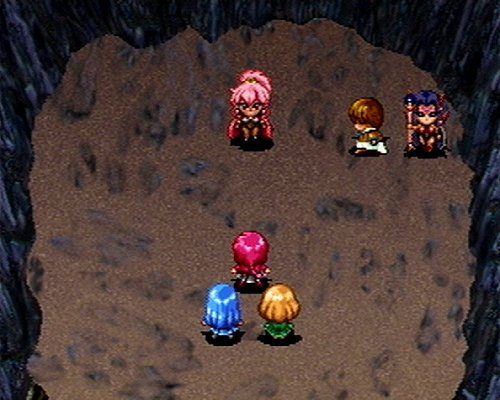 Different Magic Knight Rayearth games have appeared on several 1990s consoles/handhelds such as the Game Gear, SNES, and, most notably, Sega Saturn. I have never seen any of the TV episodes or read any of the comics, as they don’t appeal to me. But several RPGs have been released under this name, my adoration of the genre overpowering the general disinterest I otherwise have for the franchise as a whole. Thankfully, this was a wise choice, as all three games are fun, the Saturn game being the best. It’s a solid game once you get the hang of it, almost until the end.
At its core, this is a very simple action RPG. I loved being able to seamlessly change between the three girls in the blink of an eye. It reminded me of much more recent games like Ys 7–10. Even if that is not your cup of tea, the game is structured in a way that kind of forces your hand regarding switching characters, as only one HP potion and one magic potion can be carried at a time. Plus, late-game enemies and bosses can take a decent chunk out of a limited number of life bars, so switch before one of the girls is put out of commission without a potion to revive! I preferred Fuu with her long attacks that allowed everyone to stay out of danger, even if she was the weakest attacker. Maybe I had about 15 life bars per character by the end game, and some bosses were able to take off about 1/3rd or 1/4th of that with one hit, so eventually switching becomes mandatory, even if just temporary.
There aren’t too many possible actions in battle. Each girl has a basic attack, a strong attack (hold the attack button and release), and eventually, 3 magic spells they can cast, earned at specific junctures in the game, and that’s about it. There is a certain beauty in the simplicity. Partially because no two bosses are the same, each requiring different strategies or mechanics to contend with. My only gripe is, especially at the start of the game, the HP bar is tucked away in the corner of the screen and only starts with two bars, which is easy to miss or forget. As more HP jewels are gained and the meter lengthens, this is less of an issue.
The health (HP) jewels and MP jewels are all easy to spot, and each jewel increases the HP or MP of one girl by one. But finding the amulets scattered around the world is another story, as some are exceptionally well hidden with no indication that they might be near. Without a walkthrough, you will not find all of them, even with dedicated sleuthing around. Just the same, the rewards for finding all the gems aren’t really worth it, so no need to stress about finding every single one. Money can be collected, but outside of buying one HP jewel, I never used it for anything else.
All of this exploring is in a variety of indoor and outdoor dungeons with tons of obstacles and platforming sections. Jumping from place to place is slightly awkward at times, usually when using the dash skill gained mid-game, but nothing was ever too difficult, and they were short enough that having to start over, if falling down a pit, was not too much of a burden. Dungeons were just the right length, never overstaying their welcome, and some had neat puzzles; none were tough, in the Waterfall Secret Path.
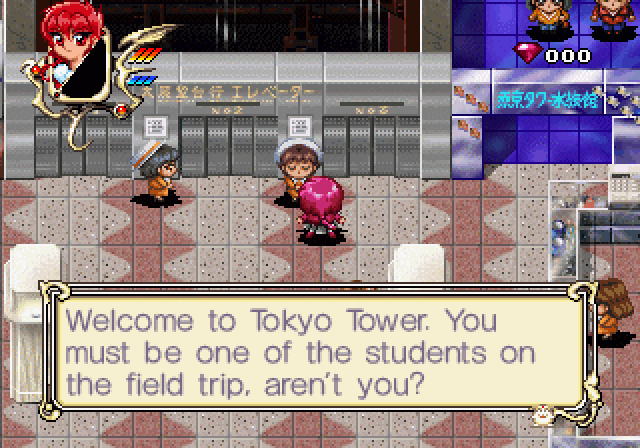
Some very weird design choices hamper what could have been an excellent experience, though. For the most part, boss fights in this game are engaging because they are challenging and require quick reactions. I stress for the most part, but let me digress before arriving back at that point. In Xenogears, there were two types of battles: Battles done on foot, and battles in “gears”, in other words, large mechs. They are different styles of battle, but it works because the player is introduced to both types early and exposed to both frequently before the second disc even starts. The transition between both is seamless, and it is never jarring to be thrust into a gear battle because the game prepares you well. The point is, games can change styles; there is nothing inherently wrong with that, if it is done well.
But if a new style is thrown at you, on the fly, especially deep into the game with no real warning, this is not good. But that is what Rayearth does in the last two battles, throws you into these fights that are so fundamentally different from the rest of the game. I saw triple as many game-over screens on the final 2 battles (6) as the rest of the game combined! Everything changes, from the perspective to the attacks that characters have at their disposal and beyond. At least the game is not punishing after a game over. Xak 3 (SNES) did this, forcing a boss fight that acted more like a shooter than an action RPG, and it was hard. Again, by all means, put different styles in the game, but give the player a chance to get better acquainted with the mechanics throughout the game, even if sparingly.
Flaws aside, Magic Knight Earth is an adorable game, no getting around that. Bright colors fill the screen, and cute character reactions and cheery music create pleasant vibes. It is one of the best-looking 2D RPGs from the 1990s, and it is the little details that caught my attention, like the slowly swaying trees of a lazy, peaceful village. If it weren’t for the occasionally questionable dialog, this might be the perfect starter RPG for a younger audience.
Working Designs gets a lot of flak, but I tend to defend them. In the past, they’ve taken lackluster scripts devoid of much expressiveness or originality and found ways to work them into something interesting, even if some creative liberties are taken. The same people who might complain about drastic changes might also complain if Working Designs had taken a more literal approach, accusing the translation of being dry and boring. I tend to see where Working Designs translators are coming from, but they did push the envelope too far two or three times with this title. An odd line about child abuse and later on, this bizarre insistence on using the word “skank” was head-scratching, like a young child learning a swear word for the first time. Ok, we get it. Other than that, the translation was decently humorous and entertaining.
It is a shame this game only ever appeared on the Sega Saturn; it deserves a better fate. Not that the Saturn is a bad system, it had some impressive games, but this game would thrive on a modern system with minor tweaks and updates and perhaps an added chapter (like a second adventure to double the total length, which, as is, stands at about 10 hours or so). Even for a 25+-year-old game, this has the foundation of something that a lot of people would really enjoy.
Wayback Wednesday Volume 1: Final Fantasy 7 and Chrono Trigger.
Wayback Wednesday Volume 2: Super Metroid and Castlevania: Symphony of the Night.
Wayback Wednesday Volume 3: The Legend of Zelda: A Link to the Past and Lunar: Silver Star Story Complete
Wayback Wednesday Volume 4: Secret of Mana and Wild Arms
Wayback Wednesday Volume 5: Illusion of Gaia and Grandia
Wayback Wednesday Volume 6: Breath of Fire 3 and X-Men Legends
Wayback Wednesday Volume 7: Star Ocean: The Second Story and Super Mario RPG
Wayback Wednesday Volume 8: Demon's Crest and Dragon Quest VI
Wayback Wednesday Volume 9: Suikoden I and Jeanne d'Arc
Wayback Wednesday Volume 10: Ranking the first 6 Final Fantasy games
Wayback Wednesday Volume 11: Earthbound and Valkyrie Profile
Wayback Wednesday Volume 12: Legend of Legaia and Secret of Evermore
Wayback Wednesday Volume 13: Threads of Fate and Soulblazer
Wayback Wednesday Volume 14: Radiata Stories and Robotrek
Wayback Wednesday Volume 15: Rogue Galaxy and Vandal Hearts
Wayback Wednesday Volume 16: Chrono Cross and Muramasa: The Demon Blade
Wayback Wednesday Volume 17: Okami and Legend of Mana
Wayback Wednesday Volume 18: Paper Mario and Terranigma
Wayback Wednesday Volume 19: Dragon Quest VIII and Atelier Iris 2: The Azoth of Destiny
Wayback Wednesday Volume 20: Ranking the 6 console Final Fantasy games from the PS1 and 2
Wayback Wednesday Volume 21: Eternal Sonata and Actraiser
Wayback Wednesday Volume 22: Persona: Revelations and Tales of Destiny
Wayback Wednesday Volume 23: Shadow Hearts: Covenant and Dragon View
Wayback Wednesday Volume 24: Ken Griffey Jr. Presents Major League Baseball and Lunar: Eternal Blue
Wayback Wednesday Volume 25: Suikoden II and Xenogears
Wayback Wednesday Volume 26: Azure Dreams and Wild Arms 2
Wayback Wednesday Volume 27: Ar Tonelico and Sword of Mana
Wayback Wednesday Volume 28: Albert Odyssey and Super Paper Mario
Wayback Wednesday Volume 29: Arcana and X-Men Legends II
Wayback Wednesday Volume 30: 10 over-rated classics that haven’t aged well
Wayback Wednesday Volume 31: Dragon Quest IX and E.V.O.: Search for Eden
Wayback Wednesday Volume 32: Tales of Symphonia and Elemental Gimmick Gear
Wayback Wednesday Volume 33: Ys Seven and Brain Lord
Wayback Wednesday Volume 34: Lufia and The Legend of Oasis