

The Twisted Tales of Spike McFang is a humorous Action-Adventure game with subtle RPG elements, developed by RED Entertainment in Mid-1994. While this isn’t an amazing game, it presents retro gamers with a fun deviation from the majority of games that tend to be more serious.
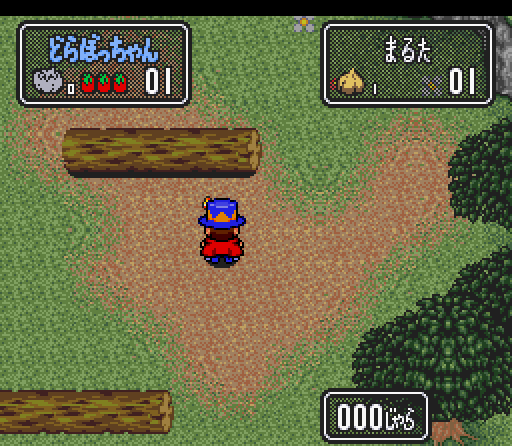 Out of all the mascots that did not make it big, Spike McFang is possibly the most disappointing, and instead, he remained in obscurity. He is a vampire, to be sure, but the way he is portrayed avoids many of the vampire clichés. The plot is basic and not a strong point. It involves Spike trying to prevent Vampire Von Hesler from gaining control over Spike’s kingdom and other neighboring kingdoms, as well as rescuing leaders of these kingdoms.
Spike McFang places a heavy emphasis on combat, and there are a few instances that require heavy grinding. This will vary depending on the gamer, but for me, the first time was very early on, at the entrance of the castle to afford a better hat; the second time was in the desert, the next time was in the snowfields just outside of town, and the last time was in the jungle at the very end of the game. Various characters help Spike navigate the various areas of the game, but I rarely found them helpful, including with the grinding. Mileage may vary depending on playstyle and patience.
Most of this grinding is because the bosses present a steep increase in difficulty compared to the rest of the game. It is important to be able to maintain a decent stock of Tomato Juice Cards and by the time you reach the snowfields, imperative you are maxed out. The casino, where you can buy random cards for 20 coins, though annoying, is just as important to patronize as keeping a healthy stock of various attack cards is paramount to success later in the game. So players must overlook the annoying RNG and stock up anyway. There is no way I could have beaten this game without frequent trips to the casino to buy these 20 coin cards.
There are several major gripes I had about battling in Spike McFang. First were the interruptions for each level up. Everything comes to a standstill as a longer-than-necessary phone call plays out for each level so the professor can inform you that you did indeed level up. Great. This couldn’t have been done quicker and more efficiently? Such as a temporary status box at the bottom of the screen as the action continued?
Another annoyance was that, along with the hat attack, there was a jump-and-spin attack. Although this seems useful at first, it becomes burdensome quickly when you realize that attacking too quickly sends Spike spinning uncontrollably and leaves him incapacitated for several seconds as you are left to helplessly watch foes wail away at Spike laying on the ground. It is hard to avoid this in the thick of things with many enemies around, as instinct will likely lead most people to push the attack button too often and too quickly. The throwing hat attack seems better at first, but it requires a charge time, of sorts, also leaving Spike open as the hat whirls above him as he prepares to throw it and, if done too close to the edge of a screen, could send him flying back into the previous screen, a minor annoyance that becomes a huge flaw after repeated instances.
One last gripe I had was the poorly placed save areas. Players will likely die several times, forcing several replays of the same area because save spots are not located just before bosses and oftentimes, not even close. Generally speaking, bosses are the only times you will likely die in this game, making save spot placements all the more irritating.
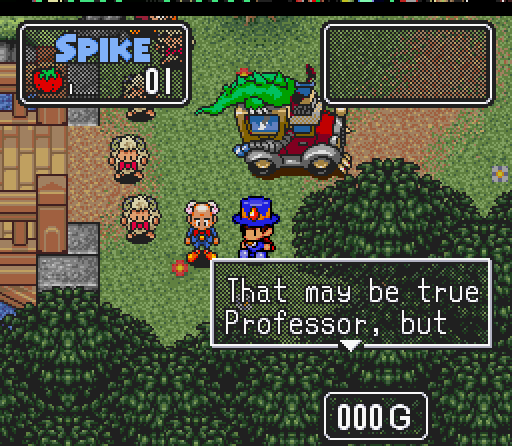 Spike McFang has an interesting, cartoony look to it, as if it belongs on your Saturday morning cartoon rotation from the mid-90s. Each location, town, or dungeon is beautifully animated, and the vibrant colors are a pleasure to look at. Enemy sprites, although looking weak at first, are impressive overall in the end. Bosses, on the other hand, are huge, except for the first cat boss, though often goofy-looking. Don’t be fooled by their looks, as the majority can be downright brutal and require several attempts. My favorite aspect of this category is the scenes where you take the car from one location to the next. There is something so novel about that car and these scenes in general.
The music creates a goofy vibe, but otherwise, nothing special. Even boss battles are not compelling, fail to create a lasting impact, and do not give off the feeling that these are crucial junctures. The tracks are never annoying, just never special.
Even with all the grinding, this is a game that should take less than five hours and is a perfect candidate for those in need of a simple game requiring limited thought, very appealing for a sick weekend at home or a long weekend. Don’t enter into this with high expectations other than a solid, well-made retro game.
Wayback Wednesday Volume 1: Final Fantasy 7 and Chrono Trigger.
Wayback Wednesday Volume 2: Super Metroid and Castlevania: Symphony of the Night.
Wayback Wednesday Volume 3: The Legend of Zelda: A Link to the Past and Lunar: Silver Star Story Complete
Wayback Wednesday Volume 4: Secret of Mana and Wild Arms
Wayback Wednesday Volume 5: Illusion of Gaia and Grandia
Wayback Wednesday Volume 6: Breath of Fire 3 and X-Men Legends
Wayback Wednesday Volume 7: Star Ocean: The Second Story and Super Mario RPG
Wayback Wednesday Volume 8: Demon's Crest and Dragon Quest VI
Wayback Wednesday Volume 9: Suikoden I and Jeanne d'Arc
Wayback Wednesday Volume 10: Ranking the first 6 Final Fantasy games
Wayback Wednesday Volume 11: Earthbound and Valkyrie Profile
Wayback Wednesday Volume 12: Legend of Legaia and Secret of Evermore
Wayback Wednesday Volume 13: Threads of Fate and Soulblazer
Wayback Wednesday Volume 14: Radiata Stories and Robotrek
Wayback Wednesday Volume 15: Rogue Galaxy and Vandal Hearts
Wayback Wednesday Volume 16: Chrono Cross and Muramasa: The Demon Blade
Wayback Wednesday Volume 17: Okami and Legend of Mana
Wayback Wednesday Volume 18: Paper Mario and Terranigma
Wayback Wednesday Volume 19: Dragon Quest VIII and Atelier Iris 2: The Azoth of Destiny
Wayback Wednesday Volume 20: Ranking the 6 console Final Fantasy games from the PS1 and 2
Wayback Wednesday Volume 21: Eternal Sonata and Actraiser
Wayback Wednesday Volume 22: Persona: Revelations and Tales of Destiny
Wayback Wednesday Volume 23: Shadow Hearts: Covenant and Dragon View
Wayback Wednesday Volume 24: Ken Griffey Jr. Presents Major League Baseball and Lunar: Eternal Blue
Wayback Wednesday Volume 25: Suikoden II and Xenogears
Wayback Wednesday Volume 26: Azure Dreams and Wild Arms 2
Wayback Wednesday Volume 27: Ar Tonelico and Sword of Mana
Wayback Wednesday Volume 28: Albert Odyssey and Super Paper Mario
Wayback Wednesday Volume 29: Arcana and X-Men Legends II
Wayback Wednesday Volume 30: 10 over-rated classics that haven’t aged well
Wayback Wednesday Volume 31: Dragon Quest IX and E.V.O.: Search for Eden
Wayback Wednesday Volume 32: Tales of Symphonia and Elemental Gimmick Gear
Wayback Wednesday Volume 33: Ys Seven and Brain Lord
Wayback Wednesday Volume 34: Lufia and The Legend of Oasis
Wayback Wednesday Volume 35: Kingdom Hearts: Birth by Sleep and Magic Knight Rayearth
Wayback Wednesday Volume 36: Tales of the Abyss and Crisis Core: Final Fantasy VII
Wayback Wednesday Volume 37: Rhapsody: A Musical Adventure and Legaia 2