

It looks great, but does it have substance?
I have mixed feelings about all the remasters and remakes of popular retro games that have hit the scene in recent years. While I think it’s great that a new generation of gamers can enjoy so many classics on the latest consoles and Steam, I’m not always sure they are needed. Sometimes that’s because I’m not convinced enough was done to update a game with quality-of-life additions or cleaner visuals, or because it feels more like a port than a proper remaster.
As a note, this review is based on the original PSP version, released in 2008. I played it shortly before the remaster was announced and less than a year before its release.
 I have fond memories of Final Fantasy 7 that extend beyond the game itself. I remember the year Final Fantasy 7 exploded on the scene at my high school. I was a painfully shy, quiet Freshman who ran from some of the big bad seniors I saw in school. In fact, regarding one such kid, I wouldn’t even dare look in his direction for fear that he would squash me into the ground. I moved through the days, content to slink away, do my own thing, and avoid detection from teachers and especially those gigantic seniors. One day during study hall, I sat at the most coveted computer in the library, furthest away from the gaze of the librarian. The computer that everyone would rush to for study hall after the bell rang. Away from prying eyes, I looked around, saw no one, relaxed, and started looking up Final Fantasy 7 and soon got lost in my world of Cloud, Tifa, and the gang.
A strong hand slapped against my shoulder, interrupting my daydreams. Thinking I had just been caught, I turned around defeated, my face beet red. My heart sank when I noticed that, even worse than the librarian, it was the senior boy I had tried so hard to avoid. This was a kid who didn’t just get a car like most juniors and seniors; he had a motorcycle and a leather jacket, often played hooky to smoke, and, overall, wasn’t someone you wanted to mess with. Oh yes, I was about to find out, as hard as I had tried to stay away, how tough this kid was. Only, he didn’t bully me or make fun of the content on my computer screen!
“Final Fantasy 7, that game is badass!”
Yes, Final Fantasy 7, the epic Square masterpiece, was the centerpiece in an unlikely friendship that blossomed that day between an awkward freshman who had few friends and a popular, Fonzi-like senior who could get any girl in the school. We would meet weekly at study hall to discuss all things Final Fantasy, video games, and eventually branched out from there. But the point of this story is that Final Fantasy 7 was a transcendent game; it got rid of these old ideas of what RPGs were supposed to be, created new fans, and helped the genre to emphatically hit the mainstream.
As incredible as that game was, and I have clear memories of large portions of it more than two decades later, I never would have imagined it would generate several other prequels, most notably Crisis Core for the PSP. Developed and released in the spring of 2008 by Square Enix, this game flew well under my radar even though I typically gobble up any Square game that comes my way. It’s a flashy game, for sure, but something is missing.
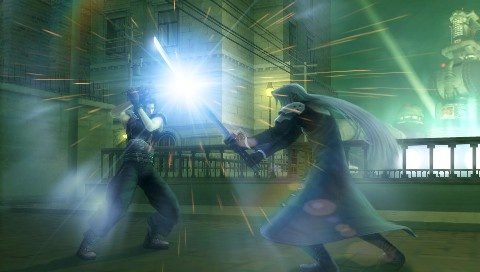
SquareSoft (and later Square-Enix) is renowned in the videogame industry for being cutting-edge, especially in graphics, and nowhere is this more apparent than with their flagship series, Final Fantasy. Every time a new game is released in the series, the games always look several years ahead of their RPG competition. Final Fantasy 7 was groundbreaking and looked incredible in the late 1990s. Crisis Core continues this trend and, considering it is for a handheld, it is impossible not to be impressed by how great the game looks. It seems to push the PSP to its absolute limits with crisp cutscenes and very clear visuals. My one complaint is that I wish there had been a wider color palette, as the game is awash in darker colors.
Music is another one of SquareSoft’s fortes, of course. As much as I like heavy metal, I couldn’t find much to like about the heavier tunes in this game, which are, unfortunately, prominent. Crisis Core’s soundtrack was at its best when paying homage to Final Fantasy 7 rather than trying to be more hard-edged. I mean, what fan of the original would not light up at the sound of the battle victory theme in Crisis Core? Otherwise, there are a lot of more generic-sounding instrumental heavy metal songs. It didn’t work during the final boss in Final Fantasy 10, and it is even worse here. On the flip side, some of the more mysterious songs were very beautiful to listen to, such as a “flower blooming in the slums,” which played during many of the interactions between Zack and his new interest, who he met after crashing through a roof. Also, the mysterious music that plays in the mansion towards the end of the game.
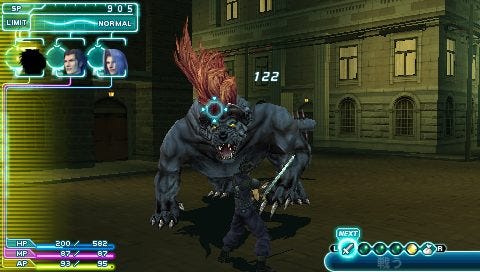 Zack is the main character in the game and is tasked with tracking down two deserters from Shinra. Of course, it gets much deeper than that and deals with issues of human experimentation, such as cloning. It is a cool topic to cover, but dealt with only as much as a 15 to 20-hour videogame could cover, in other words, surface level. The story dives deep into Final Fantasy lore, and a lot of familiar faces make an appearance. It was heartwarming to see some of my favorites return to join Zack and interact with him. The burgeoning relationship between Zack and one of these familiar faces was sweet, innocent, and one of my favorite parts of the game. It also explores the origins behind many FF7 characters. I won’t ruin it, but it was an interesting insight for many of them.
When you get right down to it, the world of Crisis Core is very small, without many opportunities to explore, and other than a few sidequests, the main plot is very linear. There are a ton of sidequests, but by the time that I got to the 25% completion mark, after completing what seemed like at least 60–70 sidequests, I was deeply bored of what this game had to offer as far as side content. It was too much, and it all felt the same. It was exploring the same few dungeons and attempting the same few types of missions. The first few side quests involve exploring a small part of a dungeon, and as you advance through these side quests and open up more quests, more of that dungeon opens. There are maybe a dozen different locations, but I felt it would be nearly impossible to do the same types of quests 3x more.
Those familiar with Final Fantasy 7 will instantly recognize materia. It makes a comeback here, and while there is a decent variety, I mostly stuck to the same few: curing materia, regen, and on occasion, thunder spells for machines; plus I tried barrier and magic barrier for some of the bosses but didn’t see that it made that big of a difference. Be aware, there is no traditional equipment, and you start with just 2, and eventually get to 4 slots where you can equip different accessories that increase statistics and status-protecting items.
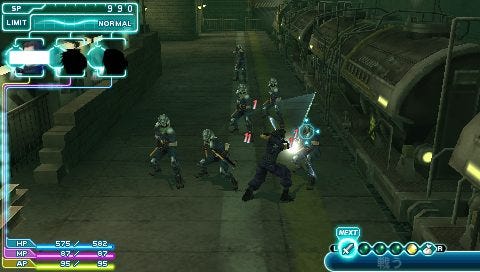 The battle system is weird; there is no other way to put it. There are random slot machines that dictate much of what happens in each battle. These slots are unavoidable and, more often than not, serve to interrupt the flow of battle with scenes that can not be skipped and will be seen over and over again throughout the game. The randomness of this slot machine was a huge turn-off, but they are the only way to level up. There are no set times when Zack levels up like in most RPGs. Granted, he might have the experience needed, but you need to wait until the slots hit “ 7, 7, 7” to get that level. Thankfully, there is a wealth of healing items that can be found or purchased on the cheap, so you don’t need to wait for the slot to heal. But certain number combinations do lead to healing and sometimes doubling of HP. Other combos lead to other strong stat increases or powerful attacks. I guess I also did limit breaks, but I could not tell. It seems the random numbers even dictate when you do limit breaks too. Really, the randomness was far too unappealing and made me feel like I had much less control over what happened in battle.
There are some mini-games that break up the constant random battles, and they are, at best, clumsily implemented. I was no good at the sniper mini-game, for example, and found it annoying. By the way, there are tons of random encounters in this game, and they would sometimes happen after taking just a step after finishing the last one. It got old quickly!
Overall, this is a decent game with a lot of potential. It looks beautiful but somehow manages to make an action game repetitive due to the high encounter rate. The story it tells is interesting, but it didn’t feel like it was necessary to add anything to Final Fantasy 7 and didn’t add enough to make it worthwhile to play. If you need something to scratch that nostalgia itch, give it a shot. Otherwise, it can fairly safely be missed by all but the biggest fans of the original FF7.
Wayback Wednesday Volume 1: Final Fantasy 7 and Chrono Trigger.
Wayback Wednesday Volume 2: Super Metroid and Castlevania: Symphony of the Night.
Wayback Wednesday Volume 3: The Legend of Zelda: A Link to the Past and Lunar: Silver Star Story Complete
Wayback Wednesday Volume 4: Secret of Mana and Wild Arms
Wayback Wednesday Volume 5: Illusion of Gaia and Grandia
Wayback Wednesday Volume 6: Breath of Fire 3 and X-Men Legends
Wayback Wednesday Volume 7: Star Ocean: The Second Story and Super Mario RPG
Wayback Wednesday Volume 8: Demon's Crest and Dragon Quest VI
Wayback Wednesday Volume 9: Suikoden I and Jeanne d'Arc
Wayback Wednesday Volume 10: Ranking the first 6 Final Fantasy games
Wayback Wednesday Volume 11: Earthbound and Valkyrie Profile
Wayback Wednesday Volume 12: Legend of Legaia and Secret of Evermore
Wayback Wednesday Volume 13: Threads of Fate and Soulblazer
Wayback Wednesday Volume 14: Radiata Stories and Robotrek
Wayback Wednesday Volume 15: Rogue Galaxy and Vandal Hearts
Wayback Wednesday Volume 16: Chrono Cross and Muramasa: The Demon Blade
Wayback Wednesday Volume 17: Okami and Legend of Mana
Wayback Wednesday Volume 18: Paper Mario and Terranigma
Wayback Wednesday Volume 19: Dragon Quest VIII and Atelier Iris 2: The Azoth of Destiny
Wayback Wednesday Volume 20: Ranking the 6 console Final Fantasy games from the PS1 and 2
Wayback Wednesday Volume 21: Eternal Sonata and Actraiser
Wayback Wednesday Volume 22: Persona: Revelations and Tales of Destiny
Wayback Wednesday Volume 23: Shadow Hearts: Covenant and Dragon View
Wayback Wednesday Volume 24: Ken Griffey Jr. Presents Major League Baseball and Lunar: Eternal Blue
Wayback Wednesday Volume 25: Suikoden II and Xenogears
Wayback Wednesday Volume 26: Azure Dreams and Wild Arms 2
Wayback Wednesday Volume 27: Ar Tonelico and Sword of Mana
Wayback Wednesday Volume 28: Albert Odyssey and Super Paper Mario
Wayback Wednesday Volume 29: Arcana and X-Men Legends II
Wayback Wednesday Volume 30: 10 over-rated classics that haven’t aged well
Wayback Wednesday Volume 31: Dragon Quest IX and E.V.O.: Search for Eden
Wayback Wednesday Volume 32: Tales of Symphonia and Elemental Gimmick Gear
Wayback Wednesday Volume 33: Ys Seven and Brain Lord
Wayback Wednesday Volume 34: Lufia and The Legend of Oasis
Wayback Wednesday Volume 35: Kingdom Hearts: Birth by Sleep and Magic Knight Rayearth