

A fairly average game with a few strong points worth mentioning.
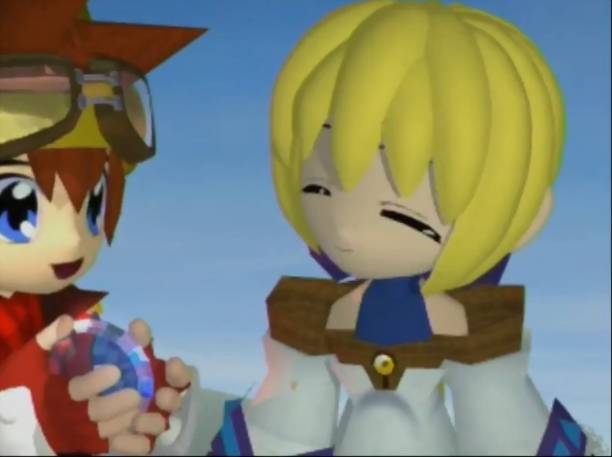 Evolution is an RPG developed by Sting and released in late 1999. It was the first role-playing game for the Dreamcast and must have, at least temporarily, quenched the thirst for something, anything to represent the genre for the console. While not nearly as groundbreaking as many had hoped for, it’s still a solid entry in anyone’s Dreamcast library.
The story is straightforward and begins with two best friends, Mag and Linear, on a treasure hunt. After they are done, they are summoned by Prince Eugene, who eventually turns out to be the game’s antagonist. He is trying to learn about a device called “Evolutia” that Mag’s father is supposed to know about. Eugene shows his true colors by very rudely dismissing the duo when they say they know nothing. Eugene is absolutely despicable, with a grotesque personality, as he spends an uncomfortable amount of time in the game trying to hit on Linear. Mag and Linear brush off his incredibly awkward and distressing advances and continue to seek various treasures throughout the numerous ruins as Eugene continues to plan, eventually leading up to the climactic confrontation on his battleship at the end.
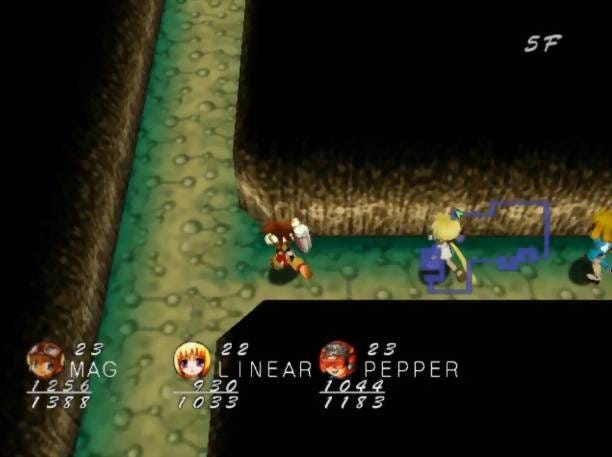 Evolution plays like a roguelike-lite. Mag, Linear, and one character of the player’s choice, Pepper, Gre, or Chain, traverse through four different dungeons. With each one you complete, the next one increases in size. It is up to you to pick the order of the dungeons. The first one is a mere 8 floors. The second is 12 floors, the 3rd is 16 floors, and the 4th is a gigantic 20 floors. Each floor is randomly generated and includes many treasures. But there are also a plethora of different traps. While some of them are beneficial, many of them hinder progress by confusing you (your d-pad will not work), blinding you (it will be harder to see), and dropping major stats. It is easy to see where traps are, as the floor will be slightly discolored.
There are a lot of enemies on each floor but, thankfully, you can see them moving around and attempt to avoid them. This is a welcome change from many RPGs of the time that still had random encounters. If you sneak up on enemies, you can make as many as 6 attacks before they can do anything. This was not done as well as it could have been, as there were times I could have sworn I snuck up on the enemy, only to have a normal battle and sometimes even be ambushed. It’s cool that you have the option to avoid fights; however, it is a bad idea to avoid baddies, as doing so too often will leave you weak and lacking in TP required for skills. It is best to try to defeat all foes or at least 99% of them.
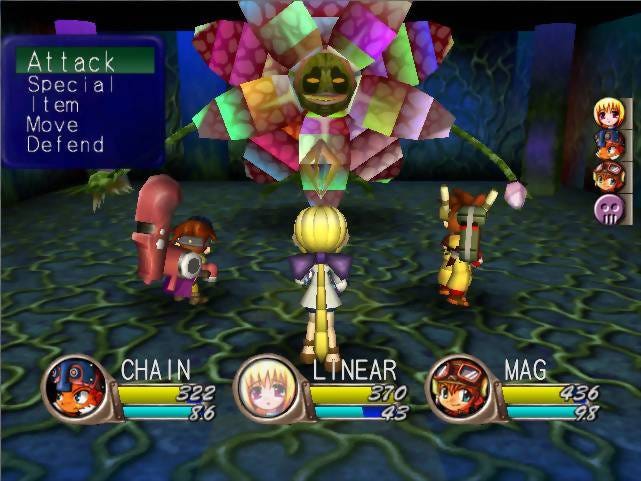
Speaking of TP, you will collect these after every fight. Once you obtain enough, you can unlock special skills such as healing, buffing your characters, and attacking enemies. While I found a lot of these skills useless, the healing, buff, and a few select attack skills were incredibly helpful, including “burst shot”, “Magna rave”, “giant knuckle,” and “spirited peak”. As for buff skills, Linear’s ability to add strength to any character is overpowered, and later on, Pepper’s “Flat shot” will help make quick work of anything in your path, including the final boss, who turns out to be more of a mouse after a few “flat shots”. So those looking for a challenge, keep these facts in mind.
 Other than TP, the game is very linear and not many options exist to do your own thing, other than choosing the order of the ruins. After each ruin, you get a large sum of money. What is aggravating, however, is that the majority of this money is taken to pay off a debt you, as the player, have nothing to do with. You are punished because, apparently, it is convenient for the game designers to do things this way and thus pay for something that happened before the game even started. Ouch. If you bring Chain or Pepper with you to any dungeon, a decent-sized chunk of the remaining cash is taken by them, leaving you with a small fraction of your initial reward money. This was irritating because while armor and weapons are pretty cheap, various upgrades are quite expensive. As for the dungeons, at first they are fun to explore, but by the start of the 4th dungeon, the game really starts to grow thin. Just think, that the 4th dungeon is 20 floors, so not a fun feeling to have as you trudge up 20 floors.
The music serves its purpose, never adding too much to what you are doing, but it also never detracts from enjoyment. Some of the dungeon tracks are above average, which is key because of how repetitive the late game is. The Boss theme, however, is fantastic and sounds grandiose, dear I say, even a little pompous, but also suitable for such a serious skirmish. But don’t get me wrong, it is magnificent, really good, and I enjoyed the few times I got to hear it. Random enemy music is forgettable, and town music serves its purpose while failing to create any meaningful, lasting impression.
Visually, I’m fond of the Dreamcast and what the system was able to accomplish in its short lifespan. I truly feel the games coming out for the system looked better than its peers on other systems of the same generation. Games quickly pushed the Dreamcast to its limits shortly after the system's release, and while Evolution is an exception, that’s not to say it is a bad-looking game; in fact, it’s easy to appreciate the vivid colors in towns and on some of the deeper floors of the dungeons.
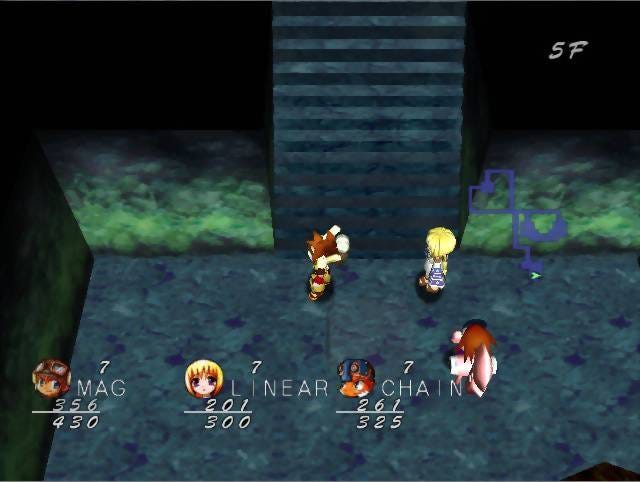 This makes me wonder, then, with the potential the game shows in some areas, mainly the aforementioned towns, why it looks so bland and drab throughout the dungeons. Character sprites look crisp, and enemy and especially boss sprites look awesome, formidable and daunting, especially with that boss battle track playing as you slug it out.
Overall, this is far from a bad game, but it never reaches the heights it is capable of, partially because it seems to lay out some well-defined rules at the start and never deviate from those conventions for the duration, which should last around 18–22 hours. If you want to try a roguelike but don’t like the extreme difficulty most of them present, this would be a good compromise. It plays like a roguelike but is simpler and much more forgiving.
Wayback Wednesday Volume 1: Final Fantasy 7 and Chrono Trigger.
Wayback Wednesday Volume 2: Super Metroid and Castlevania: Symphony of the Night.
Wayback Wednesday Volume 3: The Legend of Zelda: A Link to the Past and Lunar: Silver Star Story Complete
Wayback Wednesday Volume 4: Secret of Mana and Wild Arms
Wayback Wednesday Volume 5: Illusion of Gaia and Grandia
Wayback Wednesday Volume 6: Breath of Fire 3 and X-Men Legends
Wayback Wednesday Volume 7: Star Ocean: The Second Story and Super Mario RPG
Wayback Wednesday Volume 8: Demon's Crest and Dragon Quest VI
Wayback Wednesday Volume 9: Suikoden I and Jeanne d'Arc
Wayback Wednesday Volume 10: Ranking the first 6 Final Fantasy games
Wayback Wednesday Volume 11: Earthbound and Valkyrie Profile
Wayback Wednesday Volume 12: Legend of Legaia and Secret of Evermore
Wayback Wednesday Volume 13: Threads of Fate and Soulblazer
Wayback Wednesday Volume 14: Radiata Stories and Robotrek
Wayback Wednesday Volume 15: Rogue Galaxy and Vandal Hearts
Wayback Wednesday Volume 16: Chrono Cross and Muramasa: The Demon Blade
Wayback Wednesday Volume 17: Okami and Legend of Mana
Wayback Wednesday Volume 18: Paper Mario and Terranigma
Wayback Wednesday Volume 19: Dragon Quest VIII and Atelier Iris 2: The Azoth of Destiny
Wayback Wednesday Volume 20: Ranking the 6 console Final Fantasy games from the PS1 and 2
Wayback Wednesday Volume 21: Eternal Sonata and Actraiser
Wayback Wednesday Volume 22: Persona: Revelations and Tales of Destiny
Wayback Wednesday Volume 23: Shadow Hearts: Covenant and Dragon View
Wayback Wednesday Volume 24: Ken Griffey Jr. Presents Major League Baseball and Lunar: Eternal Blue
Wayback Wednesday Volume 25: Suikoden II and Xenogears
Wayback Wednesday Volume 26: Azure Dreams and Wild Arms 2
Wayback Wednesday Volume 27: Ar Tonelico and Sword of Mana
Wayback Wednesday Volume 28: Albert Odyssey and Super Paper Mario
Wayback Wednesday Volume 29: Arcana and X-Men Legends II
Wayback Wednesday Volume 30: 10 over-rated classics that haven’t aged well
Wayback Wednesday Volume 31: Dragon Quest IX and E.V.O.: Search for Eden
Wayback Wednesday Volume 32: Tales of Symphonia and Elemental Gimmick Gear
Wayback Wednesday Volume 33: Ys Seven and Brain Lord
Wayback Wednesday Volume 34: Lufia and The Legend of Oasis
Wayback Wednesday Volume 35: Kingdom Hearts: Birth by Sleep and Magic Knight Rayearth
Wayback Wednesday Volume 36: Tales of the Abyss and Crisis Core: Final Fantasy VII
Wayback Wednesday Volume 37: Rhapsody: A Musical Adventure and Legaia 2
Wayback Wednesday Volume 38: Star Ocean 3: Till the End of Time and The Twisted Tales of Spike McFang
Wayback Wednesday Volume 39: The Granstream Saga and Wild Arms 3
Wayback Wednesday Volume 40: Fragile Dreams: Farewell Ruins of the Moon and The Legend of Heroes: Trails in the Sky SC