

If you are looking for a thinking person's RPG, here is a good place to start!
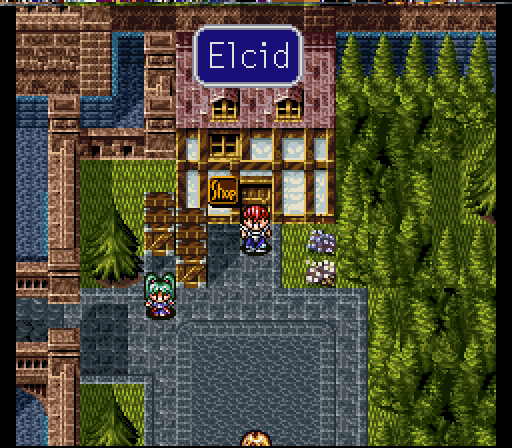 Lufia 2 is a game developed by Neverland and released very late in the SNES lifecycle in mid-1996. Because of its release date, it likely missed much of the attention it would have gotten if it had launched even a year earlier. This game isn’t perfect but has enough interesting qualities to make it a worthwhile playthrough for retro gamers and RPG fans alike.
Lufia 2’s story is generic and serves as a prequel to the first Lufia. It relates to a war between mankind and a group of evil gods known as Sinistrals, led by Daos, who wants to find a weapon to destroy the world. This is about 100 years before Lufia 1 and shows how the Sinistrals first arrived on Earth. Character development is bare-bones, and I doubt it will impress anyone. It is the least impressive aspect of the game and takes a back seat to the gameplay and exploration. For the most part, you can safely skip NPC dialogue, as it adds little to the culture of each town.
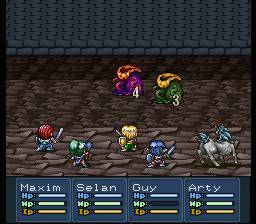 Lufia 2 escapes at least some of the most common RPG gameplay tropes of the time: It is one of the first games, along with Chrono Trigger, Robotrek, Super Mario RPG and Earthbound, to have visible enemies instead of random encounters. A welcome advancement at the time for players who were quickly becoming wary of those swirling screens. Improved player agency regarding battles with common enemies is fantastic! These encounters can be avoided at a decent rate as the game is not that challenging.
As much as I love RPGs of the 16- and 32-bit era, dungeons often feel somewhat mindless in several, even the most classic games. Lufia 2 shakes things up by adding numerous puzzles per dungeon. Some are very easy to solve, but as you advance in the game, they get increasingly harder, and most gamers would not be faulted for checking out a walkthrough for some of the more difficult, late-game puzzles. You also obtain various tools that aid in puzzle solving and progression. This is, for sure, a thinking person’s role-playing game, and I can safely guarantee at least a few puzzles will stump even the most avid gamers.
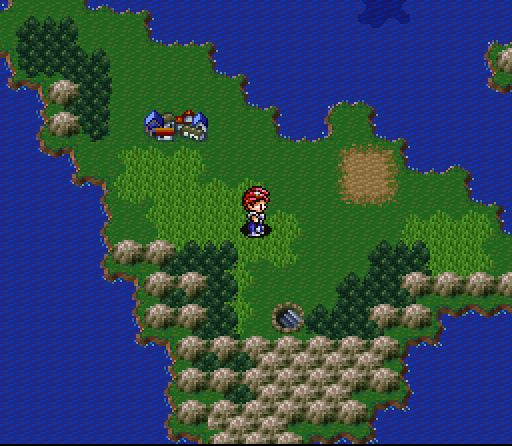 The game has a ton of optional content, including a 100-floor dungeon. While an interesting idea, one fault is that it’s largely based on pure luck rather than skill. If you don’t get a few strong items within the first 20 floors, you are in for a long trek that will likely eventually lead to failure. The one time I made it to floor 100, I was unable to beat the boss legitimately because I lacked a key item that, by incredible bad luck, did not appear randomly in any of the chests I came across in the first 99 floors. I later found out there is a cheap way to beat this boss, but I like doing things the right way in games, so I don’t think I would have tried that specific tactic even if I knew of it. You won’t be able to keep everything you find either; only items found in blue chests. I was underwhelmed by the items I found during my successful run through the dungeon.
Another fun side quest involves finding eight dragon eggs scattered around the globe. Once you find them, you’ll get a choice of four rewards, some much better than others, and the eggs will scatter around different areas of the globe again. Some of the locations are difficult to locate, and finding the four sets of eggs (8 per set) could realistically take 5 hours even using a walkthrough. After the fourth set of eggs, you are in for a real surprise and challenge that I won’t spoil for players who have not tried Lufia 2. I will say, it is worthwhile to find all four sets!
Another intriguing gameplay mechanic is capsule monsters who help along the way. They act on their own but serve as a 5th party member. If nothing more, they function as great decoys. If you feed them the correct food, they will grow rapidly and eventually do decent damage in their final form (each monster has four forms). There are seven capsule monsters in total, and each has its strengths and weaknesses.
IP skills are special additions to each character that change according to the equipment and weapons you wear. As you take damage, an IP bar fills, and the more it fills up, the stronger the IP skill you can use. Some of the best require a full bar, which takes time but is highly worth it. The best IP skills are attached to very rare equipment, only found in optional quests and hidden deep in dungeons on side paths.
There is also a casino, but I rarely utilized that as those types of mini-games don’t strike my fancy. Still, for players into these types of games, it is a great way to earn some very useful, powerful items.
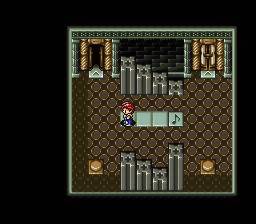 The visuals are average for late 1996 and will likely fail to impress anyone even somewhat experienced with the genre from the SNES. Other than late-game boss sprites, heroes and enemies are not impressive, and combat backgrounds look bland. Towns do not stand out in Lufia 2; there is nothing distinctive about them that makes them. Dungeons, by and large, are also dull and only saved by the aforementioned puzzles, which are a blast to solve.
Music is decent with a few memorable tracks. The battle theme is upbeat with subtle undertones of danger. Unfortunately, the same can’t be said for the overworld theme; it becomes irritating quickly and doesn’t exactly help to encourage exploration on its own. Luckily, the game is engaging enough that it is easy to look past this dull song. The boss theme also fails to inspire, although it tries to be catchy. Luckily, there is another boss theme specially made for the Sinistrals, which is a vast improvement and adds the sense of urgency expected out of a climactic moment.
Despite the typical story and character development, there are enough positives to make this an excellent use of your time. If you attempt all the extras, including the bonus dungeons, you can expect to take at least 50 hours, if not more. If you want a game that will challenge you mentally, this is the perfect title, as you’ll be stumped by at least a few puzzles. This doesn’t reach the heights of the best-known 90s classics but is still a solid title in its own right.
Wayback Wednesday Volume 1: Final Fantasy 7 and Chrono Trigger.
Wayback Wednesday Volume 2: Super Metroid and Castlevania: Symphony of the Night.
Wayback Wednesday Volume 3: The Legend of Zelda: A Link to the Past and Lunar: Silver Star Story Complete
Wayback Wednesday Volume 4: Secret of Mana and Wild Arms
Wayback Wednesday Volume 5: Illusion of Gaia and Grandia
Wayback Wednesday Volume 6: Breath of Fire 3 and X-Men Legends
Wayback Wednesday Volume 7: Star Ocean: The Second Story and Super Mario RPG
Wayback Wednesday Volume 8: Demon's Crest and Dragon Quest VI
Wayback Wednesday Volume 9: Suikoden I and Jeanne d'Arc
Wayback Wednesday Volume 10: Ranking the first 6 Final Fantasy games
Wayback Wednesday Volume 11: Earthbound and Valkyrie Profile
Wayback Wednesday Volume 12: Legend of Legaia and Secret of Evermore
Wayback Wednesday Volume 13: Threads of Fate and Soulblazer
Wayback Wednesday Volume 14: Radiata Stories and Robotrek
Wayback Wednesday Volume 15: Rogue Galaxy and Vandal Hearts
Wayback Wednesday Volume 16: Chrono Cross and Muramasa: The Demon Blade
Wayback Wednesday Volume 17: Okami and Legend of Mana
Wayback Wednesday Volume 18: Paper Mario and Terranigma
Wayback Wednesday Volume 19: Dragon Quest VIII and Atelier Iris 2: The Azoth of Destiny
Wayback Wednesday Volume 20: Ranking the 6 console Final Fantasy games from the PS1 and 2
Wayback Wednesday Volume 21: Eternal Sonata and Actraiser
Wayback Wednesday Volume 22: Persona: Revelations and Tales of Destiny
Wayback Wednesday Volume 23: Shadow Hearts: Covenant and Dragon View
Wayback Wednesday Volume 24: Ken Griffey Jr. Presents Major League Baseball and Lunar: Eternal Blue
Wayback Wednesday Volume 25: Suikoden II and Xenogears
Wayback Wednesday Volume 26: Azure Dreams and Wild Arms 2
Wayback Wednesday Volume 27: Ar Tonelico and Sword of Mana
Wayback Wednesday Volume 28: Albert Odyssey and Super Paper Mario
Wayback Wednesday Volume 29: Arcana and X-Men Legends II
Wayback Wednesday Volume 30: 10 over-rated classics that haven’t aged well
Wayback Wednesday Volume 31: Dragon Quest IX and E.V.O.: Search for Eden
Wayback Wednesday Volume 32: Tales of Symphonia and Elemental Gimmick Gear
Wayback Wednesday Volume 33: Ys Seven and Brain Lord
Wayback Wednesday Volume 34: Lufia and The Legend of Oasis
Wayback Wednesday Volume 35: Kingdom Hearts: Birth by Sleep and Magic Knight Rayearth
Wayback Wednesday Volume 36: Tales of the Abyss and Crisis Core: Final Fantasy VII
Wayback Wednesday Volume 37: Rhapsody: A Musical Adventure and Legaia 2
Wayback Wednesday Volume 38: Star Ocean 3: Till the End of Time and The Twisted Tales of Spike McFang
Wayback Wednesday Volume 39: The Granstream Saga and Wild Arms 3
Wayback Wednesday Volume 40: Fragile Dreams: Farewell Ruins of the Moon and The Legend of Heroes: Trails in the Sky SC
Wayback Wednesday Volume 41: Shadow Hearts: From the New World and Evolution
Wayback Wednesday Volume 42: Breath of Fire 2 and 7th Saga