
A decent game, but a step back from Legend of Legaia.
There’s no official remake of Legend of Legaia or Legaia 2, at least not yet, but these strike me as two games that, while they have a solid foundation and a combat system that has aged well, would greatly benefit from some modernization and quality-of-life additions, Legaia 2 especially. I’m not usually a fan of remaking everything in sight, but these would be a few worthy candidates.
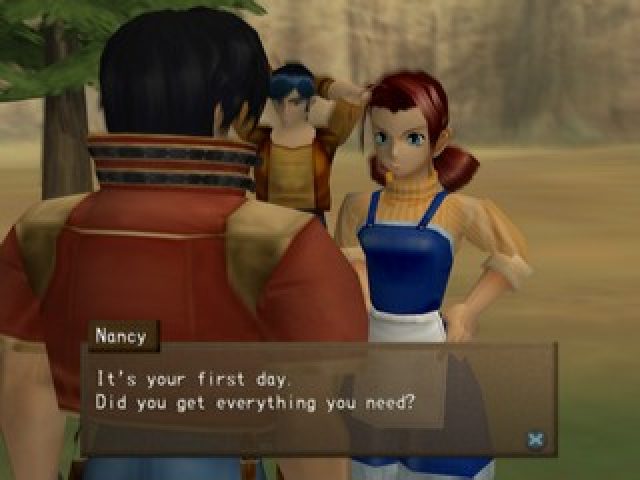 Legend of Legaia (1999) was a unique blend, at least as far as the battles, which were a mix of traditional turn-based RPG with fighting game mechanics where learning combos was paramount to long-term success and overcoming the toughest bosses. Outside of battles, the game was fairly standard fare, but it had a one-of-a-kind atmosphere, helped by its earthy music and mysterious mist-filled world. Legaia 2 was developed by Contrail and Prokion and released by Sony less than three years later in the autumn of 2001, and had a lot in common with its predecessor but took a few steps back.
The bland cover does the game no favor. Yes, you can’t judge a book by its cover, but looking at Legaia 2 didn’t exactly fill me with excitement. The bare, drab dungeons from the first game are back, and this can be seen right away after entering Hunter’s Wood. The developers had two and a half years to update graphics in places where a decent chunk of the game takes place, dungeons, but were seemingly content to continue with the same dull look. In many of the dungeons, it became difficult to distinguish between any two places as everything just blends (just wait for the sewers), so it is easy to get lost. Thankfully, there aren’t too many places that are large and confusing, like the aforementioned sewers. Just the same, the map you get in the sewers is useless and doesn’t help at all. Also, one of my major gripes was the complete lack of items or spells to instantly exit dungeons. This problem only becomes bigger when you have to return to some places in the future, either to progress the plot or for sidequests. What a glaring oversight for a game in the post-2000 era.
The characters are not nearly as pixelated as in the first game and look decent, but are even more awkward in their movements. Just look at Galvan with his plain white shirt; is he scratching his butt at the end of each battle? Why? Kazan takes a swig of some strong liquor after many battles, sometimes recoiling at the strength of his mixture in some bizarre display while mumbling something incomprehensible, all while making a nasty face. Plus, the way objects appear in the hands of each character just looks wrong. Spell animations (origins) are less impressive than Legend of Legaia but still take too long and can not be skipped. Yet some of the later game origins are the best and quickest way to take out groups of enemies, so it is likely you will sit through the same few animations over and over again in the interest of efficiently getting rid of enemies without taking damage. Be sure to have tons of MP healing items on hand.
I didn’t dislike the main character, Lang, but he was kind of uninspiring and not very intriguing for a leading protagonist. Kazan was a rough-around-the-edges warrior drunkard, and Maya, when she first joins, is one of the most useless main characters in RPG history. She remains this way for several dungeons until she finally gains an attack after she learns to talk again. She starts the game off weak, mute, and one-dimensional. It is very frustrating to have a character like this forced on you. All you can do is slap the turtle skill on her and let her heal when needed. Great. Because this happens at the same exact time as a difficulty spike. To be fair to Maya, she does get better as the game goes on, but she always had that “damsel in distress” vibe going for her. Don’t let that fool you; some well-timed magic art attacks can devastate enemies later in the game.
Sharon was one of my favorite supporting characters ever. She was badass, and the leader of a pirate group can easily take care of herself and hit hard with some great arts. Ayrn was a late-game addition and, by that point, I was already used to my trio of Lang, Maya, and Sharon and didn’t build him up. Adding him seemed forced, but there were scenes depicting him as a gentle giant, including playing gently with some children, so at least there was some substance to the character. I can give the game credit, as two of the antagonists, Elliot and especially Marienne, were incredibly annoying. Kudos to the developers for those two; they served their purpose in invoking a negative reaction, which was their point, and I could not wait to exact revenge and wail on them later in the game for what they did. Plus, this game has one of the more interesting baddies you are likely to see, Bubba, a muscle-bound meat-headed….Elvis impersonator? Sure!
My main issue with the game is that there is no expansive world map to explore, which I always enjoy. Instead, much like many old-school platforming games like Super Mario World or Donkey Kong Country, you simply move from one spot on a map to another. Because of this, the grand sense of adventure in many RPGs is lost. There were only about a dozen and a half locations; five of those 18 were towns. Other than those 18 or so locations, there were a handful of optional secret locations, about three from what I could find.
One of the key issues with the game is that there are tons of things to buy, but everything is very expensive, so it is hard to keep everyone up to date with weapons, armor, accessories, healing items, cooking items, crafting materials, and so on. By the end of the game, upgrading equipment could cost well over one million of the game’s currency. I had to resort to checking a walkthrough to find money-making tips outside of battle. It saves a lot of needless time grinding. Even without a ton of money grinding, I reached level 60 with ease in just over 30 hours. Imagine how many more levels I’d have if I had grind for money via battles rather than using some tips I found on GameFAQs! The game was already pretty easy as is at level 60, so the game had an odd balance.
The music, right from the opening screen, has Legend of Legaia vibes. There are a few tracks that, if you were to close your eyes, you would likely swear you were actually playing the first game. But just as many tracks fall flat. One of my favorite tracks was the boss theme, which was excellent and filled with tension. There was limited voice acting during a few specific boss battles, and it was good enough to wish there had been more effort put into voicing larger portions of the game. However, the constant inane babbling by all characters at the start and end of random battles quickly grew thin.
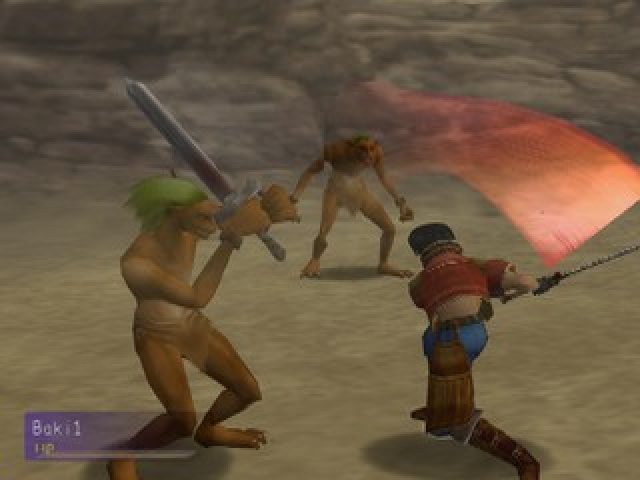 Like the first game, battles are quick and engaging, but AP functions differently in Legaia 2. Instead of simply defending with spirit to increase AP, or AP increasing after monsters attack you, it is 100% dependent on using different arts. Some art combinations increase the AP meter, and they are known as standard arts. As the name would suggest, these are the weakest combos. There are also super, hyper, mystic, and variable arts. Those four decreases the AP meter so it is important to strike a good balance between standard arts which increase AP and the other more powerful arts which decrease AP. There are items that double the amount of AP earned from standard arts and cut in half the amount of AP the other four arts use. These are incredibly useful items, especially in the last few dungeons! On the other hand, items that increase attack or defense by 10% weren’t worth the wasted turn.
There is a very cumbersome crafting system that is needlessly complex and not explained well. I was never quite sure what I was doing, but I think I was able to make some stronger weapons and armor. I never even bothered with the accessory crafting, however. What I didn’t like about crafting was the fact that you could craft weapons and armor that were currently equipped. This is not a good thing if the result ends up being something worse or something you don’t want. What would have been better was if the player had to unequip current equipment to craft it, to avoid accidentally crafting something currently equipped.
You can also cook many different recipes, but some cost a lot of money to acquire or are a pain to find. They seemed to have some kind of benefit if eaten in camps scattered throughout the dungeons, but I didn’t see much difference. Camps, by the way, act as save points, and if you have some tents, all HP and MP are recovered. You can also craft weapons and armor, and although the game won’t say it, it is always better to craft at these saving tents.
Accessories can be equipped, giving characters important skills that, at times, change the tide of harder battles. Just the same, at least from what I could tell, it seems you can only equip one offensive skill and one defensive skill from all of the accessories currently equipped. Skills learned from other accessories are not available if the accessory is not equipped, unless I was missing something.
Titles, or nicknames, can be gained after triggering extra scenes or performing certain tasks. A few of them unlocked very powerful stores later in the game, but other than that, I did not see too much use for them and could never find any kind of list of the titles I had found anywhere in the menu. In Tales of the Abyss, for example, you could change the titles for each character in the menu.
It seems to be a standard trope in RPGs these days, but for anyone who has played enough of the genre, surprise, surprise, there is a casino. Personally, I have grown very bored of casinos and bypassed the ones in this game completely. I suppose they just offer items that make the game even easier. I died two or three times in the 30 or so hours I played this, including once with the final boss, so there is a decent challenge. But it is never so hard that things seem impossible or that there is ever much of a threat.
There is also an arena. Other than a late-game run-through of the 8 rounds, plus an unexpected 9th round to get a key item for plot progression, I avoided this, and my limited experience wasn’t good, as there was nothing all that different from the normal game. Finally, there’s a rudimentary guild system. It’s not nearly as complex as, say, Final Fantasy 12, and most requests can be completed easily, while a few of the tougher ones include powerful extra bosses and/or going back to the dreaded sewers. Completing these guild requests is a fantastic way to earn much-needed money. I just wish the guild had been introduced earlier in the game and expanded upon. I was able to finish all of the ones offered to me, about a dozen.
This is a difficult game to write about because, while it was not bad, it wasn’t really that riveting and didn’t break any new ground. Other than a clunky crafting system, odd cooking mechanic, and limited guild quests, there is no innovation or positive changes from the first game, and far too many games have done the crafting, cooking, and guilds much better. It is decent, and for those who liked Legend of Legaia, it is worth a try. But overall, there are much better games for the PlayStation 2.
Wayback Wednesday Volume 1: Final Fantasy 7 and Chrono Trigger.
Wayback Wednesday Volume 2: Super Metroid and Castlevania: Symphony of the Night.
Wayback Wednesday Volume 3: The Legend of Zelda: A Link to the Past and Lunar: Silver Star Story Complete
Wayback Wednesday Volume 4: Secret of Mana and Wild Arms
Wayback Wednesday Volume 5: Illusion of Gaia and Grandia
Wayback Wednesday Volume 6: Breath of Fire 3 and X-Men Legends
Wayback Wednesday Volume 7: Star Ocean: The Second Story and Super Mario RPG
Wayback Wednesday Volume 8: Demon's Crest and Dragon Quest VI
Wayback Wednesday Volume 9: Suikoden I and Jeanne d'Arc
Wayback Wednesday Volume 10: Ranking the first 6 Final Fantasy games
Wayback Wednesday Volume 11: Earthbound and Valkyrie Profile
Wayback Wednesday Volume 12: Legend of Legaia and Secret of Evermore
Wayback Wednesday Volume 13: Threads of Fate and Soulblazer
Wayback Wednesday Volume 14: Radiata Stories and Robotrek
Wayback Wednesday Volume 15: Rogue Galaxy and Vandal Hearts
Wayback Wednesday Volume 16: Chrono Cross and Muramasa: The Demon Blade
Wayback Wednesday Volume 17: Okami and Legend of Mana
Wayback Wednesday Volume 18: Paper Mario and Terranigma
Wayback Wednesday Volume 19: Dragon Quest VIII and Atelier Iris 2: The Azoth of Destiny
Wayback Wednesday Volume 20: Ranking the 6 console Final Fantasy games from the PS1 and 2
Wayback Wednesday Volume 21: Eternal Sonata and Actraiser
Wayback Wednesday Volume 22: Persona: Revelations and Tales of Destiny
Wayback Wednesday Volume 23: Shadow Hearts: Covenant and Dragon View
Wayback Wednesday Volume 24: Ken Griffey Jr. Presents Major League Baseball and Lunar: Eternal Blue
Wayback Wednesday Volume 25: Suikoden II and Xenogears
Wayback Wednesday Volume 26: Azure Dreams and Wild Arms 2
Wayback Wednesday Volume 27: Ar Tonelico and Sword of Mana
Wayback Wednesday Volume 28: Albert Odyssey and Super Paper Mario
Wayback Wednesday Volume 29: Arcana and X-Men Legends II
Wayback Wednesday Volume 30: 10 over-rated classics that haven’t aged well
Wayback Wednesday Volume 31: Dragon Quest IX and E.V.O.: Search for Eden
Wayback Wednesday Volume 32: Tales of Symphonia and Elemental Gimmick Gear
Wayback Wednesday Volume 33: Ys Seven and Brain Lord
Wayback Wednesday Volume 34: Lufia and The Legend of Oasis
Wayback Wednesday Volume 35: Kingdom Hearts: Birth by Sleep and Magic Knight Rayearth
Wayback Wednesday Volume 36: Tales of the Abyss and Crisis Core: Final Fantasy VII