

I loved Wild Arms; it was one of my favorite turn-based RPGs of all time and, in my eyes, one of the best games on the PlayStation. This is what I said about the introduction in 2021:
One of the most memorable opening scenes I have ever seen, and one that is etched in my mind to this day, is Jack’s prologue in Wild Arms 1, jumping out of the way of spikes running from boulders, quick enough to make it over rapidly collapsing platforms while dodging spears. The first few minutes of this prologue, and also my first experience with the game, is a dizzying whirlwind of crazy maneuvers that show Jack barely averting certain death a few times coupled with a few cases of luck. What a scene! I admired Sony for instantly throwing players into the action after starting a new game. None of the long, drawn-out introductions of too many other RPGs, just play! The time for the story will come later. That was what was so unique about Wild Arms 1 for the Playstation, engaging from the get-go.
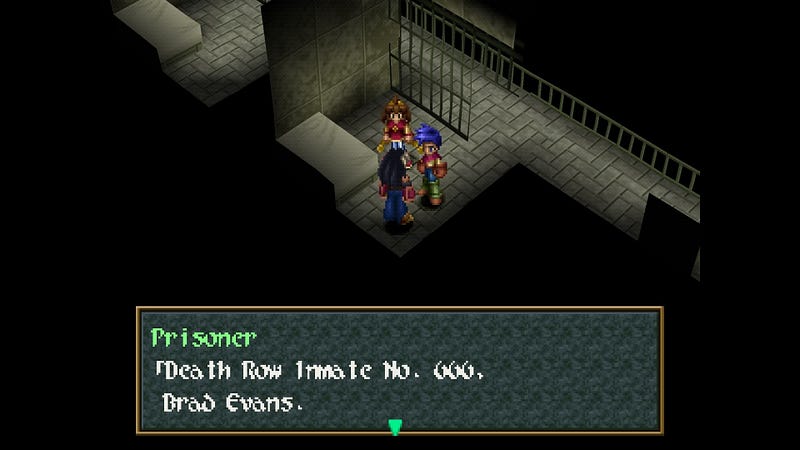 Wild Arms 2 doesn’t hold back in the character introductions either. I started as Jack, a man immediately thrust into a run from the law, charged as a war criminal, trying to remain one step ahead of vicious dogs and highly trained guards. Ashley’s introduction is just as exhilarating; he must take part in a hostage rescue mission in the middle of some ruins. In contrast, Lilka’s introduction is comedic; her story starts by accidentally teleporting into an important meeting before a flashback shows her in a complex puzzle where she must use her wits to overcome a seemingly impassable challenge. These three are later joined by the mysterious Kanon and Tim, an orphan rescued by Ashley midgame, as well as a secret sixth character.
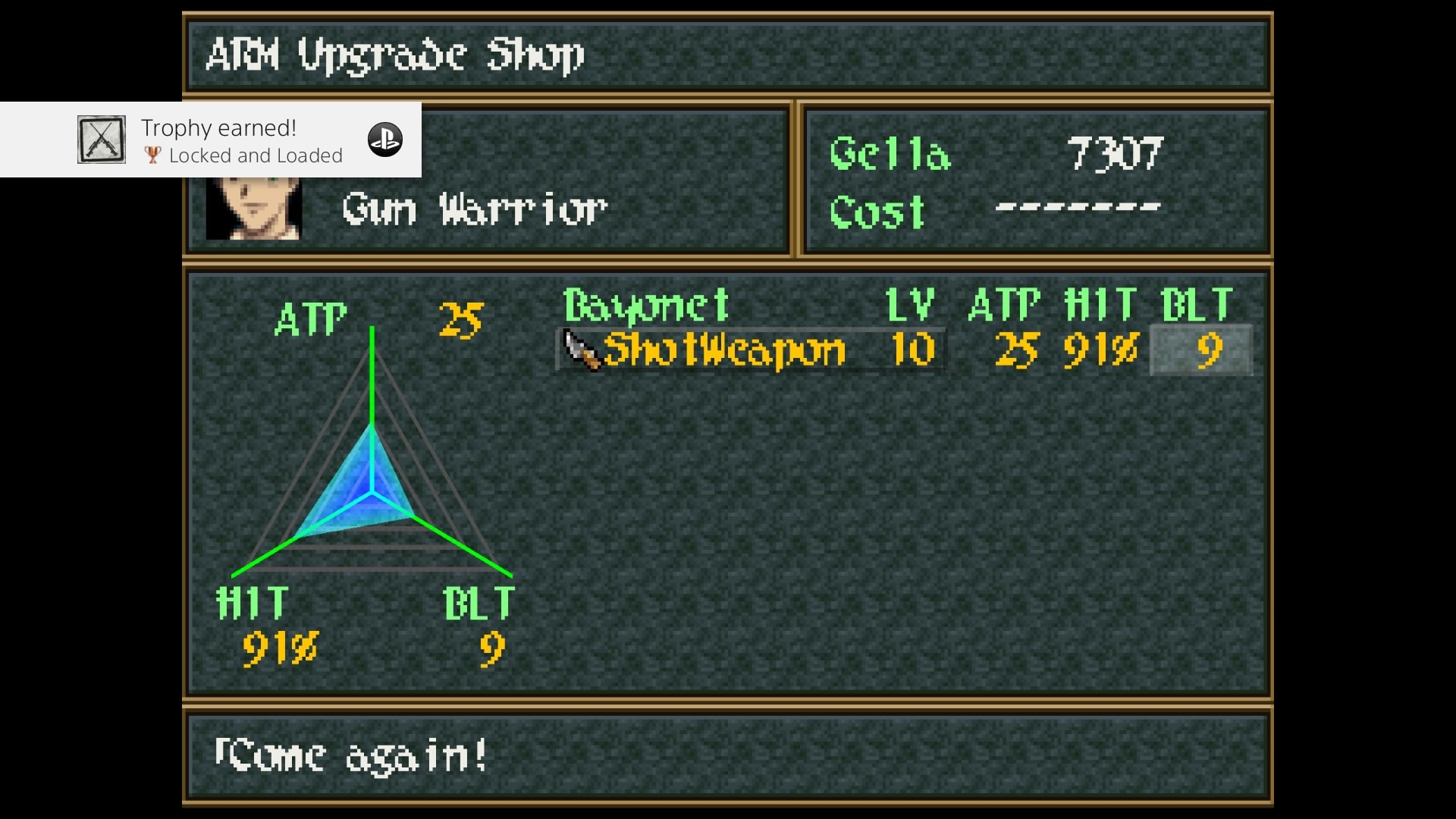 Taking place in a world that might resemble the 1800s, Wild Arms 2 is a far cry from the typical medieval setting of many RPGs. There is a lot of advanced technology in the world of Filgaia. Some of that technology is called “Arms,” and Ashley and Brad can find and use them. They are guns, and various stats can be upgraded at different costs. Do you want to prioritize raw power? Go for it, but keep in mind some arms start with very low accuracy, and some might miss every other shot. Still, others have limited bullet capacity, some 3, 2, or even 1 single shot.
Missed shots can be mitigated with Brad’s lock-on, which guarantees a hit but is only accessed via force abilities that build up throughout battle with each successful strike, or when an enemy strikes. All characters have force abilities. Every time a character is hit, or every time a normal attack is used, a meter slowly fills up, reaching a maximum of 100. In increments of 25, new force abilities become available. Using a force ability depletes the force meter. The higher the level, the more of the meter that is depleted. As your characters gain levels, the default starting point of the force meter increases too, so a level 50 character starts battle with 50 force.
Lilka is the typical mage and can learn magic written on crest graphs found across the globe. The addition of crest graphs forces players to think before deciding what magic they want to buy because crest graphs are limited in the first half of the game, but eventually there are more than enough, especially considering level 1 spells can be erased, and the crest can be used again to imprint level 2 spells.
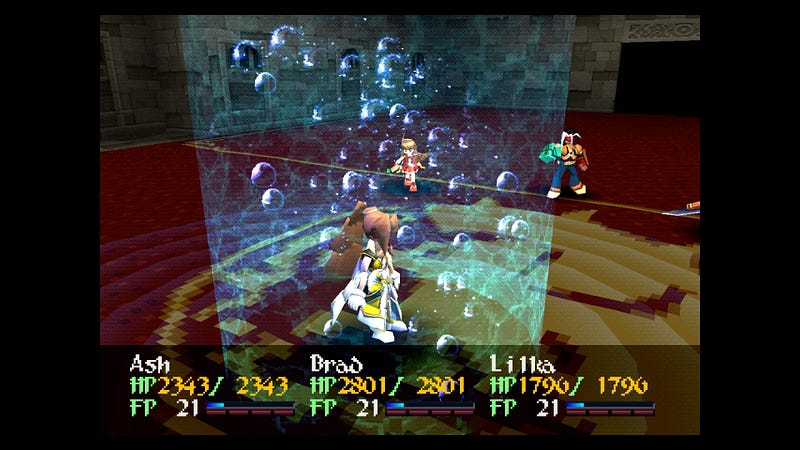 The issue with battles is that the same formula exists from 1 and can be applied for the duration of 2, so unless you’re a big fan of the series, it could start to feel stale. Get the force gauge up for a few turns with normal attacks or carrots, or both, and unleash the same few Arms for the next few turns, using Lilka to buff Ashley and Brad and then cycle through the different elemental attacks until finding one that does damage in the red (weakness), rinse and repeat. Compared to other Wild Arms games, lucky cards are more uncommon, and it is better to hold off on using them until later in the game, unless one particular source is found, which I will remain mum on as the game is easy enough without using them for every boss battle.
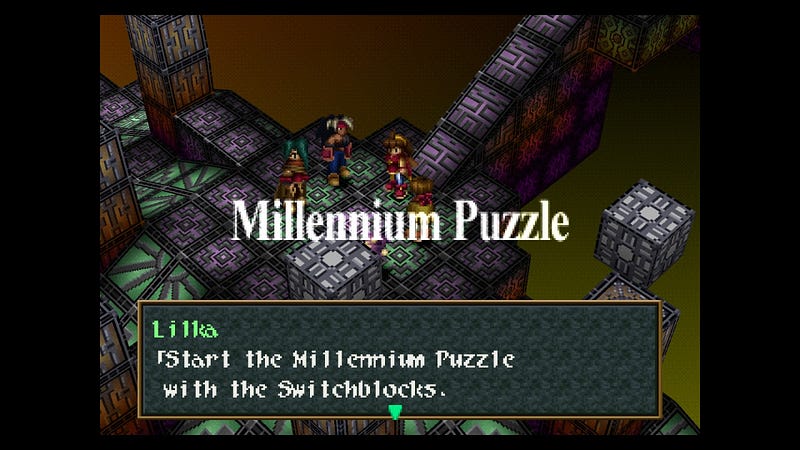 Thankfully, dungeons are interesting. To help navigate them, the five (or six) heroes each have three tools to solve, open up, and pass by any obstacle. For example, Brad uses bombs like your typical Zelda game, Kanon has the standard hook shot, and Lilka has wands that can light or put out torches. Nothing too innovative, but the puzzles were still engaging and fun to solve. There was nothing so hard that I needed a walkthrough; most players shouldn’t need one, but they are not overly simplistic either. Some puzzles require precise timing, but nothing as strict and exact as EGG (Dreamcast).
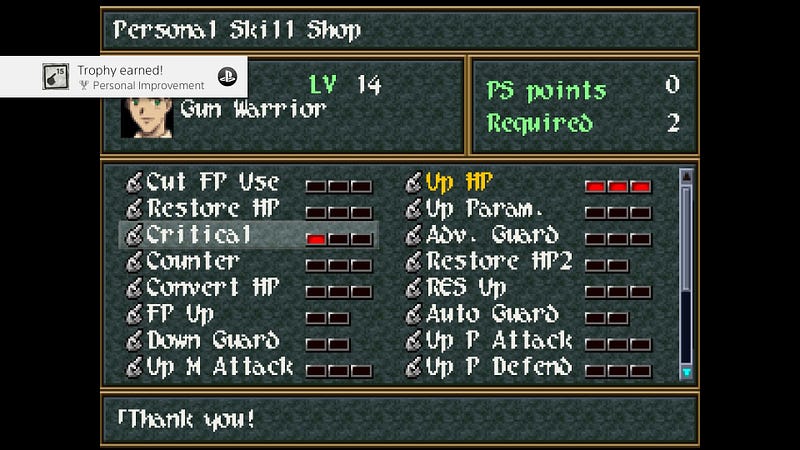 Character customization extends beyond Arms and Crests with the Personal Skill Shop. It is imperative to think very carefully because once skill points are spent, they can not be undone. 1 skill point is earned per level, and once enough are saved up, usually between two and four, they can be spent at Skill shops (found in every town) on benefits such as increased physical or magic defense, higher HP gains per level, higher chance of getting a critical hit, protection against various status effects, and so on, and have 2 or 3 levels. For my attackers, I liked increased HP, critical and counter rates, as well as magic defense, but there are many different possible builds according to personal play style.
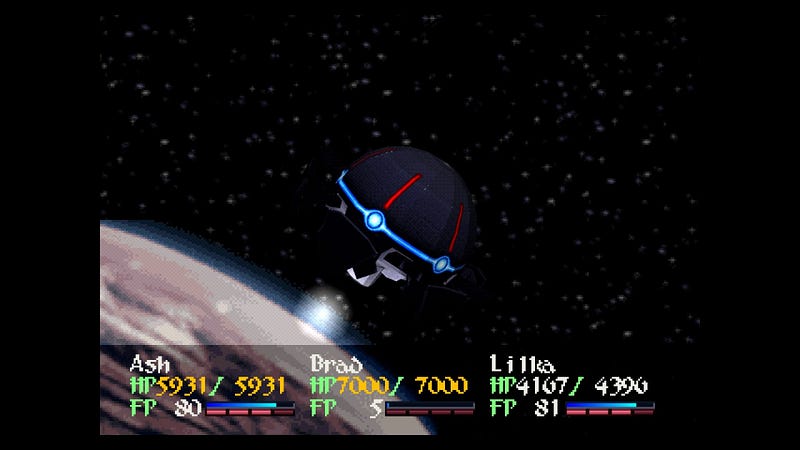 There are several optional areas and useful sidequests that help to make late-game bosses much more manageable. Finding the secret sixth character and somewhat difficult microphone tool, pyramids across the world can be interacted with, unlocking the game’s toughest bosses, some harder than the last boss. These intense skirmishes will test your skill, management, and strategy for sure! I beat 7 of them, but there are several more.
While Wild Arms 1 was merely a single step up from late-game SNES RPGS graphically (not counting the occasional cinematic), Wild Arms 2 changed the art direction and looks an additional 1 or 2 steps up. It is nothing impressive, certainly not on the level of the heavy hitters from SquareSoft, but the aesthetic has its charm. Some of the towns have a Western vibe while others have a more neutral or generic look. The world map was nothing special, and one thing I greatly disliked was having to use the radar to find every single location in the game. It is cumbersome, but an upgrade to the radar much later in the game makes it more bearable.
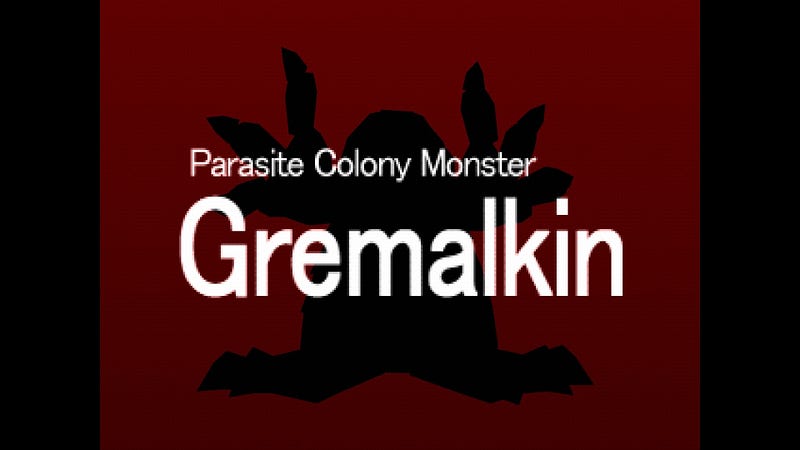 Stylistically, the neatest part of this game was the boss introductions. They were simple but effective in how menacing and mysterious they were. I adore it when games have town and boss introductions, and Wild Arms 2 nailed it in that regard.
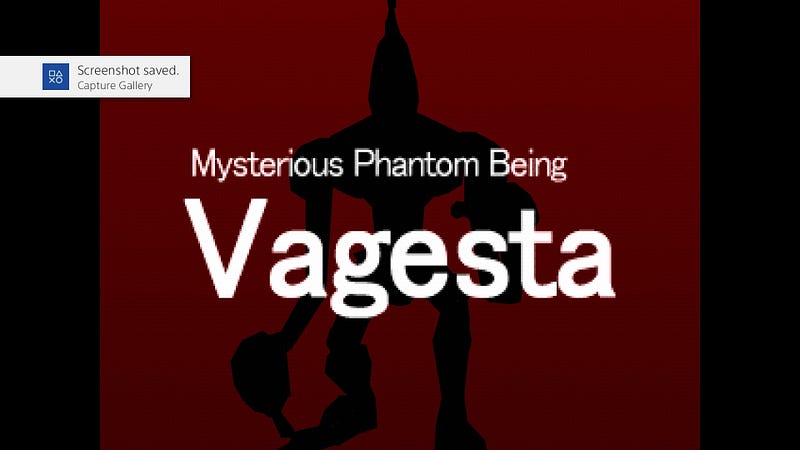 The music, on the other hand, is a baby step below Wild Arms 1. Still nothing egregiously bad, but not as memorable. There is one town theme and the short theme that plays during boss intros is excellent, but otherwise, the tracks were merely decent.
Wild Arms 2 isn’t the sophomore slump we sometimes see with follow-ups, but it didn’t reach the heights of the first game. I played this sometime around 2000, about a year after its release, and in the ensuing quarter century, it has aged fairly well, with the radar likely being the most annoying. Still, for those yearning for more after seeing the credits of Wild Arms 1, this should whet the appetite just enough.
Wayback Wednesday Volume 1: Final Fantasy 7 and Chrono Trigger.
Wayback Wednesday Volume 2: Super Metroid and Castlevania: Symphony of the Night.
Wayback Wednesday Volume 3: The Legend of Zelda: A Link to the Past and Lunar: Silver Star Story Complete
Wayback Wednesday Volume 4: Secret of Mana and Wild Arms
Wayback Wednesday Volume 5: Illusion of Gaia and Grandia
Wayback Wednesday Volume 6: Breath of Fire 3 and X-Men Legends
Wayback Wednesday Volume 7: Star Ocean: The Second Story and Super Mario RPG
Wayback Wednesday Volume 8: Demon's Crest and Dragon Quest VI
Wayback Wednesday Volume 9: Suikoden I and Jeanne d'Arc
Wayback Wednesday Volume 10: Ranking the first 6 Final Fantasy games
Wayback Wednesday Volume 11: Earthbound and Valkyrie Profile
Wayback Wednesday Volume 12: Legend of Legaia and Secret of Evermore
Wayback Wednesday Volume 13: Threads of Fate and Soulblazer
Wayback Wednesday Volume 14: Radiata Stories and Robotrek
Wayback Wednesday Volume 15: Rogue Galaxy and Vandal Hearts
Wayback Wednesday Volume 16: Chrono Cross and Muramasa: The Demon Blade
Wayback Wednesday Volume 17: Okami and Legend of Mana
Wayback Wednesday Volume 18: Paper Mario and Terranigma
Wayback Wednesday Volume 19: Dragon Quest VIII and Atelier Iris 2: The Azoth of Destiny
Wayback Wednesday Volume 20: Ranking the 6 console Final Fantasy games from the PS1 and 2
Wayback Wednesday Volume 21: Eternal Sonata and Actraiser
Wayback Wednesday Volume 22: Persona: Revelations and Tales of Destiny
Wayback Wednesday Volume 23: Shadow Hearts: Covenant and Dragon View
Wayback Wednesday Volume 24: Ken Griffey Jr. Presents Major League Baseball and Lunar: Eternal Blue
Wayback Wednesday Volume 25: Suikoden II and Xenogears