

Rankings are never easy, and when it comes to the Final Fantasy series, doubly so. In this article, I’ll be looking at the offline entries in the franchise (sorry, Final Fantasy 11).
Wayback Wednesday Volume 10: Ranking the first 6 Final Fantasy games
6. Final Fantasy X-2
Right from the start, the opening of X-2 was cringeworthy and cheesy, and in the preceding two decades, it has not aged well at all.
For a story set just two years after X, a lot has changed. All of the same locations are recycled for X-2, but many places have either already experienced drastic change or are in the process of change.
Yuna continued to be likable here, but Rikku wears thin and stops being cute after the first few times, and Paine is not memorable. The Celsius is piloted by perhaps one of the most annoying characters in any RPG I have ever played, Brother.
X-2 has some of the worst antagonists in the series as well, the Leblanc syndicate. Gone are the days of intimidating rivals and antagonists; this trio is just tiresome.
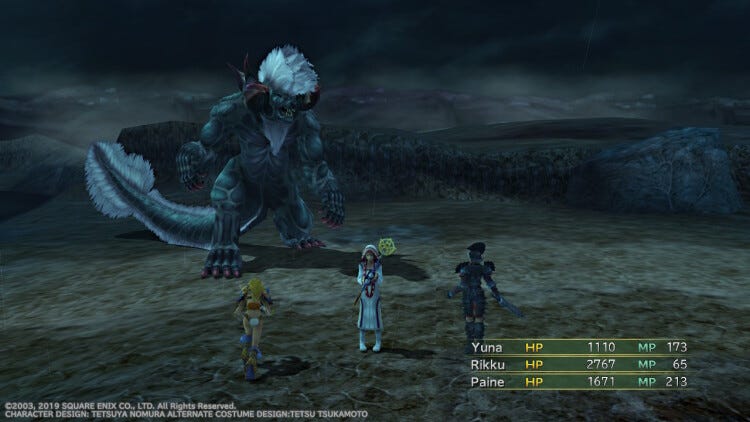 On the positive side, the battle system has a lot of potential and requires quick thinking. Unlike many turn-based RPGs that came before it, the battles in X-2 flow well. However, the garments and dressphere are needlessly complicated. X had better, more intuitive character customization than this.
There are tons of random encounters, more than in most other Final Fantasy games. Thankfully, dungeons are also very short, and bosses never presented too much trouble. X-2 is an odd mix of linear and open-ended. A blind playthrough should take most players at least 20 hours, perhaps as many as 40.
Much of the music is forgettable and seems like it was Square’s attempt at trying to be hip. Voice acting is rarely good, or even bearable. However, the random battle and especially the boss battle music are notable exceptions, filled with tension.
Graphically, this game has stood the test of time, impeccable, almost 25 years later, especially the character sprites. If there is one thing that Square always seems to excel at and outclass the competition in, it is graphics.
Overall, Final Fantasy X-2 looks incredible, but doesn’t leave a lasting impression.
5. Final Fantasy VIII
I found VIII’s story was different and, at times, strange. But at the same time, it was enticing with the political tension. There is a romance angle that gradually expands into something much larger, though the plot, which feels grounded in the beginning, starts to go off the rails by the end of the game.
VIII stars the pretty boy recluse, Squall, whose indifference practically bleeds through the screen. Rinoa is an excellent foil to his stoicism, with their meeting being one of the most quintessential RPG scenes in the genre’s history. Zell is overly rambunctious, Selphie quirky, Quistis struggles with self-doubt, and Irvine exudes confidence but cracks under pressure, though his best moments come when that facade peels away.
Final Fantasy VIII changed something fundamental: the way magic is gathered and used. New spells are drawn from enemies, and while it felt slow and tedious on the PS1, I was impressed by how much the remaster improved this by allowing players to speed up battles by as much as 3x. Spells aren’t just for casting; they can be junctioned to stats, offering character-building flexibility.
Enemies scale with you, so grinding out levels too much could lead to a much harder time in the long run. The same power obtained by adding a spell to strength at level 100 can be obtained at level 40, making the junction system more important than leveling.
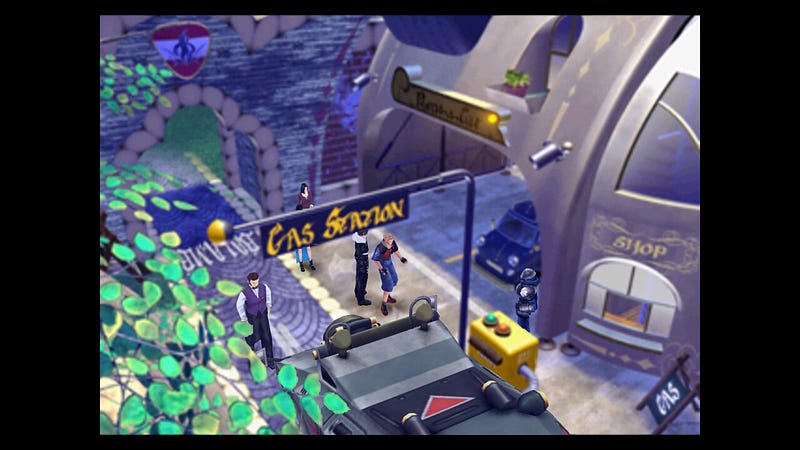 The remastered version cleaned up a lot of the rough edges while maintaining the overall feel and style of the original. VIII is an example of a remaster done correctly, the original spirit intact with a subtle cosmetic touch-up.
The music is phenomenal: the tranquil Balamb City theme, the enigmatic “Find Your Way,” the poignant “Rinoa’s Theme,” and overall, the soundtrack does not disappoint.
Despite its flaws, Final Fantasy VIII is a solid game and one worth revisiting.
4. Final Fantasy XII
Final Fantasy XII is set in an expansive, overwhelming world, and from the moment you fire it up, it becomes abundantly clear that there are a lot of choices. Coming from Final Fantasy X, the non-linear nature of this game is all the more striking. Square took a lot of risks with new gameplay mechanics, which in large part were a success.
The story follows Vaan, a young man caught up in a growing political conflict involving warring nations, which gradually expands into something much larger.
Vaan doesn’t have the defining features of Cloud or the flamboyant look of Tidus, and the first two or three hours are plain and not engaging. It wasn’t until the sunstone quest in the Giza Plains that the game slowly started to open up, at least in my experience.
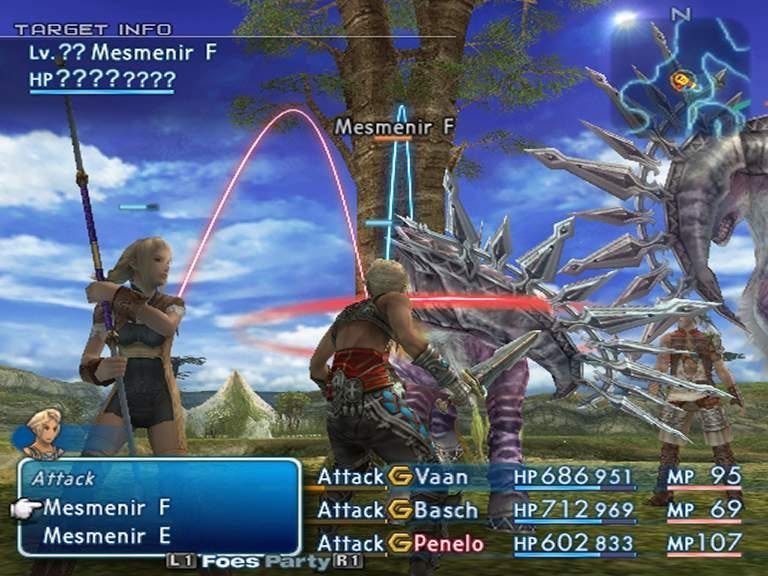 The battle system is fast-paced, replacing random battles with real-time encounters where all enemies are visible on screen. It felt like a cross between an action RPG and a JRPG. The gambit system, which offers specific instructions on how AI should react in certain situations, has a lot of potential, though the same few gambits always took priority in my playthrough. If the game were harder, the gambit system would have been a godsend, but it never reached the point where significant experimentation was needed.
Similar to the sphere grid in X, XII has the License Board, which lets you decide how characters grow, though everyone ends up very similar by the end.
The musical score is catchy and top-notch, and the voice acting felt more serious and fit the scenes perfectly. Graphically, the quickening animations are the most beautiful in the game, and some of the best cutscenes on the PS2. On a negative note, the camera is a constant frustration.
Final Fantasy XII is one of those games that is a lot of fun to play, with few bad things to say about it, outside of the slow start and the camera. For those who want a less linear experience than X, this is the perfect remedy.
3. Final Fantasy IX
Where Final Fantasy VII was eager to push the boundaries of what an RPG could be, and VIII was a graphical powerhouse, Final Fantasy IX was content to harken back to what some call the golden age of RPGs, paying homage to IV through VI with its medieval setting and more cartoon aesthetic, and as a result, IX has held up beautifully over the years.
The story starts simply enough: Zidane kidnaps a princess named Garnet to save her from her increasingly overbearing mother, Queen Brahne, which sets off a series of events that soon uncovers a larger conspiracy.
Zidane is decently likable, but didn’t seem to grow as much as Cloud, Tidus, or Squall. Vivi, the timid black mage, was the true star, and the rest of the cast is solid, if one of the weaker ones by Final Fantasy standards.
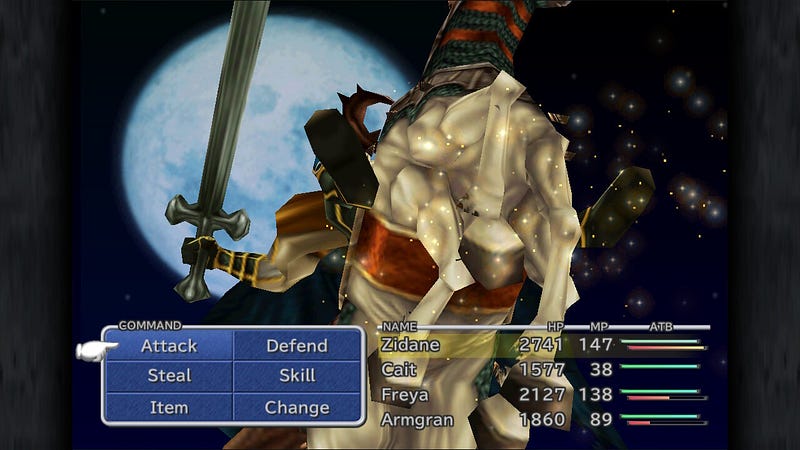 By the time IX was released, I felt the Active Time Battle system was wearing thin. There isn’t anything too spectacular regarding battles, and the archetypes, dragoon, blue mage, etc., are all seen in prior games, with little risk taken to expand on them.
The Trance system, much like the limit breaks in VII, enables powerful moves, but feels limited in practice, often activating at inconvenient moments.
One standout is the ability customization system, where every piece of equipment has abilities that can be permanently learned once enough AP is earned. There is always a certain strategy to ability management.
IX has perhaps one of the best sidequests in the series, the Chocograph quest, which starts as a simple digging game and expands into a global search for some of the best equipment in the game.
Final Fantasy IX has one of the more diverse soundtracks in the series, with more of a fairy tale vibe than any prior entry. “You’re Not Alone” is one of the more powerful songs in any RPG. Just wait for that guitar riff.
As an RPG, this is a fine game, but being part of the premier series of the genre, it falls slightly short. Still, the atmosphere, lore, and music make it worthwhile.
2. Final Fantasy X
What starts as a simple mission to win at Blitzball spirals into a much more complex story. The whole game felt surreal and ethereal, and the developers deserve applause for creating such a magical world.
Every location is breathtaking, from gentle sunsets on the beach to frozen tundras, to dense, lush jungles, and sprawling plains. If I am still amazed, 25 years later, at the various scenes in the game, I can’t imagine how blown away people were in the early 2000s.
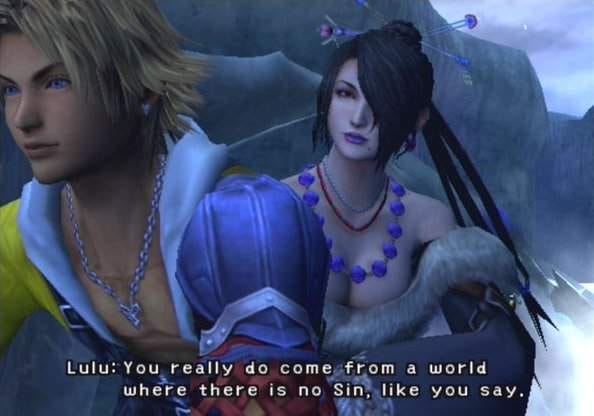 The cast is a mixed bag. Tidus gradually grew on me, but he always felt far too naive. Auron fits the Shadow, Vincent type of mold, but had much more depth and was, in the end, awesome. Yuna was likable, and at times showed a surprising level of profoundness with her choices. Rikku’s constant excessive positivity wore thin quickly, and Kimahri felt underdeveloped and was mostly the silent protagonist, a tired RPG trope.
Final Fantasy X made the wise choice of ditching levels in favor of the Sphere Grid. It just takes some getting used to and might feel overwhelming at first, but by the end, it becomes second nature. The overdrive system ranged from awesome, like Auron’s specific inputs, to overpowered with Yuna’s super summon.
The game is quite linear, and exploration is limited, though treasure chests are often well hidden, and it is important to look closely at each new screen.
The Aeon trials were the least enjoyable part, cryptic puzzles that made little sense, especially the moving platform puzzle. However, interacting with the environment during battles and even talking to some enemies was a neat change of pace that I appreciated and would have liked to see utilized more.
The music was brilliant for the most part, mysterious during dungeons, hectic and urgent during boss battles, and stunning during key plot points. There is voice acting, and it is hit or miss, with Auron being the clear highlight.
Final Fantasy X is linear, but offers interesting customization with the Sphere Grid and weapon choices. The main part of the game was a joy to play, and any fan of the genre should give this a spin. There is plenty of side content to keep players engaged for several extra hours.
1. Final Fantasy VII
Final Fantasy VII’s premise is just as relevant now as it was when it was released: the imperative to protect our planet, the struggle against those who exploit it, the widening chasm between the privileged and the marginalized, and the unsettling visions of a dystopian future where science has run amok all weigh heavily as themes. After a breathtaking opening, it is one of the best introductions to an RPG in the genre’s history.
Personally, this is my favorite Final Fantasy cast. Cloud is the indifferent hero who slowly opens up and becomes more vulnerable as the game progresses. Barrett is the gun-wielding badass who will do anything to create a better world. They are joined by the sweet flower girl Aeris, Cloud’s childhood friend Tifa, the mysterious, brooding Vincent, the cunning Yuffie, the wise Red XIII, Cid, the gruff middle-aged pilot, and Cait Sith, who at first seems like just another annoying mascot character but has a hidden secret.
The antagonists are certainly some of the best the 90s had to offer. Hojo is the psychopathic mad scientist who will stop at nothing, and the iconic Sephiroth and his slow descent into madness are well explored on the first disc, especially.
The customization is almost limitless with 83 Materia and hundreds of viable combos, meaning every character is a jack of all trades while not specializing beyond unique limit breaks.
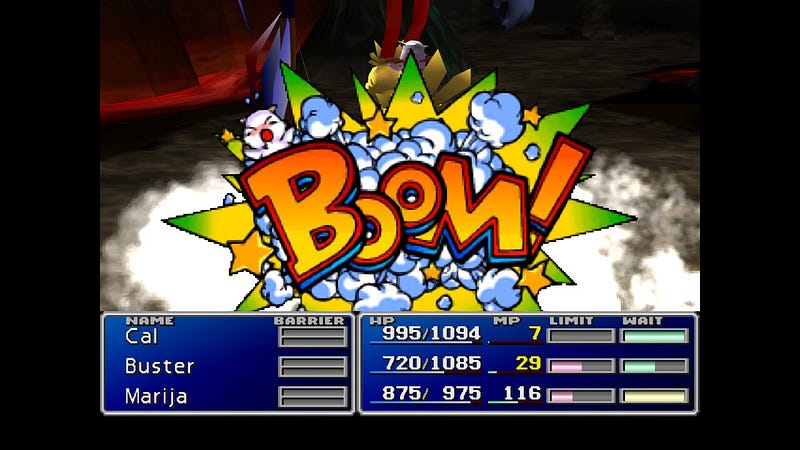 The game gets progressively easier as it goes, so for those looking for a challenge, the two optional weapon fights are necessary. Finding unique ways to optimize your chosen three heroes is fascinating.
The Gold Saucer is a fun amusement park-like setting where several hours can slip away, and Chocobo breeding is a rewarding time sink that eventually leads to the ultimate Chocobo. Beyond that, many gamers return to this game every few years because of the sheer variety of builds, encouraging different party compositions and styles.
The music holds up beautifully, from the opening theme to the last boss, one of the best in the series, and everything in between, the laid-back vibes of Costa Del Sol, the poignant Aerith’s Theme, and the ancient wisdom of Cosmo Canyon.
Final Fantasy VII has its shortcomings and, in a few specific ways, hasn’t aged well (visually), but in many ways, especially musically and narratively, has aged like fine wine. For newcomers to the genre, it is an excellent introduction, and veterans should find plenty to love, too.
Wayback Wednesday Volume 1: Final Fantasy 7 and Chrono Trigger.
Wayback Wednesday Volume 2: Super Metroid and Castlevania: Symphony of the Night.
Wayback Wednesday Volume 3: The Legend of Zelda: A Link to the Past and Lunar: Silver Star Story Complete
Wayback Wednesday Volume 4: Secret of Mana and Wild Arms
Wayback Wednesday Volume 5: Illusion of Gaia and Grandia
Wayback Wednesday Volume 6: Breath of Fire 3 and X-Men Legends
Wayback Wednesday Volume 7: Star Ocean: The Second Story and Super Mario RPG
Wayback Wednesday Volume 8: Demon's Crest and Dragon Quest VI
Wayback Wednesday Volume 9: Suikoden I and Jeanne d'Arc
Wayback Wednesday Volume 10: Ranking the first 6 Final Fantasy games
Wayback Wednesday Volume 11: Earthbound and Valkyrie Profile
Wayback Wednesday Volume 12: Legend of Legaia and Secret of Evermore
Wayback Wednesday Volume 13: Threads of Fate and Soulblazer
Wayback Wednesday Volume 14: Radiata Stories and Robotrek
Wayback Wednesday Volume 15: Rogue Galaxy and Vandal Hearts
Wayback Wednesday Volume 16: Chrono Cross and Muramasa: The Demon Blade
Wayback Wednesday Volume 17: Okami and Legend of Mana
Wayback Wednesday Volume 18: Paper Mario and Terranigma
Wayback Wednesday Volume 19: Dragon Quest VIII and Atelier Iris 2: The Azoth of Destiny