

Revelations: Persona is the first game in the Persona subseries, a spin-off of the Megami Tensei games. In my eyes, aside from Last Bible 3, it is the first worthwhile Atlus RPG from the 16/32-bit era. From here, role-playing games from Atlus would only get better, but it is interesting to see their origins when they were starting to make a solid RPG free of many of the annoyances from their older titles.
Avoiding many of the common tropes from RPGs of the time, Persona takes place in a modern setting and stars a group of teens as they navigate supernatural occurrences around their school and hometown. The personas each character can summon represent the different aspects of themselves. Kind of like multiple personalities, but more intense, because these different personas can be used to cast magic spells, and powerful physical attacks have the potential to deal much more damage to the many enemies.
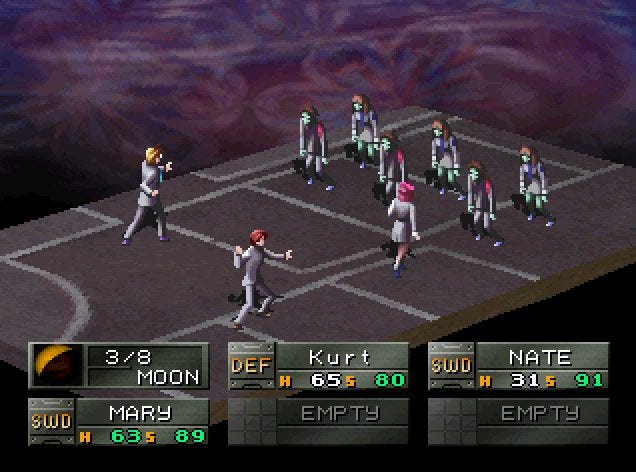 New personas can be gained by talking to monsters, a staple of many Atlus games, as well as combining personas you currently have to, hopefully, create even better ones with superior abilities. If you have played SMT games, or Last Bible, etc., you will already be familiar with the negotiating system here, except it is massive compared with the older games and still sizable compared to newer titles.
One of the key figures in Persona, and someone who helps you understand the role of the personas, among other story beats, is the enigmatic Philemon. You only see him a few times, but he adds a cool twist to the game. Judged by the standards of the time, the late 1990s, the plot is above average and has a few twists in store.
All of the characters have excellent, intriguing backstories, and for those who like extras, there are even a few hidden characters with personas that are exclusive to them and a lengthy post-game. In other words, if you are unlucky, your game will end abruptly with a bad ending. If you complete a few mandatory tasks, your game will continue for several more hours, eventually leading to a good ending.
The first time I played this back in 1999, I was unlucky and, without knowing it, obtained the bad ending. Only years later, in 2011, after stumbling on a walkthrough, did I learn there is much more to the plot. One of the most enjoyable parts of the story is the occasional deep, philosophical questions and topics it brings up that would not be out of place in a high school senior elective class or even a Freshmen 101 course at a university.
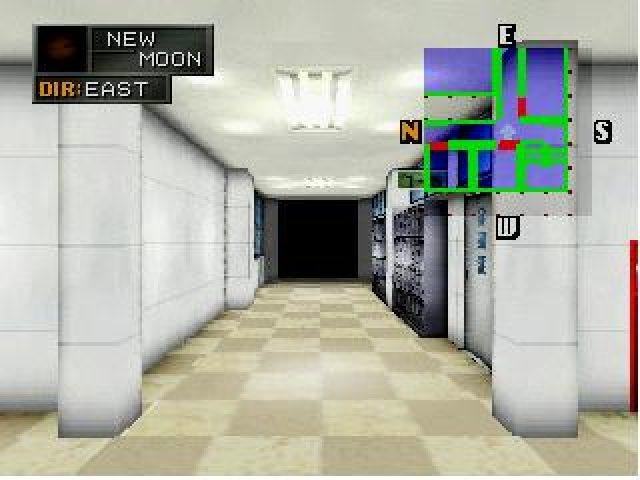 As for the dungeons, gone is the excessive backtracking of Shin Megami Tensai 2, the atrocious dungeon design of …if, and the clunky interface of Shin Megami Tensai 1. In place of all that is a more player-friendly experience without the stiff learning curve from those titles. Granted, some of the later dungeons are complicated, but in a more manageable, sensible way that won’t leave you within inches of pulling out your hair. You still walk around dungeons in first person, but when you enter important story locations, shops, etc., you can view your characters in third person. I enjoyed these portions of the game, and seeing your heroes helped me feel like I was getting to know them better, compared to previous Atlus games that felt more detached. I could never quite make a connection with them.
In battle, characters can use axes, bows, spears, swords, and different types of guns like rifles and shotguns. Enemies and bosses might seem hard at first, but success requires learning their weaknesses, and once you do that, much of the challenge dissipates.
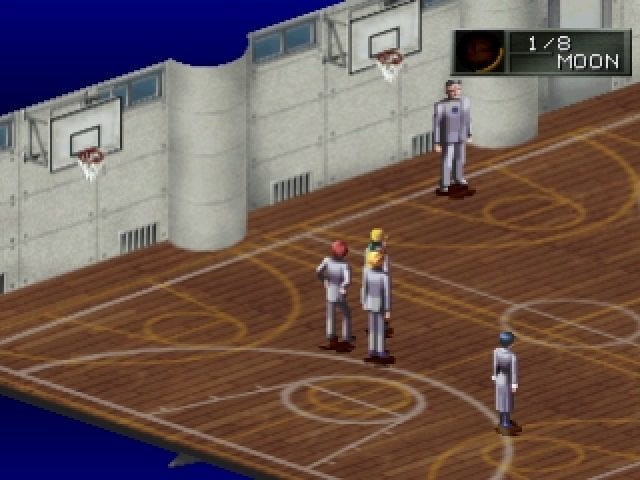 Graphics should not matter, but in Persona, the dungeons are so bland and uninspired that it impacts the playability to an extent. On the other hand, the third-person segments of Persona are stylistic and offbeat. Characters are not super-deformed like many other role-playing games of the 90s; rather, they look about as realistic and human-like as you could expect from a PlayStation RPG in 1996. The maps you walk around to go from place to place around town are also unimpressive and not much of an improvement over Shin Megami Tensai 2 and even SMT3, which came years later, didn’t look much better, surprisingly. On the positive side, enemy sprites are fantastic and add yet another distinctive layer to the atmosphere.
What struck me the most about Revalations was that the music feels ahead of its time, dear I say timeless, with industrial undertones and more obvious inspiration from more chilled out techno tracks. Even today, many tracks stand up against modern games, and make slogging through the drab dungeons more enjoyable. The soundtrack is huge in this game, but a few songs stood out to me. The song that plays at the end of the game, I believe, Deva Yuga, is one of my favorites and adds a unique feeling that I haven’t been able to find in too many other games. Some of the music is even downright creepy, really helping to add to the mysterious atmosphere of the game.
Persona has some of my favorite sound effects of any 32-bit era game. They range from the bizarre, somewhat disturbing moans and groans of the foes you are facing to the antagonistic taunts the heroes make towards their adversaries, almost like they are trash-talking and despise even having to waste any effort on disposing of them.
Persona is not without its flaws, but it is a step, or even multiple steps, in the right direction, and those looking for the roots of when Atlus became what they are today, this is a quintessential release to try out. The game can be unforgiving at times, but with patience, it is rewarding. The first-person dungeons will take some getting used to, but the other game mechanics, like fusing personas, are a lot of fun.
Wayback Wednesday Volume 1: Final Fantasy 7 and Chrono Trigger.
Wayback Wednesday Volume 2: Super Metroid and Castlevania: Symphony of the Night.
Wayback Wednesday Volume 3: The Legend of Zelda: A Link to the Past and Lunar: Silver Star Story Complete
Wayback Wednesday Volume 4: Secret of Mana and Wild Arms
Wayback Wednesday Volume 5: Illusion of Gaia and Grandia
Wayback Wednesday Volume 6: Breath of Fire 3 and X-Men Legends
Wayback Wednesday Volume 7: Star Ocean: The Second Story and Super Mario RPG
Wayback Wednesday Volume 8: Demon's Crest and Dragon Quest VI
Wayback Wednesday Volume 9: Suikoden I and Jeanne d'Arc
Wayback Wednesday Volume 10: Ranking the first 6 Final Fantasy games
Wayback Wednesday Volume 11: Earthbound and Valkyrie Profile
Wayback Wednesday Volume 12: Legend of Legaia and Secret of Evermore
Wayback Wednesday Volume 13: Threads of Fate and Soulblazer
Wayback Wednesday Volume 14: Radiata Stories and Robotrek
Wayback Wednesday Volume 15: Rogue Galaxy and Vandal Hearts
Wayback Wednesday Volume 16: Chrono Cross and Muramasa: The Demon Blade
Wayback Wednesday Volume 17: Okami and Legend of Mana
Wayback Wednesday Volume 18: Paper Mario and Terranigma
Wayback Wednesday Volume 19: Dragon Quest VIII and Atelier Iris 2: The Azoth of Destiny
Wayback Wednesday Volume 20: Ranking the 6 console Final Fantasy games from the PS1 and 2
Wayback Wednesday Volume 21: Eternal Sonata and Actraiser