

Lunar 2: Eternal Blue is a wonderful game, and with Working Designs' unique touch as far as translation, it makes for a special 30 or 40+ hours that every gamer should experience. However, I’ll admit that when I got this on Christmas Day in 2000, I didn’t like it as much as Silver Star Story. It wasn’t until a replay nearly two decades later in late 2019 that I grew to appreciate the game.
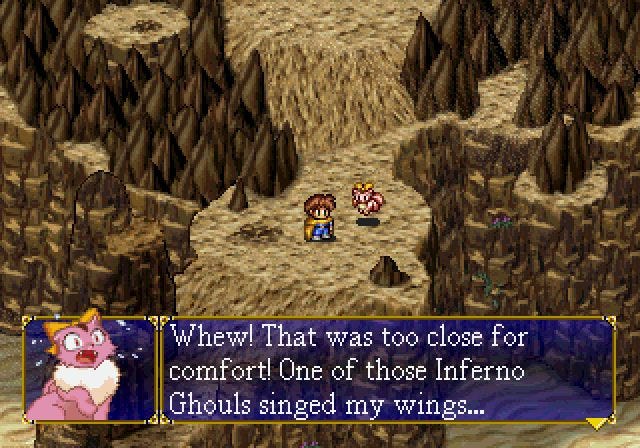 The first thing you’re likely to notice about the game and its predecessor is the quirky sense of humor. While some of the jokes are indeed dated and fall flat, let’s be honest, quite a few of them add to the flavor of the game in a very positive, hilarious fashion. While many games stick with a tried-and-true literal translation of the Japanese text, Working Designs took some risks and, yes, some liberties in spicing up the text.
The cut scenes are top-notch and a thing of beauty and add so much to the story; there is no feeling that any of the scenes are fluff, but they legitimately add to the plot. The voice acting is less stellar, but in the most important plot points, rise to the occasion. The enemy sprites in battle are also fantastic. However, the in-game sprites and NPCs leave something to be desired as they are dated even by the standards of the time. This is a very minor gripe and easy to overlook given how well done the rest of the game is.
Part of my issue when I first played this was that I jumped into it too soon after Silver Star. On my second playthrough, far removed from Silver Star, I came to appreciate the characters and found them far more likable than I did the first time around. If you give Lunar 2 a chance and judge it on its own merits, the characters and the game as a whole will likely grow on you. Just expect to warm up to the cast more slowly than you probably did in Lunar 1.
I found Lucia’s naivety and innocence to be more charming than Luna's, for example. On the other hand, I was not always a fan of Ronfar’s crass humor or Lemina’s money-obsessed ways. As far as that second point, the game really beats you over the head with that, but the characters develop redeeming qualities, and it is interesting to see their growth throughout the game, even if you have to wait until the end. Ghaleon, as one of the major villains, did not strike me as a very convincing one; nothing seems threatening about him, and some of the other “evil ones” are much worse and more convincing, however.
Battles are fairly simple but move at a brisk pace, so they never feel repetitive. Plus, they are easy to dive into. However, you have to account for range when picking an enemy for a particular character to attack, so some limited strategy is required.
Eternal Blue is average difficulty, but the bosses can provide a good challenge if you have not done any grinding. Many of them can not be beaten by brute force but by rearranging your character’s battle positions, equipping weapons that exploit boss weaknesses while equipping useful armor and accessories for better protection.
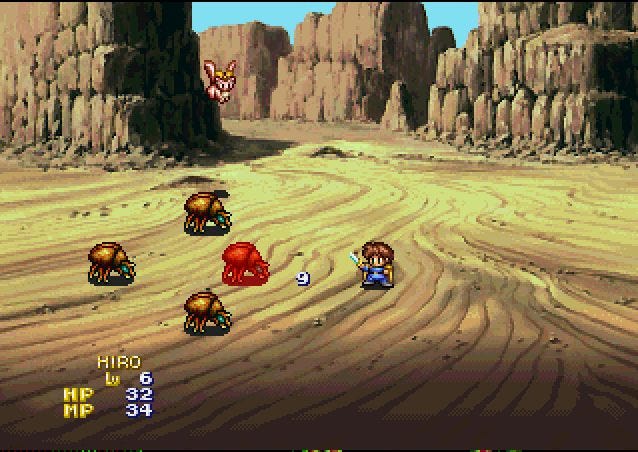 On the other hand, enemies are fairly easy, and as you advance in the game and earn more money, the first thing you should buy is MP healing items. They’ll make going through dungeons much easier. Simply use a magic or special that hits all, and use those MP items to heal your MP. Dungeon designs, by RPG standards, are simplistic, though mostly short enough to not overstay their welcome.
The music is memorable, especially the town music, providing a peaceful oasis, free from the onslaught of enemies. The boss theme felt slightly underwhelming but was helped by the dungeon themes, which created a feeling of dread.
Once you beat the game, there’s an extra chapter with three mandatory dungeons that lead to the true ending. There are several optional side quests and dungeons you can play through as well.
Although a great game, once you beat it, the replay value is not very high. Regardless, this is still a memorable gem from the PSX era that everyone should try, and it’s a perfect example of a game that lives up to the nostalgia.
Wayback Wednesday Volume 1: Final Fantasy 7 and Chrono Trigger.
Wayback Wednesday Volume 2: Super Metroid and Castlevania: Symphony of the Night.
Wayback Wednesday Volume 3: The Legend of Zelda: A Link to the Past and Lunar: Silver Star Story Complete
Wayback Wednesday Volume 4: Secret of Mana and Wild Arms
Wayback Wednesday Volume 5: Illusion of Gaia and Grandia
Wayback Wednesday Volume 6: Breath of Fire 3 and X-Men Legends
Wayback Wednesday Volume 7: Star Ocean: The Second Story and Super Mario RPG
Wayback Wednesday Volume 8: Demon's Crest and Dragon Quest VI
Wayback Wednesday Volume 9: Suikoden I and Jeanne d'Arc
Wayback Wednesday Volume 10: Ranking the first 6 Final Fantasy games
Wayback Wednesday Volume 11: Earthbound and Valkyrie Profile
Wayback Wednesday Volume 12: Legend of Legaia and Secret of Evermore
Wayback Wednesday Volume 13: Threads of Fate and Soulblazer
Wayback Wednesday Volume 14: Radiata Stories and Robotrek
Wayback Wednesday Volume 15: Rogue Galaxy and Vandal Hearts
Wayback Wednesday Volume 16: Chrono Cross and Muramasa: The Demon Blade
Wayback Wednesday Volume 17: Okami and Legend of Mana
Wayback Wednesday Volume 18: Paper Mario and Terranigma
Wayback Wednesday Volume 19: Dragon Quest VIII and Atelier Iris 2: The Azoth of Destiny
Wayback Wednesday Volume 20: Ranking the 6 console Final Fantasy games from the PS1 and 2
Wayback Wednesday Volume 21: Eternal Sonata and Actraiser
Wayback Wednesday Volume 22: Persona: Revelations and Tales of Destiny
Wayback Wednesday Volume 23: Shadow Hearts: Covenant and Dragon View