

Lufia, developed by Neverland in 1993, won’t win any awards for innovation, but it did what it set out to do well, and it was a solid game overall. In fact, when people ask for a retro RPG to start with so they can get into the genre, I tend to point to titles like this, and it’s a much better starter than Final Fantasy Mystic Quest, as Lufia also has simple game mechanics but provides a decent, though fair, challenge.
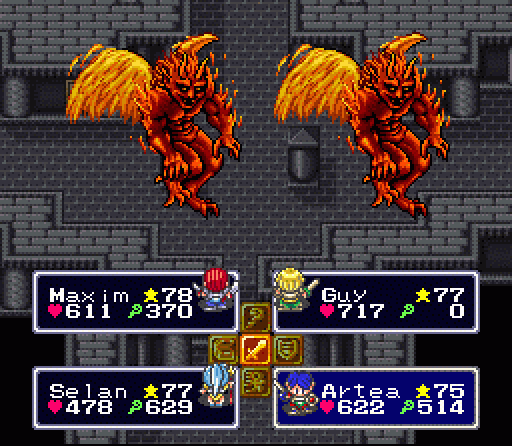 Lufia 1 starts with the ending of the second game, which, even in 2026, is very unique. Later, when I played Lufia 2 and got to the end, I realized what the first game had done and was impressed. Lufia 1 throws you into the center of a large dungeon with four incredibly strong characters who bulldoze through all opposition and easily dispatch even the Sinistrals, the main villains in both games. But from the point you beat the last Sinistral, the plot is extremely basic. It still centers around those 4 ultra-powerful beings known as Sinistrals, but fast-forwards 99 years into the future, where you meet the hero for the rest of the game. It is a generic “save the world” story with below-average character development and common story progression.
Graphically, the game looks decent considering its release date, and one of the most fascinating aspects is the large, detailed enemy sprites. Many of the bosses, especially later in the game, are huge and imposing. Towns and dungeons, on the other hand, rarely arouse any type of excitement and, viewed on their own, are not unique; rather, bland and uninspired.
The game keeps the simplicity of earlier Dragon Quest games in battle but lets you view your characters and displays damage as numbers rather than text. Otherwise, fights are very straightforward, and not many options exist to change up strategy, making this a perfect entry point into the genre but a game that will fail to challenge more veteran players or leave a lasting impact. The hero obtains about 16 spells, and Jerin, the main spellcaster, gets 23, but many of them are repeats from the hero.
One annoyance is the fact that, though the battle system is simple, there is no auto-battle, requiring your attention at all times. You can’t rapidly push the attack button to speed through weaker monsters either. For example: Assign all four characters to attack one monster. The second character beats that monster. You would think that the third character would automatically target the next monster, but no. The third and fourth characters end up attacking air where the defeated monster used to stand. So, despite the extremely basic battles, you still need to pay attention and think about which enemy you will assign each character to attack. Intended or not, this makes the battles much less mindless than they otherwise would have been and requires some thinking ahead for each battle.
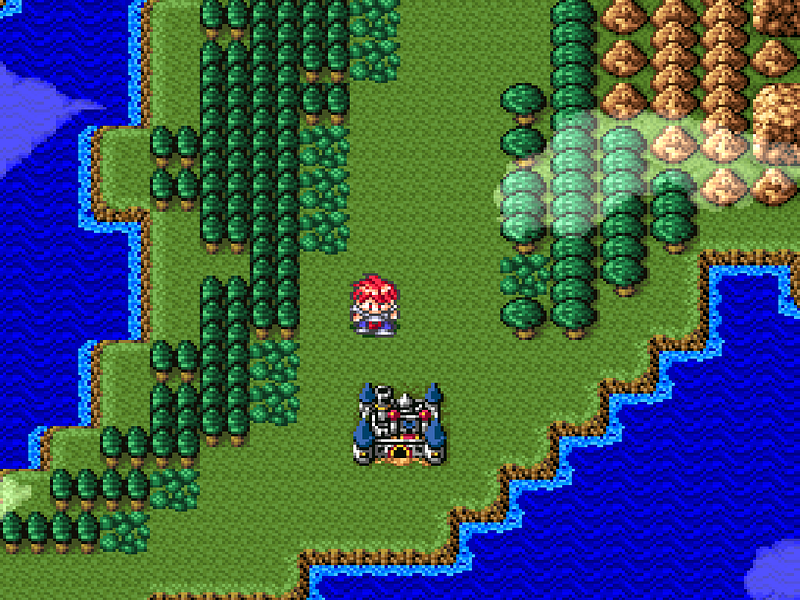 Unlike the sequel, there are random encounters that are somewhat frequent compared with other role-playing games of the time. The game also can’t seem to get out of the town-dungeon/cave-town loop, and there’s very little to break up that routine for the duration.
The break in the routine this game does offer is the Ancient Cave, a mini version of the one seen in the second game. Here, it can only be entered in portions, so it’s a good idea to check back now and then to see if you are allowed to enter a new level; there are 8 in all. Not only does this provide your party with much-needed gold and, at times, better equipment, but you also gain levels, lessening the need for grinding. It takes a long time to gain a level in this game, so take any chance you get to grind while also getting tons of new stuff.
Other than that, this is a very straightforward game that should take around 25–30 hours. The first time I beat this, I took 26:15, and the second time was very similar, at 25:32, both times completing the Ancient Cave. Ending levels are likely to range from the mid-50s to the low 60s.
Another extra, at the end credits, is that the game provides you with various stats about your game. For example, you can find out battle count (mine was 1414 during my second playthrough, which is a lot) or run-away count (35 for me) or how many boxes you found (635/655), making it worthwhile to stay until the end of the credits.
Musically, the game has some awesome tracks. The boss battle music is one of the best tracks of its kind in the 16-bit era. It is just a shame the battles don’t present much of a challenge to match the intensity of the track because the music rocks and creates an imposing atmosphere, letting gamers know these battles are incredibly important and urgent. Town music is upbeat and provides players with a nice change of pace from the numerous dungeons. The track played during random encounters, though catchy at first, doesn’t have good longevity and quickly gets old, especially considering how many random encounters there are.
Lufia does not provide much of a challenge and is a very paint-by-the-numbers RPG, but it is still a worthwhile playthrough, especially if you are looking for something simple. It is easy to pick up and master, and with a little persistence, it can be beaten by just about anyone.
Wayback Wednesday Volume 1: Final Fantasy 7 and Chrono Trigger.
Wayback Wednesday Volume 2: Super Metroid and Castlevania: Symphony of the Night.
Wayback Wednesday Volume 3: The Legend of Zelda: A Link to the Past and Lunar: Silver Star Story Complete
Wayback Wednesday Volume 4: Secret of Mana and Wild Arms
Wayback Wednesday Volume 5: Illusion of Gaia and Grandia
Wayback Wednesday Volume 6: Breath of Fire 3 and X-Men Legends
Wayback Wednesday Volume 7: Star Ocean: The Second Story and Super Mario RPG
Wayback Wednesday Volume 8: Demon's Crest and Dragon Quest VI
Wayback Wednesday Volume 9: Suikoden I and Jeanne d'Arc
Wayback Wednesday Volume 10: Ranking the first 6 Final Fantasy games
Wayback Wednesday Volume 11: Earthbound and Valkyrie Profile
Wayback Wednesday Volume 12: Legend of Legaia and Secret of Evermore
Wayback Wednesday Volume 13: Threads of Fate and Soulblazer
Wayback Wednesday Volume 14: Radiata Stories and Robotrek
Wayback Wednesday Volume 15: Rogue Galaxy and Vandal Hearts
Wayback Wednesday Volume 16: Chrono Cross and Muramasa: The Demon Blade
Wayback Wednesday Volume 17: Okami and Legend of Mana
Wayback Wednesday Volume 18: Paper Mario and Terranigma
Wayback Wednesday Volume 19: Dragon Quest VIII and Atelier Iris 2: The Azoth of Destiny
Wayback Wednesday Volume 20: Ranking the 6 console Final Fantasy games from the PS1 and 2
Wayback Wednesday Volume 21: Eternal Sonata and Actraiser
Wayback Wednesday Volume 22: Persona: Revelations and Tales of Destiny
Wayback Wednesday Volume 23: Shadow Hearts: Covenant and Dragon View
Wayback Wednesday Volume 24: Ken Griffey Jr. Presents Major League Baseball and Lunar: Eternal Blue
Wayback Wednesday Volume 25: Suikoden II and Xenogears
Wayback Wednesday Volume 26: Azure Dreams and Wild Arms 2
Wayback Wednesday Volume 27: Ar Tonelico and Sword of Mana
Wayback Wednesday Volume 28: Albert Odyssey and Super Paper Mario
Wayback Wednesday Volume 29: Arcana and X-Men Legends II
Wayback Wednesday Volume 30: 10 over-rated classics that haven’t aged well
Wayback Wednesday Volume 31: Dragon Quest IX and E.V.O.: Search for Eden
Wayback Wednesday Volume 32: Tales of Symphonia and Elemental Gimmick Gear
Wayback Wednesday Volume 33: Ys Seven and Brain Lord