

I still remember the magazine and issue: The Official US PlayStation Magazine, Volume 2, Issue 12 from September 1999, page 84. Chrono Cross! Finally, a successor to the legendary Chrono Trigger! I was just as hyped for this game as I was for Final Fantasy 7, if not more so, which is saying something. Almost a full page dedicated to a preview of the game, and I must have read through it every day for months until that fateful day in August when I finally went to pick it up at Funcoland. It was probably one of the only games I've ever preordered, and I felt like I could jump out of the car and outrun it home, I was that pumped. But did it live up to the hype?
The first thing many are likely to notice is that this isn't quite Chrono Trigger, which I had beaten for the first time less than a year prior. Yes, it isn't, I had to come to terms with that too. During my first playthrough in 2000, it was tough, but with the hindsight of time, I have gained an appreciation for the game.
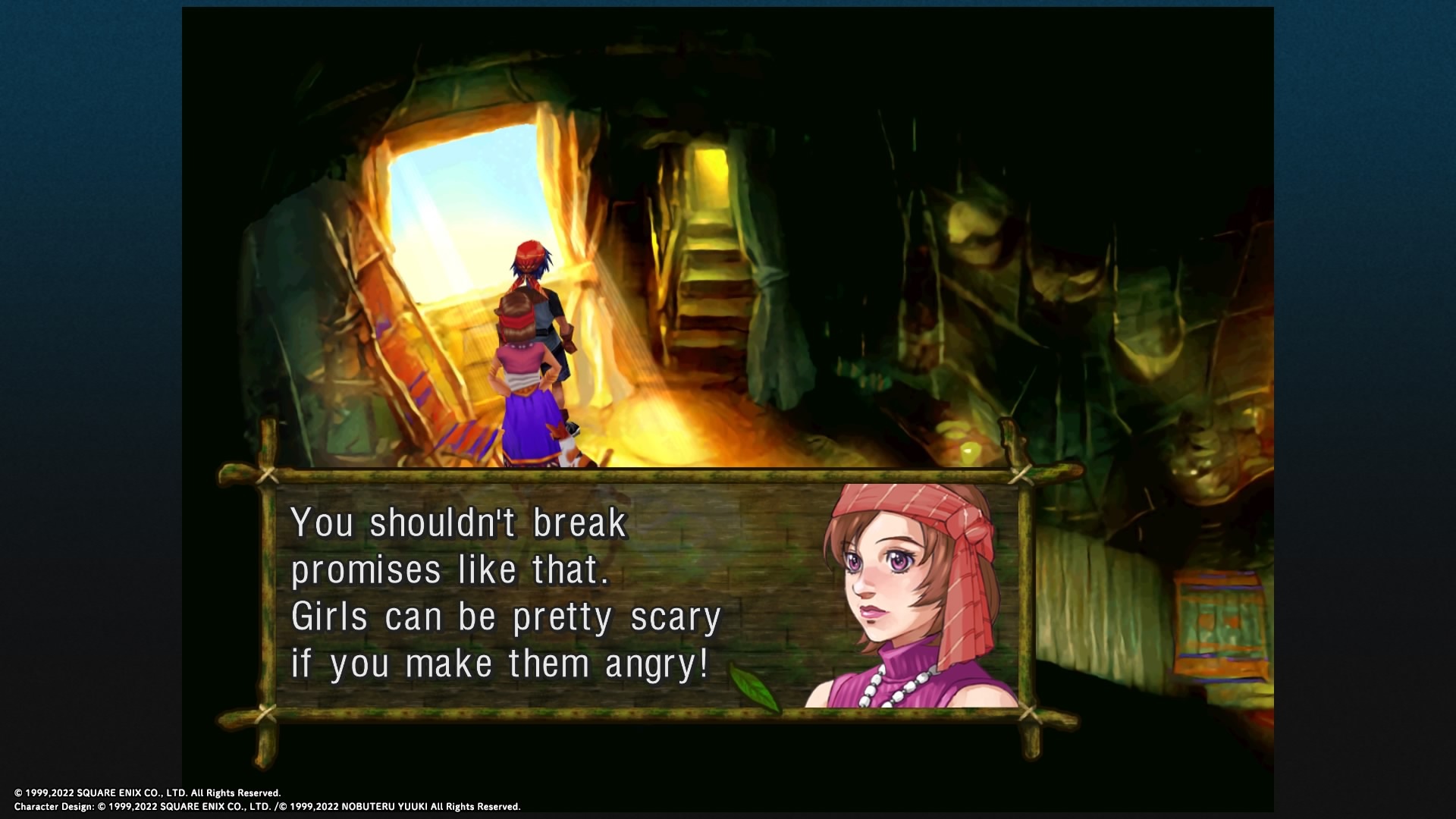 Beyond that, I have limited recollection of my first playthrough, but with the passing of 25 years, and being able to judge the game on its own merits, far removed from a playthrough of Chrono Trigger, it was the chilled vibes of the opening town that struck me. Serge, the main character, is awakened by his mother, much like Chrono Trigger, in a room not too dissimilar to his own room. He exits the house to a laid-back beach town where he must collect a few shells and meet up with his female friend. The art style is exquisite, perhaps not as storybook as Legend of Mana, but it's so inviting.
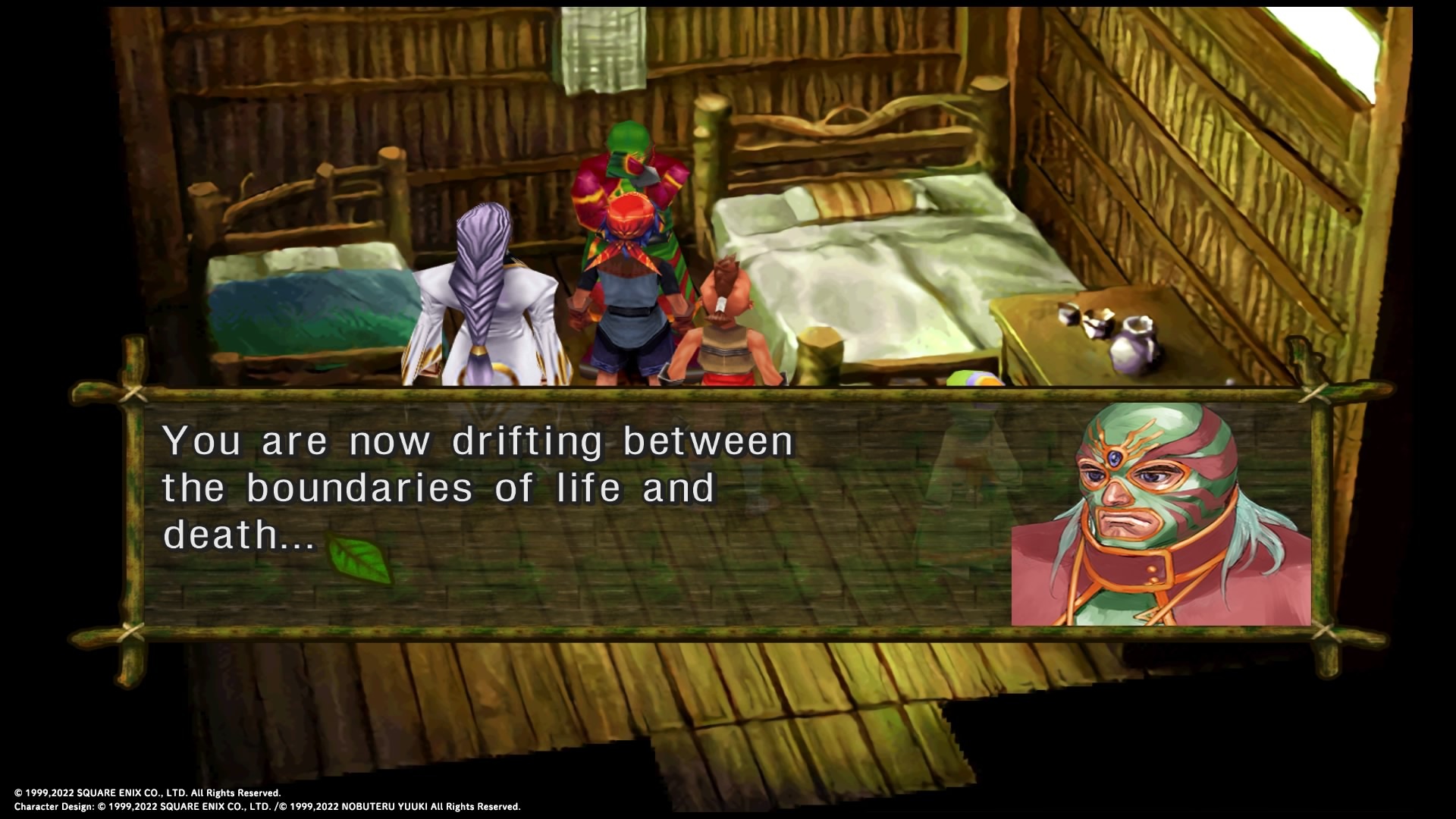 Things get real quickly, with a deep philosophical narrative posing important questions. Okay, it's no Nietzsche, Kant, or Socrates, but the game remains intriguing, covering themes of identity, fate, and cause and effect. The story can get convoluted and, at times, clumsy, but I appreciated the darker themes contrasted with the brighter visuals, a poignant reflection of life. Plus, without spoiling, for those patient enough to get to the last quarter of the game, several surprising connections are made to Chrono Trigger.
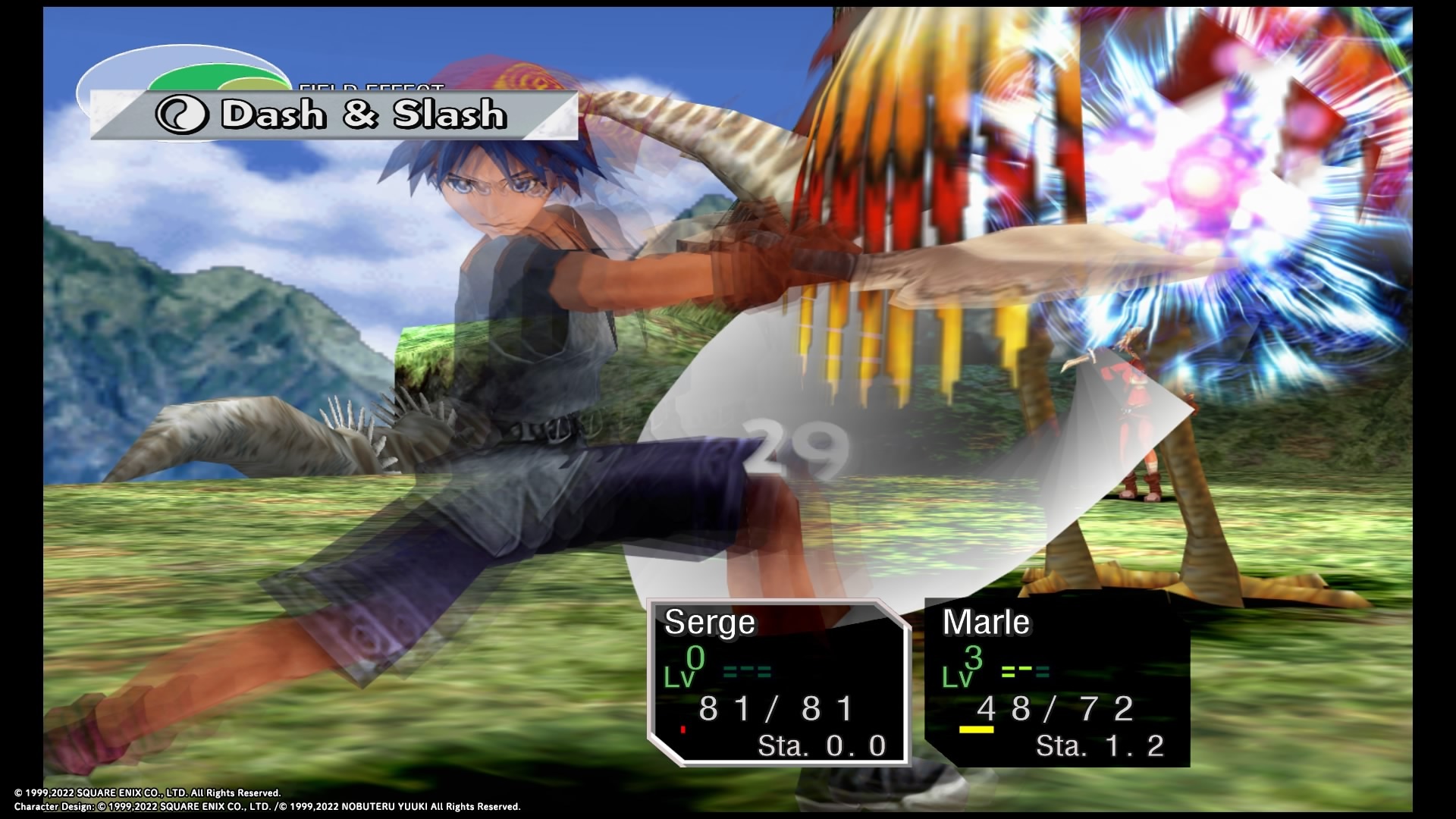 With a cast of nearly 4 dozen, it's hard to differentiate between many of the heroes, further hurt by the fact that spells are interchangeable. Other than specializing in one of the six elements and having 2 or 3 unique techs, special attacks that can hit especially hard. Like Chrono Trigger, they can be aligned with one or two other characters to form double and triple techs. Otherwise, unless the game forces your hand, there is no issue staying with your favorite trio of heroes.
If a switch is needed, every character is likely to be up to speed, as there are no levels, but rather a general star level gained after beating major bosses, and just update equipment. Otherwise, the battle mechanics function like Xenogears: chain together light, medium, and heavy attacks. Successful weaker strikes increase the likelihood of stronger attacks landing. Each character starts with 7 stamina, and attacks take up 1-3, depending on strength. Each strike adds a level to magic, eventually totaling 8 by the endgame, so I always preferred 7 light strikes to quickly get my magic meter up, despite the temptation of stronger strikes.
Indeed, it is all a balance, just like the magic system, as mentioned, with 6 elements strongly focused on duality. Red is weak against Blue, and vice versa, just as green and yellow, and black and white oppose each other. This knowledge, though simple, can be exploited to do massive damage against enemies, but they won't rest on their laurels either, especially bosses, and will take advantage of those same exploits when they can.
The Field Effect adds another strategic layer to the magic system, especially for those willing to adapt on the fly. This three-colored orb in the battle screen's corner changes based on the Elements used by anyone in the fight. A savvy player can manipulate this, filling the field with a single color to significantly amplify the damage of powerful spells of that same type.
One of the aspects I loved the most about Chrono Trigger (as well as Lufia 2), which made it feel so endearing, was that the enemies were seen on screen. It's empowering to feel like you have agency over encounters, even if, like Trigger, enemies can sometimes be incredibly hard to avoid; it does away with the annoying, random screen swirls that feel unwelcome after 20-30+ hours.
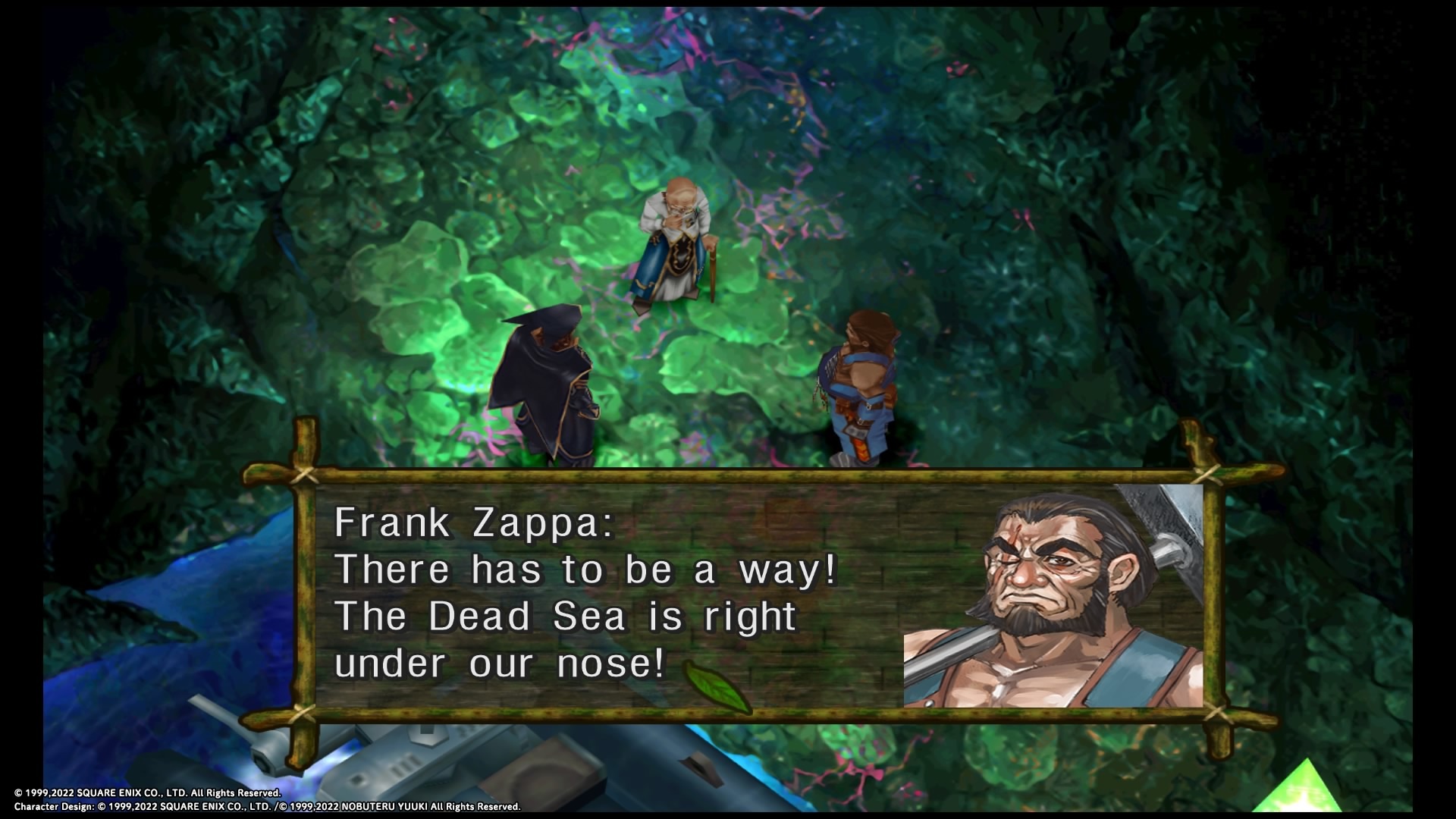 Chrono Cross also boasts one of the best soundtracks in the genre, rivaling other heavyweights such as Final Fantasy and Dragon Quest, and does its predecessor proud. The wide range of moods is covered in the tracks, from peaceful to a threatening boss theme, but even more than that, the score is at its best when it's enigmatic.
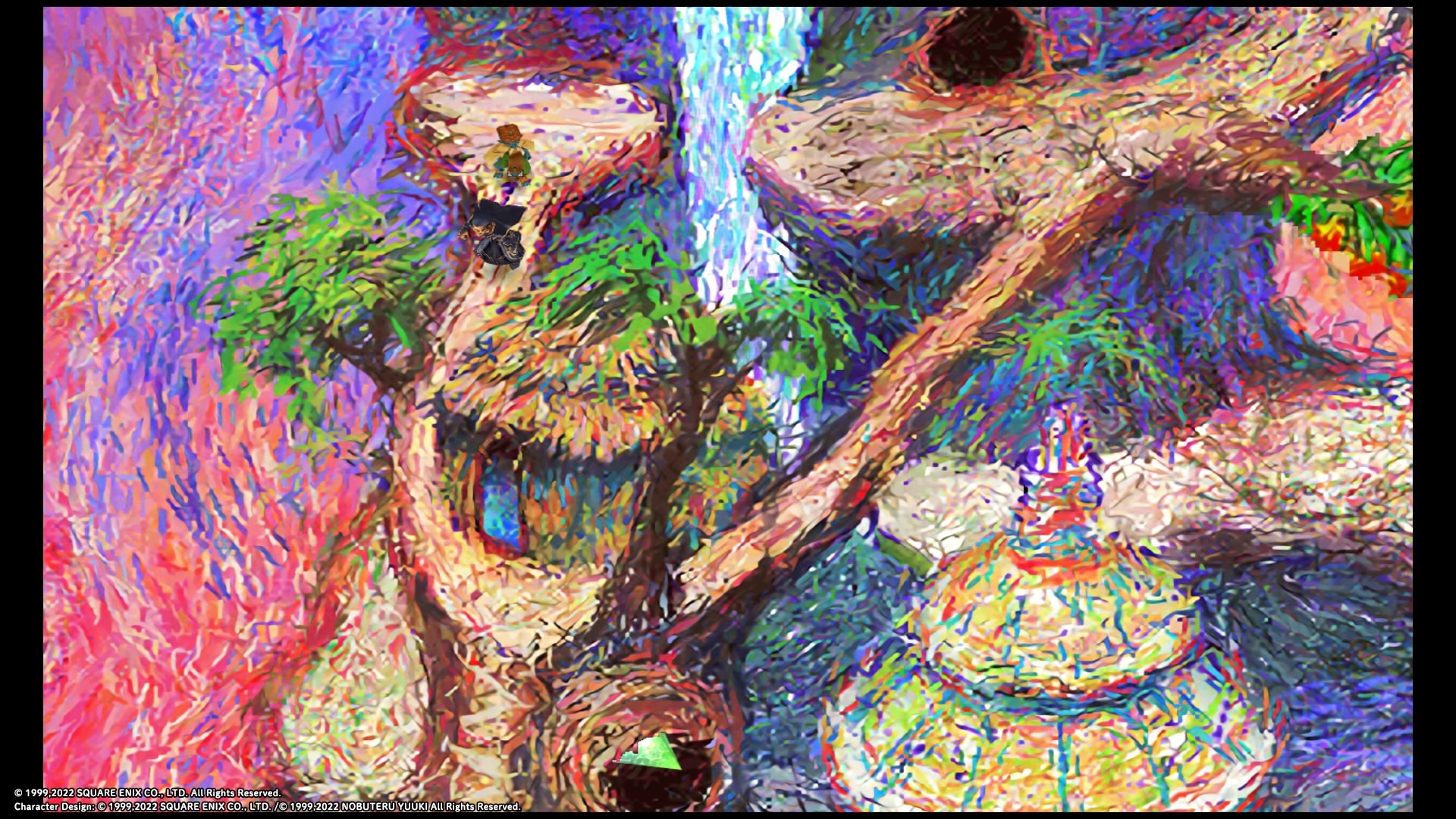
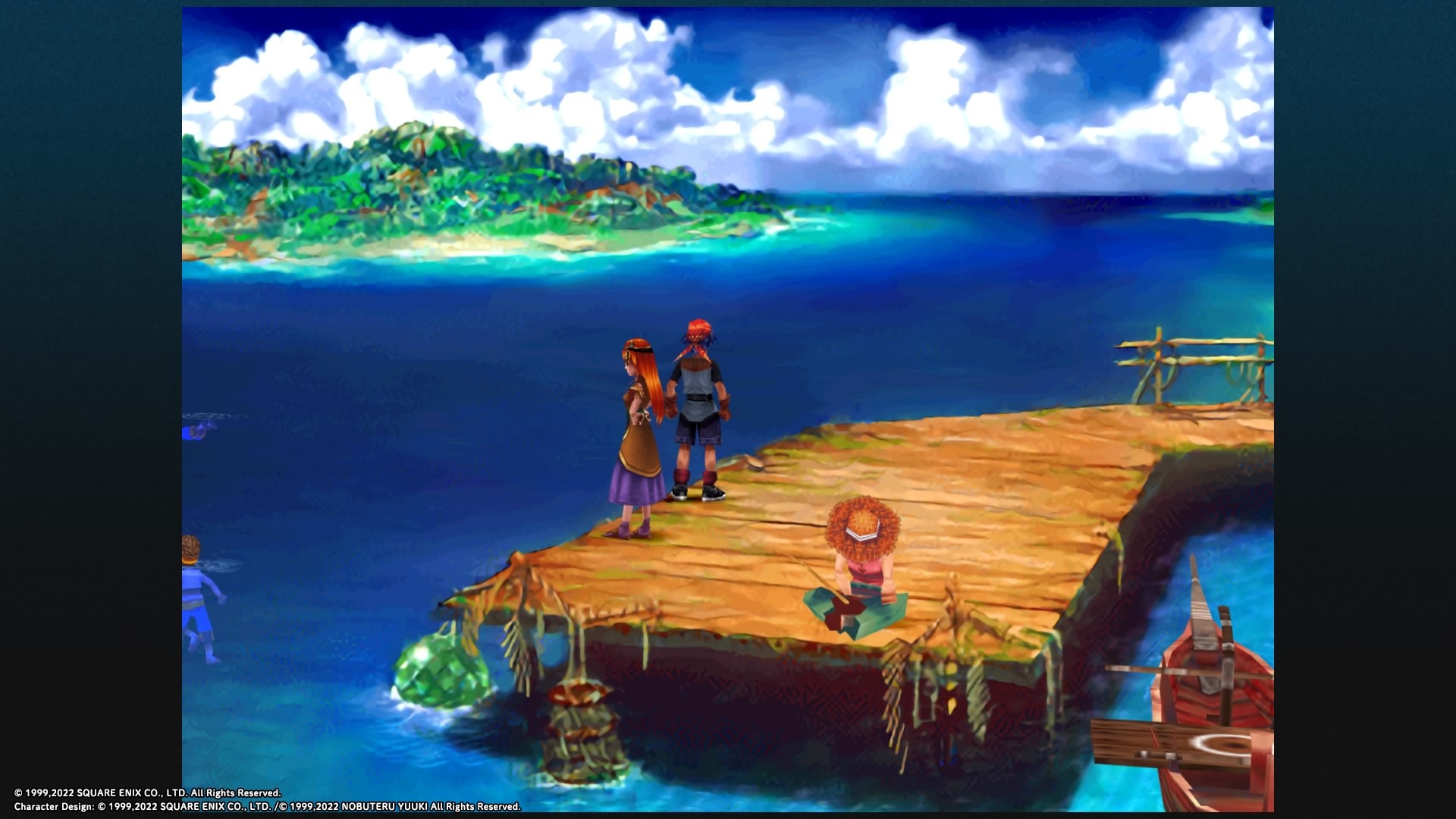 This feeling extends to the game's visual style. Throughout the 29 hours it took to beat, I consistently got Monet vibes from the various locations, mostly the outdoor areas. Other areas had a surreal feel, which intensified the dream-like atmosphere and underlying sense of disorientation, and at times, was straight-up trippy.
 Indeed, Chrono Cross is not Chrono Trigger, but I am so thankful I approached my second playthrough with more of an open mind. For those ready to do similar, a solid, even great RPG lies waiting. One that will welcome you with open arms, but with a plethora of choices and options for veterans looking to take a deep dive into a retro game with plenty of possibilities.
Note: This review combines my 2000 experience with my summer 2025 replay of the remaster, but all of the pictures are from the remaster.
Wayback Wednesday Volume 1: Final Fantasy 7 and Chrono Trigger.
Wayback Wednesday Volume 2: Super Metroid and Castlevania: Symphony of the Night.
Wayback Wednesday Volume 3: The Legend of Zelda: A Link to the Past and Lunar: Silver Star Story Complete
Wayback Wednesday Volume 4: Secret of Mana and Wild Arms
Wayback Wednesday Volume 5: Illusion of Gaia and Grandia
Wayback Wednesday Volume 6: Breath of Fire 3 and X-Men Legends
Wayback Wednesday Volume 7: Star Ocean: The Second Story and Super Mario RPG
Wayback Wednesday Volume 8: Demon's Crest and Dragon Quest VI
Wayback Wednesday Volume 9: Suikoden I and Jeanne d'Arc
Wayback Wednesday Volume 10: Ranking the first 6 Final Fantasy games
Wayback Wednesday Volume 11: Earthbound and Valkyrie Profile
Wayback Wednesday Volume 12: Legend of Legaia and Secret of Evermore
Wayback Wednesday Volume 13: Threads of Fate and Soulblazer
Wayback Wednesday Volume 14: Radiata Stories and Robotrek
Wayback Wednesday Volume 15: Rogue Galaxy and Vandal Hearts