

Actraiser is one of the most innovative games a retro gaming fan could ever hope to find. It’s a fascinating blend of genres, made even more interesting because it was released early in the life of the SNES, which went against common gaming conventions of the time, and largely succeeded in doing something different.
There is a part of the story that predates everything that happens in the game, focusing on a fight between the Master and the Evil One. Good loses out, and the Evil One takes over the land and divides it into six sections, which leads up to the current circumstances. The Master is now much weaker than he was in the past because people stopped believing in him, kind of like the day we all found out Santa wasn’t real. So it’s the hero’s goal to convince people to believe in the Master again while defeating the Evil One’s six cohorts and, eventually, the Evil One himself.
Actraiser is an interesting beast. On one hand, it is a sim, on the other hand, it is a typical platforming game with some subtle RPG elements thrown in for good measure. While each of the first two genres is represented in a more basic fashion than other games with one primary focus, it provides an intriguing mix.
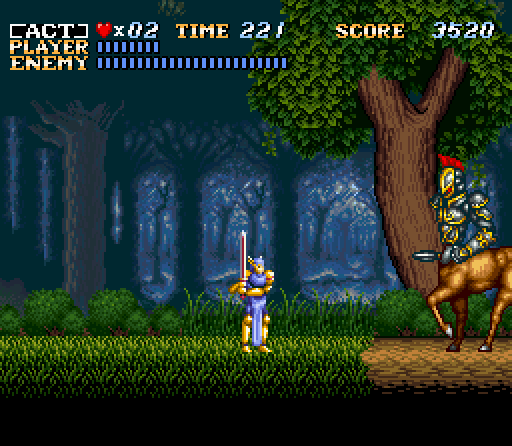
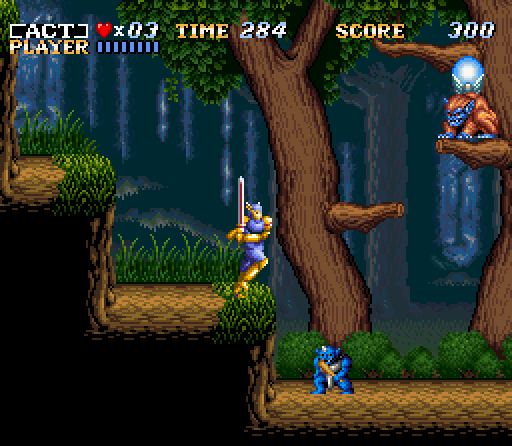 For each of the six lands, there are two platforming sections. The first platforming level has a sub-boss, and the second section has the main boss, who controls the area, one of the six generals serving the evil one. The platforming sections are shockingly easy, though some of the bosses can present a respectable challenge. The level designs aren’t complex, so be prepared if you’re coming from modern Metroidvanias.
 The sim sections are easy and, from what I could see, impossible to ever actually fail. This section of the game is not just about building; you need to fend off a bunch of annoying monsters intent on messing up everything you are trying to build. In this section, you play as an angel who can shoot arrows to get rid of these annoying, evil flying beasts. However, the focus is not always on building, as sometimes to build you need to destroy everything. So you can use natural disasters such as floods, fires, and lightning to clear away the land and make it more hospitable in the long run.
The sim portions of the game are unlikely to impress most gamers graphically, though you have to consider this came out in Japan in 1990, so it is understandable. Even judging by the standards of other early 90s games, they look dated, though. However, the platforming segments, especially for the time, are impressive with large sprites and huge, detailed bosses.
The sound effects are very distinctive, yet, at the same time, typical of an early 90s Quintet game, and you can hear similar sounds in other Quintet-developed games, especially the noise the hero makes when he is hit or when a foe is destroyed.
Tracks that play during platforming sections are phenomenal, giving off the impression that getting through these levels rapidly is of the utmost importance, that every second matters. Boss battle music is some of the best on the SNES, and the building section theme is oddly relaxing and made me feel intelligent for a change. It just gives off that progressive, knowledgeable vibe!
Overall, Actraiser shouldn’t take too long, but it was very innovative for the time and largely succeeded in blending various genres. It is worth a look for anyone who wants to see just how creative the SNES was capable of being. However, the game falls short of being a classic because of how easy the majority of it is.
Wayback Wednesday Volume 1: Final Fantasy 7 and Chrono Trigger.
Wayback Wednesday Volume 2: Super Metroid and Castlevania: Symphony of the Night.
Wayback Wednesday Volume 3: The Legend of Zelda: A Link to the Past and Lunar: Silver Star Story Complete
Wayback Wednesday Volume 4: Secret of Mana and Wild Arms
Wayback Wednesday Volume 5: Illusion of Gaia and Grandia
Wayback Wednesday Volume 6: Breath of Fire 3 and X-Men Legends
Wayback Wednesday Volume 7: Star Ocean: The Second Story and Super Mario RPG
Wayback Wednesday Volume 8: Demon's Crest and Dragon Quest VI
Wayback Wednesday Volume 9: Suikoden I and Jeanne d'Arc
Wayback Wednesday Volume 10: Ranking the first 6 Final Fantasy games
Wayback Wednesday Volume 11: Earthbound and Valkyrie Profile
Wayback Wednesday Volume 12: Legend of Legaia and Secret of Evermore
Wayback Wednesday Volume 13: Threads of Fate and Soulblazer
Wayback Wednesday Volume 14: Radiata Stories and Robotrek
Wayback Wednesday Volume 15: Rogue Galaxy and Vandal Hearts
Wayback Wednesday Volume 16: Chrono Cross and Muramasa: The Demon Blade
Wayback Wednesday Volume 17: Okami and Legend of Mana
Wayback Wednesday Volume 18: Paper Mario and Terranigma
Wayback Wednesday Volume 19: Dragon Quest VIII and Atelier Iris 2: The Azoth of Destiny
Wayback Wednesday Volume 20: Ranking the 6 console Final Fantasy games from the PS1 and 2