

Here’s a polemic list I’ve been thinking of doing for months, and have finally worked up the guts to do. For those who’ve seen my Wayback Wednesday articles, or at least taken a look at my chronological list of previous Wayback Wednesday volumes, a few noticeable omissions might be apparent. Well, perhaps this is where they are. I understand many, if not all, of the games on this list are beloved, and if you enjoyed your time with them, that’s fantastic. But these are 10 classic RPGs I either feel are overrated, have aged poorly, or both, and I’ll largely focus on what didn’t work.
Skies of Arcadia
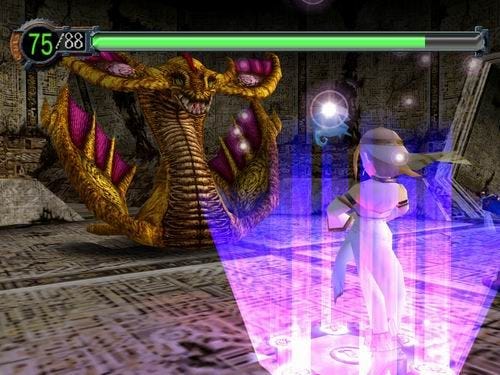 What hasn’t aged well: I was surprised by how many basic quality-of-life mechanics Skies of Arcadia lacked that games from years earlier had made standard. For example, items that allowed for no encounters and items that allowed you to warp from place to place were largely absent for a majority of the game. This is a shame because, especially on the world map, the high random encounter rate wears on you over the course of 45+ hours.
Battles tend to drag on far too long, adding to the dread each time the screen swirls, which is often. The game really gets lost in the theatrics with the multiple zoom-ins and camera pans for every single battle. Plus, it is easy to lose your bearings in dungeons during all these battles, which leads to more fights in the end. There is nothing more awful in RPGs than having that lost feeling just as the screen swirls, yet again.
The world map felt somewhat poorly constructed. Even for places you needed to go to progress the story, it always felt like there were obstacles that served more as an annoyance and hindrance than a legit gameplay mechanic.
Legend of Dragoon
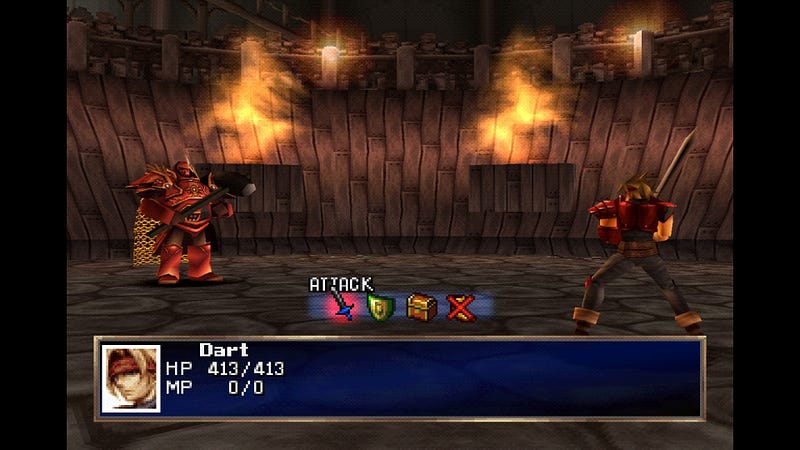 What hasn’t aged well: The Legend of Dragoon fails to live up to its reputation as a “Final Fantasy VII killer.” Its story has plenty of promising ingredients: dragons, Dragoons, Winglies, war, and ancient civilizations, but never becomes engaging enough, while its visuals have aged poorly even compared with other PS1 RPGs.
The Addition battle system relies on timed button presses to extend attacks, but increasingly difficult combinations become more frustrating as the game progresses.
Excessive random encounters, limited inventory space, and burdensome menu management make the long journey more tedious. Exploration is also hampered by unclear dungeon layouts and entrances.
The Legend of Dragoon isn’t a bad RPG, but it doesn’t stand out among the best like Legend of Mana, Breath of Fire III, Grandia, Suikoden II, Lunar, and Wild Arms, which aged more gracefully. After finally finishing it in 39 hours, I was glad to cross it off my backlog, but I have no desire to replay it.
Kingdom Hearts 1
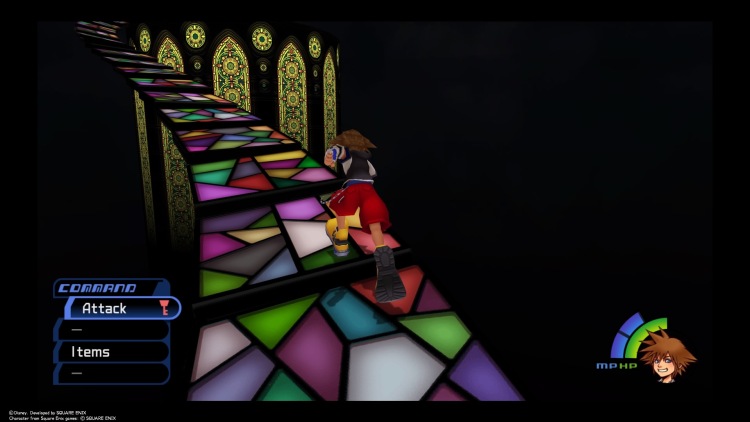 What hasn’t aged well: The Camera. I’m tempted to leave it at that too.
But the camera is frequently chaotic, making several boss fights frustrating for reasons unrelated to difficulty. Combat menus are flawed because the action continues while selecting items, making the inability to hotkey healing items all the more baffling. Enemy encounters are also excessive, with enemies constantly respawning and preventing interaction with chests and Trinity Marks until every foe is cleared.
Exploration and movement are similarly clunky, with mediocre platforming and occasional confusion about where to go, with the last dungeon being especially notable for how painfully tedious it is.
Character progression is shallow, and temporary party members are more troublesome than useful. The Gummi Ship sections are another low point, because of how needlessly confusing the construction system is.
Koudelka
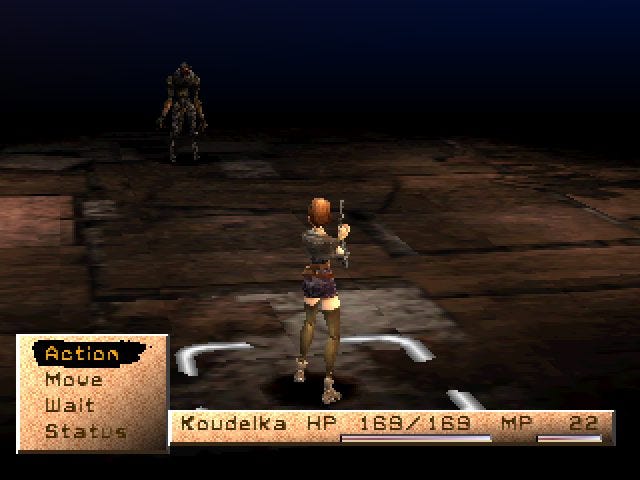 What hasn’t aged well: The combat is painfully slow, with every action seemingly taking forever, at the pace of a snail stuck in molasses.
Exploration is another major weakness. The monastery’s drab, dark environments make tiny items difficult to spot, while progression can require blindly searching rooms for objects. The atmosphere is excellent, but the presentation can become visually exhausting.
A major difficulty spike occurs early in Disc 2, but the game becomes manageable afterward; just be aware there's a lot of grinding required at the end of Disc 1 or start of Disc 2.
Weapon durability, limited inventory space, frequent status effects coupled with a lack of healing items and remedies create a ton of resource-management frustrations.
The Lord of the Rings: The Third Age
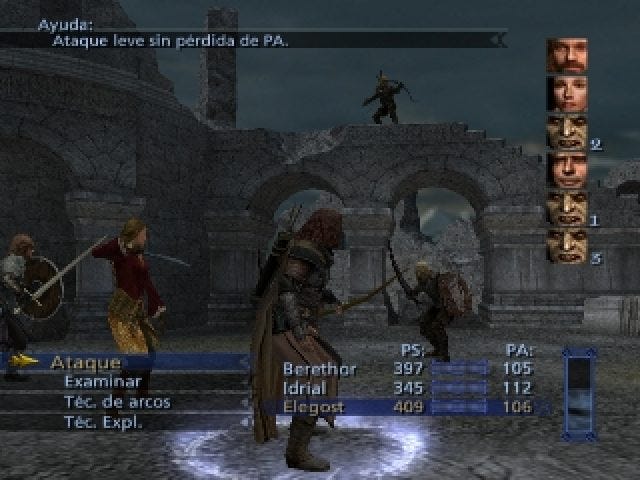 What hasn’t aged well: This game borrows heavily from Final Fantasy X, but strips away much of what made that game’s combat enjoyable. Battles are painfully slow, enemy variety is one of the least varied I’ve seen in an RPG, and frequent misses can trigger enemy counters which waste Action Points and leave characters vulnerable to stuns.
The game is also surprisingly tedious despite taking only around 20 hours to complete. Some battles throw nearly 20 enemies at the player in succession, turning combat into endurance tests. Limited access to healing and AP-restoring items adds an extra resource-management headache, and the absence of towns and shops means everything must be found or earned after battle.
The story runs parallel to the films but fails to give its original characters much personality, while appearances from movie characters feel more like brief cameos from overpowered killing machines. The movie cutscenes are excellent, but the actual game looks drab and dated, and its menus are unnecessarily clunky.
Bravely Default
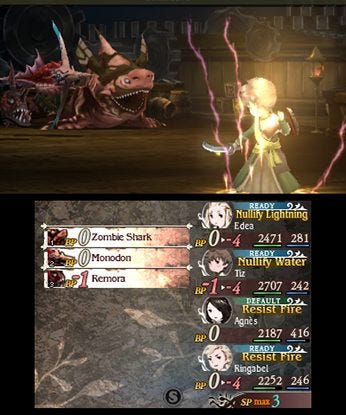 What hasn’t aged well: Battles can be sped up to 4x, which is essential because there is so much grinding. Encounter rates can be adjusted from -100% to +100%, allowing players to completely avoid dungeon battles or turn the world map into a constant stream of fights. While it’s convenient to turn battles off, this makes dungeons largely pointless.
The job system offers a ton of customization, but playing blind can waste enormous amounts of time on ineffective combinations. Researching the jobs beforehand is almost necessary because the game’s later bosses are extremely difficult and late game bosses are punishing, sometimes seemingly ignoring the protections provided by equipment and abilities.
The story is weighed down by filler, skits, and four chapters that repeatedly recycle earlier bosses to the point where chapters 4 to 7 feel like Groundhog Day.
The characters are a mixed bag, with Ringabel being the most irritating, while the voice acting is often grating.
Final Fantasy X-2
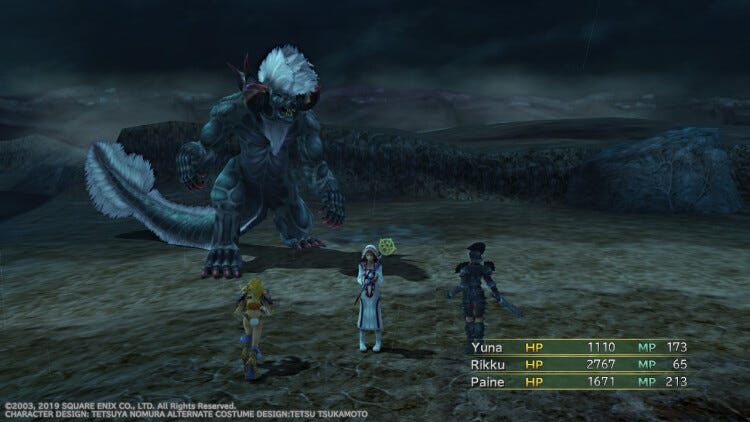 What hasn’t aged well: The story takes place two years after X and shows Spira undergoing major social and cultural changes during the Eternal Calm. This is an interesting premise, but the story never reaches its potential, with poor pacing and a cast filled with irritating or forgettable characters like Brother and Leblanc, who were the most difficult to tolerate.
Combat is fast-paced and requires more active decision-making than X, but the dressphere system feels unnecessarily complicated and restrictive despite the potential for customization. Random encounters are excessive, sometimes occurring every few steps, though a later game accessory can eliminate them.
Dungeons are small and restrictive, with few branching paths and visible areas that cannot be accessed until later. The jump mechanic does little to improve exploration and feels more like a gimmick, while the few puzzles are mostly irritating, the later musical puzzles being the worst.
A lot of the music is forgettable and sounds dated, especially the contemporary pop music (though the battle themes are excellent). Voice acting is also grating over the long haul.
Final Fantasy X-2 mixes linear locations with an open-ended mission structure, but despite the freedom to complete missions in different orders, much of the content felt unnecessary. After finishing 71% in 29 hours, I had little desire to see the rest.
.hack//infection Part 1
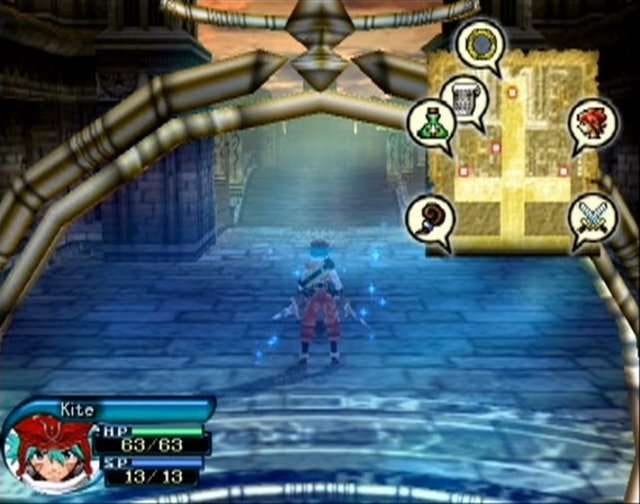 What hasn’t aged well: .hack/infection is an interesting attempt to simulate an MMORPG within a single-player RPG, but it becomes painfully repetitive despite taking just over 20 hours.
Fields and dungeons are bland and drab, while enemies can have enormous amounts of HP and defense and produce bizarre difficulty spikes, and some enemies can also inflict status effects that leave the entire party helpless in seconds. The combat can become tedious when Kite runs out of MP and is forced to wait for it to replenish, which can (and too often happens) when money becomes insufficient to maintain a supply of useful magic scrolls.
The Data Drain system is an interesting idea but requires monitoring an unclear infection gauge and can produce severe penalties if overused.
The game also has an arbitrary limit of 40 unique items, making inventory management cumbersome despite allowing 99 of each individual item. The screen distortions meant to show The World becoming unstable are effective at the start of the game but occur so frequently, sometimes every minute, that they quickly become annoying, which isn’t helped by the poor camera.
Atelier Iris: Eternal Mana
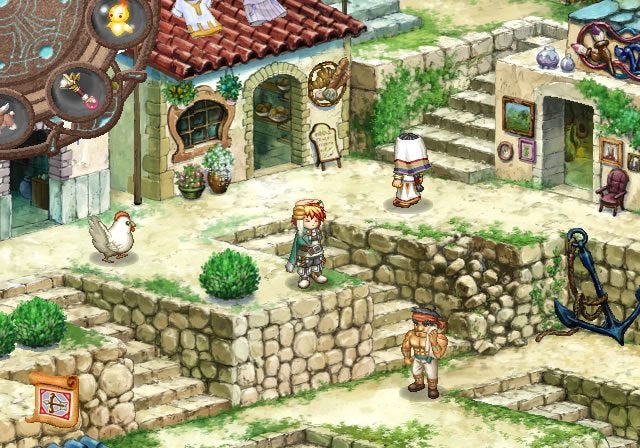 What hasn’t aged well: Probably the game that is closest to not having to be on this list. Alas, the biggest issue is a game-breaking glitch that causes the screen to go blank during the ending, potentially preventing players from seeing the conclusion after 30+ hours. I also encountered another glitch that locked me out of a fetch quest and cost about 90 minutes of progress.
The synthesis system is complex, with some recipes seemingly opening at random and the best mixes requiring specific combinations that are difficult to discover without a walkthrough.
The world is also extremely small for a PS2 RPG, yet still requiring frequent backtracking. Even with how comparatively tiny the world is, warp points don’t always cover every location.
Some party members are frustrating, Norn being at the top of that list, and losing a party member midway through the game after investing time in developing them is another annoyance.
Xenosaga Episode I: Der Wille zur Macht and Episode 2: Jenseits von Gut und Böse
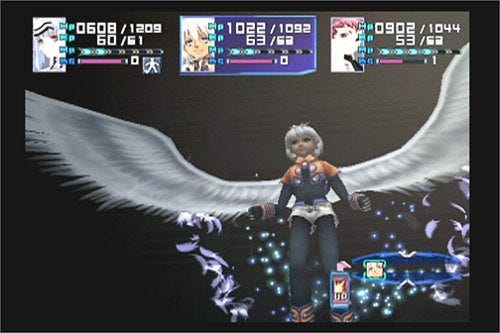 What hasn’t aged well: The biggest problem with the first two Xenosaga games is excessive cutscenes, convoluted storytelling, and unintuitive gameplay systems. Both games devote long stretches to watching rather than playing, while the story becomes increasingly buried under its own jargon and philosophical explanations.
Episode I’s ship interiors are drab and confusing to navigate, although Episode II improves the environments, to be fair.
Enemies are visible on the field but often difficult to avoid, and battles can become lengthy if the game’s more complicated mechanics aren’t used correctly. Both games also suffer from difficulty spikes.
While Episode I’s character-development and email systems impose arbitrary restrictions that can make customization and optional content feel more like homework than rewarding, Episode II removes the email system completely. It also eliminates conventional equipment and shops, creating resource problems late in the game.
In both games, the otherwise strong voice acting is undermined by repetitive and often irritating battle dialogue.
On the positive side, the third time was the charm for Xenosaga, and the third game was easily the best.
Wayback Wednesday Volume 1: Final Fantasy 7 and Chrono Trigger.
Wayback Wednesday Volume 2: Super Metroid and Castlevania: Symphony of the Night.
Wayback Wednesday Volume 3: The Legend of Zelda: A Link to the Past and Lunar: Silver Star Story Complete
Wayback Wednesday Volume 4: Secret of Mana and Wild Arms
Wayback Wednesday Volume 5: Illusion of Gaia and Grandia
Wayback Wednesday Volume 6: Breath of Fire 3 and X-Men Legends
Wayback Wednesday Volume 7: Star Ocean: The Second Story and Super Mario RPG
Wayback Wednesday Volume 8: Demon's Crest and Dragon Quest VI
Wayback Wednesday Volume 9: Suikoden I and Jeanne d'Arc
Wayback Wednesday Volume 10: Ranking the first 6 Final Fantasy games
Wayback Wednesday Volume 11: Earthbound and Valkyrie Profile
Wayback Wednesday Volume 12: Legend of Legaia and Secret of Evermore
Wayback Wednesday Volume 13: Threads of Fate and Soulblazer
Wayback Wednesday Volume 14: Radiata Stories and Robotrek
Wayback Wednesday Volume 15: Rogue Galaxy and Vandal Hearts
Wayback Wednesday Volume 16: Chrono Cross and Muramasa: The Demon Blade
Wayback Wednesday Volume 17: Okami and Legend of Mana
Wayback Wednesday Volume 18: Paper Mario and Terranigma
Wayback Wednesday Volume 19: Dragon Quest VIII and Atelier Iris 2: The Azoth of Destiny
Wayback Wednesday Volume 20: Ranking the 6 console Final Fantasy games from the PS1 and 2
Wayback Wednesday Volume 21: Eternal Sonata and Actraiser
Wayback Wednesday Volume 22: Persona: Revelations and Tales of Destiny
Wayback Wednesday Volume 23: Shadow Hearts: Covenant and Dragon View
Wayback Wednesday Volume 24: Ken Griffey Jr. Presents Major League Baseball and Lunar: Eternal Blue
Wayback Wednesday Volume 25: Suikoden II and Xenogears
Wayback Wednesday Volume 26: Azure Dreams and Wild Arms 2
Wayback Wednesday Volume 27: Ar Tonelico and Sword of Mana
Wayback Wednesday Volume 28: Albert Odyssey and Super Paper Mario
Wayback Wednesday Volume 29: Arcana and X-Men Legends II