

Subscribers get bonus perks: ask me unlimited gameplay questions about any review and get personal responses within 24 hours!
Check out Part 2, Grandia, here.
I first played Illusion of Gaia in 1998, and most recently in 2019. In the two decades sandwiched between, I had several remarkable experiences: biking through Angkor Wat in Cambodia, taking a single-engine propeller plane over the Nazca Lines in Peru, one of the scariest moments of my life (along with bungee jumping in Ecuador) as the plane twisted and turned in the wind, and hiking steep terrain at dawn up to Machu Picchu. I also listened to howler monkeys while making my way through the dense jungle to see Tikal in Guatemala. I’ve also managed to see the majority of Europe’s 44 countries. I felt like our hero Will, moving across diverse regions.
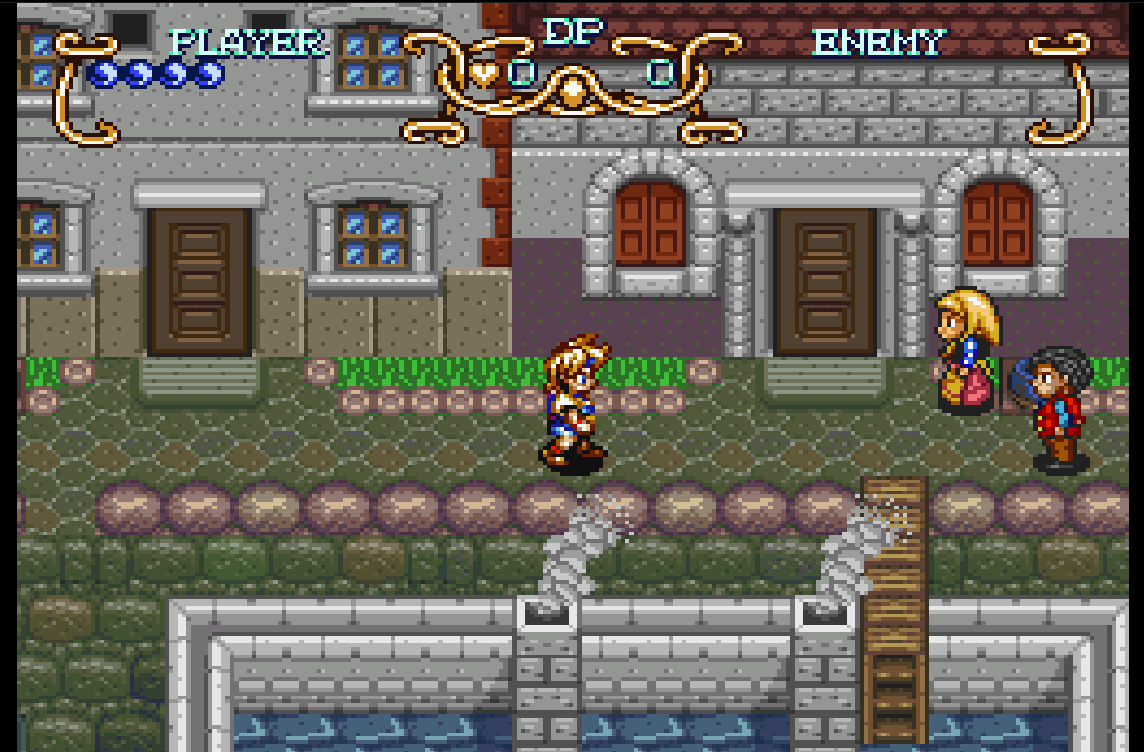 Illusion of Gaia opens humbly, in a quaint seaside village. Players will notice the vivid colors, detailed sprite animations, and sleepy vibes of South Cape. You can tell the artists worked hard to bring out the smallest details possible. This is evident in the numerous scenes that take place in Will’s house, around the town, and at Edward Castle within the first half-hour. Character, enemy, and bosses look fantastic, with fluid movements.
As all tales of adventure go, you won’t be stuck in this quiet village for long as you visit royal castles, check out ruins from old civilizations that have ceased to exist, mysterious ancient drawings, man-made architecture that seems to stretch for eternity, and reach high into the clouds. Although set in a re-imagined version of Earth, you will encounter many fictionalized versions of real-life locations on your long journey. As a lifelong gamer, this makes sense, but thoughts of Illusion of Gaia consistently surfaced as I traveled.
As you progress, you will notice that the soundtrack is eclectic, often creating a mystical, arcane atmosphere as you explore ruins or a menacing vibe during boss battles. There is not a single track that requires the mute button and holds up to repeated listens. On the other hand, sound effects, while not the game’s strong point, are passable.
This is an action RPG, and fighting is straightforward. You start as Will, with his flute, and eventually gain the ability to transform into Freedan and, much later on, Shadow. Freedan is much larger, more powerful, and has a longer reach, which helps solve some of the puzzles that are otherwise impossible with Will. However, Freedan is unable to slide under some barriers or use the psycho spin to move over some ramps. Later, you will gain the powers of Shadow, who can seep through floors to reach areas inaccessible to Will or Freedan, also providing temporary relief from boss onslaughts. There are no level-ups; instead, you must use the map to locate and beat all enemies in every room. When you clear a room, your HP, defense, or power increases by one.
Although you can only play as Will and Freedan for the majority and Shadow for a small portion, several helpful NPCs are essential to advancing the plot. Some were given minor attention, such as the Jackal, while others, like Kara, were given much more detail, and watching her development was interesting. Each character, Lance, Lily, Seth, Erik, Neil, and Hamlet, finds their unique fate as the story continues.
On occasion, the game can be somewhat cryptic, such as at the Nazca Lines, so it helps to speak repeatedly with the aforementioned characters and read everything carefully; subtle (sometimes more obvious) hints are dropped.
The story is mature for the SNES, exploring themes such as slavery, starvation, and self-sacrifice, mirrored by somber, melancholy music. There are some lighthearted moments, but for the most part, the narrative is serious.
The one downside of this otherwise amazing game is the fact that it is very linear. The only side quest involves collecting 50 well-hidden red jewels scattered throughout the world. I will not ruin the surprise of what happens if you collect all 50, but I will leave a hint stating that everything before Angel Village is missable. If you reach Angel Village at 23, you’re not in danger of missing any other red jewels and can always backtrack if one was missed, so search carefully up until Mu for the first 23.
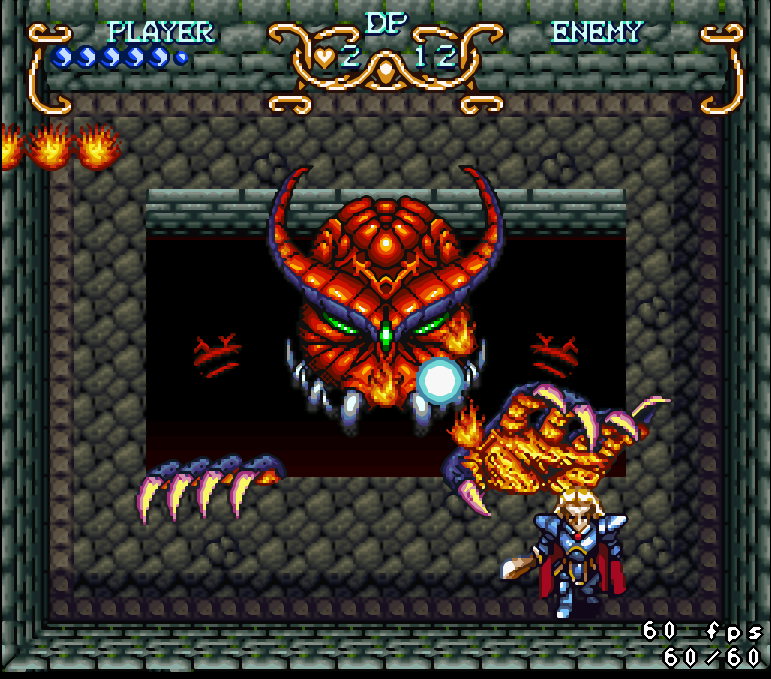 The difficulty level is moderate as long as you meticulously clear rooms you come across for stat increases and promptly collect 5, 8, and 12 jewels, which boost stats. I have heard that beating bosses allows you to regain missed stat increases; however, entering boss battles with suboptimal stats is not recommended, as bosses are by far the most difficult aspect of Illusion of Gaia, other than the bird boss and the snake bosses.
Illusion of Gaia isn’t an epic by any means, but it tells a fascinating tale that can be completed in about 5–10 hours. This is a highlight not just of the 16-bit action RPG library, but of the SNES library in general, and despite some issues with being too linear, it still deserves an honest look even today.
Wayback Wednesday Volume 1: Final Fantasy 7 and Chrono Trigger.
Wayback Wednesday Volume 2: Super Metroid and Castlevania: Symphony of the Night.
Wayback Wednesday Volume 3: The Legend of Zelda: A Link to the Past and Lunar: Silver Star Story Complete
Wayback Wednesday Volume 4: Secret of Mana and Wild Arms