
Part two in our series “Beyond the Headlines: Unpacking the Taiwan–China Relationship”.
Amid rising tensions in the Taiwan Strait, Western media coverage of cross-strait dynamics often reduces a complex and evolving relationship to headlines about military drills, diplomatic spats, or elections. This series seeks to go deeper. By exploring the cultural, historical, economic, and strategic layers shaping Taiwan–China relations, Beyond the Headlines aims to equip readers with the context necessary to interpret not just what is happening—but why it matters, and how we got here.
Each installment examines lesser-reported dimensions of the relationship, challenging assumptions and highlighting perspectives that are often overlooked in mainstream discourse. Our goal is not just to explain Taiwan or China, but to illuminate the shifting space between them.
You can read the previous installment here - The Fujian Blueprint: How Xi Jinping's Provincial Tenure Shaped China's Taiwan Strategy.
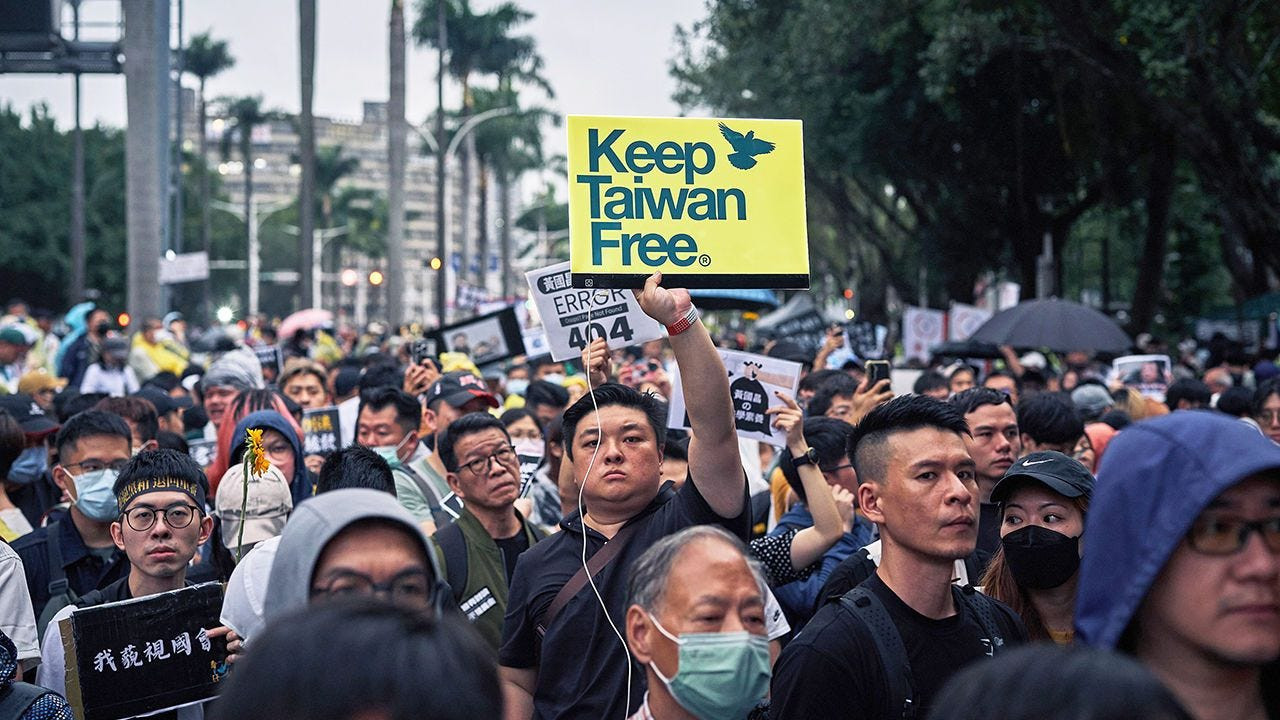 An Rong Xu / Bloomberg via Getty Images
Introduction & context
Debate over Taiwan’s readiness for a potential conflict with the People’s Republic of China (PRC) has intensified in recent years. Most commentary focuses on the military balance - force posture, weapons acquisitions, and mobilization timelines - while civil-society readiness (the ability of communities to absorb, adapt, and sustain public life under coercion, blockade, or invasion) receives less sustained attention. When civil-society readiness does make headlines, it can generate sharp judgments: a widely read piece in The Diplomat (Dmytro Burtsev and Vita Golod, 4 August 2025) used Ukraine’s post-2014 mass-mobilization model as a benchmark and argued Taiwan falls short. That comparison highlights useful questions about drills and volunteer structures, but it also risks creating a one-size-fits-all standard that overlooks alternative, effective forms of resilience.
SinoSage accepts the Diplomat article’s contribution while arguing for a broader analytic frame. Civil-society readiness is not just a count of drills or stockpiles; it encompasses social cohesion, distributed logistics, information integrity, and institutional capacity to preserve public life under sustained pressure. These capacities are rooted in history: Taiwan’s civic formation - colonial infrastructure and administrative routines, decades of centralized governance, a robust democratization era, and repeated crisis learning - has produced distinctive habits and organizations that matter operationally. At the same time, a sober analysis must acknowledge that a high-intensity kinetic invasion remains a non-zero possibility. Effective policy therefore requires modular planning that combines credible military deterrence with calibrated civil-military options and robust societal-continuity measures.
Beyond the Ukraine benchmark - reframing readiness
Ukraine’s experience since 2014 provides powerful lessons: volunteer battalions, territorial defense integration, and rapid mass mobilization can be decisive under certain conditions. But treating that model as the exclusive standard risks misdiagnosing other contexts. Taiwan’s strategic environment is often characterized less by an immediate land-grab and more by gray-zone coercion - economic pressure, information campaigns, maritime blockade, and legal or political measures designed to fracture social cohesion. In such scenarios, the key operational tasks are preserving supply chains, maintaining public services, countering disinformation, and denying the adversary political leverage. These objectives demand different tools and institutions than large-scale territorial warfare.
That said, the Ukraine model should be treated as an informative reference. The pragmatic choice is a blended posture: maintain professional military readiness and credible deterrence at the national level, while developing selective, legally structured territorial-defense and civil-integration options at local levels, and actively reinforcing societal-continuity mechanisms. In short, readiness is multidimensional; countries can borrow suitable elements from one another without identical replication.
Read more @ Sinosage.substack.com
Taiwan’s historical foundations for civic readiness
Taiwan’s civic capacities are layered and cumulative. Under Japanese rule (1895–1945), the island acquired modern transport, public-health systems, and standardized education. More operationally relevant, colonial governance institutionalized neighborhood administration - household registers, ward officers and communal labor routines - that created durable practices: keeping up-to-date household lists, using temples and schools as coordination nodes, and organizing communal work teams. In crises these routines translate into practical advantages: pre-identified distribution points, known volunteers, and recorded vulnerable households.
The KMT era’s li/lin neighborhood system (1949–1987), though politically repressive, extended these organizational patterns: neighborhood heads maintained rosters, block captains relayed notices, and community spaces functioned as distribution and meeting points. Those embedded habits enable rapid door-to-door welfare checks, orderly shelter management, prioritized assistance for the elderly or disabled, and the coordinated distribution of rationed goods without waiting for centralized orders. In a maritime blockade or short-term national disruption, such decentralized capabilities materially sustain essential services and deny an attacker the quick political rupture it might seek.
Democratization after 1987 layered a horizontal civic capacity on top of these structures. Movements such as Wild Lily and Sunflower developed experience in sustained logistics - food provisioning, sanitation, medical support, volunteer management and legal coordination - outside state channels. Civic groups learned to operate parallel information systems and maintain supply chains for prolonged actions; those competencies transfer directly to emergency logistics.
Recurrent crises - Jiji (Chi-Chi) earthquake (1999), SARS (2003), Typhoon Morakot (2009) and COVID-19 - acted as practical training grounds. Local temples and school gymnasia became immediate shelter hubs; li/lin household lists enabled relief teams to prioritize vulnerable residents; charities such as Tzu Chi coordinated donations and volunteers rapidly; and civic-tech initiatives, notably g0v, translated neighborhood reports into crisis maps, volunteer matching and short-loop distribution tracking. These episodes hardened expectations about local responsibility, developed volunteer rosters and municipal contingency playbooks, and institutionalized civic-tech tools for logistics and information management.
All of the above factors combine to produce a readiness mentality: the preservation of trust networks under stress, rapid adaptation of supply and distribution systems when normal logistics are disrupted, and the capacity to counter disinformation before it fractures social cohesion. Taiwan’s calm public behavior during high-visibility PLA drills illustrates this mindset: markets remained open, transport ran as usual, and panic buying was limited – this represents not complacency, but a collective refusal to yield psychological leverage to coercion. That civic psychology is a strategic asset in gray-zone contexts.
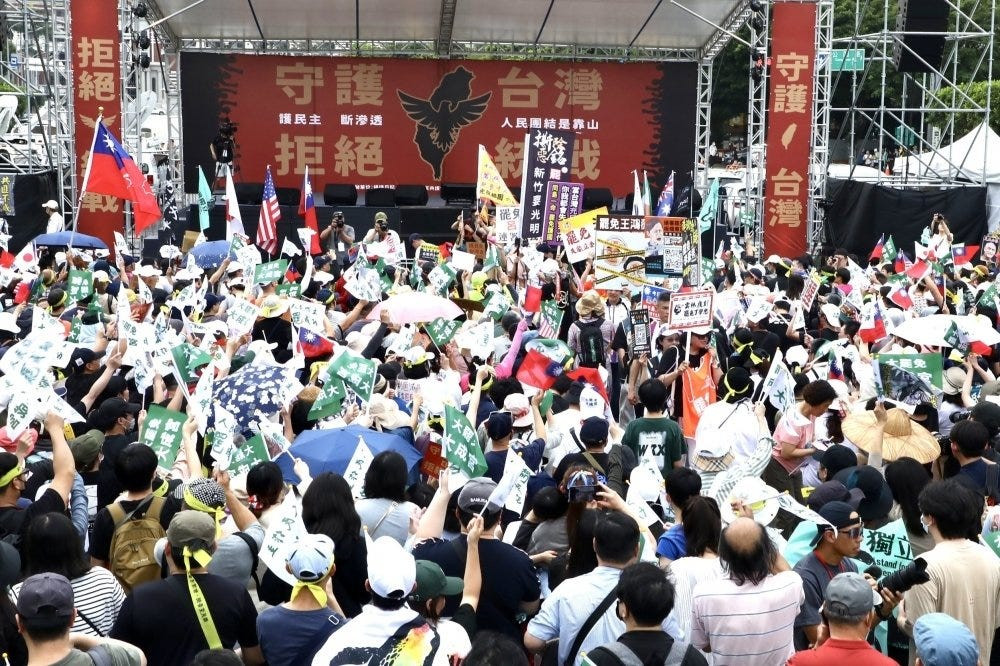 Image/YouTube/Taiwan Plus News
Comparative resilience models and hybrid defense options
Ukraine’s pathway was shaped by a land-war environment that produced rapid civilian militarization and territorial defense integration. Taiwan faces a different mix of threats - gray-zone pressure, maritime encirclement and information operations - so its institutional preferences and civic culture diverge from Ukraine’s. Taiwan’s deliberate separation between civic groups and state institutions is both a democratic choice and an operational posture aimed at preserving rights and legitimacy under stress.
Nevertheless, hybrid adaptations are feasible and worth policy attention. Although civil-military integration has historically been limited, recent initiatives such as expanded Han Kuang exercises and volunteer logistics brigades illustrate a growing recognition that civilians must play an active, coordinated role in national defense.
Taiwan could adopt selective territorial-defense elements - limited, legally regulated reserve units, volunteer logistics brigades, and neighborhood first-response teams - designed for augmentation rather than front-line combat. Lessons from Ukraine suggest value in legally framed volunteer structures, rapid enlistment pipelines and local logistics hubs. In Taiwan these features should be narrowly scoped: units focused on first aid, road clearance, short-term perimeter tasks, logistics and information denial; bound by statutory limits on activation, subject to civilian oversight boards; trained through routine, non-combat joint exercises emphasizing humanitarian support; and coordinated via NGO liaison cadres to preserve civil liberties.
Cultural dynamics matter. Widespread civilian skepticism toward centralized military authority—shaped by the memory of KMT martial law and subsequent politicization of security institutions—can slow the rapid incorporation of volunteers into military command. This is not only a constraint but also a safeguard: it preserves democratic legitimacy during emergencies. Effective policy therefore requires institutional designs that build operational trust while maintaining transparency—statutory safeguards, civilian oversight, after-action reviews, and liaison mechanisms that bridge civic groups and defense authorities.
Finally, scenario planning must treat kinetic invasion as one node on a continuum. High-intensity scenarios demand rapid professional mobilization, allied intervention timelines and strategic denial. Protracted blockade or gray-zone campaigns shift the operational emphasis to sustaining lifelines, preserving information integrity and maintaining governance legitimacy. Policy should therefore prioritize both deterrence and layered civic resilience.
Strengths of Taiwan’s approach
Taiwan has concrete civic advantages. Long exposure to PRC influence activity has produced an advanced fact-checking ecosystem - platforms such as Cofacts and MyGoPen rapidly verify and debunk viral rumors, limiting the spread of harmful narratives. Municipal autonomy allows mayors and local authorities to act quickly when national systems are disrupted, as disaster responses have shown. Civic-tech groups (notably g0v) supply crisis mapping, volunteer coordination and transparent donation-tracking tools that reduce distribution friction. Importantly, a growing sense of Taiwanese identity links democratic values to territorial defense, motivating broad civic engagement in resilience tasks.
Read more @ Sinosage.substack.com
Gaps and vulnerabilities
Real vulnerabilities remain. Legal frameworks for transparent NGO–military integration are incomplete; critical infrastructure redundancy (trauma surge capacity, fuel and power distribution, hardened storage for essentials) is uneven; household preparedness varies along socioeconomic lines; and first-aid skills are concentrated in niche volunteer communities. Prolonged gray-zone pressure - economic coercion, persistent disinformation and diplomatic isolation - poses an attritional threat that can erode morale and deplete resources over time. Recent surveys also indicate that many Taiwanese still treat large-scale conflict as unlikely, reflecting a persistent gap between historical civic habits and contemporary societal readiness. Bridging this perception gap is crucial for translating latent organizational capacity into operational resilience.
An additional security concern is influence penetration into civic space. Beijing’s United Front apparatus uses student exchanges, trade and cultural programs, business ties and targeted funding to cultivate relationships with associations, elites and community groups. Some transnational fraternal networks (often operating under the benign cover of cultural or clan associations) have in instances been instrumentalized to advance political objectives or to introduce local actors to PRC sponsors. Investigative reporting and security assessments also point to occasional intersections between such networks and underworld actors, where illicit funds, informal introductions or coercive tactics have been used to further influence operations. While most cross-Strait cultural and commercial exchanges are legitimate, where such overlap occurs it can shift local agendas, normalize pro-Beijing narratives, create patronage dependencies and weaken civic autonomy - effects that complicate rapid, voluntary civic cooperation in a crisis.
Technical vectors compound these risks. Civic-tech platforms, microgrids and fact-checking networks often rely on cloud services, foreign hardware supply chains and persistent connectivity - elements adversaries can target during a blockade or combined cyber-kinetic campaign. The robustness of these systems under sustained, sophisticated attack is not yet assured.
What is being done
Taipei and international partners are taking concrete steps to shore up weaknesses. Legislative pilots, volunteer registries and operating protocols seek to clarify NGO–military roles while preserving civil liberties. Municipal investments in hardened shelters, decentralized microgrids and water storage increase lifeline redundancy. Public education campaigns promote household preparedness with measurable benchmarks, and civic-tech groups have scaled first-aid and crisis-mapping training through hybrid online and in-person programs.
Hardening civic infrastructure is now a priority. Recommended measures include designing “offline-first” civic apps and local data caches so critical mapping and volunteer rosters function without central servers; deploying mesh networks, community Wi-Fi and satellite backstops; segmenting and encrypting critical civic databases with local backups; diversifying supply chains for microgrid controllers and creating physical protection for energy nodes; and establishing rapid incident-response teams that combine civic-tech volunteers, national CERTs and municipal utility crews. Allies can assist with hardened satellite communications, secure mobile edge compute units, joint stress tests and exercises that simulate combined cyber/kinetic disruption.
Institutional reforms to bridge civic–military trust include legally bounded integration exercises focused on medical, logistics and evacuation tasks; the creation of NGO liaison cadres to expedite coordination; civilian oversight boards for reserve activation; mandatory transparency and public after-action reporting; and routine, non-combat joint drills emphasizing humanitarian cooperation rather than combat rehearsal.
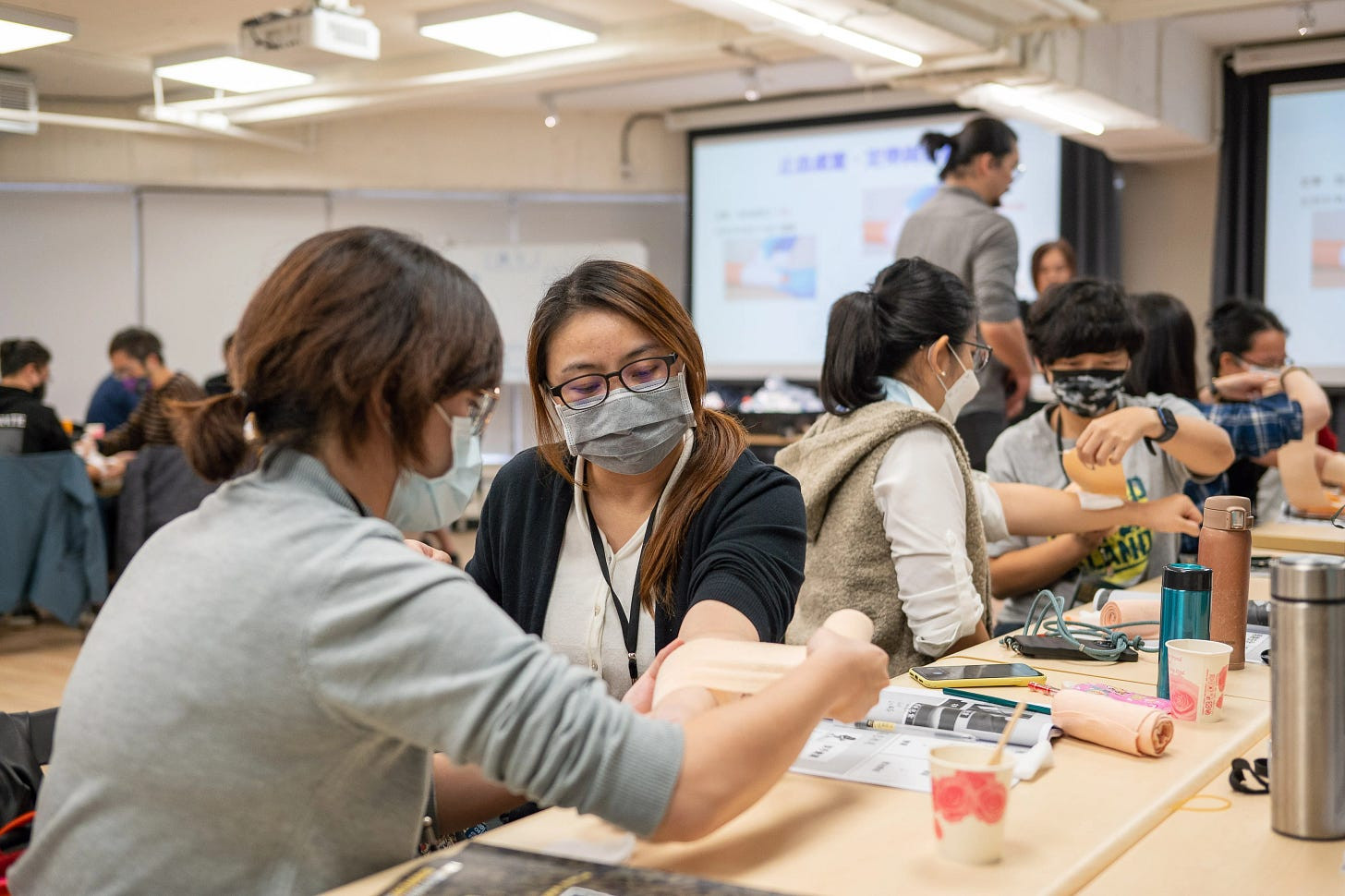 Image/Foreign Policy
Policy implications
For Taipei, priorities are pragmatic and rights-preserving: formalize transparent NGO–military frameworks with statutory safeguards and civilian oversight; accelerate investments in lifeline redundancy (distributed energy, water, medical stockpiles); scale household preparedness with quantifiable targets; and extend first-aid, trauma-response and logistics training beyond volunteer enclaves into broader civic participation. Pilot hybrid territorial measures limited to augmentation tasks should be introduced only with clear legal boundaries, training standards and oversight.
For allies, the most effective posture pairs military deterrence with societal-continuity support: fund cyber-defense capacity for civic platforms, underwrite community resilience projects (microgrids, decentralized storage), assist in maritime resupply planning and provide hardened communications and edge compute units. Support for civic-tech collaboration, scalable training and grants for fact-checking networks will pay strategic dividends.
Finally, in public debate and commentary, it is important to avoid mechanical, overly-simplified comparisons between Ukraine and Taiwan. Different histories and threat environments yield different, legitimate models of readiness. Policy and commentary that recognize multiplicity will produce more tailored and effective choices.
Conclusion
Taiwan’s civil society is not unprepared - it is prepared differently. Its model emphasizes gray-zone resilience, the maintenance of governance and information integrity, and the preservation of democratic legitimacy under sustained pressure. These strengths matter: decentralized coordination, fact-checking networks, civic-tech logistics and municipal autonomy all contribute to a practical ability to deny an adversary political leverage.
That said, preparation is a work in progress. Legal, institutional, and technical shortfalls remain, and influence penetration and cyber-kinetic risks require sustained mitigation. Taiwan’s current posture is resilient but incomplete: it must both maintain and deepen military deterrence and simultaneously accelerate reforms to expand lifeline redundancy, harden civic infrastructure, clarify NGO–military interfaces, and broaden household and neighborhood preparedness. Avoiding overly simplistic analogies to Ukraine is essential; equally essential is honest recognition of the improvements still needed to ensure Taiwan can sustain society, uphold democratic norms and achieve strategic denial across the full spectrum of plausible crises.
If you like our work, please consider subscribing or buying us a coffee. Thank you!
Read more @ Sinosage.substack.com