
Part one in our series “Beyond the Headlines: Unpacking the Taiwan–China Relationship”
Amid rising tensions in the Taiwan Strait, Western media coverage of cross-strait dynamics often reduces a complex and evolving relationship to headlines about military drills, diplomatic spats, or elections. This series seeks to go deeper. By exploring the cultural, historical, economic, and strategic layers shaping Taiwan–China relations, Beyond the Headlines aims to equip readers with the context necessary to interpret not just what is happening—but why it matters, and how we got here.
Each installment examines lesser-reported dimensions of the relationship, challenging assumptions and highlighting perspectives that are often overlooked in mainstream discourse. Our goal is not just to explain Taiwan or China, but to illuminate the shifting space between them.
 Photo/Travel.taipei
I. The Architect of Integration
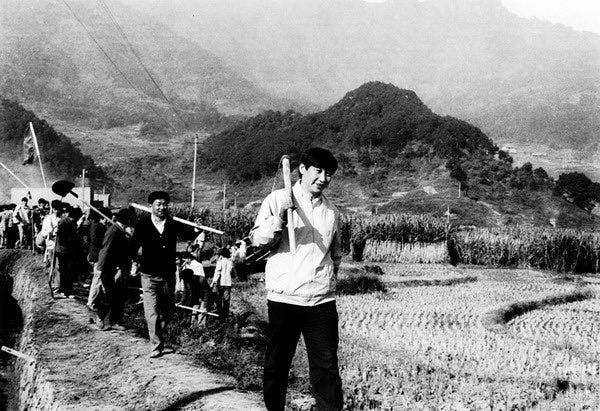
Long before Xi Jinping became the paramount leader of China, he was a provincial official in Fujian, the coastal province that sits just across the Taiwan Strait. From 1985 to 2002, Xi served in various roles in Fujian, including vice mayor of Xiamen, party secretary of Fuzhou, and ultimately governor of the province. These 17 years placed him in the heart of China's earliest experiments in cross-strait integration.
Fujian became a laboratory for peaceful unification through economic, cultural, and infrastructural outreach to Taiwan—a model that Xi internalized and, later, scaled up nationally. As general secretary, Xi has consistently returned to the themes he encountered in Fujian: integration over confrontation, infrastructure as diplomacy, and the instrumental use of shared culture. But Taiwan's political evolution and the limits of soft influence have revealed the strategic miscalculations embedded in that model.
What follows is a tracing of how Xi Jinping's provincial experience created the ideological and tactical blueprint for China's cross-strait strategy, why it initially appeared promising, and how the failures of that approach may now be pushing Beijing toward more coercive alternatives.
II. Fujian in the 1980s–1990s: The Frontline of Peaceful Engagement
In the early years of China's reform and opening era, Fujian was chosen as a testing ground for economic liberalization and cross-strait engagement. Its proximity to Taiwan, historical links, and large diaspora made it a natural interface.
Xi Jinping arrived in Xiamen in 1985. By then, the central government had begun promoting the "Three Mini Links"—postal, transportation, and trade exchanges between Kinmen and Matsu (Taiwan-controlled islands just off Fujian) and cities like Xiamen and Fuzhou. These links were limited but symbolically significant.
Xi supported infrastructure projects designed to draw Taiwan closer, including expansion of Xiamen's port, airport development in Changle, and trade zones with policies tailored to attract Taiwanese investors. He also oversaw cultural and religious exchange programs, framing Fujian as the spiritual and economic bridge to reunification. The aim was to establish "normalcy" and mutual dependence below the political threshold.
Fujian's selection was not coincidental. Historically, it has maintained close cultural and economic ties with Taiwan, including shared dialects, family networks, and religious practices such as Mazu worship. For centuries, both regions were connected through trade, migration, and common ancestry. In the 20th century, Fujian also became the base for early PRC reunification rhetoric. Xi’s policies were a continuation—and intensification—of that legacy.
Photo/Chinadaily.com
III. Cultivating Economic Ties: The Rise of the Taishang
Under Xi's governorship, Fujian aggressively courted Taiwanese businesspeople, known as Taishang, offering tax incentives, land deals, and local government support. Xiamen and Fuzhou became hubs for Taiwanese investment in light manufacturing, real estate, and trade logistics.
Xi's strategy was straightforward: economic integration would lead to political softening. This was the underlying logic behind the Cross-Strait Common Market concept that was floated in policy circles during his tenure. According to government data, by 2001 Fujian had received over 4,000 Taiwan-funded projects valued at more than US$7 billion. Taiwanese businesses helped drive the development of entire industrial parks.
Xi promoted these developments as proof that shared culture and economics could bypass ideological divides. He repeatedly called for Fujian to be the model province for peaceful reunification.
Over time, however, the influence of the Taishang diminished. Taiwan’s economy began shifting from labor-intensive industries toward high-tech and services, reducing the relevance of mainland investment destinations. In Taiwan, public skepticism about economic dependence on China grew, especially after the 2014 Sunflower Movement. By the 2020s, Taishang voices carried little political weight, especially among younger generations who viewed them as out of touch with Taiwan’s civic identity.
IV. Kinmen and Matsu: The Reunification Lab
No areas more clearly embodied Xi's strategy than the islands of Kinmen and Matsu, controlled by Taiwan but geographically and economically intertwined with Fujian. Initiatives promoted under Xi and his successors included regularized ferry links between Xiamen and Kinmen, joint cultural festivals, and proposals for joint energy and water-sharing projects. The water pipeline from Fujian to Kinmen, completed in 2018, stands as a tangible symbol of this vision.
Religious diplomacy played a central role here. Shared veneration of Mazu, the sea goddess revered by both mainland and Taiwanese communities, facilitated people-to-people exchanges and pilgrimages. Xi’s administration invested heavily in restoring Mazu temples in Fujian and promoting cross-strait religious tourism.
These measures were designed to create functional integration without formal political agreement. In Beijing's view, this would set a precedent for broader cross-strait harmonization. Xi's interest in these zones didn’t fade after his promotion to national office. In 2019, the State Council proposed the Fujian Demonstration Zone for Integrated Development, echoing the frameworks Xi helped pioneer two decades earlier.
Yet these zones, once heralded as “bridges,” have increasingly become contested spaces. Kinmen residents have voiced concerns about overdependence on Chinese resources. Taiwan’s central government has intervened to block certain integration projects, citing security risks. What were once laboratories of peaceful engagement have become warning signs of creeping influence.
Read more @ Sinosage.substack.com
V. From Fujian to Zhongnanhai: Scaling the Strategy Nationally
When Xi rose to national leadership in 2012, he brought his Fujian experiences with him. His speeches on Taiwan frequently draw on themes of shared ancestry, religious heritage, and the inevitability of reunification. He also scaled the infrastructure-diplomacy model across the strait.
High-speed rail projects in Fujian have been promoted with the notional vision of extending toward Taiwan, via a bridge to Kinmen. Cross-strait investment has been encouraged through forums such as the Straits Forum, held annually in Fujian. Moreover, Xi elevated Fujian cadres to key national roles in cross-strait policy, forming what analysts call the “Fujian clique.”
Xi’s 2019 “Message to Compatriots in Taiwan” reaffirmed peaceful unification but warned that the use of force remained an option. It marked a hardening tone, but still relied on the soft-power scaffolding developed in Fujian.
Policy documents from this period frame unification not as annexation, but as the “completion of national rejuvenation.” Yet, the notion that cultural familiarity could deliver political alignment has increasingly clashed with rising Taiwanese nationalism and growing international sympathy for Taiwan’s democratic system.
VI. Strategic Miscalculations: The Collapse of the Soft Power Model
The problem is not that Xi's Fujian blueprint lacked vision. It is that Taiwan changed in ways that this blueprint did not account for.
The rise of Taiwanese civic identity, particularly among youth, has sharply reduced the resonance of cultural appeals. According to a 2023 poll from National Chengchi University, less than 3% of Taiwanese identify as “Chinese only.” Over 60% identify solely as Taiwanese.
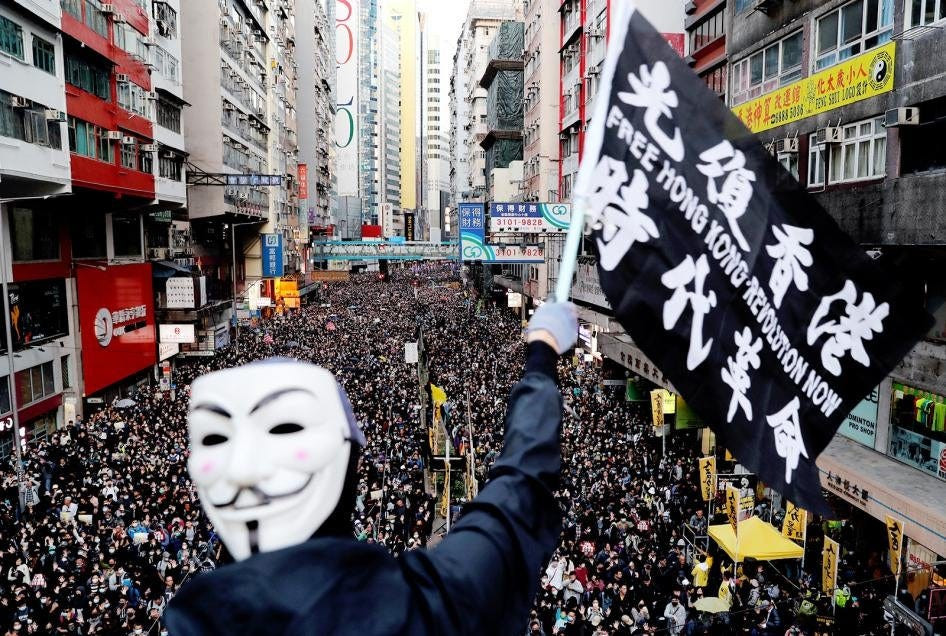
This transformation in identity has been shaped by multiple forces: generational change, democratization, education reform, and most critically, China’s handling of Hong Kong. The 2019 anti-extradition protests, the crackdown on civil liberties, and the imposition of the National Security Law shattered many Taiwanese illusions about “one country, two systems.” Surveys conducted after 2020 showed a sharp decline in support for any form of political integration with the mainland, particularly among younger voters. To many Taiwanese, Hong Kong became a cautionary tale—proof that Beijing’s promises of autonomy were ultimately hollow.
United Front activities, once subtle, have become counterproductive, prompting legal and social backlash in Taiwan. In 2020, the Legislative Yuan passed the Anti-Infiltration Act, targeting PRC-linked funding and disinformation. Civil society groups like Doublethink Lab and Taiwan FactCheck Center have played key roles in exposing covert influence operations.
The Taishang class, once politically significant, has lost domestic influence as Taiwan’s economy diversifies and its electorate turns inward. Beijing’s messaging, once couched in the language of brotherhood, is now perceived as coercive or patronizing. Meanwhile, military threats in the Taiwan Strait have undermined the plausibility of peaceful unification.
The failure of these assumptions is perhaps best illustrated by the 2024 presidential election, in which DPP candidate Lai Ching-te won decisively, rejecting Beijing’s overtures. Despite massive disinformation campaigns, Taiwanese voters demonstrated strong resilience, particularly among youth and urban professionals.
 Photo/Human Rights Watch
VII. What Comes Next: Coercion, Calculation, and Crisis
Xi Jinping’s Fujian-era playbook now sits at an inflection point. Unable to produce unification through soft means, Beijing faces a narrowing menu of options. Escalated gray-zone warfare—cyber operations, economic coercion, and disinformation—has intensified. Legal warfare has manifested in expanding air defense identification zones and maritime boundary assertions. And the specter of military coercion, including joint drills, naval encirclements, or a full blockade, looms larger.
Yet each carries enormous risk. The Fujian model may have failed, but it was also the least destructive. In its absence, China's Taiwan policy is drifting toward brinkmanship.
Military conflict would not only risk U.S. and regional intervention but also trigger internal legitimacy crises within China if it fails. Even a successful occupation would require long-term suppression of a population increasingly united around democratic identity. Paradoxically, the harder Beijing presses, the more Taiwanese identity consolidates in opposition.
VIII. When a Legacy Becomes a Liability
Xi Jinping’s Taiwan strategy is not abstract policy—it is personal legacy. His time in Fujian gave him a rare, hands-on opportunity to shape China’s approach to Taiwan through infrastructure, cultural diplomacy, and shared heritage. That blueprint guided years of national policy. But its underlying assumptions have proven fragile.
Taiwan’s trajectory is not toward integration, but toward global democratic solidarity. The tools Xi sharpened in Fujian—economic inducement, religious outreach, people-to-people ties—no longer hold the persuasive power they once seemed to promise.
The danger now is not only in the failure of past strategy, but in an unwillingness to revise it. Legacy can inspire consistency—or entrench rigidity. For Xi Jinping, the unraveling of the Fujian model presents not just a policy dilemma, but a profound test of strategic adaptability.
IX. Understanding the Past to Confront the Future
Xi Jinping’s Fujian years gave him a unique perspective on Taiwan: one grounded in cultural affinity, shared markets, and provincial diplomacy. But this legacy has also become a liability.
As Taiwan moves further from the framework Xi once believed would guide reunification, the tools he refined in Fujian have dulled. His personal investment in peaceful integration has been met with a generational pivot toward sovereignty in Taiwan.
Understanding this evolution is not simply a matter of historical interest—it is essential to decoding the strategic logic that now governs one of the world’s most dangerous flashpoints. The Fujian model offers a window into how Beijing once hoped to win hearts and minds, and why that vision has collapsed under the weight of demographic, political, and ideological shifts in Taiwan.
This is the core of what Beyond the Headlines aims to illuminate: not just surface-level developments, but the deeper assumptions, legacies, and ruptures that shape cross-strait relations today. To make sense of what lies ahead, we must first understand how we got here—and what was misunderstood along the way.
If you like our work, please consider subscribing or buying us a coffee. Thank you!
Read more @ Sinosage.substack.com