

 A hundred articles ago, Matriarchy Times set out to build an archive of the journey it began. The journey of empowering women and educating men to make a positive change in society by dismantling the patriarchy and building the stepping stone for a progressive modern matriarchy. Many things in life have been going on for much, much longer. All the same, there is every reason to be proud - and a little amazed - that this has lasted as long as it has, precisely because each article was a response to something we felt over time. These pieces didn't simply accumulate to a hundred; they spoke to one another, and they spoke to us.
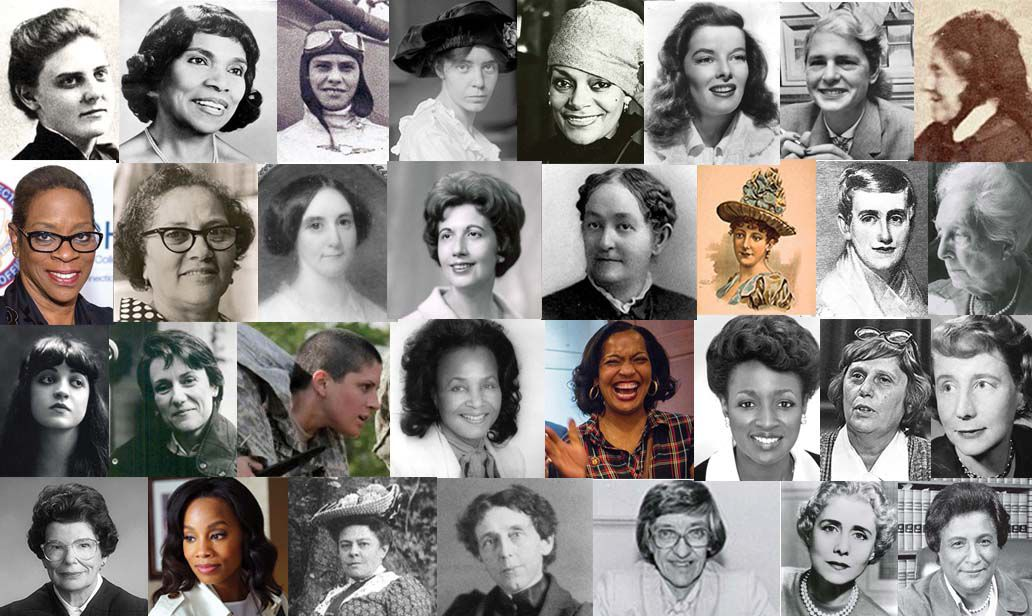 Over 100 articles, we've explored desire, violence, care, lineage, and the future, all of which trace back to four foundational branches: divine femininity, the matriarchy, the patriarchy, and radical feminism. As we celebrate reaching this milestone, we stop to congratulate ourselves and all that made it possible, and take a look back at some of the key schools of thought that shaped us. Everywhere we look, we measure our lives. After all, time is the way we measure change. As Aristotle put it, "not only do we measure change by time, but time by change, because they are defined by one another."
Milestones as such can be thought of as temporal landmarks. Just as physical landmarks are tangible and natural or man-made structures that aid in spatial navigation, temporal landmarks divide time and drive behavioural changes. The similarity? They both serve as reference points for navigation, whether navigating a city, one's own life, or our collective feminist journey.
Within this navigational milestone, we turn our attention to the areas of thought that have functioned as sub-temporal landmarks. These are not themes, nor passing interests, but recurring ideas we returned to time and time again because they continued to generate questions rather than answer them all.
These core thoughts make up a large part of Matriarchy Times because they shape how everything else is understood. Returning to them again and again allows us to explore these landmarks as living ideas that are connected to one another, and are constantly reshaped by the political and social conditions around them. By revisiting them now, we are not moving backwards, but rather taking a stop to take in our surroundings and look how far we’ve made it.
Divine Femininity
For Matriarchy Times, learning about goddess worship is not a history lesson, but an active methodological choice. Studying them allows feminism to encounter female centrality without immediately filtering it through reaction. This knowledge expands the horizon of possibility. It reminds us that the patriarchy is not the default state of humanity. Understanding it is not about reviving it, but about reclaiming the capacity to imagine power differently.
 As our articles on divine femininity unfolded, a pattern began to emerge. Across cultures and civilizations and before the rise of formalized patriarchal structures, goddess worship once functioned as a foundational way of understanding life itself. Goddesses were understood as creators of life, and this was the dominant framework through which societies made sense of the world.
What we noticed was how this didn't simply fade away. The shift from the veneration of goddesses to the dominance of male deities was a slow and violent process and not natural evolution as the patriarchy might have you believe. We encountered stories of displacement, where all-encompassing earth goddesses were replaced by masculine sky gods, who shaped them into wives and consorts. Powerful goddesses were framed as agents of chaos who had to be defeated by a male god in order to create order. As the female deity lost her supremacy, so did the status of women in society, with restrictions on their freedom and rights increasing.
The suppression of goddesses is directly related to the subjugation of women. The parallel proves how the patriarchy requiring a subordinate nature from women is something that was artificially crafted. The near absence of goddesses is ultimately a violent shift that leaves many women feeling separated from the divine. Understanding this history changes how we perceive the present. Learning about goddess worship became a way of reintroducing balance and space to imagine a world where gods and goddesses are not ranked, but recognized as equal forces.
The Matriarchy
Never has a topic been more apt to its titular reference. When we began writing about the matriarchy, we thought we were simply debunking the myth that the matriarchy is just a reversed patriarchy. After working through a hundred articles, we realized that the matriarchy is much more than that, that it is about expanding and shaping community and leadership beyond the patriarchal values of domination.
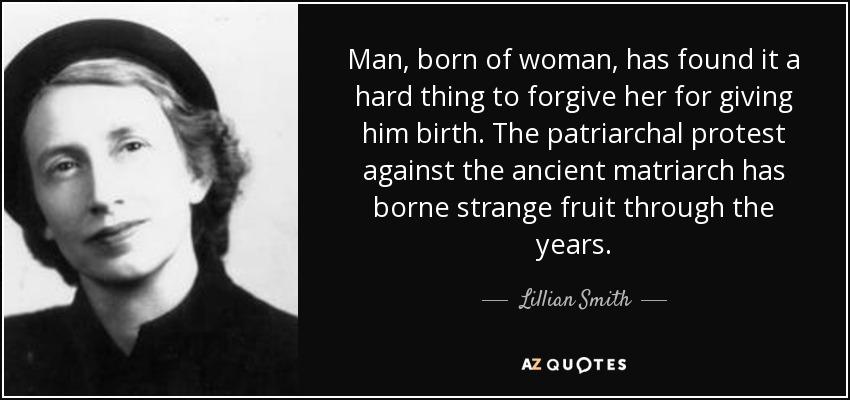 As we explored real stories in our articles, we began to identify how leadership grounded in care is foundational. We even examined how in times of crises, women are the ones who hold communities together when patriarchal systems collapse.
Thus, we began to challenge our own assumptions about work and social contribution. What was initially assumed as the matriarchy being women simply holding more authority than men was revealed through research as anything but. But as we dug deeper through our research while writing these articles, it became clear that a matriarchal system would not be a reversal of a male-dominated one. Even though existing legal systems are overwhelmingly shaped by men, a matriarchal framework would operate through an entirely different logic of organising society altogether.
Learning about historical female leadership dismantles the misconception that women in leadership is an unheard phenomenon. Throughout history, women have thrived in leadership positions despite facing significant oppressive barriers. Acknowledging female leaders allows humanity to move beyond abstraction and examine how power is exercised by women in real contexts. At Matriarchy Times, these stories work as a challenge to the myth that power is inherently masculine and expand the feminist understanding of what leadership can really look like. From our profile of Dr. Kirti Patel exploring the gynarchy and a future beyond patriarchy, to our piece on Heide Gottner-Abendroth that deepened our understanding of consensus-based societies, we learned that the matriarchy as we understand is an egalitarian communal way of thinking about power and leadership.
The Patriarchy
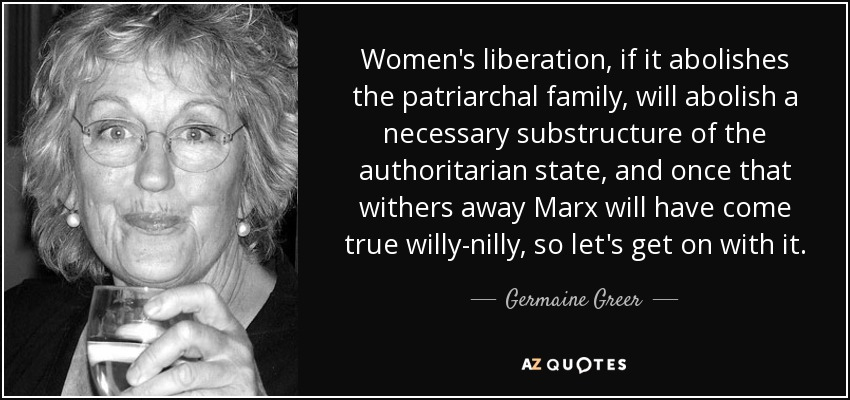 At Matriarchy Times, we took the existence of the patriarchy as a forced, unnatural concept that came to be through violence. What became clearer over time was that male dominance was a slow entrenchment that reinforced itself through institutions that now appear "natural". Our work kept returning us to the same unsettling realization, that the most powerful feature of the patriarchy is how successfully it disguised itself as common sense.
Despite the fact that there are still people that don't believe the patriarchy even exists, 2/3 of the world's illiterate is women, women are more likely to suffer severe injuries in car crashes because safety features are designed for men, 33,000 girls become child brides everyday, and according to the World Economic Forum's most recent Global Gender Gap report, it will take 108 years to close the gender pay gap at the current rate of progress. The patriarchy remains the institutionalized pattern of male dominance in society which gives men advantages that are not entitled to.
Religion emerged repeatedly as one of patriarchy's most effective preservation tools. We already discussed the way religion was twisted to subjugate women by positioning them weak and impure. These prohibitions used spirituality to justify and naturalize the patriarchal hierarchy, which in turn made resistance look sinful.
Over the course of history, some progress has been made. Feminist heroes have improved the position of women today, but this is still far from enough. Change will not happen on its own, it is in our hands to be making a difference which will create a fairer, and less difficult world for 50% of the population. For a system that is not natural that has forced women to live as second-class citizens, it is about time it is dismantled. The change might be slow, but it is still changing in the right direction.
Radical Feminism
Radicalism was never a phase. Matriarchy Times believes what is central to any feminist project that wants real change is radical policies. From challenging the root of rape and identifying radical femnist mandates, we identified that radical feminist reform began from recognizing the inequality that designs social and economic structures to not include women as full independent subjects. These were built around male normativity, and to reform such systems confrontation was required.
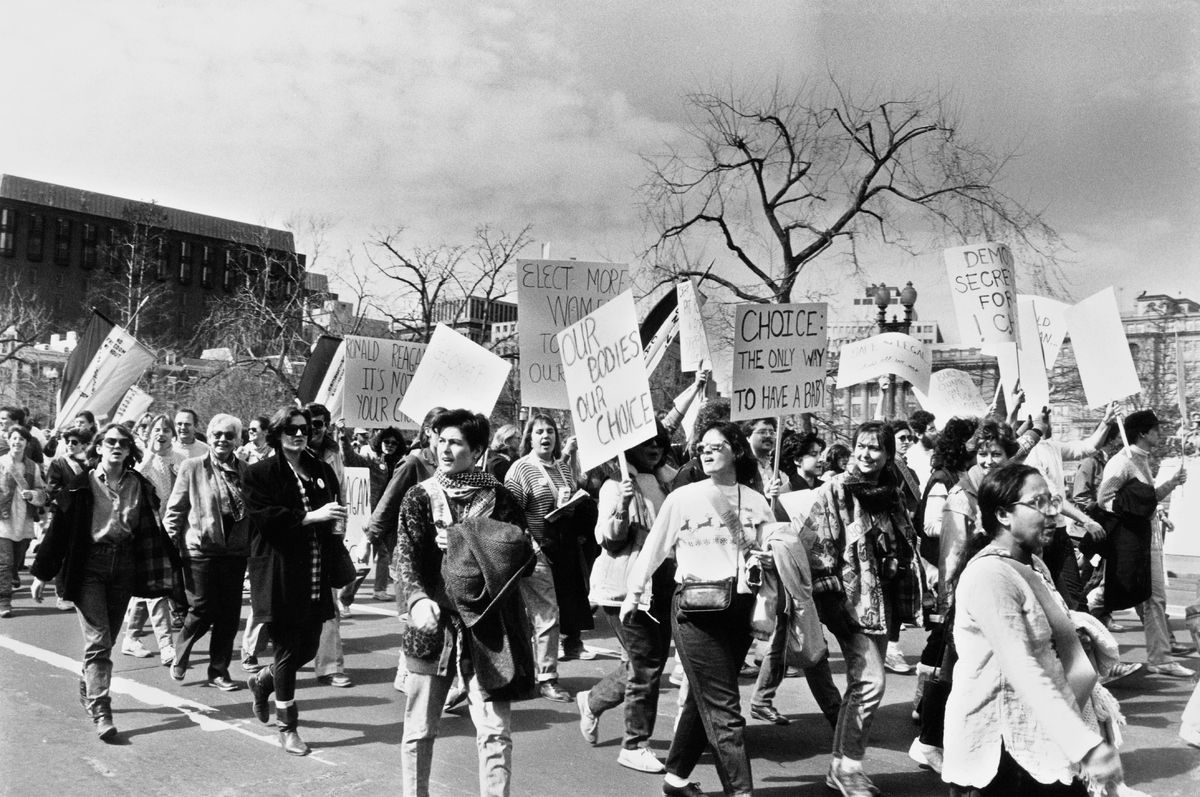 Across our articles, we examined legal policies and politics, identifying the pattern where representation without transformation became a recurring theme. Legal and institutional delays began being framed as procedural neutrality. It was clear that slow reform systematically failed women, particularly in cases where the delay causes the growth of gender based violence, domestic abuse and harm as they waited slowly for the systems to evolve.
However, we are reminded that radical does not equal recklessness. It simply means questioning why certain harms are treated as inevitable and why equality is framed as something to strive for rather than the norm. For feminist movements, standing openly signals that feminism isn't merely a phase, but a political force committed to restructuring the conditions of life. Without radical policy reform, feminism risks becoming a trend, rather than a transformation that is required to reshape the future.
The Unfinished Map
As these ideas accumulated, what stood out was the fact that they weren't separate thoughts, but an entangled web of thoughts that were connected to one another. Divine femininity doesn't sit apart from matriarchy. Through our work, it is evident that divine femininity shows how power was imagined before the patriarchy narrowed it into control. The matriarchy cannot be discussed without properly confronting the patriarchy, because matriarchal frameworks expose the patriarchy as a constructed artificial system rather than natural order. One only makes sense in relation to the other.
Seen this way, radical feminism is not an isolated or extreme ideology, but a necessary response to a historical rupture. The decline of divine femininity stripped power of balance, the rise of patriarchy entrenched hierarchy, and the continued articulation of matriarchy functions as both critique and alternative. Each idea feeds into the next, forming a coherent web rather than separate arguments. Together they explain how inequality emerged and why confronting it requires more than just reform.
Within this web itself, some core ideas function as the central point of conversation. The patriarchy and the matriarchy remain foundational because they determine how every other question is formed. Along with them sit smaller specific niches, such as the redpill culture, female separatism, and corporate governance, that act as points of pressure and not as core pillars. The roles of these points have never been to replace the core foundations, but to experiment how each of them were willing to stretch.
At the same time, what this map has allowed us to make visible is what has not been explored. Questions of ageing, environmental feminism, the damages of late stage capitalism and feminist epistemology stand among the large areas that we haven't given adequate attention to. These gaps provide us with indicators of where the map has to expand next. The map reminds us what remains uncharted. Each of these unexplored territories has the potential to reshape how we understand the ground we have already covered, altering our future direction and the meaning of our journey so far.
A Web of Determination
Reaching one hundred articles didn’t signal completion. Instead, it sharpened the stakes. It revealed how far we've come and inspires us to go further. What this journey has shown more than anything, is that feminist thought doesn't move in straight lines; it circles. Some of the recurring schools of thoughts we have reached through Matriarchy Times are thoughts driven by necessity.
These thoughts matter because they refuse compartmentalization, just like how feminist struggles cannot be isolated from one another without distorting reality. Refusing compartmentalisation played out in how we wrote across boundaries that are often kept artificially separate. When we examined law, we could not avoid culture. When we wrote about violence, economics followed. At the same time, this reflection makes visible what remains unfinished. They give us signals of where attention must move to next. Our work on debunking feminist myths emerged precisely because we noticed how isolated claims were being used to delegitimise the entire movement. This moment of appreciation affirms that Matriarchy Times is defined by a commitment to refuse the pressure to simplify what is structurally complex.
What comes next will continue this pattern and the task will remain clear: to refuse the narrowing of feminist imagination and explore the territories left unexplored. From how systems are quietly re-encoding patriarchal power to how feminist interventions must look like before those systems become untouchable, Matriarchy Times believes that we must momentarily pause at this hundredth article to celebrate our position and beliefs. This will let us recognize the patterns that have emerged across our work and affirm our refusal to dilute feminist analysis for comfort.
REFERENCES:
1. Goddess Worship and the Divine Feminine
Link: https://buymeacoffee.com/matriarchytimes/why-i-quit-goddess-worship
Focus: An exploration of goddess worship and spirituality centered on the divine feminine, including critical reflections on its limitations and contradictions within feminist and matriarchal discourse.
2. Matriarchy and Matriarchal Civilizations
Link :https://buymeacoffee.com/matriarchytimes/unique-female-personalities-fueling-matriarchal-revolution
Focus: An examination of matriarchal systems and civilizations, highlighting distinct female personalities that drive matriarchal revolution and cultural transformation.
3. Sisterhood and Roles of Women in Building a Matriarchy
Focus: Sisterhood-focused writing that explores the diverse roles women can occupy to collectively build and sustain a matriarchal society, with emphasis on advocacy and solidarity.
4. Fierce Female Figures and Women’s Rights Advocacy
Link: https://buymeacoffee.com/matriarchytimes/in-realm-queens-journey-into-dravidian-matriarchy
Focus: Profiles of powerful female figures who actively fight for women’s rights, combined with reflections on leadership, resistance, and matriarchal legacy.
5. Ancient Matriarchal Civilizations
Link: https://buymeacoffee.com/matriarchytimes/in-realm-queens-journey-into-dravidian-matriarchy
Focus: An exploration of ancient matriarchal civilizations, with particular attention to indigenous and Dravidian matriarchal traditions and their cultural foundations.
6. Matriarchal Leadership in Corporate Governance
Link: https://buymeacoffee.com/matriarchytimes/matriarchal-leadership-corporate-governance
Focus: A call for female-centered leadership models within corporate spaces, critiquing patriarchal hierarchies and proposing matriarchal governance frameworks.
7. Critique of Patriarchy and Call for Female Separatism
Link: https://buymeacoffee.com/matriarchytimes/the-tea-app-leak-rising-demand-female-separatist-spaces
Focus: Timely critiques of patriarchal systems, highlighting the growing demand for female separatist spaces as a response to systemic misogyny and male violence.
8. Religion, History, and Patriarchal Control
Focus: A critical analysis of Abrahamic religions and their historical role in dismantling matriarchal divinity and reinforcing patriarchal power structures.
9. Redpill, Incel Culture, and Boyhood Misogyny
Focus:
An investigation into redpill ideology and incel culture, examining how misogyny is cultivated during boyhood from a matriarchal feminist lens.
10. Radical Feminist Policy Reform
Link: https://buymeacoffee.com/matriarchytimes/when-women-walk-free-feminist-policy-male-curfew
Focus: A radical feminist policy proposal advocating structural reforms, including male curfews, to prioritize women’s safety, freedom, and autonomy.
11. Radical Feminist Mandates and Movement Critique
Focus: A critique of mainstream feminist movements, arguing for uncompromising radical feminist mandates to reform a deeply broken, patriarchal world.