

 The automobile industry and driving culture were historically designed by and for men. In the early twentieth century, women were actively discouraged from driving, and when they did drive, they often had less experience, leading to inexperience-based mistakes to be perceived as gender-based incompetence. Even today, when someone sees a woman make a driving mistake, it often reinforces an existing stereotype in their mind. Conversely, when they see a woman driving well, they ignore it or dismiss it as an exception. The stereotype persists because men are often seen as more "skilled" because they are more aggressive and confident. However, this "skill" often translates to risky behaviour, such as speeding, tailgating and driving under the influence. Women are often more cautious and attentive, which can be interpreted by others as hesitation or just being a bad driver, whereas that same caution reduces their likelihood of severe accidents.
Acknowledging this does not mean pretending the stereotype does not exist. Rather than dismissing it as a baseless belief, which only results in the continued persistence of it, Matriarchy Times seeks to examine where the myth comes from, whether it has any factual grounding and why it continues to survive within society.
The origins of the myth
The reality of the patriarchy is that social structures, norms and even environments often prioritize male experiences and perspectives, creating the gender data gap where women's needs are overlooked in areas like medicine, technology and safety. If you're a woman and ever felt cold in a public air-conditioned space, you aren't alone. The algorithm that dictates temperature regulation in many office buildings was designed in the 1960s for a man. Women who typically have smaller frames and less muscle mass, naturally feel a bit more colder than men do. This goes beyond simple temperature issues. CPR mannequins are mostly male; a study even identified that men's odds of survival were 23% higher than women when it came to resuscitation in public. Even smartphone designs are made with only men in mind. Women's hands are, on average, smaller than men's - which can make the industry's ever-increasing screen sizes problematic to use.
And vehicles aren't any different.
The likelihood of getting involved in a traffic accident is bigger for men than for women, but the likelihood of dying or being injured once the accident occurs, is bigger for women. Research shows that women are significantly more likely to suffer severe injuries (73% more likely in frontal crashes) and whiplash (3x more likely) compared to men. Men and women have different bone density, muscle mass, and spinal structures, which affects how bodies react in collisions.
Vehicle safety tests have historically primarily used crash test dummies based on a male body. Even the "female" crash test dummy was merely a smaller version of the male dummy, that didn’t take into consideration the abovementioned differences in male and female physiques. The call for an accurate female crash test dummy dates back almost four decades, yet it was in 2025 where a female-modeled crash test dummy was unveiled. Since automotive design is directly influenced by the results of safety testing, any bias in the way cars are crash-tested translates into the way cars are manufactured. So when safety tests don't prioritize female occupants, carmakers won't make changes to better protect half the population.
Estimated increase of risk for moderate injuries in a car crash compared to a male driver or front passenger of the same age
That's not all, seating positions themselves increase the risk of injury to women. As women tend to be shorter, they generally have to sit closer to the steering wheel in order to reach the wheel and the brakes. This position makes them more vulnerable to lower-body injuries involving the legs, spine and abdomen. Despite the fact that women have a higher seatbelt usage rate than men in fatal crashes, have a lower mean body mass index, and drive newer cars, women are clearly at higher risk than men in vehicle collisions. Car manufacturers cannot protect the whole population without models that represent both men and women.
Further, conventional seatbelts don't fit pregnant women properly, and motor vehicle crashes are one of the leading causes of fetal death related to maternal trauma, making up to 20% of deaths. Even a relatively minor crash can cause harm.
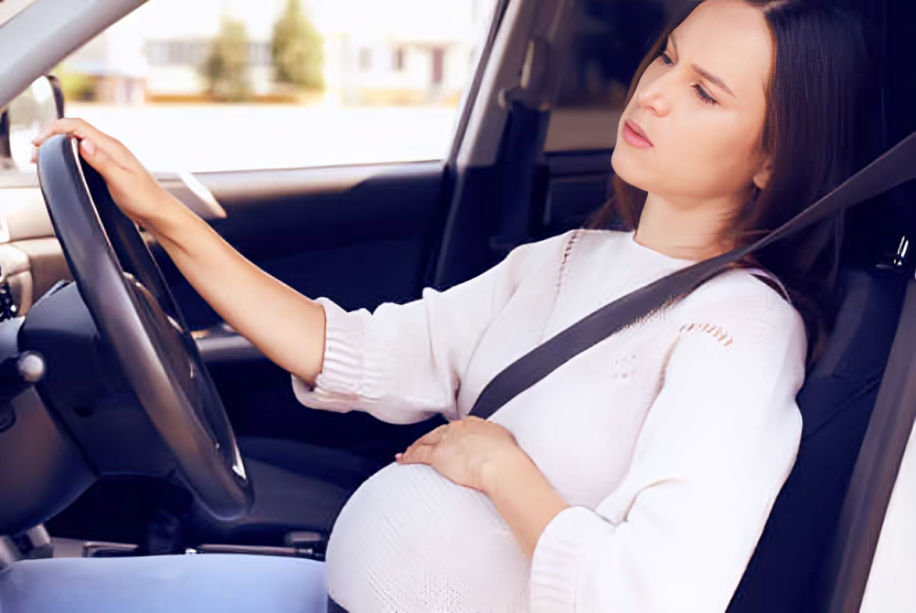 With women struggling to fit into vehicles not designed for them, and driving in situations where even minor accidents could be fatal, the stereotype that women are just bad drivers arise. When a woman is involved in a car crash, she is 47% more likely to be seriously injured and 17% more likely to die. Women aren't bad drivers; they're just more susceptible to injury driving in conditions that systematically put them at a greater risk.
Moving past the myth
Despite these structural disadvantages, women have learned to navigate a world designed around male norms, including learning to drive vehicles built for male bodies. What is particularly interesting is that, when measured objectively, women may in fact be safer drivers than men.
In 2024, Austria issued 40% more driving licenses to men, Despite this higher number of male license holders, the road accident data for the first quarter reveal a stark gender gap in fatal outcomes: out of 63 people killed in traffic accidents between January and March, 54 were men and only 9 were women, meaning roughly six times more male than female fatalities. This disparity reflects the differences in behaviour and risk exposure. In fact, based on accident statistics, insurance data and safety studies, women are generally considered safer drivers than men (although it must be remembered that driving skill itself is individual).
Statistics indicate that men account for over 70% of traffic violations, including speeding offences, and crashes involving male drivers are more likely to be severe or fatal. Factors such as excessive speed, alcohol consumption, aggressive drivings, and failure to wear seatbelts are disproportionately associated with male drivers. While men often report greater confidence in their driving abilities, this confidence frequently crosses into overconfidence, increasing the likelihood of dangerous behaviour. Women, on the other hand, tend to drive more calmly and cautiously. They are less likely to engage in aggressive overtaking, unnecessary honking, or intimidating behaviour toward other road users. As a result, even though women are more vulnerable to injury when accidents occur, they cause fewer accidents overall.
Men break far more motoring laws than women
The influence of gender driving stereotypes
Stereotype threat is a sociopsychological phenomenon where individuals fear confirming negative stereotypes about their social group, leading to increased anxiety, distraction and underperformance on relevant tasks, even if they don't personally believe the stereotype. Accordingly, negative female driver stereotypes might lead to women being prone to experience anxiety in driving tasks, which may potentially lead to poor driving performance and ultimately verify the negative female driving stereotype. This phenomenon is known as the gender driving stereotype threat. In any setting, if an underrepresented person is only one of their kind, they often become hyper-visible and are expected to speak for their entire community. When a woman makes a mistake driving, it is sometimes wrongly perceived as representative of every woman ever, unlike in the majority group where a mistake is just an individual error. In addition to the stereotype threat, this pressure leads to increased anxiety and self-doubt, not only in driving, but in every activity where women are underrepresented. However, this is far from the truth, individuals cannot represent the vast, diverse and contradictory experiences of an entire community.
When women are reminded of the stereotype, they become aware of the judgement that follows it. This awareness triggers anxious stress and lower self-esteem, where women begin to doubt their own abilities. The mental effort to combat the stereotype and perform perfectly adds to the cognitive lead, which diverts resources from the actual task of driving. This increased mental load can eventually lead to real-life mistakes, which automatically makes the negative stereotype appear real, which creates a vicious cycle.
 Gender stereotypes exist in many areas and affect the self-perception of countless women. They create rigid expectations for traits and roles, leading individuals to internalize these norms, limiting career choices, affecting emotional expressions, and impacting body image, ultimately lowering self-esteem and creating pressure to conform, even for those who don't fit traditional molds.
Research illustrates this effect clearly. An Australian study found that women who are told that men are better drivers are more than twice as likely to collide with pedestrians as other women in a similar test. "When people are confronted with negative stereotypes about themselves they seem to experience an additional cognitive load, which can decrease their performance on a task," Dr. von Hippel stated in the study, "There can be subtle things happening in the environment while a woman is driving, like a male driver shaking his head when she tries to reverse park a car."
Accident gap and age differences
Research shows that the difference in accident involvement between male and female drivers tends to be smaller among younger age groups but grows as drivers get older. In many countries, young men and young women under 25 have the highest overall crash rates because of inexperience, and while young males still tend to be involved in more severe and fatal accidents than young females, the relative gap is smaller at these ages compared with later in life.
For example, in OECD data across several countries, young male drivers aged 18-20 have about three times the fatal crash rate of their female peers, but as drivers age into middle age, the male-to-female fatality gap tends to widen before narrowing again in senior years. Older male drivers continue to show notably higher fatality involvement than women of the same age. These patterns reflect both behavioural differences, such as greater risk-taking and overconfidence by men, and exposure differences across age groups.
Women aren’t bad drivers; society just says they are
The idea that women are inherently bad drivers is not only unsupported by evidence, but actively obscures the real factors that shape road safety outcomes. It shifts attention away from systemic design failures and cultural norms that reward aggression while punishing caution. When women are judged more harshly for mistakes, while men’s risky behaviour is normalized and even admired, the conversation becomes less about safety and more about maintaining gendered hierarchies.
This myth also performs an important social function. By framing women as incompetent drivers, it reinforces broader narratives about women’s supposed unsuitability for independence in public spaces. Driving is not just a practical skill; it is closely tied to autonomy and freedom. Casting doubt on women's abilities to drive restricts them from actually driving, creating significant risks by forcing reliance on others for mobility, which in turn increases vulnerability. This state of forced dependency makes women lose the capacity to protect themselves from physical harm, access essential services and maintain mental well-being, leading to increased isolation and risks of abuse and exploitation, especially as this makes it difficult and almost impossible to flee dangerous situations.
 What makes this particularly concerning is that the consequences of this aren’t just psychological, they are also physical. Women are driving vehicles that are less safe for their bodies, navigating systems that do not account for their needs, and doing so under the weight of constant judgement. Yet even under these conditions, they continue to demonstrate safer driving behaviours than men. Rather than recognizing this, society continues to treat women’s caution as weakness and men’s recklessness as skill.
Challenging this myth requires more than correcting individual attitudes. It demands structural change, including gender-inclusive vehicle design and equitable safety testing. It also requires acknowledging how stereotypes shape behaviour and performance, and how these affect confidence over time. When women are allowed to drive without the burden of disproving a stereotype, the roads become safer for everyone.
Ultimately the question is not whether women are bad drivers, but why society remains invested in believing they are. The data tell a clear story, and it is one that challenges long-held assumptions. Women are not the problem on the road. The problem lies in systems that were never built for them, and in myths that refuse to die even when confronted with overwhelming evidence.