

 In the summer of 2025, a mobile app called Tea soared to the top of the Apple App Store, supported by a viral wave of feminist support on TikTok and Reddit. Its idea was straightforward but revolutionary: a platform exclusively for women where users could exchange safety advice and red flag alerts regarding men they've met on popular dating apps. The app was hailed as a silent revolution in the frequently risky world of heterosexual dating and as a tool for mutual protection.
However, Tea experienced a disastrous data breach just a few days after its quick ascent. Then another. ID documents, private messages, and images meant to protect women were instead used against them. In addition to exposing technical errors, these coordinated leaks exposed the structural and cultural hostility that any attempt at female digital self-defense would encounter. There is more to the Tea incident than just a botched app. In a digital world created by and for men, it is a scathing case study of what happens when women dare to make their mark.
Why Was Tea Necessary and What Was It?
In 2023, Tea (formerly Tea Dating Advice) was founded in the US. Its tagline, "Helping women date safely," encapsulated its mission. Women could share their experiences about men on the app, which provided a private, female-only area where they could identify men by name or photo, mark them as green or red flags, and highlight potential threats like emotional manipulation, violence, or catfishing. A selfie and a picture ID were required for platform access in order to confirm that the user was a woman.
The app addressed a gap that had long been ignored by popular dating services. While traditional apps like Tinder, Bumble, and Hinge profit from matching users, they don't take much responsibility for user safety. These businesses frequently disregard or downplay the concerns expressed by women, despite the innumerable horror stories of assault, deceit, and stalking. As a crowdsourced defense mechanism created by women for women in response to systemic failures, tea served as a digital whisper network.
 As a result of growing mistrust of male-dominated dating culture and regressive reproductive policies, Tea became popular by July 2025. Women viewed it as a symbol of group empowerment as well as a practical tool. In just one week, over two million users signed up.
However, the celebration didn't last long.
The Vulnerabilities That Damaged Trust
Investigative publication 404 Media revealed a significant security breach on July 25, 2025. An unprotected storage bucket connected to Tea was found by users on 4chan, a well-known message board that is frequently linked to misogynist trolling. According to Reuters, 13,000 of the roughly 72,000 photos that were made public were selfies and official identification documents that were provided when confirming an account. The remaining 59,000 photos were sourced from comments, private messages, and posts.
Users were specifically assured by Tea that verification photos would be removed following account approval. Rather, these private documents were kept in an unprotected cloud environment, where anyone who discovered the link could access them without restriction.
The breach quickly became a hideous sight. The women were doxxed by 4chan users, who shared their photos, made fun of their looks, mapped their alleged physical locations, and made nasty ranking websites. Posts were accompanied by derogatory terms like "whales" and "ugly bitches." A digital firing squad was created out of what was supposed to be a sanctuary.
 A second breach was discovered only four days later. Kasra Rahjerdi, an independent researcher, found an unprotected Firebase database that was reachable via Tea's API. 404 Media disclosed on July 29 that this database contained more than 1.1 million direct messages, revealing extremely private discussions about sexual assault, abusive relationships, abortions, and other topics.
According to Tea's developers, the initial leak only impacted users who signed up before February 2024. However, it became evident from the second breach that recent user data had also been compromised. In actuality, Tea failed to safeguard the data it retained and had not erased the data it had pledged to discard.
The Reasons Behind the Attack on Tea: An Insight into Patriarchal Anger
One must look beyond cybersecurity issues and into the core of gendered digital power in order to comprehend the backlash against Tea.The virulent response from male communities online, particularly the organized campaigns on 4chan, was not random. The backlash was planned and ideological. Men planned "hack and leak" operations to take down Tea within hours of it becoming the most popular app in the App Store. For them, the platform was more than just a dating app; it was a challenge to male authority.
Why so angry? Because tea gave women the ability to warn and protect one another, something that patriarchal systems do not allow. It made it more difficult for men to separate, deceive, and control women on an individual basis. Information that was previously disregarded or ignored was centralized. Most unbearably, it did so without letting men see or control what was being said.
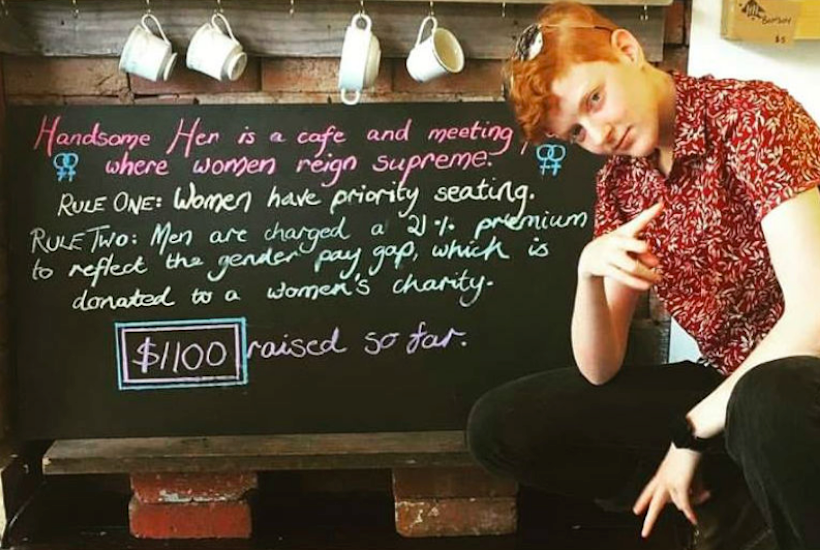
In other words, it was considered unacceptable that Tea permitted women to engage in collective self-defense. This response is not new. Male harassment has long targeted feminist cafés, female-only bookstores, and separatist communities. The feminist vegan café Handsome Her in Melbourne, which catered primarily to women, was forced to close after receiving a ton of hate online. An intense patriarchal anxiety is triggered by any attempt to create women-only spaces. The Tea attacks are just the most recent example of this pattern.
A Problem That Is Structural, Not Just Cultural
Although male aggression was a major factor, Tea's shortcomings extended beyond the attackers. Whether due to carelessness or a lack of responsibility, the app's male developers broke their promises to its users. Insecure storage was used for sensitive files. Data that was designated for deletion was kept. There was no enforcement of access protocols.
Platforms created within patriarchal structures have a tendency to perpetuate patriarchal values, as feminist theorists have long cautioned. The infrastructure itself is the issue, not just bad actors. Men code, fund, and run the majority of digital platforms. The internet's architecture is shaped by their priorities. Because of this, even areas intended for women are frequently constructed on top of structures that ultimately fail them.
The Tea scandal demonstrates that even apps designed exclusively for women are not always secure if the back-end systems are still run by men. Genuine safety must be incorporated into systems from the ground up, by and for women; it cannot be grafted onto platforms that were created by men.
The Internet is patriarchal; there is no such thing as a neutral ground.
The picture presented by statistics is bleak. According to studies conducted worldwide, between 16 and 58% of women and girls have been victims of online violence. Online harassment is 2700% more common for women than for men. Furthermore, targeted attacks and breaches are common, even in communities that are centered around women.
This is structural, not coincidental. The internet isn't a neutral environment. It is a system that is inherent to male dominance and frequently reinforces it. Dating apps run by men don't screen out risky users. Male-coded forums serve as havens for online hate groups. Furthermore, when platforms like Tea, even those specifically for women, rely on this same infrastructure, they become vulnerable.
Women are caught between two extremes: platforms that disregard their safety and those that attack them for having the audacity to establish their own safety.
Rethinking the Future: Collective Resistance and Feminist Technology
It is not appropriate to read Tea's failure as a cautionary tale about separatist spaces. Conversely, it demonstrates their necessity. A new wave of feminist technology is now required, including platforms that are owned, created, and accountable to the communities they serve by women.
This comprises: Systems with privacy as the norm rather than the exception are known as privacy-first designs.
Decentralized architecture: Federated or peer-to-peer models that lessen the possibility of centralized data breaches.
Platforms that are collectively run by women and have open decision-making procedures are examples of transparent governance.
Survivor-centered policies: Resources that let people report abuse, issue alerts, and look for help without worrying about being discovered.
Broader cultural change is crucial, in addition to technical solutions. In both online and offline contexts, men need to be pushed to confront misogyny. Doxxing, harassment, and surveillance are manifestations of patriarchal control and should be viewed as such; they are not simply "trolling." They are deliberate acts of patriarchal control, often carried out by men who know exactly what they’re doing and take pleasure in silencing women. These perpetrators should be called what they are: abusers, not jokers, and their actions should be treated with the seriousness of targeted political violence.
Mainstream platforms are also accountable. While ignoring the systemic causes of violence, they must cease outsourcing safety to women's whisper networks. They need to make investments in moderation, screening, and effective sanctions for negative conduct.

Final Thoughts: Expanding on Feminist Terminologies
The Tea app was both a daring experiment and a painful lesson, revealing the extraordinary risks women face when they try to build women-only digital spaces, and the deep hunger for such spaces. Retreat is not the answer. This is a moment for renewal, for creating places where women can connect, share, and defend one another online. These spaces must be grounded in feminist ideals, not just feminist branding, and they must be built on infrastructure, data, and code controlled by women themselves. Safety will come not from hiding but from empowerment, from the ability to shape the very systems we inhabit. The internet may be hostile now, but with structural reform, feminist innovation, and collective resistance, it can be transformed. The future of safety, trust, and solidarity online depends on women not only participating in the digital world, but owning it.