

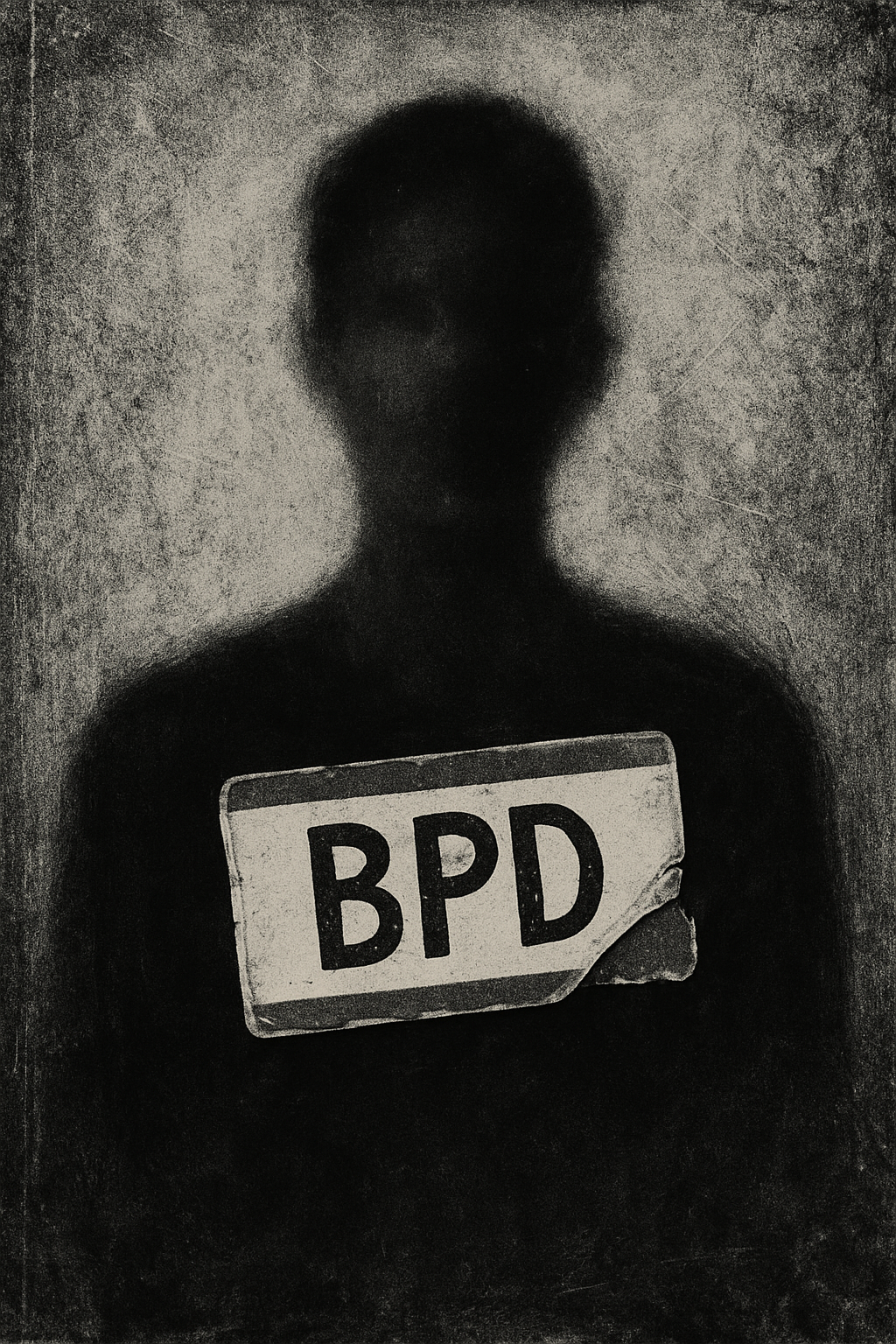
 I was originally diagnosed with Bipolar Disorder. Sitting in a doctor’s office, one who claimed to specialize in adolescent behavior, and awaiting my fate in a small, uncomfortable chair, is one of my core memories.
I remember sitting there thinking, This is it. Once I know what’s wrong with me, we can fix it.
After an agonizing process, one that consisted of answering a million questions and talking to stoic doctors who could recite these questions in their sleep, they provided me with a diagnosis: Bipolar Disorder.
The diagnosis felt like freedom. I tried it out, said it a few times. So this was to blame. This was the reason why I cried for hours on end, then could write five different poems at one time in the next. It was the name responsible for my self-mutilation, my angry self talks. Finally! This was what was wrong with me.
Over the next decade or so, I was treated for Bipolar Disorder. I was tried on several different medications from antidepressants to mood stabilizers, but to no avail. Therapy didn’t help, either. Some therapists were cold and mocking, others cried while reading my poetry. One therapist in particular wanted me to relive my traumas in vivid detail. It took until I was 23 years old to realize therapy wasn’t for me.
My symptoms got progressively worse. My temper became even harder to control. I would get so angry, I would break things. I yelled, I screamed. I hit myself. I was at an all-time low, and I was scared. Nobody could help me, either. I didn’t have anyone I trusted with how I felt.
Deciding to turn to books for answers, I found myself meandering through the self-help section of a Books A Million. That’s when I saw it: a book slightly sticking out on a shelf. Borderline Personality Disorder for Dummies. I bought it immediately, took it home, and read it in two nights.
The book described rage, emptiness, and an unsteady view of oneself. It had all the answers I had been seeking up until that moment.
Everything I read on the symptoms page was like a missing puzzle piece fitting into place. There was so much more going on than they had thought before, and I wasn’t alone. I wasn’t going crazy.
The Problem With Labels
Labels remind me of the cliques back in high school. You had the goths, the emos (holla!), the skaters, the jocks, etc. Cliques could make you feel like you belonged to something bigger, that you weren’t the only one having that particular experience. Beyond the idea of providing you with a sense of community, they also provided you with an identity.
But there’s a dark side to cliques, too. They excluded everybody who didn’t fit their criteria. You had to fit in a neat little box, or you couldn’t wear that label. You couldn’t be a goth kid who also listened to country music; you would get the boot quick.
Labels are like that. Once I got labeled with Borderline Personality Disorder, it saved me, at least for a little while. I didn’t feel like I was losing my mind. That diagnosis validated the experience I was having in my life, and I didn’t feel so lost. Everything made more sense, and the world didn’t seem so terrifying with me knowing there were others out there like me.
On the flip side, the label limited me, as well. It tucked me away in a neat little box stamped “Borderline Personality Disorder”. If I were Borderline, then I also fit all of the stereotypes of the disorder, not just the good bits.
Common stereotypes of BPD include being manipulative, emotionally explosive, and malicious. We’re also viewed as addicts, dramatic, and narcissistic. One peek into a forum about the disorder will reveal what people have to say about us. I’ve even seen people call their significant other who has BPD a monster. That’s a stab in the heart. We are misunderstood, to say the least.
Labels are just small pieces of your entire person. Just because you have certain characteristics doesn't mean they make up who you are. People with BPD can be kind and caring, they can be helpful and, honestly, some of the sweetest, most loyal friends you could ever hope to have. Why? Because we are extremely empathetic and passionate people.
Who I Am Beyond My Diagnosis
If you’re open about your diagnosis like I was, then you risk people seeing you for your disorder rather than for you as a person. Instead of seeing the good parts of BPD, they will hyper-fixate on your explosiveness and your fear of abandonment. That’s how it happened in my case. I kept attracting toxic people who blamed my label rather than taking accountability for their behavior.
This put me in a bind because I was at a dark place in my life, and I believed what other people around me said about me. I did not have a cement foundation of who I was as a person, and toxic people took advantage of that. Their negative idea of me became a burden I carried for years.
I had to relearn who I was before I became wrapped up in survival techniques. I was forced to unwrap all of that and find the person underneath. There were a few traits I took on simply because people around me had them. I learned that I’m a good mother, a poet, a reader, a witch, and a gamer, just to name a few.
There are so many other dimensions to our identity. We are complex, emotional people. We have just as many interests as anyone without BPD. We just feel emotions differently, that's all. Many of us also have to learn coping techniques because we were never taught. I, for one, am also extremely spiritual, and that’s the only tool I’ve had to cope with much of my emotional turmoil most of the time.
Sure, I live with BPD. But I am not BPD. And neither are you.
Redefining the Narrative
The negative connotations that came with having a disorder like this one got to me for a long time. I became obsessed with being understood. The idea of someone misinterpreting what I’m saying or how I’m feeling was agonizing. I became focused on trying to make people see things from my point of view. When that didn’t work, I had no choice but to embrace every aspect of my personality, even the negative parts, and to finally say, I don’t give a damn what you think of me.
I’ve had a few ah-ha moments along this journey, but one in particular made me pause and reflect on my entire life thus far. I remember arguing with my husband, and we were talking in circles. He was trying to tell me how something happened, and I was trying to tell him that’s not how it went. Over the past week of reviewing BPD resources, I learned the verbiage, “We are simply remembering things differently.” What a game changer. It stops anybody in their tracks and makes them rethink everything.
It gives you a tool to use when somebody wants to argue with your reality, not that he was doing it on purpose. I do not doubt that he remembers the situation happening that way, but that doesn’t mean that he gets to invalidate my experience by arguing about how I feel. You can’t tell someone how they feel, just as you cannot tell someone how they’ve experienced something. That was a huge wake-up call for me.
Suddenly, the smaller traumas I had gone through as a child came to light, and I could trace back from my triggers to what caused them in my childhood.
My healing journey truly began at this moment, and it didn’t involve medication or therapy. It didn’t involve me trying to communicate my feelings to everyone around me. Why do I owe them shit? I don’t, and neither do you. You owe yourself peace, and living as the best you possible for you. Everyone’s healing path is different. Mine involved meditation, shadow work, and cutting everyone off who was bad for me. It consisted of finding my religion and my place in the universe through spirituality.
I invite you to do the same: challenge your label.
My Manifesto, My Truth
When you look at me, you don’t see my diagnosis. You only see what I give you. And if you were to dig deeper, you would see someone much more than a woman with Borderline Personality Disorder. You would see someone who loves to laugh until I’m in tears, someone who loves to bake things homemade, and someone who loves thunderstorms because even nature deserves some catharsis from time to time. You would see someone who no longer minds being misunderstood, as long as she keeps the peace she’s worked so hard to finally obtain.
I am allowed to be more than my diagnosis.