

Most sunscreens protect your skin. The ones on this list protect the ocean too — without asking you to trade off on protection, wearability, or convenience.
Reef-safe and vegan sunscreen has moved from niche to mainstream, driven partly by Hawaii's 2021 Reef Act 104 (which banned oxybenzone and octinoxate — two of the most common chemical UV filters) and partly by growing awareness that what washes off in the water doesn't disappear. This guide covers what those terms actually mean, why they matter, and which products are worth buying.
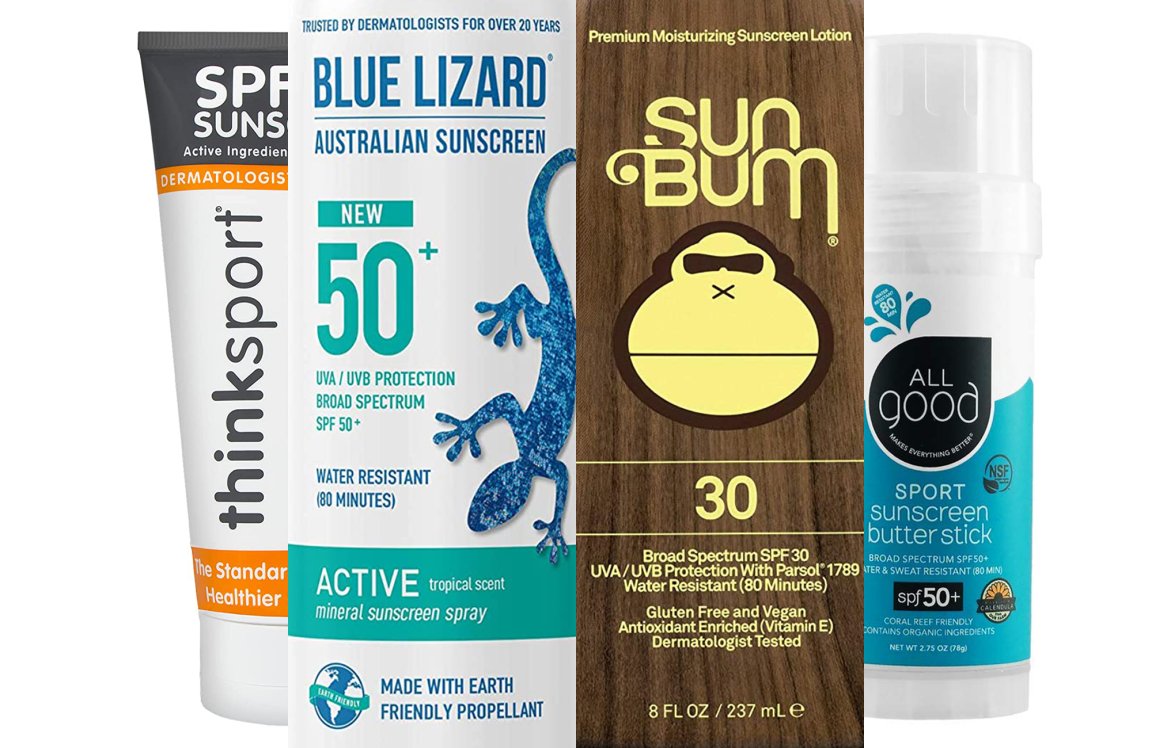
What "Reef-Safe" Actually Means
There is no regulated definition of "reef-safe" in US federal law, which means any brand can print it on a label without meeting a specific standard. What separates genuinely ocean-friendly sunscreens from ones that are just marketing is the active ingredient list.
The chemicals with the strongest documented evidence of coral reef harm are:
Oxybenzone (benzophenone-3) — the most studied harmful UV filter. Research published in Archives of Environmental Contamination and Toxicology found it causes coral bleaching, disrupts coral DNA, and deforms juvenile coral at concentrations as low as 62 parts per trillion. The Environmental Working Group's 2024 Sunscreen Guide rates oxybenzone as a hormone disruptor detectable in blood, urine, and breast milk after a single day's application — and both oxybenzone and octinoxate are now banned in Hawaii under the 2021 Reef Act 104 due to documented coral reef toxicity.
Octinoxate (octyl methoxycinnamate) — the second most prevalent harmful filter, also banned under Hawaii's Reef Act 104. Disrupts coral endocrine systems and accelerates bleaching.
Other flagged chemicals: homosalate, octocrylene, and certain parabens also appear on environmental concern lists, though evidence is less comprehensive than for oxybenzone and octinoxate.
What genuinely reef-safe sunscreens use instead: non-nano zinc oxide and/or titanium dioxide — physical mineral UV blockers that sit on top of skin rather than absorbing into it, reflect UV away from the skin rather than converting it to heat, and do not penetrate the water column in bioactive concentrations under normal use.
The switch to mineral sunscreens using non-nano zinc oxide and titanium dioxide is not a compromise on protection — it's a straightforward upgrade: reef-safe, no systemic absorption, broad-spectrum UVA and UVB coverage, and increasingly elegant formulations that don't leave a white cast.
What "Vegan" Means in Sunscreen
A vegan sunscreen contains no animal-derived ingredients and involves no animal testing. The most common animal-derived ingredients that appear in conventional sunscreens include:
Beeswax — used as an emollient and thickener
Lanolin — from sheep wool, used for moisture retention
Carmine — red pigment from crushed insects, appears in tinted sunscreens
Collagen — sometimes bovine-derived in anti-aging SPF formulas
Vegan does not automatically mean reef-safe — a sunscreen can be entirely plant-based and still contain oxybenzone. Similarly, reef-safe does not mean vegan — some mineral sunscreens use beeswax in their formula. The products below are both.
Does Mineral Sunscreen Work as Well as Chemical?
Yes — broad-spectrum mineral sunscreen at SPF 30+ provides equivalent protection to chemical sunscreen at the same SPF, with the physical blocking mechanism arguably more reliable in some conditions.
One practical difference matters for this article: mineral sunscreens typically block slightly more UV because physical reflection is more complete than chemical conversion. For anyone also trying to tan (rather than purely protect), a mineral SPF 30 will allow marginally less UV through than a chemical SPF 30 — meaning slightly slower colour development. The trade-off is real but small for most users.
The bigger practical challenge with mineral sunscreens is white cast — zinc oxide and titanium dioxide are white minerals, and at high enough concentration they leave a visible residue on skin. The products below have been selected partly on how well they've solved this problem.
The Best Vegan & Reef-Safe Suntan Lotions on Amazon
1. Sun Bum Original SPF 50 Sunscreen Lotion — Best Overall Vegan Reef-Safe Option
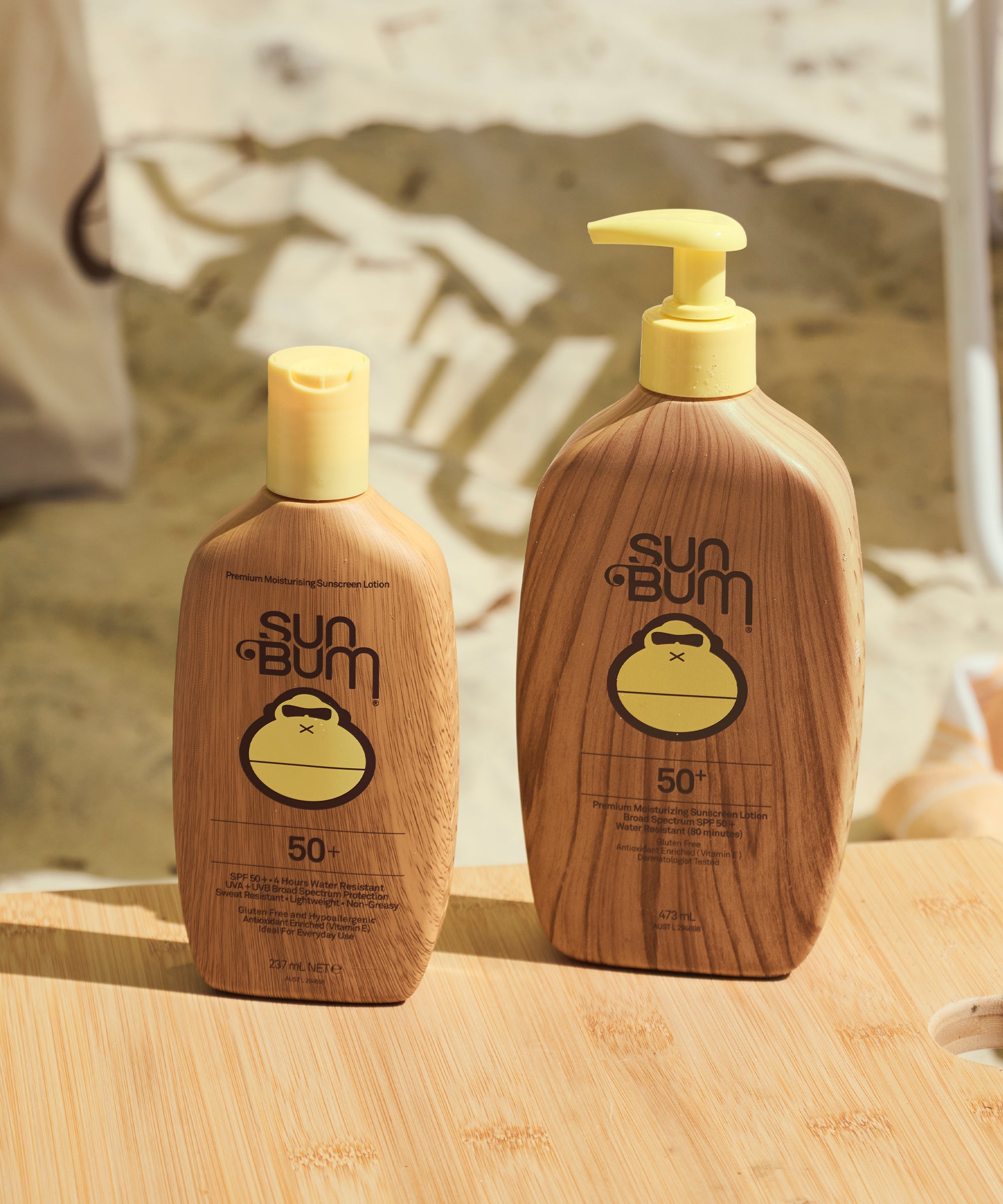
Best for: everyday outdoor use, all skin types, beach and pool sessions
Sun Bum is the brand that made reef-safe sunscreen desirable — and the Original SPF 50 lotion is the product that built that reputation. Sun Bum Original SPF 50 is vegan, Hawaii 104 Act compliant — meaning free of octinoxate and oxybenzone — and delivers non-comedogenic UVA/UVB protection packed with Vitamin E. The oil-free, water-resistant formula works for all skin types.
What stands out beyond the certifications: the formula actually feels good to wear. Where many mineral-heavy sunscreens feel chalky or thick, Sun Bum's chemical-mineral hybrid formula applies like a standard moisturising lotion. The vitamin E addition means it conditions skin while protecting it.
Sun Bum focuses on natural and reef-safe ingredients that are perfect for beach-goers and outdoor enthusiasts. The SPF 50 formula is their most popular — the 2-pack on Amazon represents the best value per ounce in the line.
Note on formula type: Sun Bum Original uses a combination of chemical and mineral filters — it's oxybenzone and octinoxate free (Hawaii 104 compliant) but does use some chemical UV filters such as avobenzone. For anyone wanting a fully mineral formula with zero chemical filters, Blue Lizard or Thinksport below are the right choice.
What to know:
Hawaii 104 Act compliant — no oxybenzone or octinoxate
Vegan, cruelty-free, paraben-free, gluten-free
Water resistant up to 80 minutes
Oil-free, non-comedogenic — suitable for acne-prone skin
Vitamin E for skin conditioning during sun exposure
The verdict: The most wearable reef-friendly SPF 50 on Amazon — best for everyday tanners who want ocean credentials without sacrificing the feel of a premium lotion.
👉 Sun Bum Original SPF 50 Sunscreen Lotion — Amazon
2. Blue Lizard Sensitive Mineral Sunscreen SPF 50+ — Best Fully Mineral Formula
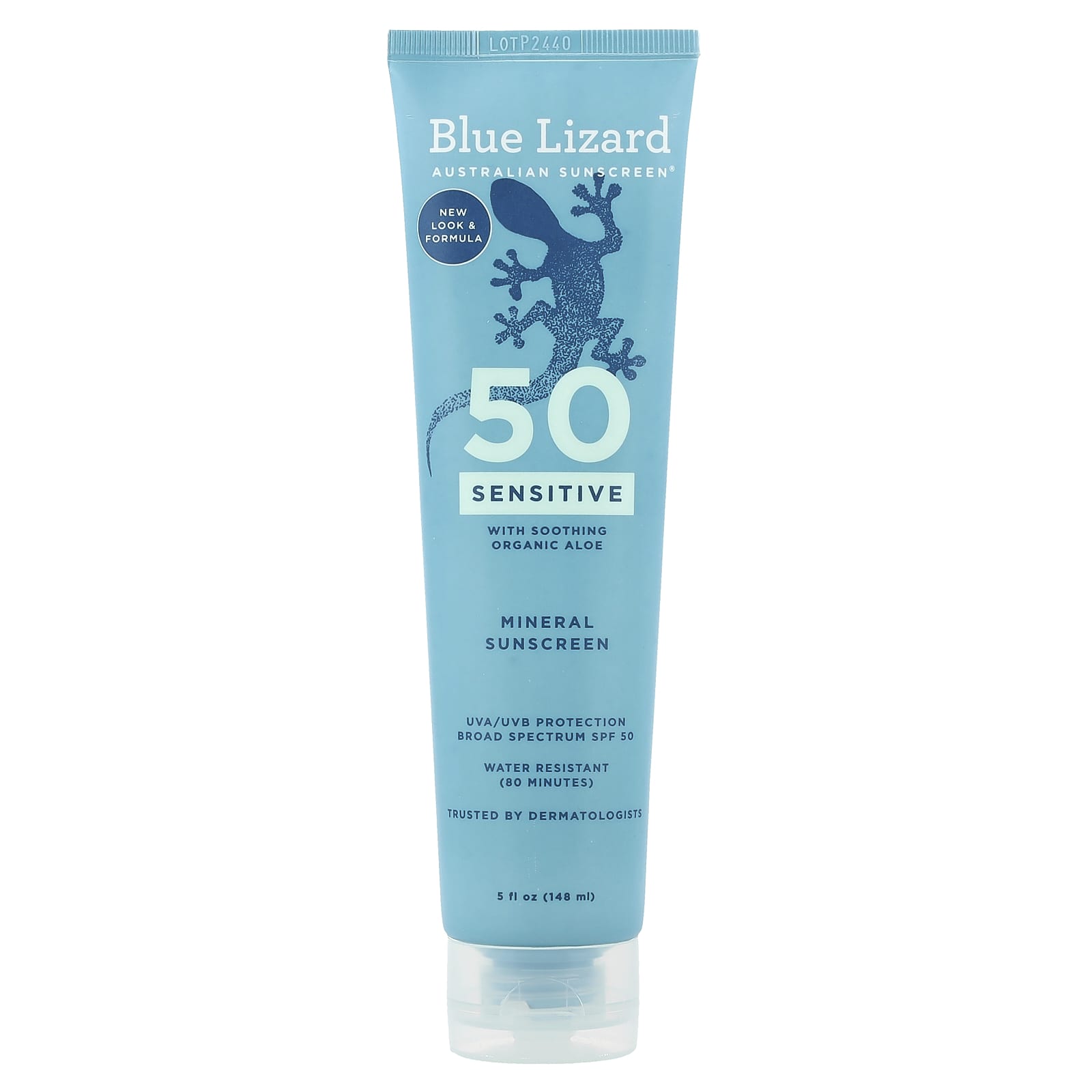
Best for: sensitive skin, deeper skin tones (minimal white cast), fully mineral protection, families
Blue Lizard is the mineral sunscreen brand that keeps appearing on dermatologist recommendation lists — and the Sensitive SPF 50+ lotion is the product they're most often recommending. Blue Lizard Sensitive Mineral SPF 50 contains no harsh chemical active ingredients, is formulated specifically for sensitive skin, is paraben-free and fragrance-free, infused with organic aloe vera to soothe and moisturise — and is made without oxybenzone or octinoxate to help protect fragile reef ecosystems.
The Smart Cap Technology is a practical feature worth calling out: the cap turns blue when exposed to UV light — a visual reminder that UV is present and protection is needed. Minor detail, but genuinely useful for people who forget to reapply.
One Amazon customer noted: "I originally purchased this sunscreen because my family was vacationing in the Virgin Islands, where reef-safe sunscreen is required by law. I'm glad I did because I love it and use it every day now. It goes on nicely, a little goes a long way, and it doesn't leave a white cast."
The white cast point is important: Blue Lizard's formula is notably better than most mineral SPF 50s for minimising residue. It's not completely invisible on deeper skin tones but it's well ahead of most zinc oxide formulas at this concentration.
What to know:
100% mineral sunscreen — zinc oxide only, no chemical UV filters
Fragrance-free and paraben-free — specifically formulated for sensitive skin
Reef-safe: no oxybenzone or octinoxate
Organic aloe vera for hydration and soothing
Smart Cap UV indicator
Water resistant up to 80 minutes
The verdict: The best fully mineral vegan reef-safe option for anyone with sensitive skin, skin conditions, or who needs zero chemical UV filters — and significantly better than average for white cast reduction.
👉 Blue Lizard Sensitive Mineral Sunscreen SPF 50+ — Amazon
3. Badger Reef Safe Mineral Sunscreen SPF 40 Sport — Best for Outdoor Activities & Strictest Reef Certification
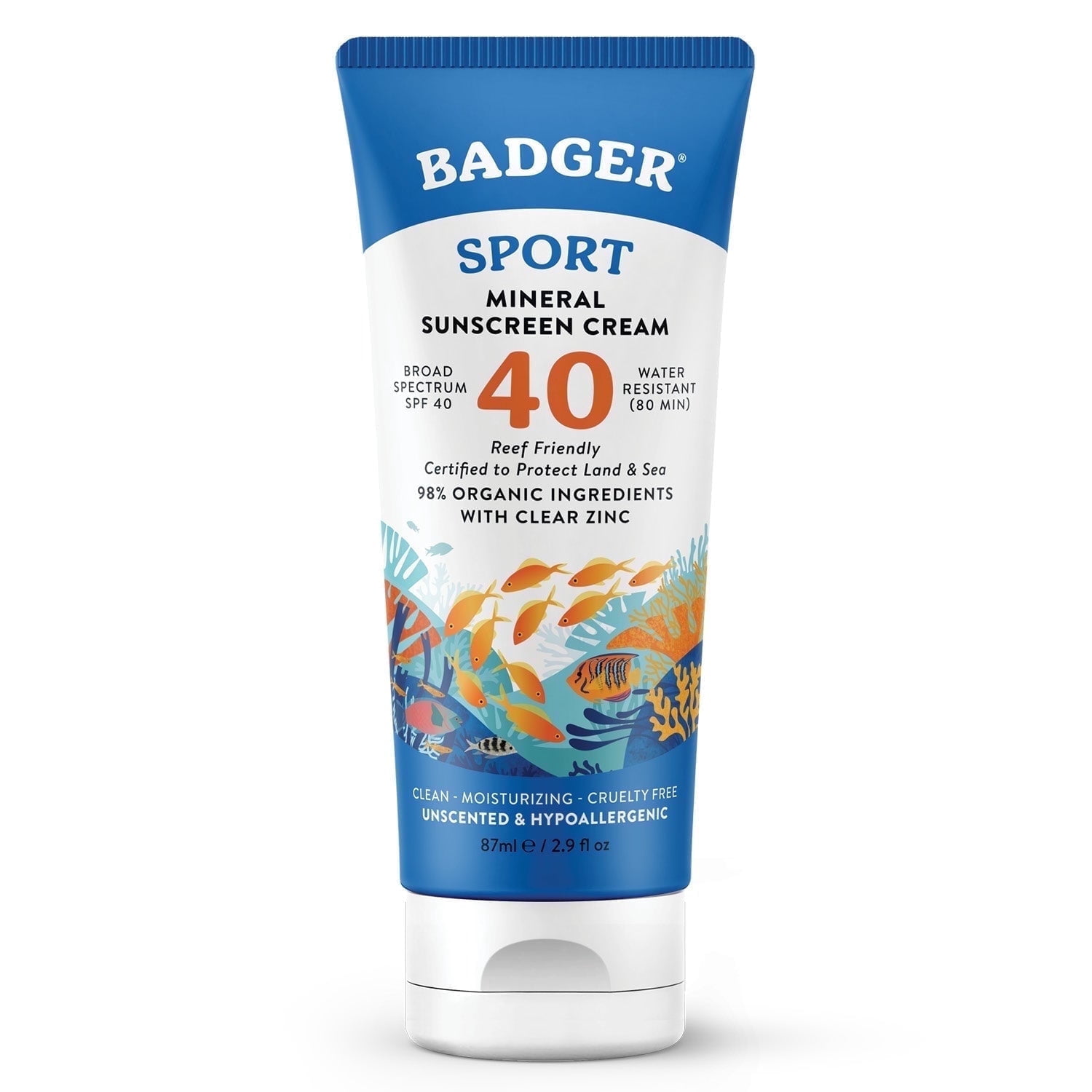
Best for: surfing, swimming, adventure sports, maximum reef-safe credentials
Badger Reef Safe Sunscreen SPF 40 Sport is the only widely available sunscreen to pass Haereticus Environmental Laboratory certification — the most rigorous reef-safe standard available — contains just four ingredients, has excellent water and sweat resistance, minimal white cast for a mineral sunscreen, and is made in the USA by a woman-owned, B-Corp certified company.
That Haereticus certification is significant. Most "reef-safe" claims on product labels are self-certified by the brand. The HEL certification is independently verified against a published list of harmful ingredients — including not just oxybenzone and octinoxate, but homosalate, octocrylene, parabens, and a range of other marine-toxic compounds. If maximum environmental rigour matters to you, Badger is the only widely available choice that's been verified to that standard.
The four-ingredient formula also matters from a skin perspective: the simpler the formula, the fewer potential irritants, and the lower the risk of reactions for sensitive or reactive skin. The SPF 40 rating provides serious protection — blocking about 97.5% of UVB rays.
Badger Mineral Sunscreen is SPF 50 in some versions and offers zinc oxide protection with 98% organic ingredients, catering to adventurers with its reef-safe, hypoallergenic, and unscented formulation.
One honest note: Badger's formula is thicker and harder to blend than Blue Lizard or Sun Bum. The tin format is less convenient than a squeeze tube for full-body application. For face and targeted areas before surfing or watersports — ideal. For a full beach-day body application — slightly more effort required.
What to know:
Haereticus Environmental Laboratory certified — most rigorous independent reef-safe standard
98% organic ingredients, 4-ingredient formula
B-Corp certified, woman-owned, made in USA
Unscented and hypoallergenic
Water and sweat resistant
Slightly thicker consistency — better for targeted use than full-body coverage
The verdict: The most credibly reef-safe option for anyone who needs certification beyond a brand label — particularly suited to surfers, divers, and anyone in protected marine environments.
👉 Badger Reef Safe Mineral Sunscreen SPF 40 Sport — Amazon
4. Thinksport SPF 50 Mineral Sunscreen — Best for Sports & Active Outdoor Use
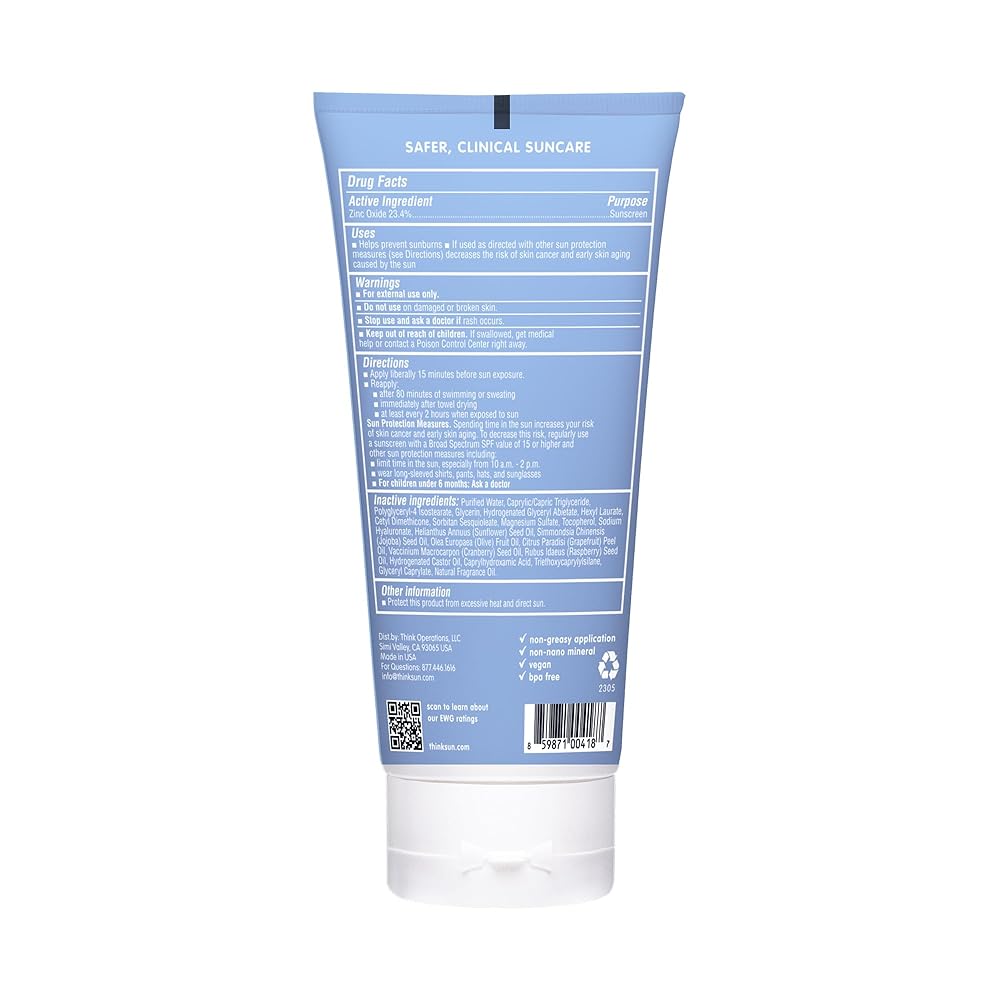
Best for: sports, active outdoor use, sweating, high UV environments
Thinksport Mineral Sunscreen SPF 50 is the highest-recommended fully mineral sunscreen lotion by dermatologists and customer reviews, containing non-nano zinc oxide formulation. Thinksport was the first sunscreen to pass Whole Foods Premium Care requirements and contains no PABA, parabens, phthalates, BPA, oxybenzone, avobenzone, or petroleum.
The Whole Foods Premium Care certification is a practical shorthand — it means the formula passed third-party ingredient screening against a published list of ingredients of concern. It's not the same as Haereticus certification but it's a meaningful independent standard above self-labelling.
Thinksport's formula is specifically optimised for active use: the lotion consistency is designed to stay on skin during heavy sweating without migrating into eyes (a significant problem with many mineral sunscreens during sport). The 80-minute water resistance rating is maximum waterproof performance by FDA standards.
At SPF 50, it blocks approximately 98% of UVB rays — appropriate for extended outdoor sessions, higher altitudes, or fair skin at peak UV hours.
What to know:
Non-nano zinc oxide — fully mineral, reef-safe
Vegan and reef-friendly formulation
First sunscreen to pass Whole Foods Premium Care requirements
Free from PABA, parabens, phthalates, BPA, oxybenzone, avobenzone, petroleum
Water resistant 80 minutes
Specifically formulated for sweat resistance during active use
The verdict: The best active-use mineral SPF 50 for athletes, hikers, and outdoor workers who need protection that holds through sustained physical activity.
👉 Thinksport SPF 50 Mineral Sunscreen — Amazon
5. Project Reef SPF 50 Mineral Sunscreen — Best Eco-Packaging Option
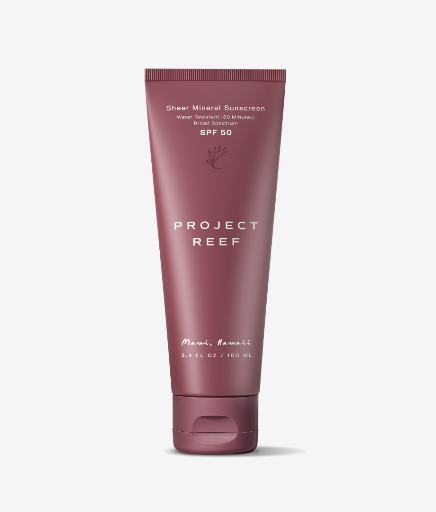
Best for: sustainability-focused buyers, everyday beach use, travel
Project Reef SPF 50 Mineral Sunscreen is made with non-nano zinc oxide, is vegan, reef-safe, and meets Hawaii Reef Act 104 standards — the strictest environmental guidelines for sunscreens. The formula is lightweight, non-greasy, and chemical-free, applying easily with water resistance up to 80 minutes. The packaging is made from ocean-bound and post-consumer recycled plastic.
The recycled ocean-bound packaging is the differentiator here — for buyers who care about the full environmental footprint of a product, not just the formula, Project Reef closes the loop. Ocean-bound plastic is material collected from coastal communities before it enters the ocean; using it for packaging creates demand that funds collection.
The formula itself performs well — non-nano zinc oxide at SPF 50 with a lightweight gel texture that applies more easily than typical zinc formulas. TSA carry-on compliant sizing also makes it the most practical travel option in this list.
What to know:
Non-nano zinc oxide, Hawaii 104 Act compliant
Vegan and reef-safe
Packaging made from ocean-bound and post-consumer recycled plastic
Water resistant 80 minutes
Lightweight, non-greasy texture
Travel size available — TSA compliant
The verdict: The most complete sustainability story — reef-safe formula plus ocean-recovered packaging, in a lightweight formula that applies easily.
👉 Project Reef SPF 50 Mineral Sunscreen — Amazon
Quick Comparison
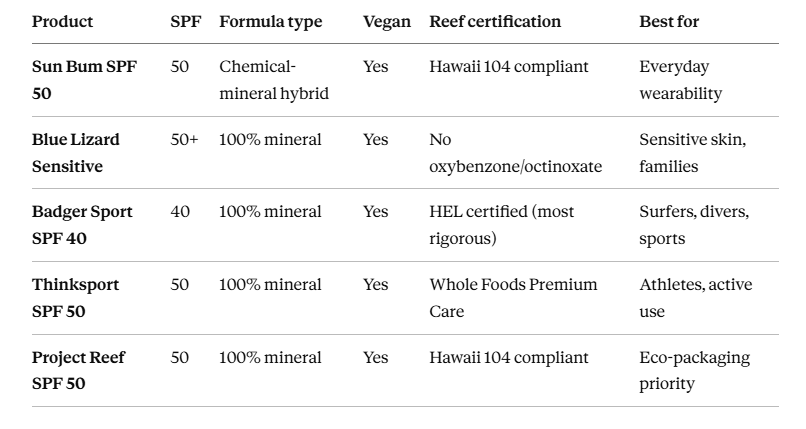
Does Reef-Safe Sunscreen Work as Well for Tanning?
This is the practical question for buyers who want both ocean-friendly credentials and real colour.
The short answer: yes, but slightly slower than chemical SPF sunscreens at equivalent SPF numbers.
Mineral sunscreens reflect UV away from the skin physically. Chemical sunscreens absorb it and convert it to heat. Physical reflection is marginally more complete — meaning a mineral SPF 30 blocks a hair more UV than a chemical SPF 30. For tanning purposes, this translates to slightly slower colour development per session.
In practice, the difference is small enough that most people won't notice it over a normal beach day. The more significant factor is SPF level: choosing SPF 30 versus SPF 50 matters more for tanning speed than choosing mineral versus chemical at the same SPF.
For anyone prioritising both reef credentials and tanning: SPF 30 mineral sunscreen (not available in the products above, but most brands offer a 30 option) will give the best balance of ocean-safe protection and colour development. All five products above are available in lower SPF variants — check the brand's Amazon page for SPF 30 options.
The White Cast Problem — Honestly Addressed
Most people's main hesitation about mineral sunscreens is the white cast. Here's an honest ranking of the products above on this metric:
Least white cast: Sun Bum (chemical-mineral hybrid minimises cast significantly), Blue Lizard Sensitive (notably better than average for a fully mineral formula)
Moderate white cast: Thinksport, Project Reef (both apply with some initial cast that rubs in with blending)
Most white cast: Badger (thicker formula, highest organic content, most visible initial cast — less relevant for face/targeted use)
For darker skin tones specifically, the Sun Bum formula is the most cosmetically wearable option. The fully mineral formulas all leave some trace on deeper skin, though Blue Lizard's concentration keeps it manageable for medium-to-deep tones. Tinted mineral sunscreens (not on this list) are the better solution for face use on darker skin.
Where Are Reef-Safe Sunscreens Required?
Several destinations have legally mandated reef-safe formulas — if you're travelling to any of these, products containing oxybenzone or octinoxate are confiscated or result in fines:
Hawaii — statewide ban under Act 104, effective 2021
US Virgin Islands — ban on oxybenzone and octinoxate
Palau — world's first national reef-safe sunscreen law, bans 10 chemicals
Bonaire — National Marine Park requires reef-safe sunscreen
Mexico (select areas) — Xcaret parks and several Quintana Roo protected areas require mineral only
Key West, Florida — city ordinance banning non-reef-safe sunscreen at beaches
All five products above are Hawaii 104 Act compliant and permitted in all of the above locations.
Frequently Asked Questions
Is mineral sunscreen truly reef-safe? Non-nano zinc oxide and titanium dioxide are the active ingredients with the most supportive evidence for marine safety. Non-nano means the particles are too large to be ingested by coral polyps. Most marine biologists and environmental organisations consider non-nano mineral formulas reef-safe within the context of normal recreational use. No sunscreen has zero environmental impact, but mineral formulas represent a significant improvement over oxybenzone and octinoxate.
Does "Hawaii 104 compliant" mean the same as reef-safe? Hawaii 104 compliance means the product contains no oxybenzone or octinoxate — the two most studied harmful chemicals. It doesn't cover the broader list of potentially harmful ingredients (homosalate, octocrylene, parabens, etc.) that Haereticus Environmental Laboratory certification does. Compliance is a good baseline; Badger's HEL certification is more comprehensive.
Can vegan sunscreen be just as effective as regular sunscreen? Yes — vegan status has no bearing on SPF performance. The UV-blocking active ingredients (zinc oxide, titanium dioxide, avobenzone, etc.) are either mineral or synthetic, not animal-derived. A vegan SPF 50 sunscreen blocks exactly the same amount of UV as a non-vegan SPF 50.
What's the difference between non-nano and nano zinc oxide? Nano zinc oxide has particle sizes below 100nm, which can potentially penetrate skin and pass through coral tissue when washed off. Non-nano zinc oxide has larger particles that sit on the skin's surface without penetrating and are too large for coral ingestion. All five products above use non-nano zinc oxide.
Is Sun Bum fully reef-safe? Sun Bum Original is Hawaii 104 Act compliant — free of oxybenzone and octinoxate. It does use some chemical UV filters (avobenzone, homosalate) that appear on broader environmental concern lists but are not banned under current legislation. For the strictest reef-safe standard, Badger's HEL-certified formula or a fully mineral option like Blue Lizard or Thinksport is the safer choice.
Do these sunscreens work in tanning beds? Reef-safe and vegan attributes are specifically relevant for outdoor and ocean use — the chemical filtration question doesn't apply in a tanning bed, which uses UV lamps not sunlight. For tanning bed use, see our guide to indoor tanning lotions.
The Bottom Line
The best vegan reef-safe suntan lotion is the one you'll actually use correctly — which means it has to feel good enough to apply properly and reapply consistently.
Sun Bum SPF 50 for the best wearability and everyday usability, at Hawaii 104 compliance level
Blue Lizard Sensitive for 100% mineral protection with the least white cast of the fully mineral options
Badger Sport for the strictest independent reef certification — the choice if you're in a protected marine area
Thinksport for active outdoor use and the broadest third-party ingredient screening
Project Reef if the packaging sustainability story matters as much as the formula
Any of these five is a genuine step up from a conventional chemical sunscreen, for your skin and for the ocean.
More Sun Care Guides
👉 Can You Tan with SPF? The Truth About Sunscreen and Tanning
👉 Best Self Tanner for Every Skin Tone — Tested & Ranked
👉 Best Indoor Tanning Lotion for Tanning Beds — 2026 Guide
Affiliate disclaimer: Some links in this article are Amazon affiliate links using the tag ziilaa-20. If you make a purchase through them, I may earn a small commission at no additional cost to you.