
Introduction: The Wound We Share
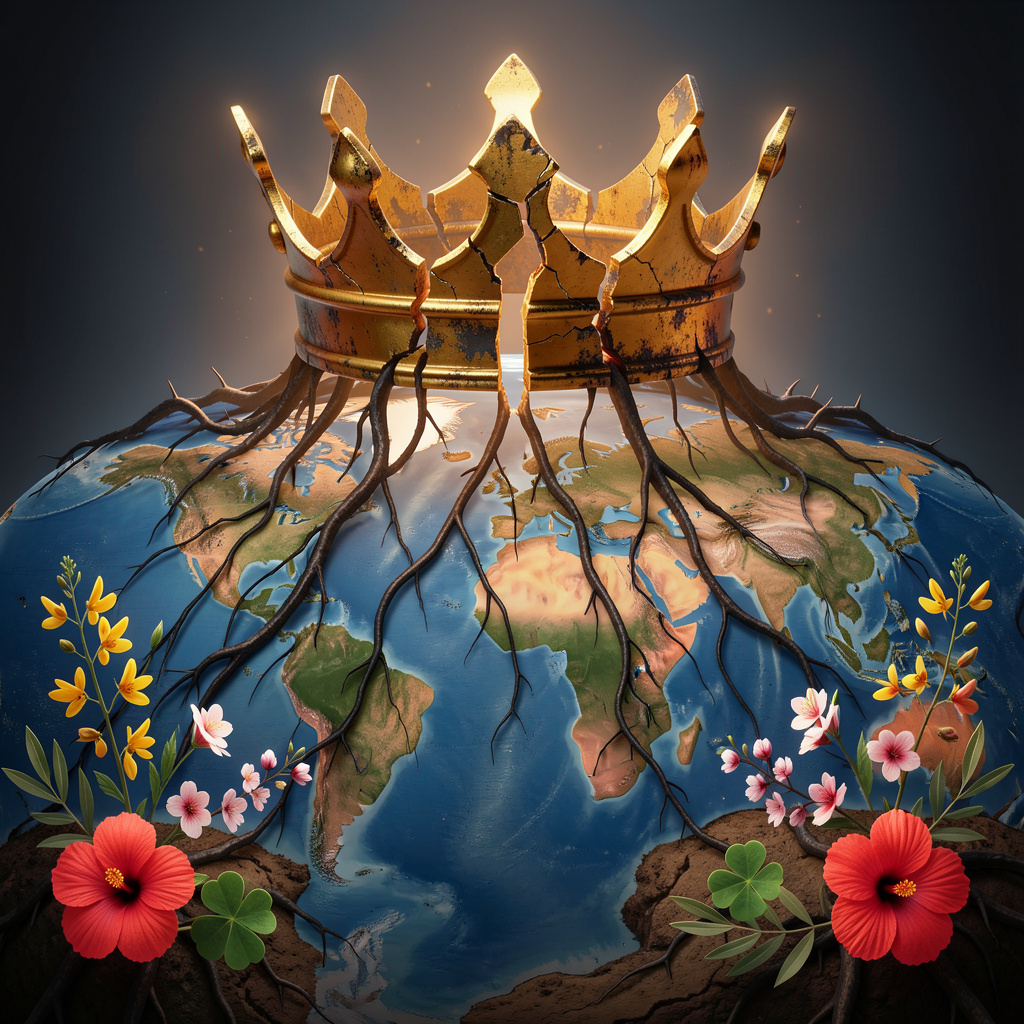
There is a wound that runs through the modern world. It is not a wound of flesh, but of spirit, a moral injury inflicted by centuries of colonial conquest, extraction, and cultural erasure. It lives in the bodies of Indigenous peoples whose lands were stolen. It lives in the descendants of enslaved Africans. It lives in the Chinese whose civilization was humiliated by opium and unequal treaties. It lives in the Irish who starved while food was exported. It lives in the Congolese whose hands were severed for rubber quotas. It lives in the Palestinians, the Indians, the Pacific Islanders, the Aboriginal peoples of Australia, the Māori of Aotearoa.
And it lives in the immigrant, the newcomer who is needed for their labour but never fully welcomed into belonging.
This paper is not an exercise in blame. Blame looks backward and seeks to punish. Awareness looks clearly at what is, and seeks to understand. The purpose here is not to indict the Crown or its extensions, though the evidence of wrongdoing is overwhelming and documented. The purpose is to name the wound, to describe its psychology, its transmission across generations, and its present-day manifestations, so that it might finally be brought into the open.
For a wound that is denied cannot heal. A wound that is silenced cannot be treated. Only a wound that is seen and spoken can begin the long journey toward repair.
Part One: What Is a Moral Wound?
The Psychology of Moral Injury
The term "moral injury" was first coined by psychiatrist Jonathan Shay to describe the psychological damage suffered by veterans who had perpetrated, witnessed, or failed to prevent acts that violated their deepest moral beliefs. It is not simply trauma. It is a wound to the moral self, a shattering of the assumption that the world is just, that authority is trustworthy, that one's own actions are aligned with one's values.
Moral injury occurs when a trusted authority betrays what is right. It occurs when one is forced to participate in or witness acts that transgress deeply held moral beliefs. And it occurs when the institutions that are supposed to protect instead harm.
The Collective Dimension
While moral injury was first described in individuals, scholars have increasingly recognized its collective dimension. The enduring legacies of colonialism and systemic violence have inflicted deep moral injuries that extend beyond the individual, permeating the collective consciousness of entire communities. These collective moral injuries are inflicted, transmitted across generations, and often strategically manipulated.
This is the colonial wound. It is not simply a historical event. It is a living presence, a moral injury carried in the bodies, stories, and silences of peoples who were conquered, extracted, and told it was for their own good.
The Wound's Message
Every colonial wound carries the same message, delivered in different languages and different lands:
You do not matter.
Your civilization is inferior.
Your gods are false.
Your ways are backward.
You should be grateful for what we have done to you.
This message is not merely rhetorical. It is backed by force, by stolen land, suppressed languages, removed children, and broken treaties. And over generations, it becomes internalized. The wounded begin to believe the lie.
Part Two: The Crown in 2026 - David Seymour and the Politics of Erasure
The Best Crown You Can Find
To understand how the colonial wound operates in the present, one need look no further than Aotearoa New Zealand in 2026. Here, the Crown's logic is embodied not in a distant monarch, but in a Deputy Prime Minister named David Seymour.
Seymour leads the ACT Party, a coalition partner in the current government. He has made the reinterpretation and undermining of Te Tiriti o Waitangi, the Treaty of Waitangi, his central political project. In 2025, his Treaty Principles Bill was defeated at its second reading after a hīkoi of tens of thousands marched on Parliament. But Seymour has not stopped. He has promised to "reignite" the Treaty debate, declaring he will "never move on from his vision for equality".
In September 2026, Seymour announced ACT's next move: a policy to strip the Waitangi Tribunal, the body that investigates Crown breaches of the Treaty, of its power to examine contemporary breaches. Once historical claims are settled, the Tribunal would be abolished entirely. "Nearly two centuries since the signing of the Treaty," Seymour said, "it is time to complete the historical settlements and move New Zealand forward".
This is not simply a policy dispute. It is a profound act of moral erasure.
The Logic of Dismissal
Seymour's framing reveals the psychology of the colonial wound at the level of the state. He acknowledges that historical wrongs occurred. "The historical claims were clearly wrong to anybody," he said. "The government of the day illegally used military power to take away people's property. I'm opposed to that".
But then he draws a line. That was then. This is now. And the Tribunal, in his view, has become "incredibly inventive in saying that treaty breaches are still occurring". The implication is clear: the wound is in the past. Stop dwelling on it. Move on.
This is the same defense mechanism observed in individuals who cannot face their own wrongdoing. Denial. Minimization. Deflection. The Crown acknowledges the historical wound in order to deny its present reality. It says: we admit what happened, but we refuse to see how it continues.
The UN as Witness
In December 2025, the United Nations Committee on the Elimination of Racial Discrimination (CERD) issued its most critical review of New Zealand to date. The committee found that New Zealand is "going backwards" in its implementation of the Convention, "particularly by winding back of measures designed to ensure substantive equality and give effect to Te Tiriti o Waitangi".
The committee raised alarm over the disestablishment of Te Aka Whai Ora (the Māori Health Authority), the removal of section 7AA from Oranga Tamariki legislation, the introduction of military-style boot camps for young offenders, and moves to minimize the role of the Treaty in education and governance, all of which "risk entrenching historical, structural, and systemic discrimination against Māori".
The government's response was not engagement. It was dismissal. Seymour called the findings "absolutely laughable" and said the United Nations was "a joke". He attacked the credibility of committee members based on their countries of origin, an ad hominem attack that avoids the substance of the charges entirely.
This is what happens when a nation cannot face its own reflection. It smashes the mirror.
Part Three: The Immigrant Wound - Needed but Not Belonging
The Same Pattern, Different Bodies
The colonial wound is not only inflicted on Indigenous peoples. It is inflicted on anyone who is needed for their labour, their resources, or their compliance, but whose full humanity is never quite granted.
In Aotearoa, immigrants are the newest arrivals in the room. And the same Crown logic that wounded Māori, you are a resource to be used, not a person to be welcomed, is now being applied to them.
In May 2026, Seymour announced ACT's immigration policy. It included a five-year welfare stand-down for all residence class visa holders, barring them from accessing Jobseeker support or accommodation supplements for their first five years in New Zealand. It included a $6 per day infrastructure surcharge on temporary work visas, imposed from day one. It included stronger English language requirements, an overstayer enforcement unit, and deportation for serious offenders "no matter how long they have been here".
Seymour framed this as "restoring fairness and accountability". But the message is unmistakable: Come, but know your place. Work, but don't expect to belong. Contribute, but don't claim rights.
The Contradiction
Here is the contradiction at the heart of the immigrant wound: New Zealand needs immigrants. Seymour himself acknowledges this. "We need new migrants to grow and develop," he said. The economy depends on their labour. The ageing population depends on their taxes. The society depends on their contributions.
But the same government that needs them wounds them. It tells them they are not quite welcome. It tells them their presence is conditional. It tells them they must earn their belonging, and even then, it may be revoked.
This is the colonial logic applied to the newcomer. The immigrant is welcomed as labour, not as person. Useful, but not fully human. Needed, but never quite belonging.
The Internalization
And so the immigrant internalizes the wound. They work harder. They keep their heads down. They don't speak out. They accept exploitation because the alternative is deportation. They internalize the message that they don't quite belong, that they are guests who must earn their place.
This is the same internalization that afflicts Māori, Aboriginal peoples, African Americans, and all who have been told their pain is their own fault. The wound turns inward. Shame. Silence. Compliance. Fear.
Part Four: The Internalization of the Wound - Why It Turns Inward
The Psychology of Internalized Oppression
The colonial wound is collective. But it is experienced individually. And because it cannot be expressed outward, because the Crown punishes those who resist, it turns inward.
Psychologists describe this as internalized oppression. It occurs when the oppressed absorb the values and judgments of the oppressor. They come to believe that they are inferior, that their culture is backward, that their pain is deserved. The colonial trauma is internalized, creating psychological problems by "wounding the soul".
This internalization takes many forms:
Shame - "There must be something wrong with me."
Self-hatred - "My people are backward, violent, stupid."
Addiction - numbing the pain that cannot be named.
Lateral violence - turning on each other instead of the source.
Silence - not talking about it, not passing on the language, not teaching the history.
Compliance - "The Crown knows best. Just do what they say."
Despair - "Nothing will ever change. Why try?"
Why It Cannot Be Projected Outward
Why does the wound turn inward rather than outward at the Crown?
Because the Crown has punished outward expression for generations. If you fought back, you were killed. If you spoke your language, you were beaten. If you practiced your religion, you were imprisoned. If you organized, you were surveilled. If you protested, you were criminalized.
And so, over generations, the nervous system learned: Anger at the Crown is dangerous. Anger at yourself is safe.
This is not weakness. It is survival. The wound turned inward because turning it outward would have gotten you killed.
The Collective Wound, Treated as Individual
And here is the deepest tragedy: the wound is collective, but it is treated as individual.
"You're depressed? Take a pill."
"You're angry? Get therapy."
"You're struggling? Pull yourself up."
"You're traumatized? That's your problem."
But you cannot heal a collective wound alone. You cannot therapy your way out of colonization. You cannot medicate your way out of history. The wound is not individual. It is collective. It lives in the village that lost its language. The nation that lost its sovereignty. The people who lost their gods. The generations who lost their story.
Part Five: The World Stage - A Global Pattern
The Crown's Reach
This is not a New Zealand problem. It is a world problem. The British Crown and its extensions, the United States, Canada, Australia, and the global economic system they built, have wounded peoples on every continent.
China - The Opium Wars, the unequal treaties, the Century of Humiliation.
India - The East India Company, the Raj, partition, famine.
Ireland - Colonization, the Great Famine, partition.
Africa - The Scramble, the Congo atrocities, apartheid, debt.
The Caribbean - Slavery, genocide, extraction, reparations denied.
The Middle East - Sykes-Picot, Balfour, displacement, occupation.
The Pacific - Nuclear testing, annexation, climate destruction.
The Americas - Slavery, genocide, broken treaties, ongoing marginalization.
Australia - Invasion, stolen generations, deaths in custody.
Aotearoa - Te Tiriti broken, land stolen, language suppressed.
Same Crown. Same pattern. Different coordinates.
The Present Wounding
And the wounding is not history. It is now.
Trump targets immigrants with travel bans, mass deportations, and social media vetting, while comparing detention policies to the internment of Japanese Americans.
Israel offers tax breaks to encourage Jewish immigration while restricting Palestinian partners and applying different rules based on identity.
Seymour says New Zealand needs migrants, but they must "share values," "speak English," "obey the law," and "fill genuine gaps in the economy".
The message is always the same: some people belong, some people don't, and the line is drawn by those in power.
Part Six: From Wound to Conversation - A Pathway to Healing
The First Step: Acknowledgment
A wound that is denied cannot heal. The first step is acknowledgment, naming what happened, without minimizing or deflecting.
This is what the UN CERD report did. This is what the Waitangi Tribunal does. This is what Māori leaders, Aboriginal elders, African American scholars, and immigrant advocates have been doing for generations. They have been saying: this wound is real. This wound is ongoing. And you must see it.
Acknowledgment does not require self-flagellation. It does not require guilt. It requires truth-telling, the simple, difficult act of saying what is true. Note that acknowledgment is not word serves, the crown is good at that, it is feeling it. The heart remember the lips do not. But the wound and the wounded need to acknowledgment the reality, the pain.
The Second Step: Collective Healing
Healing cannot happen alone. The wound is collective, and so must be the healing.
Scholars of collective trauma argue that addressing enduring harms requires collective healing, involving processes of acknowledging the wounds, truth-telling, reparations, reconciliation, and inclusive dialogue across diverse generations and communities.
This is not abstract. It has been done. In Rwanda, community dialogues and restorative justice have promoted social healing after genocide. In Sierra Leone, the Fambul Tok ("family talk") approach anchored reconciliation in indigenous traditions of communal truth-telling, apology, and forgiveness. In South Africa, the Truth and Reconciliation Commission created a space for victims and perpetrators to speak and be heard.
These processes are imperfect. They do not erase the wound. But they create the conditions for healing.
The Third Step: Intergenerational Dialogue
One of the most promising approaches is Intergenerational Dialogue and Inquiry (IDI), a process that creates safe spaces for youth and elders to break the silence on past atrocities, facilitating a transfer of wisdom and resilience rather than just trauma.
IDI has been piloted in the UK, Nigeria, Kenya, the USA, and Colombia, addressing historical injustice and present challenges. The results showed that participants of all ages experienced mutual affection, affirmation of cultural identity and dignity, and, above all, healing and well-being.
This is the medicine the world needs. Not more blame. Not more denial. But spaces where the wound can be named, heard, and held, together, across generations.
The Fourth Step: Shifting the Conversation
The goal is not to force anyone to feel guilty. The goal is to shift the conversation from denial to awareness, from blame to understanding, from silence to speech.
This means:
Naming the wound - in schools, in media, in public discourse.
Creating safe spaces - where people can speak and listen without fear.
Telling the truth - about what happened, and what continues to happen.
Listening to the wounded - not to fix them, but to witness them.
Acting collectively - not as saviors, but as partners in repair.
This is what the document you shared earlier called "the world is watching." The world is not waiting for New Zealand to catch up. It is drawing conclusions. But the world is also waiting for something else: a conversation that has been too long delayed.
Conclusion: The Wound and the Word
The moral wound on the world stage is the wound of colonial conquest, carried by Indigenous peoples, by the descendants of the enslaved, by the conquered, the colonized, the displaced, and the newcomer who is needed but not welcomed.
It is a wound that has been denied, minimized, deflected, and attacked. It has turned inward, becoming shame, addiction, silence, and despair. It has turned sideways, becoming lateral violence and inter-community conflict. And it has been strategically manipulated by those who benefit from division.
But it is also a wound that can be seen, named, and spoken. And in that speaking, there is the beginning of healing.
This is not a call for guilt. It is a call for awareness. It is not a demand for blame. It is an invitation to conversation.
The Crown made a promise. The Crown broke it. And now, when the world points this out, the Crown attacks the world. But the world is not fooled. The world is not impressed. And the world will not wait forever.
The wound is real. The pain is real. The anger is real. And the only way through is to speak it, hear it, and heal it, together.
"If you cannot keep your word, why should anyone deal with you?"
The world is asking this question about New Zealand right now. But the deeper question is the one we must ask ourselves:
Will we face the wound? Or will we keep attacking the mirror?
The answer is not yet written. It is being written now, in every conversation, every classroom, every marae, every parliament, every protest, every silence, and every voice that refuses to be silenced.
The wound is real. But so is the possibility of healing.
The conversation has begun. The question is whether we will have the courage to continue it.
The Psychology of a Wound Caused by Injustice
Is one of the most complex and deeply human experiences. It's not just a philosophical problem, it's a lived, embodied reality that reshapes how a person sees themselves, others, and the world. Let me walk through it layer by layer.
1. The Nature of the Wound
An injustice wound is different from a physical injury because it attacks something invisible but essential: your sense of worth, agency, and belonging.
When someone is wronged, betrayed, dismissed, falsely accused, humiliated, exploited, or ignored, the message delivered is not just "something bad happened." The deeper message is:
You don't matter.
Your voice doesn't count.
You are not safe.
The rules don't protect you.
This is why injustice wounds cut deeper than ordinary disappointments. They strike at identity and moral order, not just circumstances.
2. The Initial Pain: Moral Injury
Psychologists use the term moral injury to describe the damage done when something violates your core sense of right and wrong, especially when you are the victim, or when you witness it and feel powerless.
The pain has several layers:
Shock and disbelief, "This shouldn't be happening."
Humiliation, especially if the injustice was public or made you feel small.
Powerlessness, the crushing awareness that you could not stop it.
Grief, for what was taken, and for the person you were before it happened.
Self-doubt, "Did I deserve this? Did I cause it? Am I overreacting?"
This last one is crucial. Victims of injustice often turn the knife inward first, because blaming yourself feels more controllable than accepting that the world is unfair.
3. Why Pain Turns Into Anger
Pain that has no outlet doesn't disappear. It metabolizes into anger, and this is not a flaw. It's actually a psychological survival mechanism.
a. Anger as Protection
Anger is energizing. It replaces helplessness with a sense of power. When you're angry, you're no longer just a victim, you're someone who could fight back. The nervous system prefers rage to collapse.
b. Anger as Meaning-Making
Pain is chaotic and senseless. Anger gives it a story: someone did this, and it was wrong. That narrative restores a kind of moral order. It says: the problem isn't me, it's what was done to me.
c. Anger as Unmet Justice
Anger is often grief with nowhere to go. If no one apologized, no one was held accountable, no one acknowledged the wrong, the need for justice stays open, and anger keeps it alive. It's the psyche refusing to let the wound be forgotten.
d. The Anger-Pain Loop
Eventually, anger and pain can become fused:
The pain reminds you of the injustice.
The anger protects you from the pain.
But the anger also keeps the wound fresh.
So you can't heal, because healing feels like letting the wrongdoer off the hook.
This is why some people carry injustice wounds for decades. The anger becomes identity.
4. How It Changes a Person
Long-term, unresolved injustice wounds can reshape personality and perception:
Hypervigilance, constantly scanning for betrayal or disrespect.
Cynicism, "No one is trustworthy; the system is rigged."
Shame, "If I were better, this wouldn't have happened."
Rage outbreaks, anger that seems disproportionate to the trigger, because it's actually old pain surfacing.
Numbing, shutting down feelings entirely to avoid the pain.
Difficulty receiving good things, because joy feels unsafe or undeserved.
Isolation, pulling away before others can hurt you again.
A need for vindication, needing the wrongdoer to admit fault, sometimes for years.
In extreme cases, this can harden into resentment as a worldview, where every new person is judged through the lens of the old wound.
5. The Paradox
Here's the painful truth: the anger is justified, but it doesn't heal you.
The injustice was real. The anger is a legitimate response. But if the anger never moves, it becomes a second wound, one you inflict on yourself. The person who hurt you may never pay. The system may never correct itself. And yet your body, your relationships, and your future are still yours to carry.
Healing doesn't mean saying "it didn't matter." It means separating the injustice from your identity, so that what happened to you is not the same as who you are.
6. What Healing Actually Looks Like
Not forgiveness as a demand. Not forgetting. But:
Naming the wrong clearly, without minimizing or exaggerating.
Feeling the grief underneath the anger, often the hardest step.
Reclaiming agency, small choices, boundaries, voice.
Finding witnesses, people who believe you and validate the wound.
Channeling anger into meaning, justice work, art, advocacy, protecting others.
Letting the body release, anger lives in the nervous system, not just the mind.
In Short
An injustice wound is a moral and relational injury that says: you were not protected, you were not seen, you were not valued.
The pain is real. The anger is real. And the anger is often the pain's only language, until someone helps it find another one.
If you're asking because you're carrying this yourself: the wound makes sense. The anger makes sense. And you are not broken for feeling it.
Related Paper
The World Sees What New Zealand Refuses to Acknowledge
Treaty of Waitangi - Guardians of the Land
NZ Crown's Projection: A Psychological Exposé of 180 Years of Manipulation