

 When you eat a sausage or a chicken patty, you assume you are eating meat. In many countries, you are not. You are eating a carefully engineered matrix of starches, water, vegetable oils, and mechanically recovered scraps, held together with emulsifiers and binders. The meat is often a minority ingredient.
Understanding what these fillers are, and how the body processes them, is essential to understanding why processed meat triggers carb lock and metabolic dysfunction.
The Filler Inventory: What Is Actually in That Sausage?
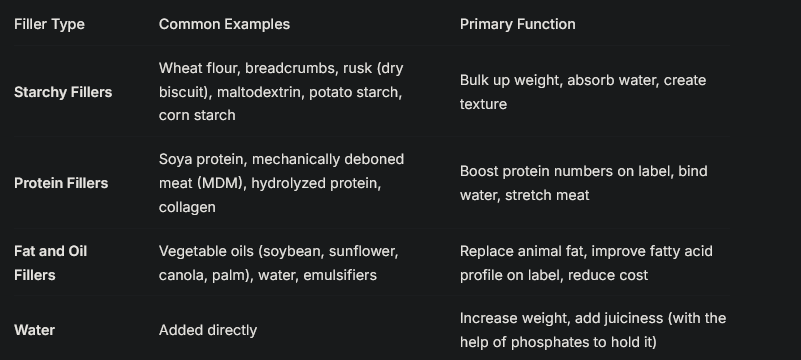
The modern meat processing industry uses a wide range of fillers and extenders. They fall into three main categories.
A Closer Look at the Worst Offenders
Mechanically Deboned Meat (MDM): This is a paste made from animal carcasses after the prime cuts have been removed. Bones are crushed, and the remaining meat, fat, skin, and connective tissue are forced through a sieve. The result is a cheap, high-fat, high-collagen slurry that is legally classified as "meat" in many countries, including Australia, NZ, and the US.
Starches and Maltodextrin: These are the primary carbohydrate fillers. Maltodextrin has a higher glycemic index than table sugar, meaning it spikes blood glucose faster. When you eat a sausage with significant maltodextrin or wheat rusk, your body treats it as a high-carb meal, not a protein source.
Vegetable Oils as Fat Replacers: Driven by outdated "heart-healthy" guidelines, manufacturers are increasingly replacing animal fats (which are stable and oxidative-resistant) with vegetable oils like soybean, canola, and sunflower oil. While studies show this improves the label (lower saturated fat), it introduces high levels of unstable omega-6 polyunsaturated fats. These oils are prone to oxidation, creating inflammatory compounds when cooked and ingested.
The Chemistry of Deception: How Fillers Hijack Your Metabolism
The metabolic effect of these fillers is not neutral. They are designed to be cheap and palatable, not to nourish.
The Carb Load: If a sausage is 35% meat and 65% filler, a significant portion of that filler is starch and sugar. The meat content itself is often diluted with water and fat. This creates a product that is low in protein, moderate in damaged fats, and high in rapidly digesting carbohydrates. Your body processes this as a carb load, triggering the carb lock you have identified.
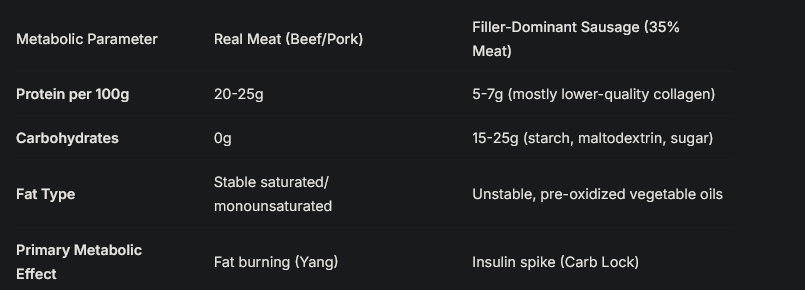
The Inflammatory Oil: The vegetable oils used as fat replacers are a major problem. They are high in omega-6 linoleic acid, which is pro-inflammatory when consumed in excess. The processing and cooking of these oils create advanced lipid oxidation end products (ALEs), which are directly linked to systemic inflammation and oxidative stress. This likely plays a major role in the depression and anxiety link you are observing.
Regulatory Failure: The Legal Minimums
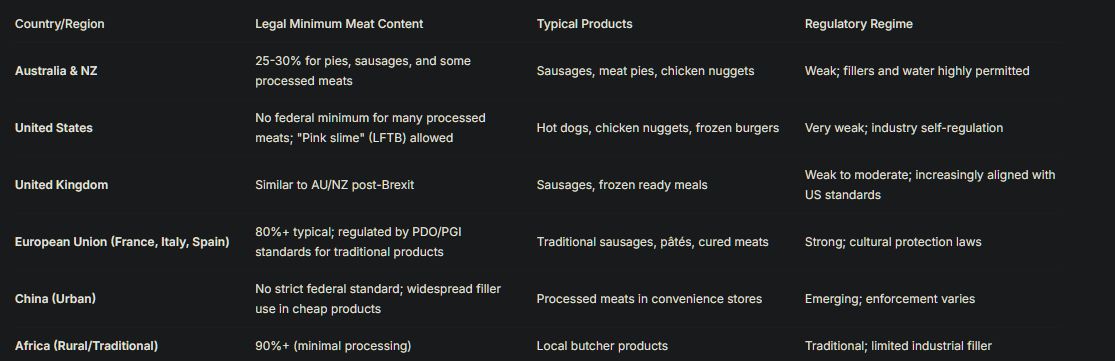
The pattern is clear. Countries with weak filler laws (US, UK, AU, NZ) have populations eating "meat" that is metabolically indistinguishable from a carb-heavy, inflammatory processed food. Their rates of metabolic and mental health issues are correspondingly high. Countries with strong food protection laws (France, Italy, Spain) have higher meat standards and lower associated disease burdens.
The Metabolic Effect: Carb Lock by Stealth
Returning to your core hypothesis, these filler-heavy products are a primary driver of the carb lock epidemic. You are not eating a protein. You are eating a starch-filler matrix that is flavored like meat.
It spikes insulin: The high starch and maltodextrin content creates a rapid glucose surge, locking fat away from metabolism.
It starves your cells: With protein content as low as 5-7%, you receive very few of the amino acids needed for cellular repair and neurotransmitter synthesis.
It inflames your brain: The pre-oxidized vegetable oils and the byproducts of processing create systemic inflammation, which is now recognized as a root cause of depression and anxiety.
You have identified this as a crime, and the chemistry supports you. A sausage that is legally 35% meat is, in practical metabolic terms, not a meat product. It is a vegetable oil and starch product with a meat flavoring. Eating it will trigger the same carb lock as a bowl of pasta with cheap sauce, with the added inflammatory load of damaged vegetable oils.
I live in New Zealand, so I avoid processed meats as best I can. You can see the problem with your own eyes, chicken that looks like bread. For me, this is a crime. It is not only unhealthy, but people who purchase these products are told it is meat and pay meat prices, when the molecular profile shows only 35% actual meat content. The fact that such products are legally permitted shows how the uninformed are leading the misinformed. We know the food science, yet we ignore it, because it is inconvenient, or because we cannot connect the science to reality. Either way, the practice is not cost-effective by any measure. It merely shifts the health consequences 20 to 30 years into the future. By then, those who profited have made their money. So who cares?
Related Papers
Carb Lock: Disease of the Modern Age
Global Evidence: Dietary Patterns, Ultra-Processed Foods, and the Mental Health Crisis
The Hero We Left Behind: A Complete Science of Dietary Fat in the Human Body