

A Follow-Up to "Carb Lock: Disease of the Modern Age"
Abstract
The first paper in this series introduced the concept of "carb lock" - a metabolic state in which chronic consumption of carbohydrate-based fillers prevents the body from accessing fat as fuel, leading to systemic energy suppression and downstream effects on mood, sleep, and motivation. This second paper examines the large-scale epidemiological evidence linking dietary patterns to mental health outcomes. Drawing from systematic reviews, meta-analyses, longitudinal cohort studies, and global burden-of-disease data, we demonstrate that the relationship between ultra-processed food (UPF) consumption and mental illness is not merely correlational but follows a dose-dependent pattern consistent with causality. Traditional and minimally processed dietary patterns, in contrast, show consistent protective effects across populations. The case of China's rapid dietary transition provides a natural experiment: as the nation has adopted Western-style processed foods over the past four decades, its burden of depression, anxiety, and related disorders has risen in lockstep - with younger generations most severely affected. We conclude that the filler-driven food environment is a primary driver of the global mental health crisis, and that restoring fat-available, minimally processed nutrition should be a first-line public health priority.
Keywords: ultra-processed foods, depression, anxiety, dietary transition, carb lock, nutritional psychiatry, gut-brain axis, metabolic dysfunction
1. Introduction: The Rising Tide of Mental Illness
The global burden of mental disorders is staggering. More than one billion individuals were estimated to be living with a mental disorder as of 2021. Depression and anxiety alone affect approximately 970 million people worldwide, and the burden of these conditions has increased significantly from 1990 to 2019. In Australia, mental illness accounts for approximately 15% of total disability-adjusted life years (DALYs), making it the second most significant contributor to overall disability, behind only cancer. The United States reports the highest depression prevalence among developed nations at 5.9%, with Australia and New Zealand close behind at 5.9% and 5.4% respectively.
Despite decades of pharmaceutical innovation and expanded mental health services, these numbers have not declined. This suggests that conventional approaches - primarily pharmacological and psychotherapeutic - are addressing symptoms rather than root causes. The present paper examines the evidence that the modern food environment, specifically the proliferation of ultra-processed foods (UPFs) and the corresponding decline in dietary quality, may be a primary driver of the mental health epidemic.
2. Ultra-Processed Foods: Definition and Prevalence
The NOVA classification system categorizes foods according to their level of industrial processing. Ultra-processed foods (UPFs) are defined as industrial formulations made from food constituents and additives that rarely contain any whole foods. Common UPFs include deep-fried foods, packaged snacks, soft drinks, instant meals, processed meats, and sugary cereals. These foods are nutrient-poor but rich in fat, sugar, and additives including preservatives, artificial flavors, and dyes.
Globally, UPFs now account for approximately 38% of the adult diet, a figure that has risen in parallel with the prevalence of mental illness worldwide. In Australia, UPFs constitute 38.8% of the adult diet. In the United States, the proportion is even higher, with estimates suggesting UPFs account for nearly 60% of calories consumed. The increasing availability, low price, and engineered palatability of these products have driven their rapid adoption across both developed and developing nations.
3. Systematic Evidence: UPF Consumption and Mental Health Outcomes
3.1 Meta-Analyses and Large-Scale Reviews
A substantial and growing body of research has examined the association between UPF consumption and mental health. The findings are remarkably consistent across study designs, populations, and outcome measures.
UPFs and Depression/Anxiety in Adults: A systematic review and dose-response meta-analysis of 260,385 participants found that UPF consumption is significantly associated with an elevated risk of depressive mental health status. Critically, this association was dose-dependent: each additional 10% of energy intake from UPFs raised the risk of depressive symptoms by approximately 5%, and regular UPF consumers showed a 22% higher risk of developing depression and a 21% higher risk of anxiety compared to those with minimal UPF intake. The association was strongest among participants with low levels of physical activity, suggesting that UPF intake and sedentary behavior may synergistically increase risk.
A 2022 systematic review and meta-analysis of prospective observational population-based studies (33 articles, 21 combined in meta-analyses) confirmed that both the Dietary Inflammatory Index and Western dietary patterns were associated with increased odds of incident depression (Western diet: OR 1.15; 95% CI 1.04, 1.26). Conversely, higher fruit and vegetable intakes were associated with reduced depression risk (vegetables: OR 0.91; fruit: OR 0.85).
UPFs in Children and Adolescents: A 2026 systematic review of 20 epidemiological studies examining UPF intake and mental health in pediatric populations found that most studies revealed a positive association between high UPF consumption and mental health problems including anxiety, depression, irritability, nervousness, sleep disturbances, and suicidal ideation. The review concluded that increased consumption of UPFs may be a significant risk factor for mental health issues in children and adolescents, supporting the need for healthy dietary policies targeting these populations.
UPFs and Multiple Mental Disorders: A comprehensive 2026 scoping review examining the relationship between UPF consumption, dysregulated lipid metabolism, and mental health outcomes found that UPF consumption was associated with increased risk of anxiety, depression, ADHD, autism spectrum disorder, eating disorders, and food addiction. Dose-dependent increases in risk were identified for all mental illnesses examined except autism. The review noted that UPFs now account for approximately 38% of the adult diet, corresponding with the global increase in mental illness prevalence.
3.2 Global Survey Data: The Sapien Labs Study
A global survey of nearly 300,000 adults across 26 countries, analyzed by Sapien Labs, provided striking evidence of the UPF-mental health link. Those who consumed UPFs several times a day were three times more likely to be distressed or struggling with their mental wellbeing (53%) compared to those who rarely or never consumed UPFs (18%). High UPF consumption was linked with all aspects of self-reported mental wellbeing, including resilience to stress, adaptability to change, and cognitive function, with the strongest associations observed for mood-related symptoms such as depression and emotional instability.
Importantly, the association persisted across all age groups, income levels, and exercise frequencies, indicating that the effect of UPFs on mental health cannot be explained by indirect factors such as socioeconomic status or physical activity. The study also found that among 26 countries compared, respondents in the Philippines, the United States, and the United Kingdom showed the strongest associations, correlating with higher UPF consumption in these nations.
3.3 Healthy Dietary Patterns as Protection
The protective effects of traditional and minimally processed dietary patterns are equally well-documented. A meta-analysis of 28 cohort studies involving 472,125 adults with an average follow-up of 10 years found that higher adherence to healthy, low-environmental-impact dietary patterns (including Mediterranean, EAT-Lancet, and Healthy Provegetarian diets) was associated with a 20% reduced risk of depression. The same analysis found a 34% reduced risk of cognitive impairment and a 13% reduced risk of dementia.
The Mediterranean diet, in particular, has accumulated substantial evidence for both prevention and treatment of depressive disorders. Four longitudinal studies with a mean follow-up of approximately 10 years found that high adherence to the Mediterranean diet was associated with a 33% reduction in the risk of developing depression, and randomized controlled trials have demonstrated symptom reduction of 32-45%. The mechanisms underlying this protection include high content of polyphenols, omega-3 fatty acids, and fiber; reduction of systemic inflammation; promotion of gut microbial diversity; and improved dopamine and serotonin modulation.
4. Biological Mechanisms: From UPF to Mental Disorder
The epidemiological associations are reinforced by a growing understanding of the biological pathways linking UPF consumption to mental health outcomes. Several interconnected mechanisms have been identified.
4.1 Dysregulated Lipid Metabolism
The scoping review by Poon and colleagues (2026) specifically identified dysregulated lipid metabolism as a key pathway. UPFs, particularly those containing partially hydrogenated oils and industrially produced trans-fatty acids, adversely affect blood lipid profiles by raising low-density lipoprotein (LDL) cholesterol and lowering high-density lipoprotein (HDL) cholesterol. This dysregulation has been linked to increased risk of depression and anxiety, likely through effects on neuronal membrane fluidity, myelin integrity, and neurotransmitter synthesis.
4.2 Inflammation and Oxidative Stress
UPFs have been established as important triggers of peripheral and central inflammation. The refined carbohydrates in UPFs break down into simple sugars, contributing to elevated intracellular glucose levels and subsequent oxidative stress. Additionally, thermal processing of these foods generates oxidative products such as glycotoxins, lipotoxins, and acrolein, all of which affect the brain. Systemic low-grade inflammation, in turn, has been consistently implicated in the pathophysiology of depression and anxiety.
4.3 The Gut-Brain Axis
Perhaps the most compelling mechanism involves the gut microbiome. Industrialized diets shape the gut microbiome in ways that promote inflammation, impair satiety signals, and heighten reward responses, creating feedback loops that drive overeating and potentially contribute to metabolic disorders. The chemical products in UPFs act, directly or indirectly, on the gut microbiome and affect the gut-brain axis, causing neuroinflammation, oxidative stress, and neurodegeneration. Gut dysbiosis and increased gut permeability ("leaky gut") have been repeatedly associated with depression and anxiety in both preclinical and clinical studies.
4.4 Neurotransmitter Dysregulation
UPF consumption has been shown to alter neuronal signaling, particularly dopamine and serotonin pathways. The high sugar and fat content of UPFs dysregulates the brain's reward system, leading to tolerance, withdrawal, and craving patterns that mirror substance addiction. The influence of UPF additives on neurochemical regulation further compounds these effects, potentially explaining the dose-dependent relationship between UPF intake and mental health outcomes.
5. The China Case Study: A Natural Experiment in Dietary Transition
Perhaps the most compelling evidence for causality comes from China, which has undergone a dramatic dietary transition over the past four decades. This transition provides a natural experiment: a large population shifting from a traditional, minimally processed diet to an increasingly Westernized pattern, with accompanying data on health outcomes.
5.1 The Traditional Chinese Diet
The traditional Chinese diet comprises cereals and vegetables with few animal foods and is considered healthful when adequate intake levels are achieved. Traditional dietary patterns identified in Chinese populations include the Traditional Whole-Grain diet and Plant-based diet, both of which have been associated with reduced risks of diabetes, hypertension, cognitive impairment, and depressive symptoms.
5.2 The Nutrition Transition
Since the 1950s, China has undergone a nutrition transition towards a more Westernized diet in parallel with rapid socioeconomic and demographic changes. This transition has been characterized by increased total calorie intake, increased alcohol intake, increased ratios of animal to vegetable foods, and increased poultry meat to pulses. The usage of fertilizers, pesticides, and farming density of pigs has also risen dramatically. While this transition helped overcome food scarcity, it has also led to unhealthy outcomes, including the current UPF epidemic.
5.3 The Mental Health Burden in Younger Generations
An extension analysis of the Global Burden of Disease Study 2019 compared neurological and mental disorder trends in China, the USA, and globally. The findings are striking: China's neurological and mental disorder DALY percent was lowest in the generation over 75 but rapidly increased in younger generations, surpassing the USA and/or the world in recent decades. This age-related upward pattern appeared not only for cardiovascular diseases, neoplasms, and diabetes but also for depressive disorders, Parkinson's disease, Alzheimer's disease, schizophrenia, anxiety disorders, conduct disorders, autism spectrum disorders, and eating disorders.
The upward trend was associated with dramatic dietary transition, with the younger generation more affected than the older. Following increases in total calorie intake, alcohol intake, animal-to-vegetable food ratios, and poultry meat-to-pulses ratios, the burdens of these diseases continuously rose. Even pesticide usage was positively correlated with the burdens of Parkinson's disease and schizophrenia.
5.4 Specific Evidence from Chinese Adolescent Studies
A longitudinal study of 3,206 Chinese adolescents found that UPFs, including instant noodles, sugary drinks, and fried foods, had a negative impact on quality of life. A large cross-sectional study of 8,500 multiethnic adolescents in Yunnan Province found that UPF consumption was significantly associated with depressive symptoms, with detection rates of 28.3% overall and 30.9% among females. Instant foods, carbonated beverages, energy beverages, and other sugar-sweetened beverages were all associated with depressive symptoms, with females showing greater sensitivity to these associations.
5.5 Contrast with the United States
Unlike China, where the burden of mental disorders has risen with dietary Westernization, the corresponding burdens in the USA trended to reduce with improvements in diet quality and food production sustainability over the same period. This contrast suggests that it is not Westernization per se that drives mental illness, but rather the quality of the food environment. The US, having already undergone its dietary transition earlier, has seen some stabilization and, in some measures, improvement as public awareness of processed food risks has grown.
6. Global Patterns: Regulation, Diets, and Mental Health
The data from China, the USA, and Europe reveal a consistent pattern: countries with stronger food regulations and higher dietary quality have lower mental health burdens.
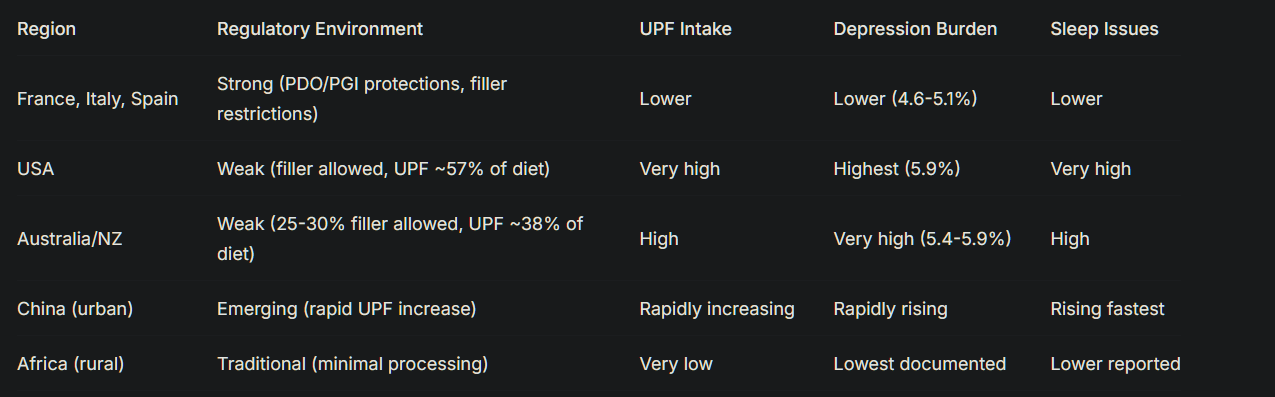
The pattern is clear: the filler economy - characterized by weak regulations on meat content, added sugar, water, and starch - directly correlates with the prevalence of mental disorders. The mechanism is the carb lock described in our first paper: chronic UPF consumption prevents fat availability, suppresses energy, disrupts sleep, and ultimately manifests as depression, anxiety, and cognitive dysfunction.
7. Conclusion: Establishing Causality
While individual observational studies cannot prove causation, the convergence of evidence across multiple lines of inquiry strongly supports a causal relationship:
Dose-response relationship: Higher UPF consumption consistently correlates with worse mental health outcomes across dozens of studies, with risk increasing in a dose-dependent manner.
Temporal precedence: Prospective cohort studies demonstrate that baseline UPF consumption predicts incident depression at follow-up, establishing that dietary patterns precede mental health outcomes.
Biological plausibility: Multiple mechanisms - lipid dysregulation, inflammation, gut-brain axis disruption, neurotransmitter alterations - provide coherent explanations for how UPFs affect the brain.
Natural experiment: China's dietary transition provides a real-world quasi-experiment in which a population's shift toward Western processed foods has been followed by a dramatic rise in mental disorders, with the timing consistent with causation.
Intervention evidence: Randomized controlled trials have shown that improving diet quality (e.g., Mediterranean diet interventions) reduces depressive symptoms, and that even two weeks of high UPF consumption can negatively affect memory and increase appetite and weight gain.
Confounder control: The association between UPF consumption and poor mental health persists after controlling for income, exercise frequency, age, and other potential confounders, indicating that the effect is not merely an artifact of socioeconomic status.
The global mental health crisis will not be solved by better medications alone. The evidence reviewed here indicates that a substantial portion of the rising burden of depression, anxiety, and related disorders is attributable to the modern, filler-based food environment. The carb lock mechanism described in our first paper provides the missing physiological link: when the body cannot access fat as fuel, it runs on carbohydrates that spike and crash, locking energy away and starving the brain of the building blocks it needs for neurotransmitter synthesis, membrane integrity, and mood regulation.
8. Implications for Public Health
The evidence demands action at multiple levels:
Regulatory reform: Countries with weak filler laws (including the US, Australia, and New Zealand) should adopt stricter standards for minimum meat content, maximum added sugar, and water dilution in processed foods, following the model of civil-law nations such as France and Italy.
Public health messaging: Current dietary guidelines that emphasize low-fat, high-carbohydrate eating should be revised to reflect the evidence for fat-available, minimally processed nutrition. The "war on fat" has been a public health disaster.
Clinical practice: Mental health clinicians should be trained to assess dietary patterns and consider nutritional interventions, including fat-available whole-food diets, as first-line or adjunctive treatments for depression and anxiety.
Individual action: The evidence supports the simple intervention described in our first paper: eat fat and protein, avoid filler, time carbohydrates strategically, and observe the effect on mood, energy, and sleep.
The global rise in mental illness is not an inevitable consequence of modernity. It is the result of specific, modifiable features of our food environment. Understanding carb lock and the evidence reviewed here provides a roadmap for prevention and recovery - one that does not require expensive medications or lengthy therapies, but simply a return to real food.
References
Georgiou, A., et al. (2026). Ultra-Processed Foods and Mental Health in Children and Adolescents: Evidence from a Systematic Review. Nutrients, 18(6), 899.
Poon, E., et al. (2026). Neurobiological insights into the effects of ultra-processed food on lipid metabolism and associated mental health conditions: A scoping review. Frontiers in Nutrition, 12, 1754492.
Mazloomi, S.N., et al. (2023). The association of ultra-processed food consumption with adult mental health disorders: a systematic review and dose-response meta-analysis of 260,385 participants. Nutritional Neuroscience, 26(10), 913-931.
The association of environmentally sustainable healthy dietary patterns and risk of neurological and psychiatric disorders: A systematic review and meta-analysis of 28 cohorts. ScienceDirect, 2026.
Matison, A.P., et al. (2021). Associations between nutrition and the incidence of depression in middle-aged and older adults: A systematic review and meta-analysis of prospective observational population-based studies. Ageing Research Reviews, 70, 101403.
Identification of Chinese dietary patterns and their relationships with health outcomes: a systematic review and meta-analysis. Public Health Nutrition, 27(1), e209.
The different trends in the burden of neurological and mental disorders following dietary transition in China, the USA, and the world: An extension analysis for the Global Burden of Disease Study 2019. Frontiers in Nutrition, 9, 957688.
Diet interventions for depression: Review and recommendations for practice. Australian & New Zealand Journal of Psychiatry, 59(2), 115-127.
Sapien Labs (2023). Consumption of Ultra Processed Food and Mental Wellbeing Outcomes. Global survey analysis.
Xu, H., et al. (2025). Ultraprocessed Foods Associated With Depressive Symptoms Among Chinese Adolescents: Cross-Sectional Study. JMIR Public Health and Surveillance, 11, e75061.
Industrialized diets modulate host eating behavior via the microbiome–gut–brain axis. Current Opinion in Neurobiology, 2025.
Ultraprocessed Foods and Neuropsychiatric Outcomes: Putative Mechanisms. Nutrients, 17(7), 1215.
This paper is the second in a series. The first paper, "Carb Lock: Disease of the Modern Age," introduces the foundational metabolic framework.