
Check out Part 2, Lunar: Silver Star Story Complete, here.
That golden cartridge shone like a brilliant beacon in the dead of a cold, snowy night. The gatekeeper to that game was a relentless neighborhood bully, very aware of my desire to try it out, and boy, did he take advantage of that. I can’t tell you what types of toys and items I gave up or the crazy pranks I had to play on unsuspecting neighborhood kids just to play an hour here, an hour there. But bit by bit, I did his bidding, and my little 8-year-old self slowly made it through the original Zelda. He eventually moved away before I got a chance to finish the game. But just a little later, an even better game came into my life that I got to try around 1993 or 1994. The game was Legend of Zelda: A Link to the Past, released in the USA in 1992, developed and published by Nintendo. This was the ultimate SNES game, perhaps being topped only by Chrono Trigger, Super Mario World, and Donkey Kong Country.
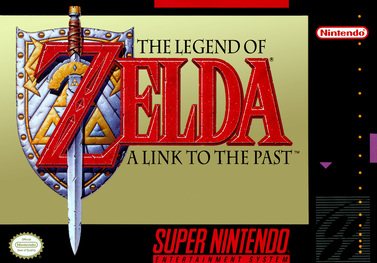 A Link to the Past is just fun, plain, and simple. You can think of all the fancy words you want, and I frequently do, but if I had one word to summarize this game, it would be fun. I’ve probably beaten it nearly ten times over the years, most recently in 2018 on the SNES mini. It is the only game that, no matter how many times I beat it, remains on my internal list of games to replay. Each dungeon offers a superb level of challenge that never frustrates and is always interesting and engaging. Link to the Past immediately thrusts you into the thick of things within seconds of starting a new game. Link, the game’s hero, is awakened by a telepathic message from the imprisoned Zelda. She is held hostage in the nearby Hyrule dungeon by a nefarious wizard. Is there a hero greater than the one who ventures out into the pouring rain in pitch black, with no weapon or shield in hand or armor for protection? That is dedication! Link quickly discovers his uncle, who, with his dying breath, gives Link a tiny shield and flimsy sword. From here, Link embarks on a journey to rid the world not only of the wicked wizard but of a far greater, vile beast named Ganon.
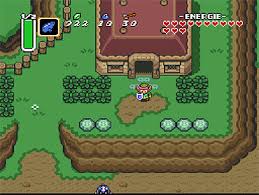 Link to the Past shows its age graphically, but in its place is an expansive world for Link to explore. A world that spans both the Light World and Dark World, where the seven sages are imprisoned in seven different dungeons, the ones responsible for keeping Ganon at bay in the Dark World. As dated as the graphics look, they work, and credit must be given to the bosses. They are gigantic, intimidating, and erupting with detail and color. It is the tiny things like the way the mask chips away at one of the later game bosses as you hit him or the menacing hops of the six knights as they shake the floor with every movement, aggressively trying to end Link’s life very early on in the game. While the graphics are outdated even by 1993 standards, the world is still colorful and distinct. To this day, nothing compares to the world of Hyrule as seen in this game; it has a special atmosphere unequaled by anything else I have played. The contrast between the Light and Dark worlds is interesting, too, and properly noting the differences between them would take up a book; there was that much attention to detail!
Part of the reason for the game’s one-of-a-kind world is the music. Ranging from the sleepy, pleasant vibes of Kakariko Village to the menacing, daunting boss music. The first time I played this game as a child and heard the boss music, I got shivers down my spine! I was legitimately nervous, and that feeling was taken to another level when meeting the wizard after getting the three pendants. I was almost peeing myself (I was 10, mind you). The dungeon music finds that middle ground between the aforementioned tracks and is an exploration in musical form. It is purposely ambient but done in a way to lull you into a false sense of security, with very subtle, stressful undertones. Like, something isn’t quite right here. For certain dungeons, like the trek up to see the wizard, the stress-o-meter is ramped up during the long hike up to see his ugly mug, a great track that was more than suitable. The intensity only climbs from that point on as you visit progressively more massive dungeons; some of the best dungeon music is found in the Swamp Palace and Ice Palace.
The gameplay is intuitive in a way that newer systems haven’t been able to replicate. Simple to pick up, no need for lengthy, tedious explanations, but enough under the surface to keep seasoned gamers interested with a plethora of hidden secrets and items. Trying to do a blind playthrough and/or the first playthrough, or after years of not playing and finding all the heart pieces, is not an easy task. But it is rewarding, and there is a sense of accomplishment as you see your heart meter change to 20 full hearts at the end of the game.
There are plenty of items to help you along the way, not just in finding those secrets, but in solving puzzles and progressing in dungeons and new areas on the world map. Bombs will blow away weak walls or floors as if they are nothing, with tons of wonderful prizes waiting behind, or perhaps just a new part of the dungeon. Arrows can strike enemies from afar as you laugh at their inability to get within striking distance, never mind striking back.
The arrows are also used for a fun mini-game where you strike targets in Kakariko Village to get wonderful prizes. There are four or five mini-games in total scattered throughout the game that serve as a nice diversion from the main quest. The boomerang has been a staple item since the first game in the Zelda series and helps to solve puzzles and stun enemies before you beat them to a pulp. My favorite was the Hookshot, though. In total, there are nearly two dozen unique items that will aid in progressing through dungeons and exploring new parts of the world map. Part of the joy of Zelda games is figuring out just what they are and what functions they serve, so I will leave that up to my fellow gamers to explore!
Enemies often drop rupees, the game’s currency. These can be used to purchase potions, arrows, and bombs, among other things. Thankfully, combat is more seamless in this game. Instead of only being able to slash your sword in front of you, like in the original Zelda, you can swipe sideways and, later, twirl it around after getting a sword power-up. Early in the game, you gain the ability to run, which makes the journey much more bearable. One of my few complaints after recent replays is how slow Link is at the start of the game, remedied by around the 1/10th mark of the game by the Pegasus boots. I would have liked to be able to run right from the get-go, but I understand why they didn’t make it available from the start.
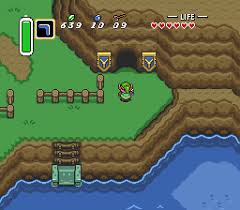 One interesting thing to note is that the game keeps track of how many times you die + how many times you save and quit, represented as one number under Link after beating the game (kind of like a clear game save). Trying to beat this in one sitting, without dying, is a wonderful challenge for people who are more experienced with the game but still enamored with it. I have gotten as low as 3 and will someday get that counter to 0!
Dear I say, Legend of Zelda: Link to the Past is one of the greatest games ever made and, at the very least, should easily make anyone’s Top 25 list of best games. It was an instant classic upon release and has aged incredibly well. For anyone new to video games, it is one of the first games I recommend.
Wayback Wednesday Volume 1: Final Fantasy 7 and Chrono Trigger.
Wayback Wednesday Volume 2: Super Metroid and Castlevania: Symphony of the Night.