

A game that has aged like milk, Falcom at its worst.
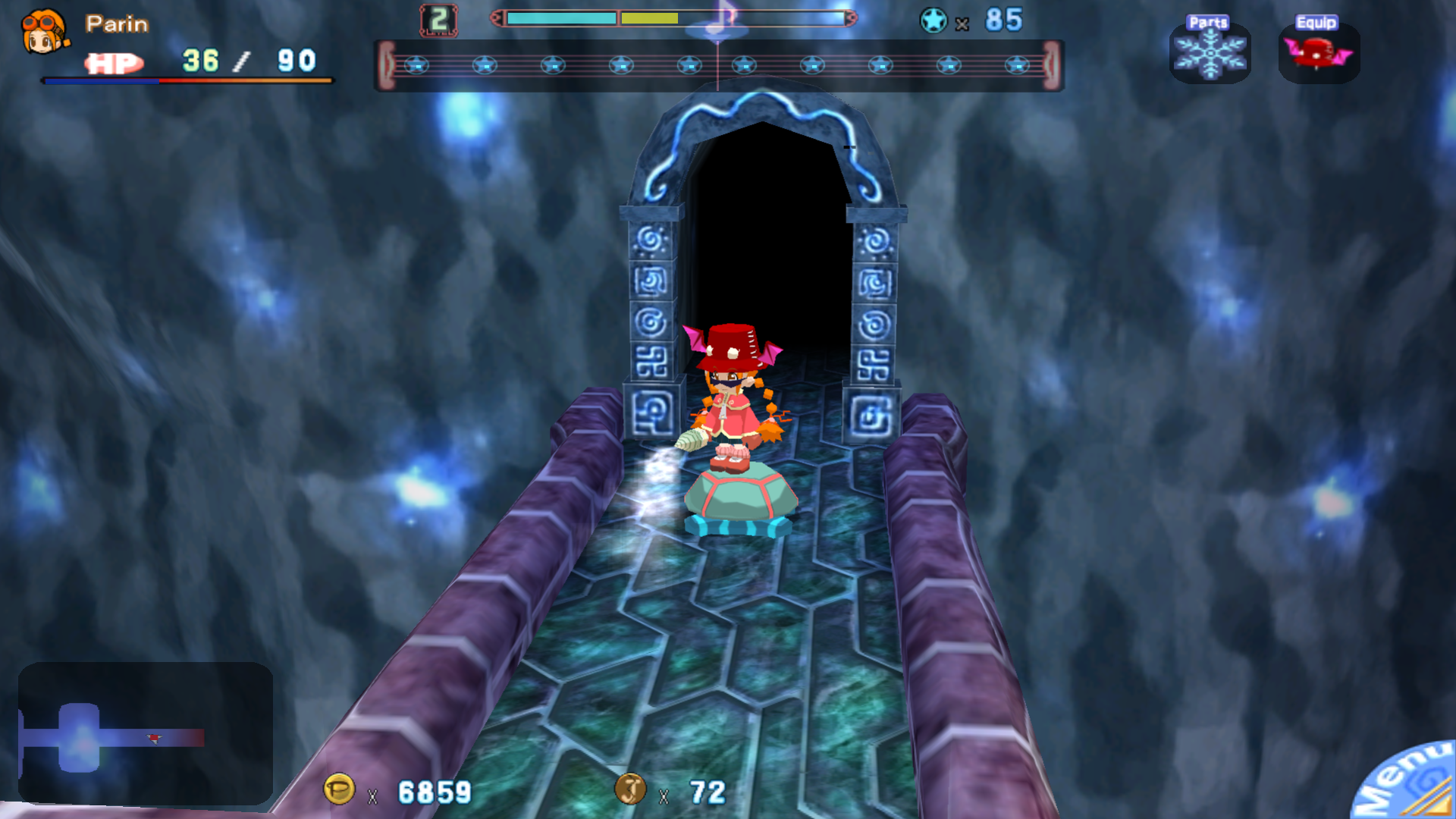 Note: I reviewed the 2015 PC port, which makes the game even more disappointing, as after 8 years (from the PSP release), no improvements were made.
When it comes to Gurumin: A Monstrous Adventure, I can’t talk about anything else until I talk about the camera. It is monstrous how bad it is, absolutely abysmal, and for me, it’s both a blessing and a curse when classic games get ported to newer consoles. When it’s a solidly built game, or falling short of that, given some quality-of-life improvements or slight polish, it can be a wonderful thing. But other games need significant work, even at the time of original release, which, with games like this, has only become more glaring with time, as it seems no extra work went into updating this.
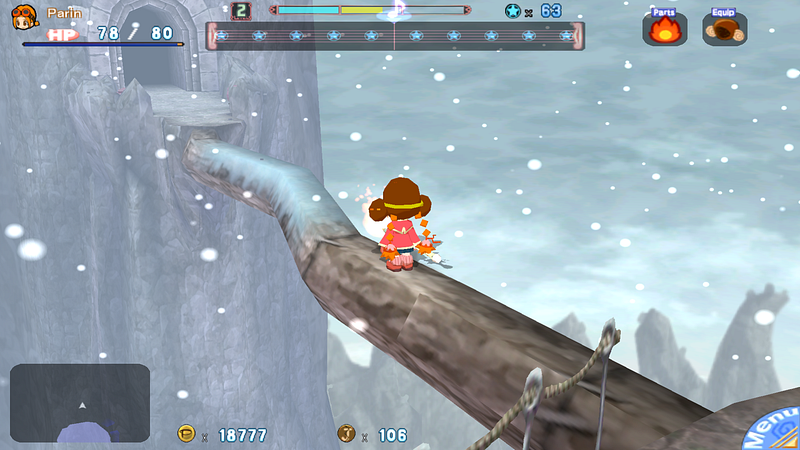 Falcom has two incredible series, Ys and Trails, so I went into this expecting better. However, this was Falcom’s first 3D game, released way back in 2006 for the PSP, and it shows. The camera is too zoomed in, slightly angled down, and gets caught when Parin, the hero, turns corners. I had bad flashbacks to Dawn of Mana, and I’d say those two titles are two of the worst I’ve struggled against in the 600 or so games I’ve beaten over my three decades of gaming. Even by more modest standards like Zwei, this is poorly done; the camera seems to have a life of its own, too jerky and shaky, never providing a useful angle for more demanding jumps, such as when you’re slipping and sliding across a narrow, ice-covered platform. Heavens Hill and a few levels around that time were particularly egregious and frustrating.
After a while, I stopped caring about ranks in each level and started to speed through the game because I felt like the camera was actively working against me, making what should have been simple platforming far harder than it otherwise would have been. Plus, sometimes enemies with shields appear on those aforementioned thin platforms. Gurumin was at its best in more wide-open, flatter areas where the camera wasn’t as much of a burden and liability.
So when an important aspect of a game is such a failure, what else is there to focus on? Please not Cylinder, because he is one of the creepiest NPCs I’ve ever seen. Remember that when he pesters Parin for a date or makes bizarre innuendos, he is an adult, and Parin is very clearly a child, but she’s forced to speak to him for any movement upgrades for the drill. I’ve never seen such a cringe character, and that includes Zavied or Raven from the Tales games. Plus, the baker just doubles prices for healing items for a large portion of the game. Joy, thanks, evil doppelgänger.
For some games, the flaws are an afterthought, but here, they take center stage and practically obscure any positive momentum, even if it is only chugging along at 30 FPS. I normally don’t even care about that, but it is noticeable and interrupts my movement and combat too often. I kept having to remind myself that this is the same company that made so many great action games, with Ys. How is it possible that it is so not fluid? Plus, this game made me appreciate why so many games include an auto-lock feature, even if it only targets the nearest enemy. I watched my fully charged drill attacks fly past enemies far too many times. Aiming was a nightmare.
Customization is fairly limited; you can imbue your drill with an element, such as fire, ice, or lightning, and equip a single accessory. Once I obtained the Vampire Set, I never took it off, as it restores 1 HP every time you land a critical hit. Critical hits are performed by timing your attacks to the rhythm indicator displayed at the top of the screen, though it was slightly out of sync with the actual beats of the music.
Even poorly made RPGs have some sense of progression, but even that’s missing here. There are no character levels, just a drill level that resets with every level and slowly increases, eventually to level 4, after many successful hits, as long as Parin doesn’t take hits. But the drill level can be lowered, too, if she is hit too often. There are a few places on the ground that can be drilled to gain instant levels, and usually at least one place to heal HP, which eventually, by end game, climbs to 100.
The enemies, and there is a serious lack of variety, aren’t, by themselves, difficult. Usually, a powered-up drill hit disposes of them quickly, or gets rid of their shield before they can be beaten to a pulp. Again, it’s the damn camera that adds any semblance of challenge, as it often loses track of enemies or gets caught up in the environment, or walls in the foreground or background.
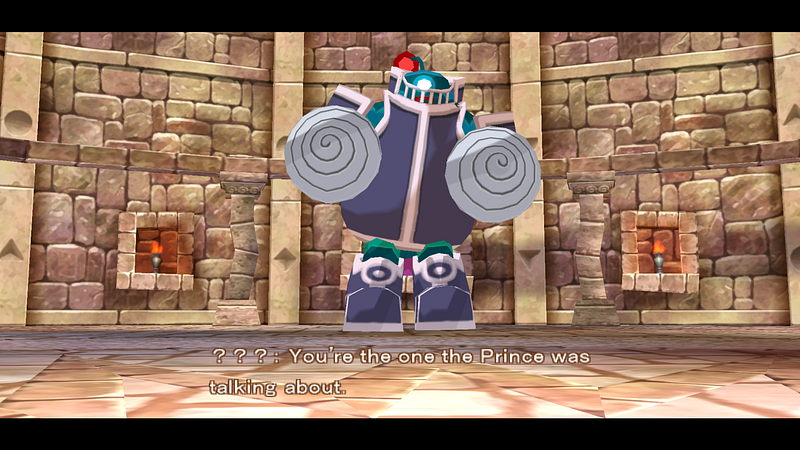 There are a few bosses throughout the game, some of them with slightly interesting mechanics, even. But again, any entertainment is often lowered because of the game’s fatal flaw, undermining the experience.
By and large, Gurumin is repetitive because of its simple gameplay loop. Go to a level, beat all the enemies you can find, smash pots, get the piece of furniture at the end, return it to a citizen in the monster village to open up a new place, and repeat.
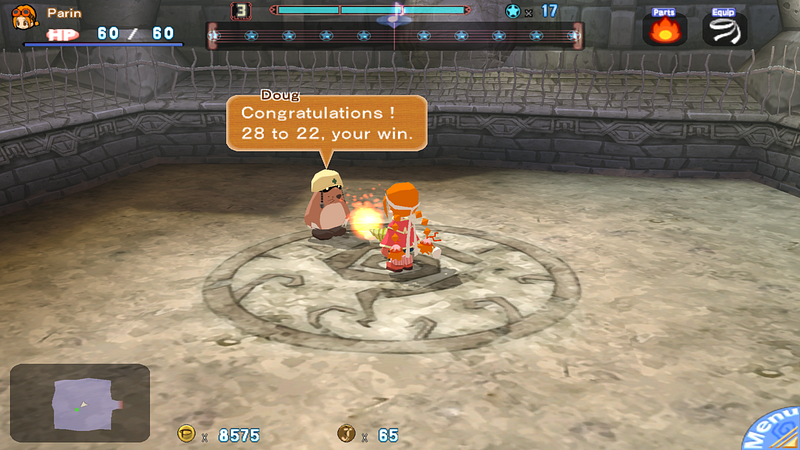 The game does manage to break up the monotony a few times with some admittedly fun games, like trying to smash more rocks than a mole in a minute, or dodging lasers. Despite the key flaws in the games, they still worked well.
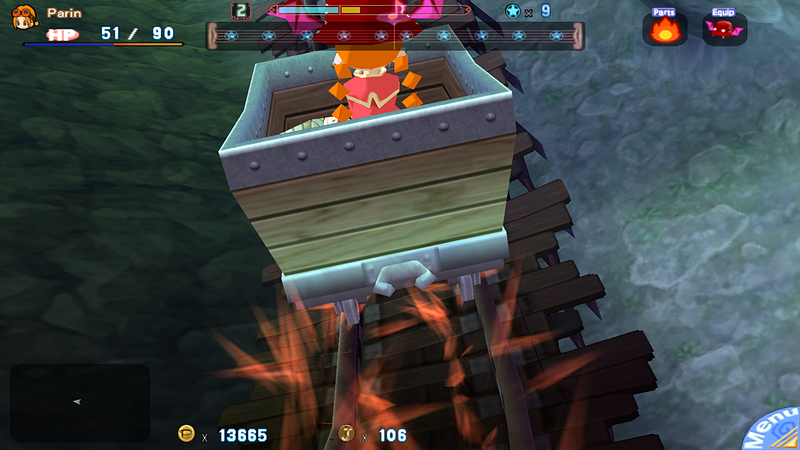 On the other hand, the mine cart was the exact opposite, an absolute mess. I tried to take several pictures, but this is one of those cases where screenshots simply don’t do it justice. Perhaps the image above comes closest, with a quick dip just after that and then an immediate jump. I never doubted that people could get motion sickness from video games, but I never truly understood it until I played those sections.
Visually, this is a very colorful game, mostly with bright colors and a light-hearted soundtrack with goofy sound effects. This was an easy game that I finished in 10 hours and 20 minutes, the only difficulty coming from the god-awful camera, though the last few bosses did present a somewhat decent spike.
Other games I’ve beaten, like Kingdom Hearts 2 and 3, all of the Ys titles, or Alundra, work and are hard because they are mechanically sound and hard in a clean way where, when you fail, you usually know why: poor positioning, timing, or decision-making, because the underlying systems are consistent and built well. As opposed to artificial, structural limitations, which can turn an otherwise easy game into much more frustrating because the basic foundation isn’t reliable.
Gurumin shows Falcom at an interesting, though very rough, bumpy crossroads, and certainly not at their best. Under different circumstances, perhaps with a fixed top-down, zoomed-out camera perspective more similar to older Zelda games, this could have been a decent game. Gurumin is an example of how one design misstep can drastically ruin a game.
Monday Misfires Part 1: Genopanic
Monday Misfires Part 2: Book Quest
Monday Misfires Part 3: The Ascent
Monday Misfires Part 4: Micetopia
Monday Misfires Part 5: Lisa
Monday Misfires Part 6: South Park: The Fractured But Whole
Monday Misfires Part 7: Cookie Cutter
Monday Misfires Part 8: Final Fantasy Type-0
Monday Misfires Part 9: The Outer Worlds
Monday Misfires Part 10: Evoland 2
Monday Misfires Part 12: Edge of Eternity