

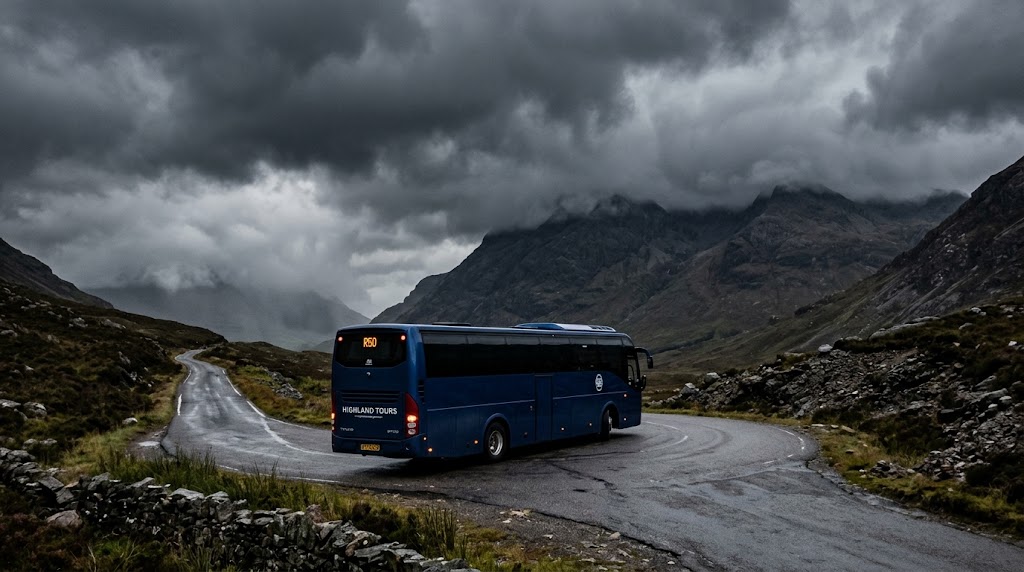
Every winter, thousands of visitors board large coaches in Tromsø hoping for a clear night, and every winter some of them return having seen mostly cloud. The reason is rarely bad luck. It is usually logistics.
Tromsø sits on a coastal island, and weather systems from the Norwegian Sea frequently park cloud over the city. A coach carrying around 50 passengers is built for predictable routes: a short drive to a known pull-off, an hour or two of waiting, then back to town. When the sky closes in, that format has little room to adapt. Long detours push the driver toward legal working-hour limits, and a coach full of cold, tired guests is not easy to redirect at 11 pm.
Smaller operators work differently. A boutique 8-guest tactical weather chase treats the forecast as a map rather than a verdict. If the coast is clouded, the van heads inland toward the Skibotn valley, or even over the border into Finnish Lapland, where the mountains often leave pockets of clear sky.
A smaller vehicle also changes the experience on the ground. With eight guests, a guide can pick a quiet roadside spot instead of a crowded car park, adjust to the aurora's movement, and move again if the sky shifts.
What to Look for When Choosing a Tour:
Does the operator commit to driving beyond Tromsø if the coast is cloudy?
How many guests share each vehicle?
Is the cabin heated for long waits at -20°C?
Does the guide track live aurora and cloud data, or only the city forecast?
The aurora is a natural event and no one can promise it. But a tour built around mobility gives you far more chances than one built around a fixed route.
Alshemal Norway runs small-group Northern Lights expeditions from Tromsø in 8-guest Mercedes-Benz Sprinter 4x4 vans.