

I’m not really planning to write full reviews of board games here, even though my blog is mostly about board game design. But then… it was this game. Monkey Palace. And it gave me the biggest emotional swing I’ve ever experienced with a board game. Let me explain.
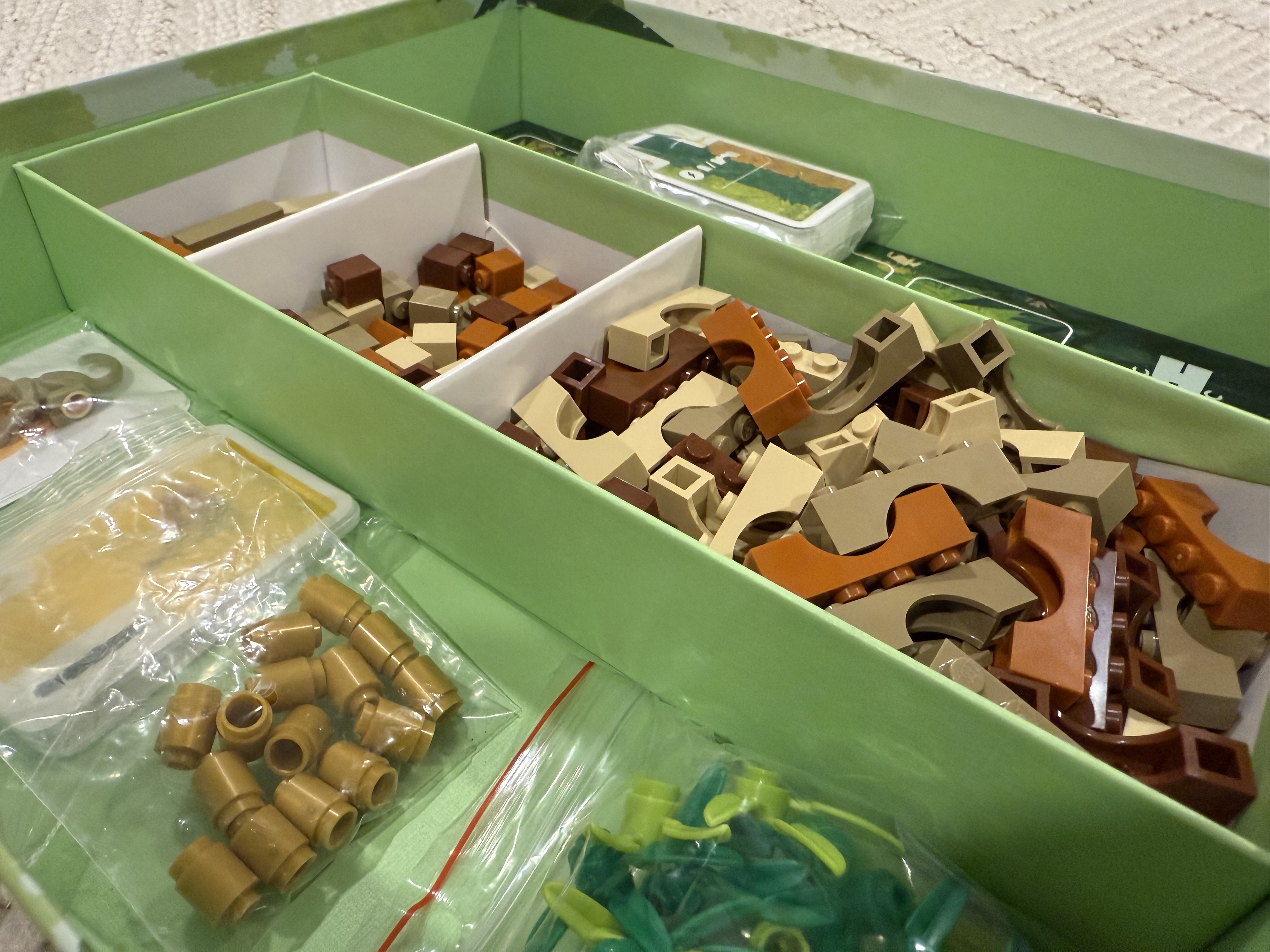
When I first heard about Monkey Palace, what I saw was: “A game made by LEGO.” And, honestly, that made me immediately disappointed. I’ve tried LEGO board games in the past—and they were, let’s be honest, bad. Gimmicky, clunky, and far from what I consider fun as a board game enthusiast. But something was different this time. I started seeing people talk about it. Good reviews. Positive buzz. Designers I trust were saying that it might actually be great. So, I did what every curious game designer does: I started to dig deeper. Everything I found started to make me more and more excited. The components looked great. The art style had a very polished, almost boutique indie feel. It didn’t scream “mass-market LEGO product.” It looked… fun. And smart.
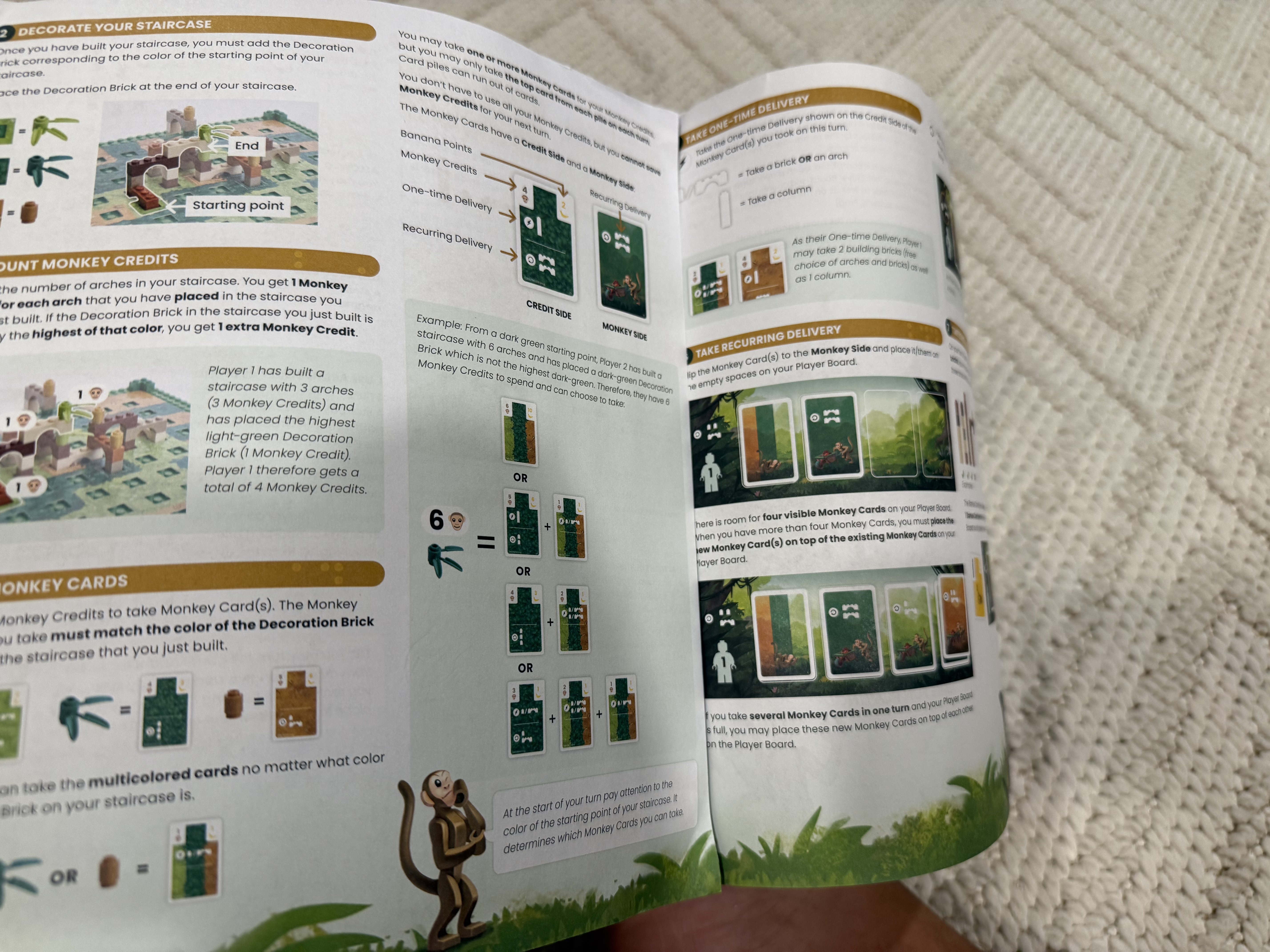
And then… the rules were uploaded to BGG. I clicked, downloaded, opened the PDF, and started reading. Carefully. Slowly. At the same time, I was watching a few early playthroughs and reviews on YouTube. The components still looked amazing. The table presence was fun, the insert was genius, the monkey figure? Adorable. But something wasn’t clicking. From my perspective as a game designer, I can often “pre-play” a light game in my head just by looking at the mechanics. I don’t need to sit at the table to understand the flow, the tension, or lack thereof. And as I read through Monkey Palace’s rules… I felt that familiar sting of disappointment again. But this time, it wasn’t because the game looked too random—it was actually the opposite. The game looked too strict. Too procedural. You draw pieces, you build, you take card and... That’s it. Very little room for tactical pivots or strategic choices. It felt like a beautiful machine with no gears to tweak—just a track to follow. Mechanically neat, but emotionally flat. The structure reminded me more of a solitaire puzzle than a player-driven game. You do what you can with what you’re given. No real space for clever combos, surprises, or meaningful decisions. Just… optimization within a tight grid. Still, I was curious. And something kept me coming back to the idea that maybe—maybe—I was wrong.
Somehow—probably accidentally—I ended up buying the game. Maybe I was still curious, or maybe it was on sale. I don’t even remember. I brought it home, played it with my wife… And wow. It surprised me. It was genuinely fun. Light, yes—but smart. Silly but not stupid. Quick but not forgettable. There was something here, and we both enjoyed it. Then I discovered the micro-expansions. We added them in, and suddenly the game became really interesting. New layers. New twists. The core mechanisms suddenly felt more alive. It felt like I found a little treasure—something I could play, explore, and enjoy again and again.
We played Monkey Palace four times in one week. And by the fourth game, I felt… empty. Like the whole palace was made of cardboard after all. The game just didn’t have replayability for me. Once the surprise was gone, the same paths and combos started showing up. The charm faded. And I was left feeling sad again—because I wanted to love this game forever.
Even with all that, I don’t regret playing it. Monkey Palace gave me a real emotional ride—from doubt to delight, from surprise to reflection. And that’s something worth celebrating. It reminded me that board games aren’t just mechanics or rulesets—they’re emotional experiences. And sometimes, no matter how much theory you know, you have to play a game to understand it.
Would I recommend it? Absolutely, yes—especially for families or casual gamers who want something fast, quirky, and beautifully produced. Just don’t expect a deep, strategic sandbox you’ll return to 20 times in a row. That’s not what it’s trying to be. It’s a joyful experience, a visual treat, and a clever little ride that leaves a smile behind. As for me—yeah, I may be done playing it for now. But I’m already imagining the day my kid is old enough to enjoy it. I know we’ll open that box again, laugh about the monkeys, and probably play it over and over. Monkey Palace will be one of those special games we keep not because it’s “the best game ever,” but because of the feelings and memories tied to it. And honestly? I dream of working with LEGO one day. That’s not just a sentence—I mean it. I see so much potential in bridging LEGO’s creative playsets with smart, modern board game design. Promo cards inside LEGO boxes. Secret builds that only unlock in the game. Unique minifigs available only through a game expansion. There’s a whole world of hybrid ideas waiting there. So maybe one day I’ll help build a better LEGO game. Maybe something quirky, beautiful, with depth and laughter. Until then, I’ll be quietly cheering for them from the sidelines… and keeping my Monkey Palace box safely on the shelf.
Because who knows—my next favorite memory might be just one play away.