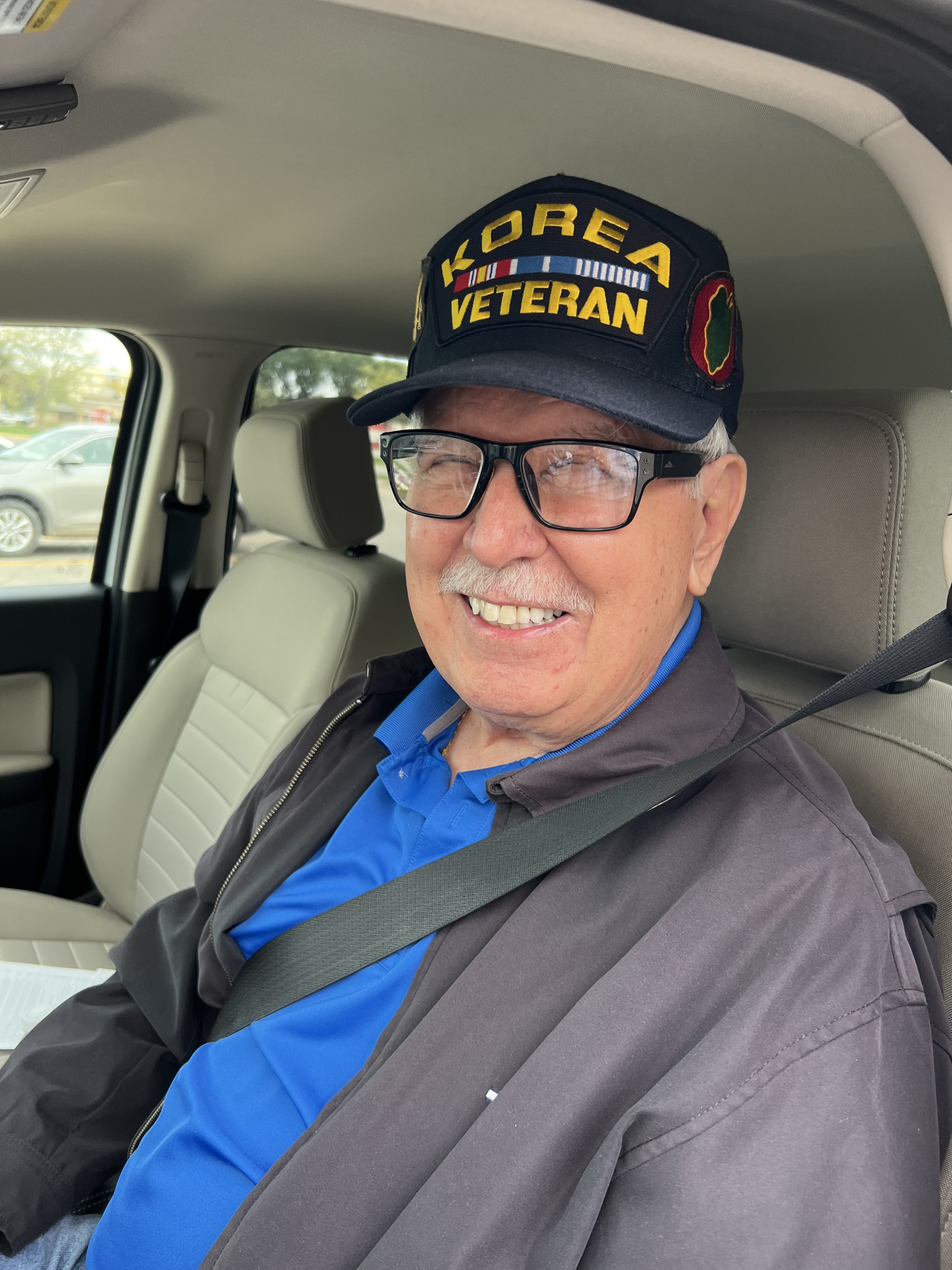
On 27 July 1953, a Korean Armistice Agreement was signed. One of the requirements was that neither party in the next five years could add more troops or weapons to the Korean Peninsula. If 100 soldiers entered, then 100 soldiers had to leave. There was no trust, so there must be verification.
Verification would be overseen by the Neutral Nations Supervisory Commission composed of four officers, two from the north and two from the south. To be neutral, a nation could not have had combat troops participate in the war. The south chose Switzerland and Sweden while the north chose Czechoslovakia and Poland.
The first 96 monitors arrived in North Korea from Switzerland 1 August 1953. At about the same time 300 Czechs arrived in South Korea. Those bodies were eventually disbanded and its place were installed fourteen member teams in the north and south. In the south, the teams needed protection because someone took a shot an inspector. One of the men in the protection team was Robert “Bob” Wittmeier.
Bob was born 11 April 1934 in Tyndall, South Dakota to William and Louise (Koenig) Wittmeier. Both of his parents were of German descent. William worked for the S.D. Highway Department and Louise clerked at a grocery store. Bob was an only child, which made him smile. He received more presents and mountains of attention from all of his grandparents.
On 7 December 1941, Bob and his parents were at his grandparent Koenig’s home for Sunday dinner. They lived on a farm near Kingsburg, South Dakota, located north and west of Springfield. “Everyone was talking about Pearl Harbor and war. I didn’t know much about it.” His part during the war was to travel door to door to pick up tin cans, newspapers, and grease. “I got the day off from school.” And, of course, he recalls rationing. “We were permitted only two pair of shoes per year, one school shoe and one shoe for summer, tennis shoes.”
At the age of seven, his parents moved off the farm. “I became a city slicker. I lived on the west side of town to the north of the Tyndall school.” That home was more modern. It had electricity and indoor plumbing. They owned a radio and he particularly liked to listen to big band artists such as Artie Shaw, Glen Miller, and Woody Herman. In the 7th grade Bob began to play percussion. By the time he was a sophomore in high school, he was the drummer in a band composed of several band directors. He earned $3.00 per job in late 1940s, which is pretty good.
His favorite things to do were bicycling, swimming at the pool where he was a lifeguard, and drinking nickel Cokes! He was active in school. He played center on the football team, was in the big band and pep band, sang in the chorus, debated, played Legion baseball, and was student body president. He graduated from high school in 1952.
His English teacher, Ralph Wilkinson, and band instructor, Grant Lowery, encouraged him to attend college. They were wonderful mentors. Bob enjoyed literature in high school. He enrolled at Southern College in Springfield, South Dakota in the fall of 1952 with the intent of becoming a literature teacher.
Two important things happened during his freshman year. Bob and a few friends traveled to Yankton to visit Wallbaum’s drugstore. One of Bob’s friends saw a girl that he knew. She attended Sacred Heart nursing college. With her were two roommates, one of whom Bob adored. Her name was Marilyn and soon enough they began to date.
The next spring Bob was having coffee with two other education majors after a morning class. They were Robert Schoeppert from Menno and Lonnie Grayber from Freeman. “At that time, education majors were not eligible for the draft. They needed teachers.” Bob did not consider enlisting, which meant he would have to serve for three years, but they all agreed to do withdrawal from school and to volunteer for the draft, which was a two-year obligation. “Away we went!’
Basic training was during the summer of 1953 at Ft. Bliss, TX, which was across the border from Juarez, Mexico. “They advised us to go in groups of three and stick together. You might get rolled if you were by yourself. I went to a bullfight, but I didn’t care for that.” Training lasted eight weeks.
After a two-week furlough home, he was sent to Ft. Ord, CA for training in heavy weapons, light artillery, and mortars. “By then the Korean War had ended. We all felt fairly safe.” There was a lot do to on the weekends in San Francisco. He has a fond memory of dining on wonderful fresh fish at the Old Fisherman’s Grotto located at the end of the Monterey pier.
At Ft. Lewis, WA, they received seven inoculations in two days and then boarded the USS Marine Lynx. They slept four high. “I got on top over and back. I had a light to read by. I never got seasick.” His buddy, Larry Luetz from Ft. Dodge, Iowa, “was seasick before the ship even left.” They stopped in Alaska to drop off 500 men into three feet of snow, stopped in Hawaii to drop off a few more, stopped in Sasebo, Japan for few more, and then docked at Pusan, South Korea’s only natural port.
Perhaps the most shocking part about Korea was the utter destruction. Korea is about the size of Minnesota. The North Koreans invaded and nearly took the entire country. The United Nations jumped in and pushed them all the way back to the Chinese border. The Chinese pushed back to the thirty-seventh parallel. The entire time both sides chewed up the landscape and killed thousands of people. As a result, when Bob was asked what he did in Korea during the sixteen months he was there, the answer was “not much.” When asked if he tried Korean food he replied, “there was no place to eat. The place was devastated.”
Bob’s first months were in the guard unit protecting the inspectors. It was a twelve-man guard team. “We didn’t know why we were selected. We had all just recently arrived. We all had some college. Two were college grads. Maybe?”
“There was a 2nd lieutenant, a staff sergeant, and the rest were grunts. We traveled in three jeeps, one had a mounted .30 caliber, and a personnel carrier. The four-man inspection team sat in back.”
“Initially the inspectors could travel at will. However, South Koreans hated anything Communist because their country had been totally destroyed. We would pick up the inspectors at the compounds. We would go to the docks to watch troops arrive and leave. Lots of equipment was thrown into the ocean. They inspected cargo ships too. We worked about five days per week. Everyone had to speak English to communicate with all of us.”
“The inspectors had a tent they sat under. Troops walked right by and they counted them. We formed a semi-circle around them. The middle jeep had a .30 caliber machine gun, which was right behind them. Only once did we load our weapons. We all had shells in the magazine but none in the chamber. I put 4 shells in the morning and unloaded at night.”
“Usually the South Korean dock workers saw us and they left. This time was different. A crowd was there, which was unusual. 30-50 people. They started throwing rocks and a broke a windshield. The lieutenant gave us the command to ‘load.’ I had a 12-gauge sawed off Winchester model 12 shot gun. Other weapons were three carbines, three shot guns, and three grease guns. We all carried a .45. The crowd only calmed down a little. When the guy jacked back the .30 caliber, they stopped and turned around.”
The other ten months Bob served in the 24th division band, composed of 50-60 members. 24thDivision headquarters was located fifteen miles west of Seoul. If he did anything in Korea, it was playing a lot of music.
It was not uncommon for the commanding general to come down and listen to the band play at night. Every band had a library of the big bands, the Dorsey’s and Glenn Miller. Every time the general and staff met a dignitary the band and honor guard were present. The highest-ranking dignitary was Vice President Richard Nixon. They saw a lot of people from other countries and played national anthems for every one of them.
The band traveled by bus all over South Korea. They typically played concerts on Sunday afternoons. “We saw the countryside. I cannot remember a village that didn’t have damage from the war. We saw lots of poverty. There were bodies in the ditch that had frozen. Kids with no shoes in January. The band supported an orphanage. We kicked in $5.00 per month.”
They also hired Koreans. “We had house boys we paid $2.00 per month per person. For a pack of cigarettes they would do your laundry. We bought them for a dime and they sold them for a dollar. They polished boots and cleaned our tent. They were wealthy compared to others. Each house boy took care of two tents with eight men per tent. The last few months while I was there, we got a permanent Quonset hut.”
“I was once close to the DMZ. You could see it. It is one or two miles wide of no man’s land. Thousands of mines buried there. Tank traps. Hunks of concrete. While I was there, a patrol of GIs were in a storm. A little village beside the DMZ was deserted, but one building was still intact. The squad leader ordered them inside to wait until it was done raining. They noticed there was a lot more building, so they looked and discovered a tunnel that went under the DMZ. Two miles of tunnel. Four men could walk abreast or drive a small vehicle through it. It was electrified and ventilated. They blew it up.”
The 24th Infantry also had an all-GI variety show and Bob was a member of the 10-man backup band. They played in Korea, Japan, Okinawa, Guam, and aboard two large ships. He thought the comedian, Lou Karitsky, was great. There were a couple of singers. One fellow played piano and imitated voices. Two guys could tap dance. There was a quartet. “They could sing!” They were the equivalent of a USO group. “A lot of the places didn’t realize we were in the military. We changed into band outfits. They really liked us.”
Bob returned home in the summer of 1956 aboard the same ship, the USS Marine Lynx. They didn’t stop this time and went straight through to San Francisco. “We knew we were close to home because of the portable radios. At 3:00 A.M. we passed under the Golden Gate Bridge. Tears were running down your face. Cars were honking. People were waving at us.”
Discharge from the military takes about five days. There are physical exams, travel, pay, dental exams. “I am sitting on a bench and a sergeant asked if I wanted to go to mess hall and take headcount. Sure. I can do that. It was the women’s mess hall. I enjoyed that.” The last thing they did was place a Korean patch over his 24th Division patch.
Bob flew home aboard a prop plane. They arrived very early in the morning in Kansas City. The ticket agent in California could not guarantee them a ticket, so they inquired in Kansas City. The agent was a World War 2 veteran. “He saw the Korea patches over our 24th Division patches, and asked, ‘how long has it been since you were home?’ Almost two years. We got the next flight. Somebody didn’t make that flight!”
Bob told Marilyn, who had moved to Phoenix for a change of scenery, that he was coming home. Marilyn said, “If he is out there, I am going to be too.” They were engaged by that time. However, he didn’t tell anyone in his family so he hitchhiked from Sioux City, which very easy. They were married in August.
“I had the GI Bill. Didn’t cost me anything to get my baccalaureate and a master’s too.” He graduated from Southern in 1958. His first job was the principal at Grove Elementary School. “Blikre was superintendent. Sattler was on the board at Grove. Marilyn worked with Sattler. There 125 kids with two grades to a room, except kindergarten.” Bob taught 7th and 8th grade literature and history.
In 1960, Bob was asked if he wanted to move to Yankton High School. He started in 1960 and didn’t stop until 1994. He taught English and Literature, and later some Social Studies and Geography. “I enjoyed it. I loved the romantics, Poe and Longfellow, Thoreau and Emerson. In the last five years I worked with mentally challenged. They called themselves ‘The Gang.’ A dozen of them. We did a lot of field trips.”
After retirement, the Wittmeiers spent twenty years in Florida, most of the time at Destin. They have two daughters, four grandchildren, and four great grandchildren.