

Jon Stather was born March 29, 1944, in Bangor, Maine to Sidney and Amy Stather. Sidney measured wood for a paper company. 90% of Maine is covered with trees, so he had job security. Amy taught children in the 4th, 5th and 6th grades. Jon has three siblings: Ronnie Nelson, Sidney Stather, Jr., and Sally Gehris. The family lived in the countryside, which meant Jon was eager to get his driver’s license at fourteen. He earned money by cutting wood, moving snow, and cutting grass with his brother.
“I had a good time in school.” Jon ran track and cross country and played football. He claimed he was only average in all of them. In 1962, he graduated from Bangor High School. There were no discussions about Vietnam when he was in high school because the war was not a public issue at that time. During the summer he worked as a commercial fisherman.
In the fall of 1962, Jon enrolled at the University of Maine at Bangor, but it just didn’t feel right. Half way through his first semester he realized, “I need more excitement. I wasn’t ready for college.”
Jon, his cousin, Dennis Higgins, and two friends thought about the military. There was a history of military service in Jon’s family, including Sidney who was in the Army Air Corps during World War 2 and several uncles who were in the Navy. One of Jon’s friends wanted to join the Army and Dennis was interested in the Marine Corps. A third was undecided, but Jon was drawn to the Air Force.
Jon described basic training for the Air Force this way. “They treat you like a human being. Not like Army, Navy and Marines.” After arriving in March of 1963, he spent six weeks at Lackland Air Force Base in Texas. After training, “I became a dog handler and Dennis became a vet tech.” Their family always had dogs and he liked them.
Jon was assigned duty at Loring Air Force Base located on the northern tip of Maine. It was the farthest north of any U.S. Air Force base and the closest to the Soviet Union if the plane flew over the Artic Circle. Nuclear loaded B-52G Stratofortress’s flew 24/7 and, as a result, they required in-air fueling by KC-135 Stratotankers that could hold 90,000 pounds of fuel. The B-52 is a strategic long-range bomber designed to deliver nuclear weapons from high altitudes.
Jon was slightly disappointed. He was from Maine and was being sent back home. It was not exciting! However, Loring Air Force Base is really secluded and the duty can be lonely, so they must have thought a kid from Bangor would make it.
Jon was at Loring when Kennedy was killed, 22 November 1963. They went on full alert and locked the base down.
On 4 January 1965, four crewmembers took off in a KC-135 from Loring. One engine separated from the plane and the plane crashed three miles away. There was extensive devastation. The temperature was below zero and there were pools of fuel a foot deep. It was unpleasant. Two dog teams had to go and secure the area. The dogs wore special boots because of the jet fuel. “It took us 1 ½ hours to get us out there by snow weasel,” said Stather. They had to clear trees to salvage the plane and locate the four bodies. In addition, citizens wanted to get in the perimeter and look around. “Citizens skied to the area and tried to get in. We stopped them a quarter mile away,” he said.
When he got back to the base his buddy, John Mertsock from Upper Darby, PA, said, “We need to get a different job and get the hell out of here!” After chow John said, “Let’s go put in for a new assignment.” They did and they were reassigned to Vietnam. “I went from one extreme to another,” explained Stather.
“We went to a school for six more weeks in Texas where the dogs were trained for mortars, machine guns, grenades, etc.” There were twenty-two dogs in the class. “Our dogs are not vicious, like Marines. The German Shepards are simply sentries. After that I went to Bien Hoa Airbase, located sixteen miles north of Saigon.” His buddy, Mertsock, went to Pleiku in northern Vietnam. He recognized that it was likely, but it made him sad.
There are other kinds of dogs -- scout dogs, tracker dogs, booby trap dogs, bomb dogs. Malinois is one of the toughest breeds because they can be trained to be aggressive. Marine Corps dog handler duties are different. They always moved around. According to Jon, “In the Air Force we had a bed and stayed at one place. I had an air mattress. I worked twelve-hour shifts six days a week.”
There were fifty-four sentry dogs at Bien Hoa, and he established lifetime friendships with some of the other dog handlers, including a 6’5” Pollok, George Miller, from Racine, Wisconsin, and John Chumley from Waycross, Georgia. Jon chuckles every time he mentions Chumley. “He reminded me of Popeye with his tobacco. He went to the PX and bought a suitcase of chewing tobacco. Never took tobacco out of his mouth.” The squadron commander ordered Chumley to get a GED, which he did.
The Bien Hoa Airbase was managed by the Vietnamese Air Force; the Americans were just tenants. It has quite a history. The first planes to arrive there were bombers. In June of 1962, two South Vietnamese soldiers guarding the base perimeter had been killed by Viet Cong. As a result, the jungle north of the base was defoliated.
Sentry life remained dangerous. On the night of 1 November 1964 a VC mortar team penetrated the base perimeter and launched a thirty-minute barrage on the base destroying five B-57s, three A-1Hs and damaging twenty-one more planes. Four Americans were killed. It was a huge fire. (Vietnamese rubbed themselves with garlic when attacking the base. The odor was offensive to dogs.)
As a result, in May 1965 the 173rd Airborne Brigade was sent to secure the airbase and other nearby areas. Also joining them were an Australian Infantry Regiment and a New Zealand Artillery Battery.
Finally, in November 1965 the 3d Tactical Fighter Wing moved to Bien Hoa. Several different fighter squadrons operating F-100s were stationed at Bien Hoa over the years. The 145th Aviation Battalion, a U.S. Army helicopter unit, also called Bien Hoa home. They also had a Nike anti-aircraft missile battery.
By the time John arrived, the perimeter of the base was huge. Each nightly patrol has twelve dogs. There were twenty-one dogs at the base. “We patrolled the entire outer perimeter of the base,” and there were some “gun fights. Someone would fire a few rounds, and you were always looking over your shoulder.” One dog handler was killed at Bien Hoa during the war.
Sentry dogs used their vision and keen sense of smell. “If the base was hit, the dogs would look for people. However, the dogs were not good during monsoon season, which was sixteen weeks long. The rest of the year was hotter than hell.” Their patrols were always at night.
The men still had sentry duty in the rain. “During rainstorms, three to four inches of rain fell per night. You would pick a high spot and stay there. The dog just sits covered by a rain jacket with his nose out. They are looking for movement and no scent. During monsoons their scent cones were impacted. They couldn’t put a scent on anything.”
An F-100 crashed and the sentries had to secure the airplane so that the body could be removed. The pilot had burned. He was placed in a body bag and put in the cooler in the chow hall. “Nobody used ice for three days until they took his body down to Saigon.”
“Two weeks before I came back my dog got really sick. The vets said he had leptospirosis. Bien Hoa was the source of Agent Orange. Oily to the touch. It was in the dogs’ water all the time. Maybe that caused it, but we couldn’t take dogs home anyway. All dogs that passed on were destroyed. We buried them in a trench. In Vietnam dog meat is a delicacy and we didn’t want them used for food.”
Jon left Bien Hoa in October of 1966 and returned home. His first job was a mailman, which was not exciting. Across the street was the headquarters for the Bangor and Aroostook Railroad. They hired him on the spot to unload frozen French fries and then offered him a brakeman job, or assistant conductor, for four months. That ended eight months later, so he was forced to fill out weight forms. They offered him the station agent position at Fort Kent, Maine, which was located even further north than Loring. Nope.
After about two years in the civilian population, John had the itch. He stopped at the recruiting office. If he enlisted in the air force, what could he do? How about an airbase electrician? That sounded good and he was off to Keesler Air Force Base in Biloxi, MS. He was trained there for a year and a half on electronics and communications and shipped to Plattsburgh Air Force Base located in New York along Lake Champlain. John asked for flying status and had additional six months of training, including the altitude chamber and water training. He did pre-flight on B-52s and KC-135s. He thought it was very interesting that he could talk to someone across the world on those radios.
Jon returned to Vietnam and served two tours in the air. During his first tour, he was a crew member on an RC-135 Cobra, a plane manufactured by Bell to collect optical and electronic data on ballistic targets. He recalled one mission aboard the SR-71 Blackbird concerning the USS Pueblo. On 23 January 1968, North Korea captured the USS Pueblo, an unarmed US Navy intelligence vessel, in international waters. The North Koreans held the eighty-three crew members hostage for nearly one year. According to Stather, “We went up there to spy on them.” The tapes from the trip were top secret.
He was told that he was next going to Guam, which did not excite him, but two weeks later he was given a position at Kadena Air Base on Okinawa. (He also had TDY in U-Tapao, Thailand.) He became a crew member aboard KC-135s and B-52s. Refueling is “cool. It’s interesting to watch. A man uses a joystick.” “I flew three B-52 missions out of Okinawa. Each was loaded with 33 tons of bombs. The formation was 500 feet apart in different elevation and 1,000 feet wide.” His missions were part of Operation Rolling Thunder. According to the Air Force, that operation was a systematic bombing campaign against North Vietnam to provide a morale boost to South Vietnamese forces, to stop the flow of supplies going south, and to discourage North Vietnamese aggression.
On one of his three trips, Stather had a unique experience. “One time, we were coming into Vietnam over the Da Nang Airbase and the USS New Jersey was there. It was firing its 16’ guns with 2,000-pound projectiles twenty-two miles inland to the DMZ. We had to fly around it, so we came along the border of Laos. We flew at 35,000 feet or higher. We dropped our payload. After bombs are released from a B-52, the auto pilot is screaming because it has to compensate for the release. We had twenty-seven B-52s shot down the war.”
Jon’s tours ended in 1974. He thought he had a shot at a decent job on the East Coast. Instead he was sent to Bellville, Arkansas in the middle of cotton fields. It was also empty. There were no planes there, so he rebuilt and cleaned for a year. His next assignment was at Keesler Air Base in Biloxi, Mississippi. He trained for an airborne command post for fourteen months aboard a Boeing EC-135, and was then sent to Grissom, Indiana, one of three locations for America’s Airborne Command Posts. They flew twenty-four hours per day, every day of the year. The other two are in Rapid City and Omaha. He completed his twenty years at Ellsworth Air Force Base in Rapid City in 1982. That was an important stop because it is where he met his wife, Lynn.
Jon was headed back to civilian life, kind of. He had finally matured and was ready to obtain a college degree. He completed degree requirements in civil engineering at South Dakota School of Mines. The company that he worked for rebuilt missile sites. It was challenging work. Each launch door weighed 100 tons, and a ballistic gas generator blew the door off if necessary. He retired from that job after twenty-two years.
Jon had kidney cancer caused by agent orange. “One kidney was removed thirteen years ago. Other guys have Parkinson’s. I don’t. Everyone has PTSD and I see a shrink.” He has two children, and he has been married to Lynn for 37 years. They have six cats and a dog. 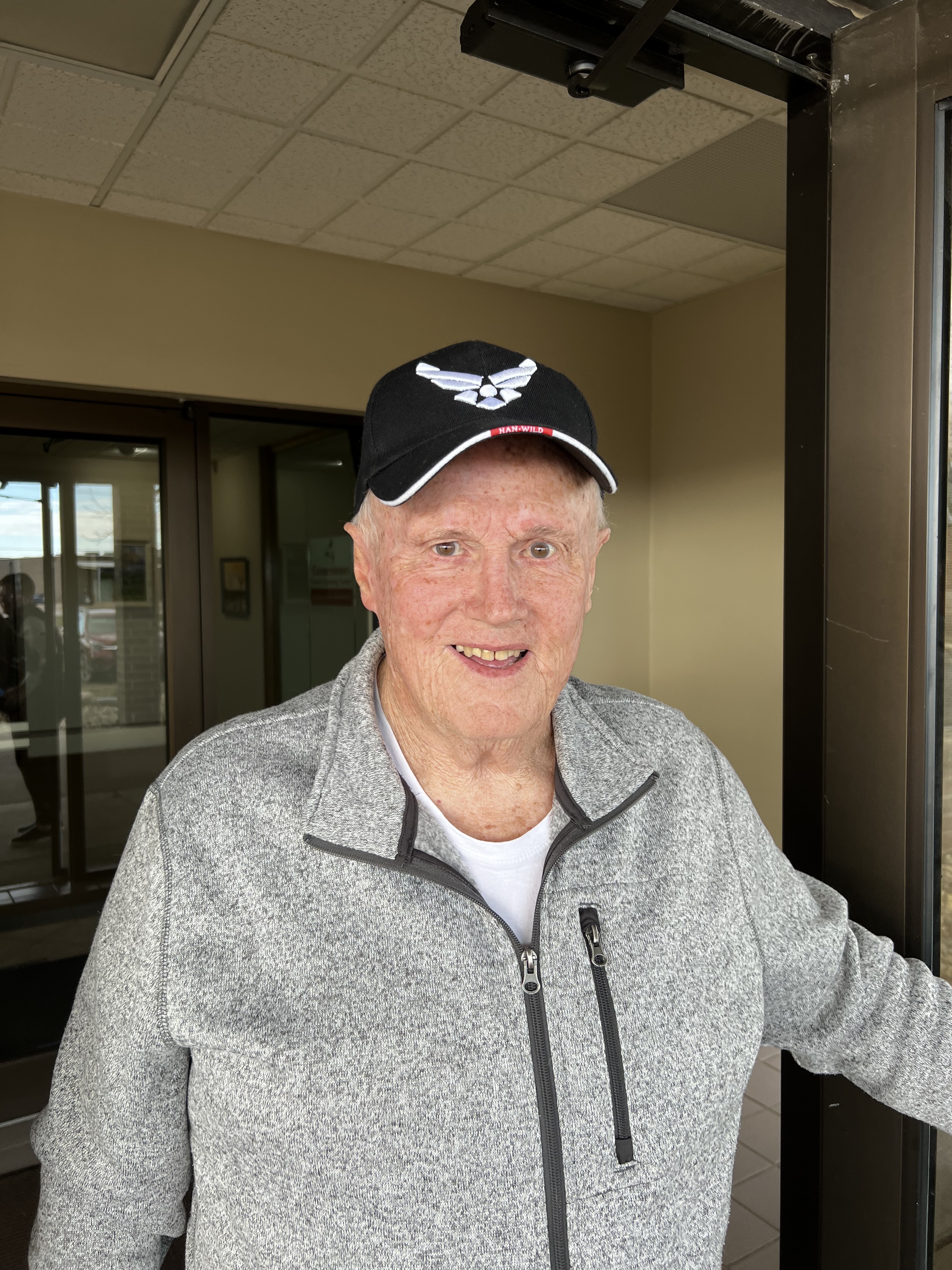
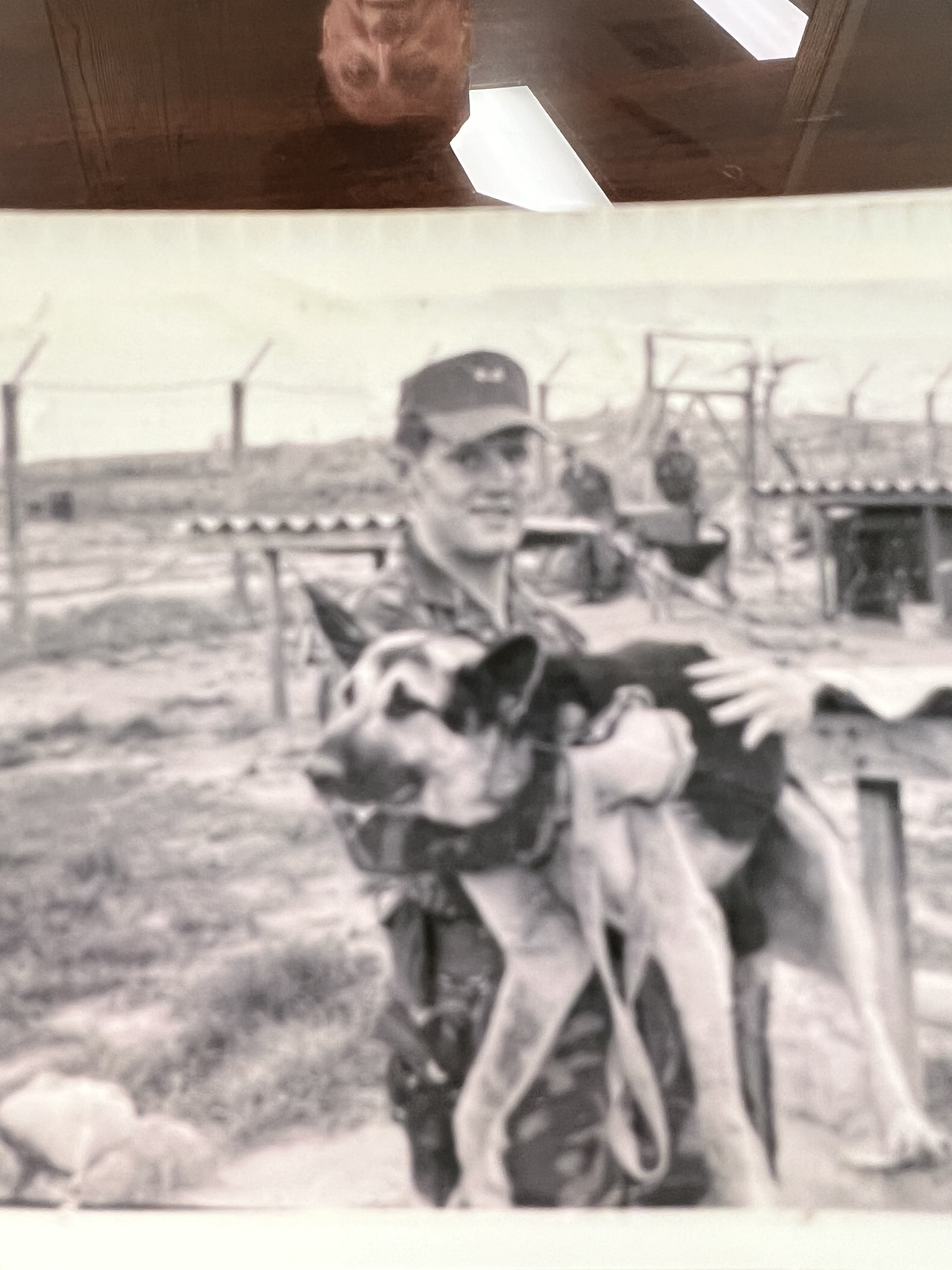
Jon Stather
Nov 03, 2024
¿Te gusta esta publicación?