

 The stock market has been very choppy over the last few weeks. Yet, we've survived the market's ups and downs by being very selective in where we've put our money.
Over the last few weeks, in our Sector Selector service, we've focused on four ETFs. These funds are acting much better than the market.
That's a perfect illustration of the principle of relative strength - investments that outperform when others are falling in price.
Here's a useful comparison.
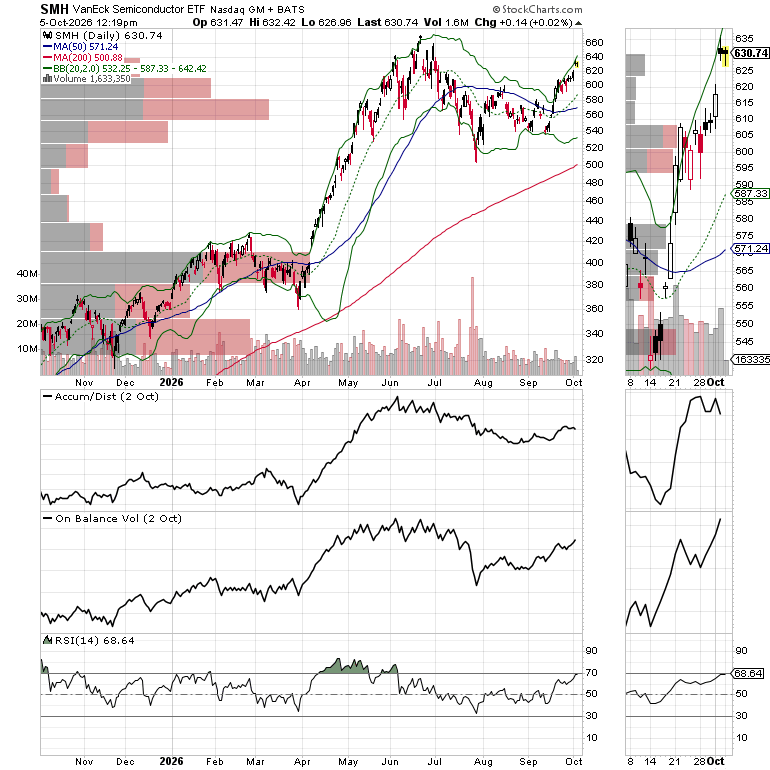 The semiconductor sector (SMH) has been holding up quite well after the Federal Reserve's recent interest rate increase. On the other hand, the financial stocks (XLF) have declined.
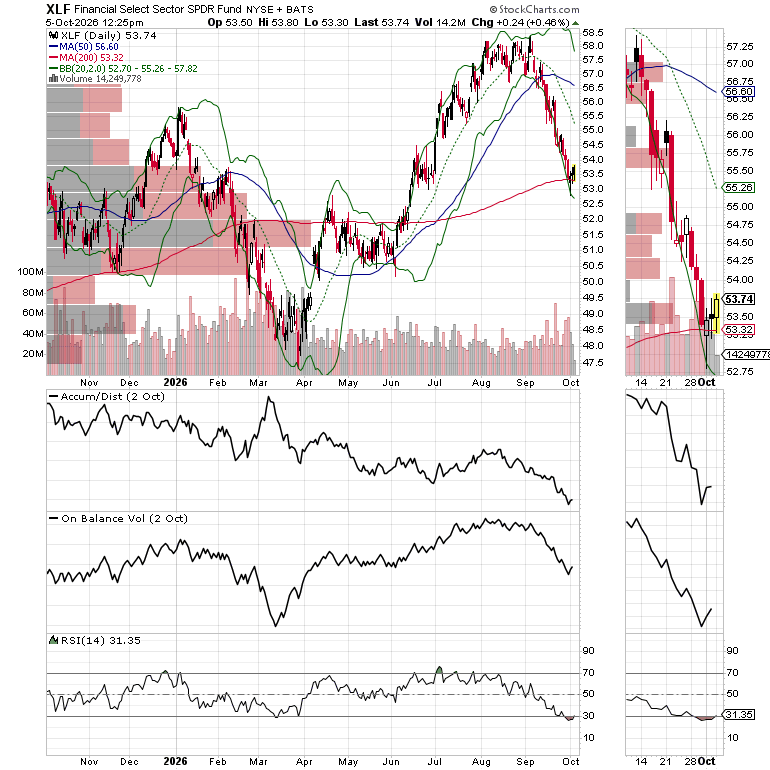 In other words, SMH is exhibiting relative strength compared to SMH.
That's what we focus on here at the The Sector Selector - the areas of the market that are working best. Right now, we're holding four ETFs that are outperforming the rest of the market. And you can have full access with a FREE trial. Just go to our front page and hit the link.
Now let's talk more about how to use relative strength.
Relative Strength Investing Pays Off
It’s an investor’s dream. The perfection of being 100% in stocks in bull markets and 100% in cash during bear markets. Moreover, the dream is fueled on the perception that one can respond well ahead of trend reversals in order to achieve perfection.
The truth is that achieving such execution is nearly impossible.
Indeed, some may wonder why I often have positions open while the market is falling. The answer is simple; if it’s working there’s no reason to panic.
Of course, there are no guarantees. And some markets are bad enough that everything you own gets stopped out.
That’s o.k. Getting 100% stopped out raises cash for the next buying opportunity. Some buying opportunities develop during major selloffs. Some of the stocks you buy during major selloffs are the leaders when the market turns around.
Always look for bullish setups regardless of the market environment. Bear trends make them harder to find. But they’re still there. When you find them, gobble up a few shares and see what happens
Once you own them, let the Sell stop do the work. If a stock doesn’t get stopped out in a nasty market, that means that investors are confident that the company will withstand the selling spree.
Thus, when you get a significant reversal which follows a dramatic downtrend, you often make money with those stocks you bought deep into selloffs because they were setting up to rally.
In other words, because positions that are not stopped out survive the selling and are still in play, you’ve already got exposure to the stock market when things turn around.
And if you’ve played it right, you’ve got exposure to the stuff that bounces well when the market gets sold out.
So far so good as we’ve been slowly deploying some money into the semiconductor sector which is paying off nicely.
What’s Next for this market?
In addition, the stock market is attempting to form a bottom which may lead to a year end rally. Thus, it's important to discuss this in some detail. But, in order for this rally to last:
The buying must extend beyond technology. Without the broad market participating, the odds of a meaningful rally into the end of the year will be significantly lower than if the buying spreads beyond tech.
Simultaneously, the technology sector should keep its leadership role or at the very least continue to participate. That’s because a failure of the tech rally would leave the market without meaningful growth and momentum leadership. History shows that healthcare, financial, and cyclical led rallies don’t have the staying power of tech led uptrends.
Bond yields must remain stable with a downward bias. If bond yields resume their climb, it will have a negative effect on the real economy, as eventually it will hurt the consumer and worries about corporate earnings will rise. And
Liquidity must not tighten meaningfully, and interest rates (from central banks and bond markets) must not continue to rise. Without liquidity, there is no significant bid for stocks. We’ve recently seen that the current flattening out of financial conditions (see below for details) has led to selling in stocks. Higher interest rates will reduce liquidity.