

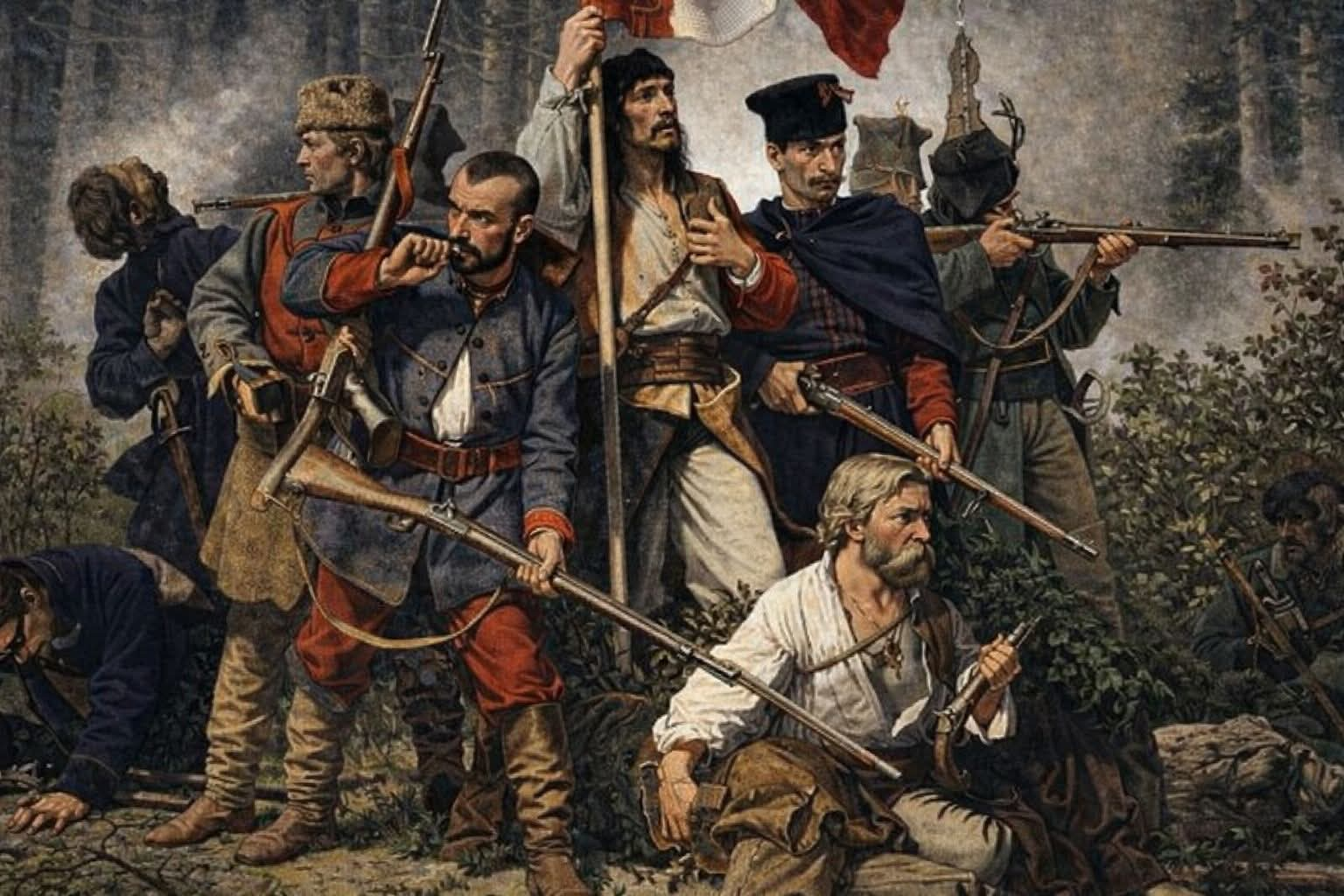
 The January Uprising broke out on the night of January 22–23 without an army, without allies, and without real chances of victory.
In 1863, Poles took up arms without any state support and with no guarantee of help from abroad. Yet the uprising spread across almost the entire Kingdom of Poland, Lithuania, Belarus, and parts of Ukraine. Its ranks included landowners, workers, students, craftsmen, and school youth. It was the first insurrection that truly tried to encompass the entire society.
The stakes were not only the fight against Russia. Equally important was the attempt to change the social order. The dispute over the emancipation of peasants became the core of political and ideological conflict. The uprising was defeated militarily, but it set processes in motion that could no longer be reversed. The belief that autonomy could be regained without deep reforms vanished.
Europe watched with sympathy but did not intervene. Diplomacy replaced real support, and the interests of great powers proved more important than the fate of the fighting nation. When it became clear that a European war would not break out, the insurgents were left alone.
Reprisals after 1864 were brutal: executions, exiles, confiscations of property, and accelerated Russification. The memory of 1863 did not disappear. It became the foundation for subsequent generations. From it grew the path to 1918.
The January Uprising did not bring freedom. It gave the awareness that without a modern society and an independent state, there could be no future.