

What if you didn't need to try so hard at mindfulness? That's the intriguing question at the heart of Diana Winston's The Little Book of Being, a slim guide that gently nudges readers beyond focused meditation towards something more spacious.
Synopsis: The Little Book of Being is Diana Winston's second book on mindfulness, following her earlier collaboration, Fully Present, with Susan Smalley.
The book is structured as 72 short "mini chapters", each just a page or two, designed to be dipped into rather than read cover to cover. It's a format that suits busy readers well; you could easily read one chapter with your morning tea and still make it out the door on time.
Diana is Director of UCLA Mindful, the mindfulness education centre at UCLA Health, and has been teaching mindfulness since the early 1990s. She trained in the Theravada Buddhist tradition, including a spell as an ordained nun in Myanmar, and now teaches at Spirit Rock Meditation Centre in California.
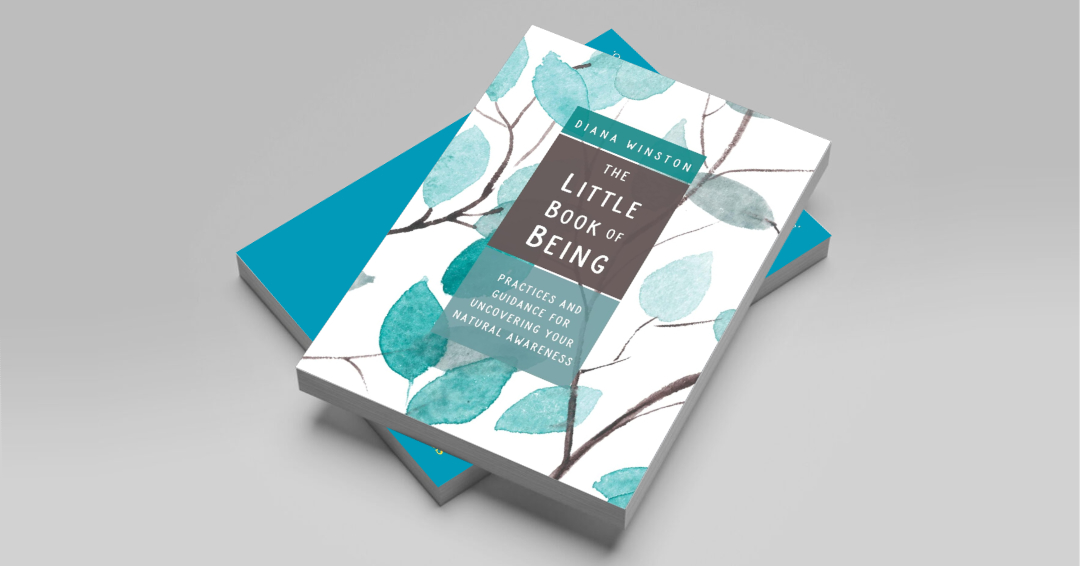 The Little Book of Being: Practices and Guidance for Uncovering Your Natural Awareness by Diana Winston
Published: 2019, Sounds True. Paperback: 248 pages (also available as ebook and audiobook).
What is 'natural awareness'?
The central idea of the book is what Diana calls "natural awareness", distinct from the more familiar focused mindfulness most of us encounter in apps and courses. Rather than deliberately anchoring attention to the breath or a specific object, natural awareness is described as a more effortless, spacious way of simply resting in the present moment, the sort of "awareness of awareness" many of us stumbled into as children watching clouds drift by.
Diana describes natural awareness as "always there, like a radio station playing quietly in the background, whether or not we choose to tune in."
The book maps out a spectrum running from focused mindfulness through to this more open state, and offers practical routes to reach it, including three specific techniques Diana calls relaxing effort, broadening awareness, and dropping objects. There's also a treasury of what she terms "glimpse practices", quick moments you can use to touch into natural awareness during an ordinary day, whether you're washing up or waiting for the kettle to boil.
What does the book offer?
Where this book excels is accessibility. Diana writes with warmth and a light touch, and the mini chapter format means there's no pressure to power through a dense treatise on non-dual awareness. For readers already familiar with classical mindfulness, it offers a genuinely fresh angle rather than yet another beginner's guide to breath awareness.
That said, the concept of natural awareness sits closer to the more advanced or subtle end of meditation practice. Those completely new to mindfulness may find some of the ideas around "resting in being" a little abstract without prior grounding in more structured practice first. It pairs well alongside Diana's previous book Fully Present: The Science, Art, and Practice of Mindfulness, co-authored with Susan Smalley, which is certainly a better introduction to mindfulness.
It's also worth noting the book draws on UCLA's own evidence-based programme development experience, though this particular volume reads more as an experiential guide than a research summary, so don't expect heavy citation of studies within its pages.
Would you enjoy it?
If you've already got a regular meditation habit and fancy something to deepen or refresh your practice, you'd likely enjoy this. It would be a valuable addition to your meditation bookshelf. It would also suit anyone who's felt slightly deflated by mindfulness apps that make concentration feel like hard work; Diana's whole premise is that ease, not effort, is the way in.
The Little Book of Being isn't a beginner's manual, but for those ready to explore what lies beyond focused attention, it's an accessible and quietly rewarding read. Its bite-sized structure makes it easy to return to again and again, which, fittingly, is rather the point.
Diana also co-developed the UCLA Mindful app, which offers free guided meditations, some of which draw on the natural awareness approach covered in the book. As meditation apps go this is a gem - it doesn't gameify meditation or try to sell you anything, there are no notifications, no ads and it's entirely free. If you find apps helpful this is definitely one to try.
Verdict: Highly recommended. I've read this book a number of times and would recommend it to anyone who has been practising mindfulness for a while and has a feel for the practice. Available in all good bookshops and may be free to borrow from your local library.