
Time to talk about $LULU and detail my view on why I believe it is a good company and a good stock to buy at today's price - around $350.

There's a lot to unpack, so let's dive in and explore everything I've learned about Lululemon and why I believe it's a great long-term investment.
[Company]
Many might not be familiar with Lululemon because it's not the type of product that everyone buys - not me at least. But let me start with a simple chart.

Yes, yoga. More precisely, yoga pants. This is how Lululemon began before expanding to more products. As I said, not really the kind of things I buy but let's move forward. Offer comes with demand, so many new studios opening meant much more students over the years, eager to practice yoga. You can see that they had a rapidely growing market in what was a niche sector just some years ago - it isn't anymore.
Demand grew, their brand got known so they chose to extend their product line and offered more than yoga pants. I would have a hard time defining exactly what they sell now but I guess you can find anything you want to practice sport and even more as some of the clothes they sell could be used for everyday life - as long as you're pretty chill because we're still talking sportswear here. Pants, shorts, leggings, tops, skirts, hoodies, coats, underwear, all kinds of accessories & more...
And that was probably a very good idea as another trend has grown massively those last years where their outfits can be used by everyone: the gyms.
The fitness market has been growing massively with gyms opening everywhere, while each member has their own sportswear and brand.
You understand that Lululemon is in a wider market by now and left its yoga niche - or did the yoga pants get more popular among other activities? Whichever it is, Lululemon now has a pretty huge client base and a very strong brand. A premium brand as even if they evolved over the last year to propose more than just yoga pants, they kept the identity of their brand: high-quality expensive clothes - we're talking about $80 leggings.
I won't do an entire section on their business model because this is a very simple one. They design and manufacture clothes & accessories and sell them for a premium to their clients with three different methods: Via internet, through their own stores, or via resellers.
Basics.
So that's what we'll be talking about. A premium sportswear brand, Lululemon.
[Sportswear market]
Which evolves in the same market as Athleta, Nike, or Adidas. A wide market which is planned to grow to $750B by 2031 with a CAGR of 6.84%.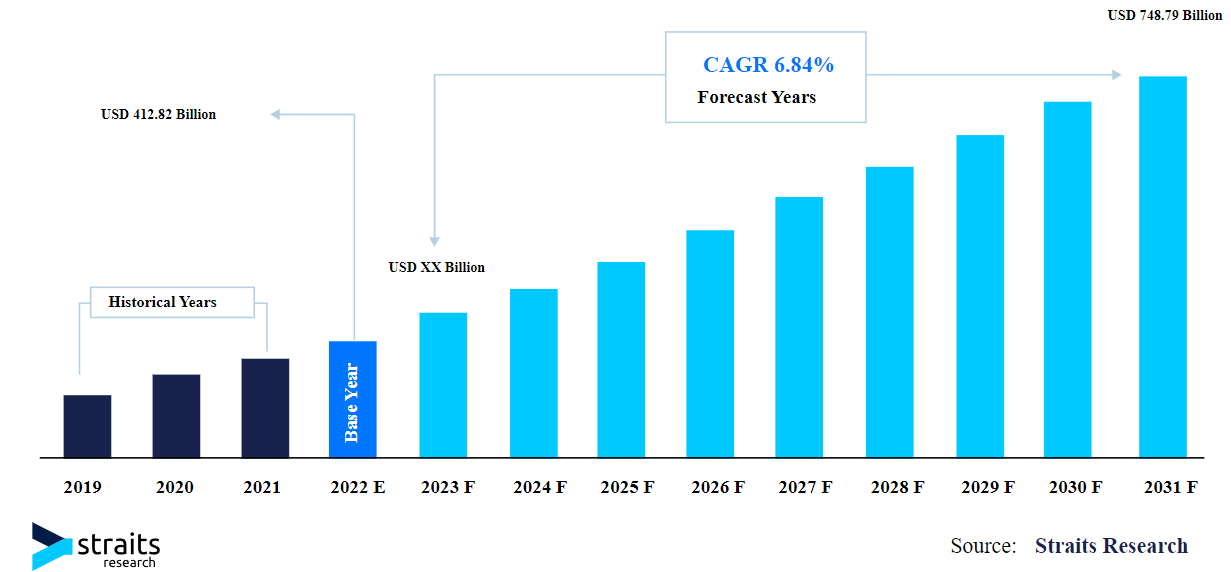
Truth is a bit more complex as this shows the entire sportswear market, while Lululemon isn't implicated with footwear for example, which should compose around 30%-35% of those numbers. This would leave a $500B market by 2031, big enough for the company.
I'll use those numbers later on on the outlooks.
[Moats]
It's very hard to talk about competitive advantages for sportswear brands because the only one this kind of company has is given by their clients, and it won't prevent competition from one day doing better or stealing their customer base.
Intangible asset. It's the name given to products that have nothing special, but people love them enough to pay a premium for them. That's what Lululemon has over its competition. It can be called with a simpler phrasing though: Brand.
People come for the it; it's a mark of distinction that was built through the years by the company through different aspects. To give more examples, companies like Coca-Cola, Louis-Vuitton, or Ferrari also have intangible assets. Competition could reproduce their products but people would still buy the original ones. And that is because of some specificities brands work on for years to fidelize their clients.
One thing is stores. They need their clients to come "home" to the brand's house to buy their products. It gives a sensation of being part of something bigger than yourselves. It also gives the brand an identity & the capacity to give a premium service through their sellers.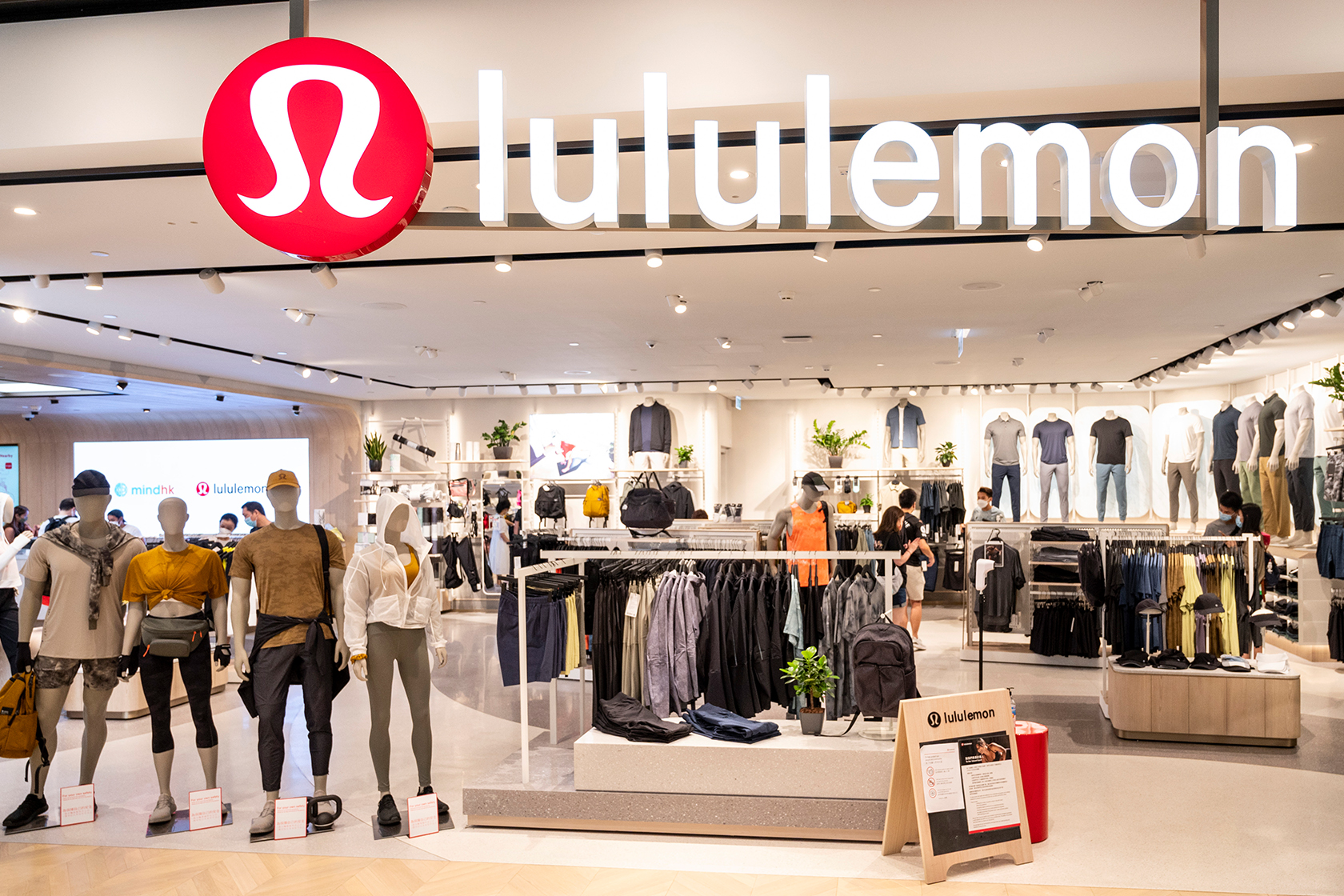
I always say that one of the first ones to understand it was Steve Jobs and his Apple stores, which gave the brand a much stronger reach and impact. He knew what he was doing, although everyone told him they didn't need to have those. Stores matter, and Lululemon now operates more than 700 of them around the globe.
Another aspect is my next point.
Quality. Because you won't create a strong lasting brand without quality, and Lululemon understood this very fast. That is also why their products are so expensive - and the premium. They can afford to put a premium on their products because of that quality, but also because they created an image, a story around their brand to which clients were very happy to be a part of.
Lululemon didn't have innovations or revolutionary products. They don't have regulation on their side nor any barrier to enter the market. They certainly don't have any cost advantage over competitors, and each of their customers could very easily go to their competition.
Yet, people come back to buy overpriced leggings. Because they want the brand, they're part of a community.
Margins & ROIC. And it's not all opinion, there is data to confirm it.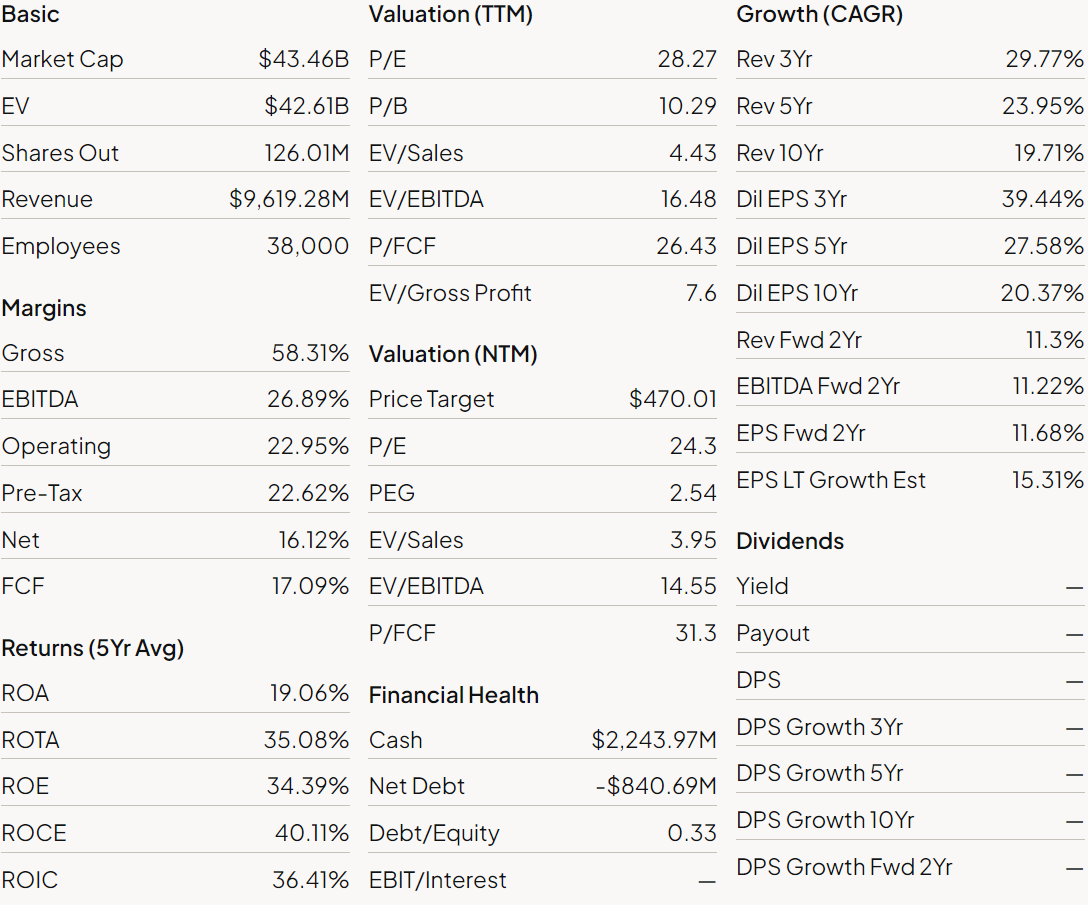
Many say that MOATs are identifiable by a strong ROIC, and as you can see, Lululemon's above 35%, a very high number for a sportswear company (Nike sits at less than 30% to compare). It also shows very good management.
Besides ROIC, we also see strong margins with a gross margin above 60% and a net margin around 15% - compared to Nike, respectively under 45% and around 10%.
If you couple it with their growth (30% YoY CAGR), you can easily interpret these data as follows: The brand is growing its client base, or their existing clients are consistently buying more of a very high-margin (therefore expensive) product. It shows a strong acceptance and validation of their products. People like it and are pleased to pay the premium. There is a strong community behind the Lululemon brand.
[Power of Three x2]
Before talking about the finances, a word about Lululemon's management, goals and excecution which is a key aspect of the investment thesis as it shows firstly how good they are and secondly their long term thinking.
So what is the power of Three x2?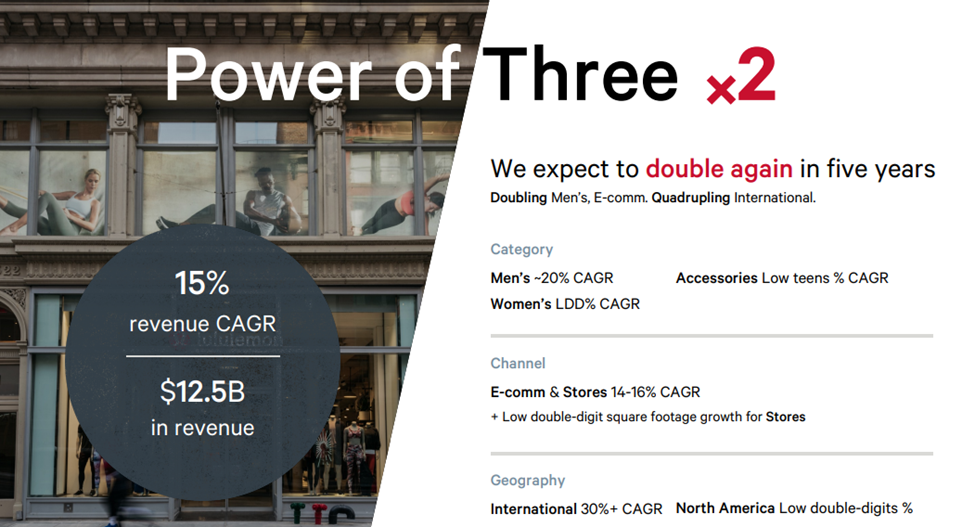
It is a financial goal that management set for Lululemon back in 2021, and the goal was pretty simple as you can see in the screenshot: to double their revenues to $12.5B by 2026. This is the short version, as the management is also setting some more specific goals on how to achieve this, and you have to love the way they think and execute. Long-term goals are clearly defined by smaller step objectives through the next five years.
And they execute. The company did a bit less than $10B FY-23, and assuming their growth and guidance, they should achieve their goal, probably even earlier, but let's talk about this in the next part of our article.
[Finances]
We've seen the margins, we've seen the growth & the ROIC so it's time to talk about revenues & Cash Flow.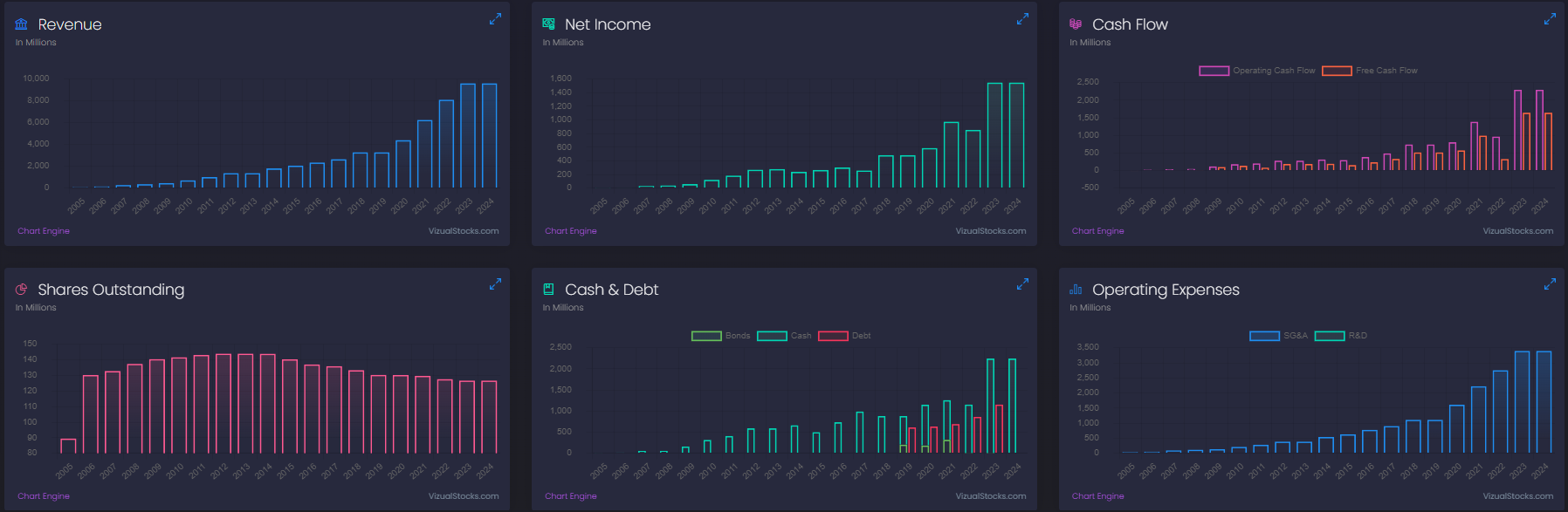
Charts are pretty impressive even though we knew about their strong growth.
I won't dissect the data as we've already talked about what matters, but I'll add some things, especially about their balance sheet. You can easily see that they own a huge amount of cash, $2.25B, with no debt. They still have lots of expenses with the lease of their stores, for example, but those are easily covered by a very strong cash flow, with FCF margins above 15% - you don't have a lot of R&D in the wearable market.
And what do you do when you have growing revenues, strong margins, positive and growing FCF, and a very strong balance sheet? Buybacks. And that's what the company has been doing over the last years, as you can see. They decreased their shares count by -12% in 10 years. And their buyback plan still has $1B to deploy - which would buy back more than 2% of the company at today's price.
[Risks]
The risks have already been presented through this post, I think, but I'll rapidly come back on them here.
Image. Like most brands, what matters the most is their image, as the saying goes "It takes many good deeds to build a good reputation, and only one bad one to lose it." This is true for every man but also for every brand, and Lululemon needs to cultivate and grow it safely.
One thing which could hurt it could simply be a reduction of the quality of their products, a too strong increase of their prices or some greed from the top management to make more on the back of their user base.
I honestly believe we always come there at one point, and no brand is eternal - except Coca-Cola, apparently. It's very important to keep an eye on how things evolve.
Competition. The starting point is the brand, but any decrease in quality will let other companies rush into the opening to steal Lululemon's customer base. Once again, this always happens, and that is why we see brands come and go while products kind of stay the same - nothing fundamental changed in the yoga pants during the last years after all.
[Opportunity]
It's finally time to talk about the stock itself and the opportunity it presents. Before making any assumptions, let's take a look at Lululemon's business over the last three years. This analysis is based on data from the sportswear market I discussed earlier, excluding the 30% portion related to footwear.
Sellings. First, we can see that the company is entirely adapted to its time as it sells as much online as at their own stores - surprising to me as I thought they'd sell much more online. Once more proof that stores really matter. If you do the math and find that it's not 100%, it's simply because they also sell with tier resellers but that's data I didn't include here.
Market share. The entire sportswear industry is really huge and Lululemon is nothing but a tear. Yet, over the last years they really grew their share of it and that small 1% growth in 2 years is actually a very strong achievement.
Geography. What interests me even more here is the distribution of their sales and how they're changing. Of course, the U.S. is the biggest part of the company's revenues, which makes perfect sense with half of their stores in the states and being the first place where their products were commercialized. But although this portion is still growing (12% YoY, pretty strong still), it is losing shares in the geographic revenues of the company.
And who's growing really fast by now is China & Asia as Rest of World also includes Asian countries. The company is playing big in the east with half of the last stores opened in those countries last quarters (most in China).
I know it is a consensus in the west that the country is kinda dying and I hardly disagree with it - I wrote a lot about it here if interested. https://twitter.com/WealthyReadings/status/1707408948876226903
Lululemon's management seems to agree with me. As they expect the Chinese and Asians buying power to keep growing, allwoing them to finally distract themselves with some yoga pants after being used as cheap labor for decades.
Asia seems to be their next growth source.
Now we can make some assumptions, and we'll do them based on the market share the company would keep in the global market.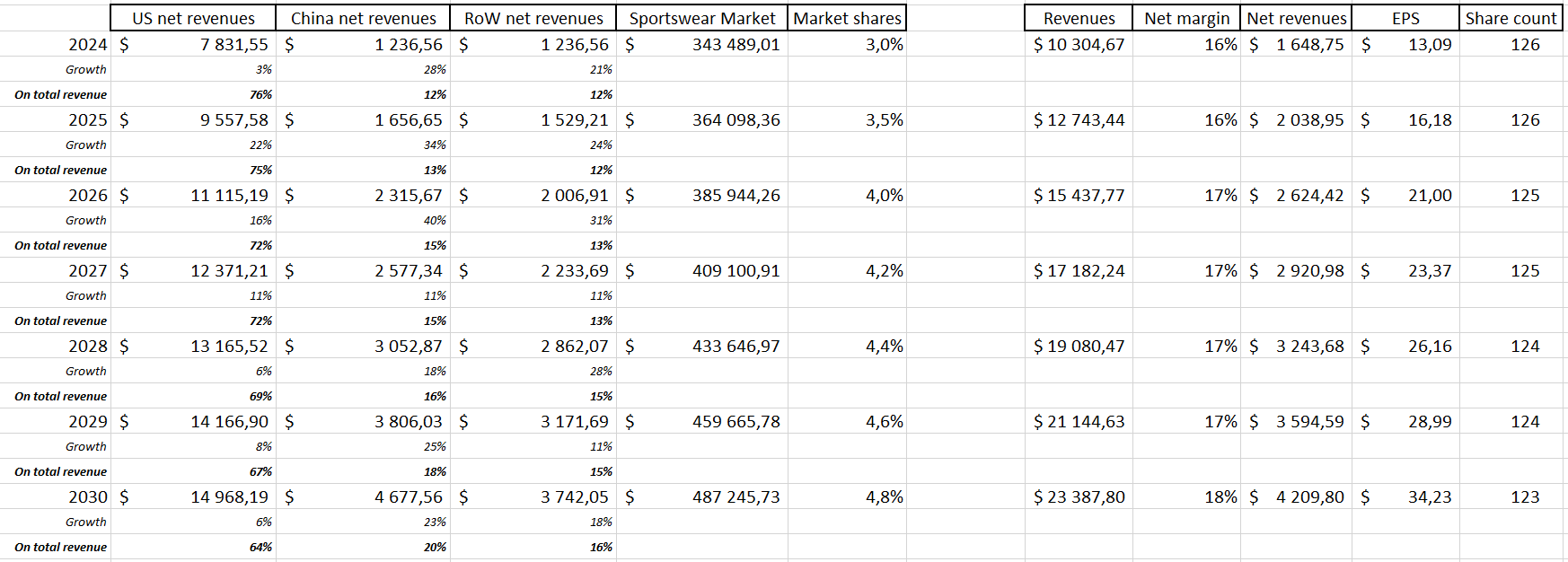
Every computation is based on the market size and Lululemon's market share. I assumed the company would grow it over the next years as they're still growing, more rapidly in Asia than in the U.S - although keeping a strong growth there as we saw earlier.
Are the numbers shocking? We'd be talking of a 12% CAGR until 2030 which seems doable, at least according to their guidance. We could be a bit more conservative and lower this growth to high single digits but the prospects would still be bullish - as we'll see it after.
Now, on China's and the Rest of the World share for the total revenues, I still don't see anything shocking here as the company is aggressively expanding in those countries lately so we can expect a much bigger growth than in the U.S. For reference, Nike is doing 25% of its revenues from Asia.
As to growing their global presence to own 5%ish of the entire market, that's what we can expect from this kind of aggressive expansion and as long as their product remain of quality, there's no reason for consumers to another brand nor that to not attract new users. Again, to compare, Nike owns more than 10% of the entire industry, would it be crazy for Lululemon to own half of what Nike owns today in 6 years? Not to me.
These are, of course, simple & kind of useless projections so let's not take them too seriously. Many things could happen and smash them - positively or negatively. It simply gives an idea of what is possible in an optimistic future. And I'll do the same for the share price now to estimate the opportunity.
The goal when investing in individual stocks is always to beat the $SPY, which returns roughly 10% CAGR over the years. We can clearly see here that with some base and even bearish assumptions, we'd be above those returns and that is without any share reduction plan as math was done with today's share count.
In terms of ratios, only my best case might be a bit inflated but the bull and base cases are pretty standard. $LULU is trading today at a PER of x28.5 and a P/S at x4.5. The bull case would bring Lululemon under Nike's capitalization at the moment (which is at $144B while some call it undervalued), which once more doesn't seem a crazy number at all considering the growth & global inflation going to 2030.
I wouldn't trust my best case too much as this would need a strong push and good catalysts to get there (Asia might be it) but something around the base case, toward the bull case wouldn't be surprising to me. Not at all.
Besides the good case, we can see that even the bear case would yeild correct returns with actual ratios and lower growth & margins than the company's guidance. Again, keep in mind that this is without counting the share count reduction over the years.
[Conclusion]
Lululemon is a wonderful company, solidly implanted by now in the fitness market and expanding its products to more than simply yoga & gym outfits. Revenue growth and market share expansion should continue over the next years, especially with their implantation in Asia where the potential is huge.
Management showed already their capacity to plan over the long term and execute perfectly with long term goals and short-term objectives. They built a real brand to which many customers now identify and come back to. I see no reasons for this to change over the next years.
I'd say the stock is fairly valued around $370 and everything under gives enough margin of safety in my opinion. I'm already in and will buy more if the price keeps drifting.
I hope this article helped you understand Lululemon better and that you'll dig deeper into any points I didn't fully cover!