

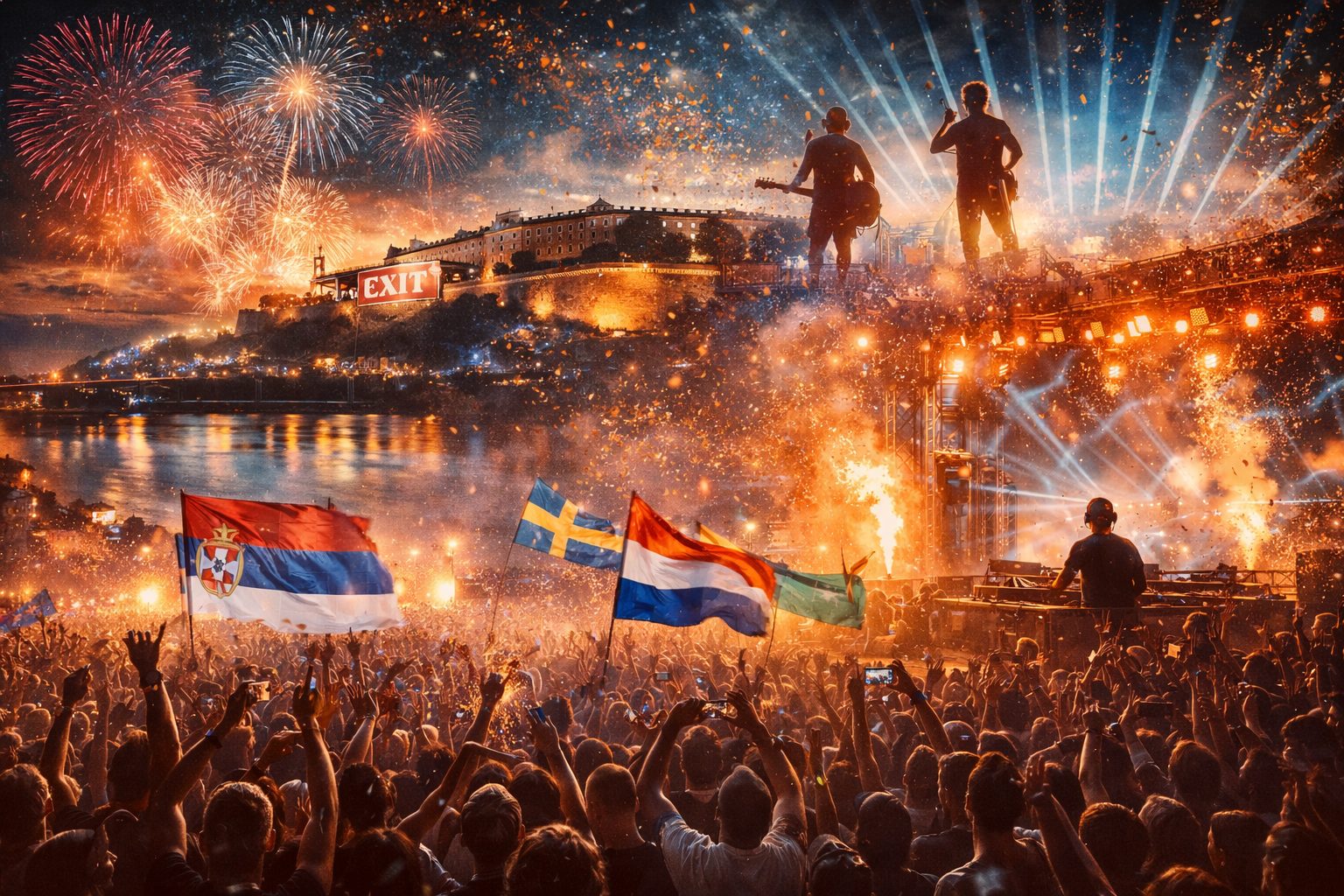
Exit festival in Novi Sad shows how Serbia became part of a more global cultural development through music, youth movements, and international festivals. Founded in 2000 during a period of political change and demonstrations against the authoritarian regime, EXIT began as a student initiative promoting civic participation and openness after the turbulent 1990s. Over time it developed into one of Europe’s most recognized music festivals, attracting visitors from dozens of countries each year. Beyond entertainment, EXIT demonstrates how cultural events can transform local spaces into more global meeting points. Thereby, festivals such as EXIT show how globalization operates through culture, tourism, and transnational youth communities.
In world history, festivals have long served as meeting points where cultures, ideas, and communities intersect. From religious celebrations and traditional fairs to modern music festivals, these events create spaces where local identities interact with wider global trends.
In Serbia, the EXIT Festival in Novi Sad still provides an example of how a country often associated with political upheaval in the late twentieth century has also become part of global cultural exchange.
EXIT Festival was founded in the year 2000 by students and young activists in Serbia during a period of significant political change. The country was emerging from a decade marked by economic crisis, international isolation, and armed conflict in the region.
From politics and activism to cultural meetings and events
For many young people, cultural initiatives offered a way to reconnect with broader European and global communities. The first edition of EXIT combined concerts, debates, and civic discussions. Its founders envisioned it as a space encouraging democratic participation, cultural openness, and engagement with international ideas.
The festival quickly developed beyond its initial activist character. Since 2001 it has been held at the Petrovaradin Fortress in Novi Sad, a historic Austro-Hungarian military structure overlooking the Danube River.
The fortress itself symbolizes centuries of imperial and regional history, but during the festival it becomes a venue for contemporary global culture. Artists from across Europe, North America, Africa, and Asia perform there, while audiences travel from many different countries to attend.
Over the past two decades EXIT has grown into one of Europe’s major summer music festivals. International performers representing genres such as electronic music, rock, hip-hop, and pop have appeared on its stages.
Each year tens of thousands of visitors gather in Novi Sad, transforming the city into a temporary hub of tourism and cultural exchange. This development reflects broader global patterns in which music festivals serve not only as entertainment events but also as economic and social phenomena linked to travel, digital media, and youth culture.
EXIT and the global context
The emergence of EXIT can also be understood within a wider history of festivals in the late twentieth and early twenty-first centuries. Large music gatherings such as Glastonbury in the United Kingdom, Roskilde in Denmark, and Coachella in the United States have become globally recognized events.
They all show how cultural experiences increasingly circulate across borders. Musicians tour internationally, audiences follow global music trends online, and festivals compete to attract participants from multiple continents. In this context, EXIT represents the integration of Serbia into these transnational cultural networks.
At the same time, the festival retains a local dimension. It highlights Serbian cultural life, supports regional artists, and contributes to the international visibility of Novi Sad and the wider Balkan region.
For Serbia, which has often appeared in global news primarily through political events, festivals such as EXIT provide an alternative narrative focused on creativity, tourism, and cultural exchange.
Events like EXIT demonstrate how culture operates as a channel of globalization. They show how cities and societies can reposition themselves within international networks not only through politics or economics but also through music, art, and youth participation. Cultural gatherings bring together people from different countries, encouraging interaction and shared experiences worldwide.
Summary
EXIT Festival represents more than a music event. It shows how Serbia has become connected to wider global cultural currents in the decades following the end of the Cold War and the conflicts of the 1990s.
By transforming a historic fortress into an international meeting place for artists and audiences, EXIT reflects broader historical trends in which festivals function as platforms for cultural exchange, tourism, and global youth culture.
In this way, Serbia’s role in world history is not only defined by political events but also by its participation in the evolving networks of global culture.
Thank you for reading. I can make more texts for you as well.
Please become a monthly supporter and join the book writing about Serbia, protests and democracy.