

The Golden Mean — Confucius and the Morality of Wealth
By Velian Krav - 04/12/2025)
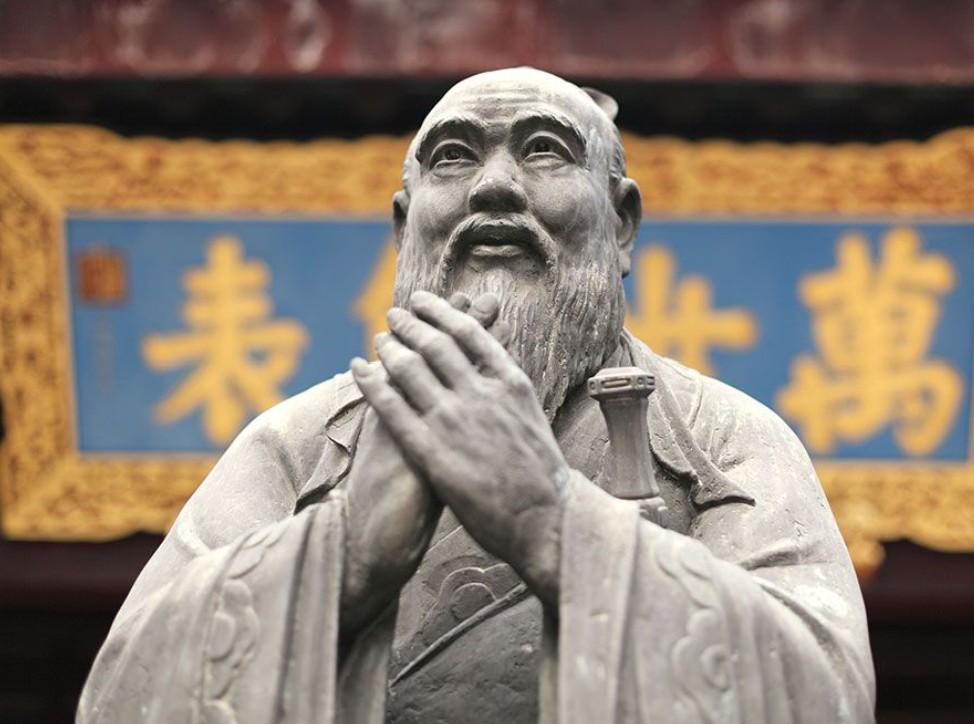 1. The Foundation of Harmony
In ancient China, long before banks or empires of interest,
the sage Confucius (Kǒng Fūzǐ, 551–479 BC) taught that the true strength of a nation lies not in its treasury,
but in its virtue.
“The gentleman understands righteousness; the petty man understands profit.”
— Analects, 4:16
For Confucius, profit (lì) without righteousness (yì) was moral decay.
Wealth must serve the order of Heaven, not replace it.
To enrich oneself through usury was not cleverness, but betrayal of the Dao —
the Way that connects Heaven, Earth, and Humanity.
2. Money as Moral Energy
In the Confucian worldview, money itself was neutral —
neither evil nor sacred — but spiritually charged.
It became pure when it flowed through benevolence (rén),
and toxic when trapped by greed.
The Book of Rites declared that wealth must always follow lǐ — ritual propriety and social duty.
A ruler who accumulated gold while his people starved lost the Mandate of Heaven (Tiān mìng).
“When wealth is gathered in the hands of the few, the people will revolt.”
— Mencius, I.A.3
Thus, usury was not only economic exploitation — it was a breach of cosmic order.
It destroyed trust, harmony, and the five sacred relationships that held society together.
3. The Law of Just Profit
Later Confucians and statesmen refined the doctrine of Yì-Lì (義利) —
the balance between righteousness (yì) and profit (lì).
Yì Lì — moral profit, earned through work that benefits others.
Li Lì — selfish gain, achieved through manipulation or interest.
Only Yì Lì was permitted by Heaven.
The merchant who ensured food for the hungry was noble;
the lender who preyed on the desperate was spiritually corrupt.
Confucius did not abolish wealth — he civilized it.
Money without virtue was chaos; profit with righteousness was order.
4. The Role of the State
Ancient dynasties, from Zhou to Han, translated this ethic into law.
Interest rates were capped; famine loans were interest-free;
and excessive profiteering could lead to confiscation or exile.
Such laws were not socialist decrees but Confucian morality in practice:
to protect the people from losing their dignity under debt.
“To take advantage of another’s need is not wisdom but cruelty.”
— Han Confucian Commentary
The goal was harmony — hé — not equality through force,
but justice through moderation.
5. The Peasant, the Merchant, and the Usurer
Confucian society ranked labour by virtue:
The peasant was honoured — he worked in harmony with Heaven.
The artisan was respected — he shaped creation with skill.
The scholar-official was revered — he guided with wisdom.
The merchant was tolerated — useful but watched.
The usurer was despised — a breaker of harmony, a thief of time.
The reason was simple:
real value grows from soil, hands, and wisdom — not from interest on hunger.
6. The Heaven-Mandated Order
Confucius believed that moral order began with rulers.
If the ruler governed by virtue (dé), the people would follow naturally.
“If the people have food, trust, and justice, the state will stand.”
— Analects 12:7
A ruler who permitted usury revealed inner corruption;
his dynasty’s fall was Heaven’s answer.
Thus, usury was not just financial sin — it was treason against Heaven.
7. The Eternal Teaching
Across dynasties, China preserved a delicate balance between commerce and conscience.
The empire did not abolish wealth — it taught that wealth must breathe.
Like blood in the body, money had to circulate — too much in one place meant death.
“Let wealth be like water: nourishing when it flows,
but destructive when it floods.”
This is the Confucian law of measure —
the middle path between greed and poverty,
between freedom and duty,
between man and Heaven.