
Removed. Blocked. Blamed.
And why betrayal culture is rising in our communities
(Names and identifying details have been changed to protect privacy. This piece shares lived patterns and community experiences, not a call-out of specific individuals.)
It happened to me.
And it’s happened to many fellow community members, too.
What’s most disturbing isn’t a single incident. It’s the pattern — and how quickly it’s becoming normal.
We’re watching a cultural drift where deceit earns applause, and authenticity gets punished. Where the people who build patiently and ethically get isolated, while the people who extract, copy, and manipulate walk away with attention, allies, and a polished narrative.
So the real question is not “who did what.”
The real question is this:
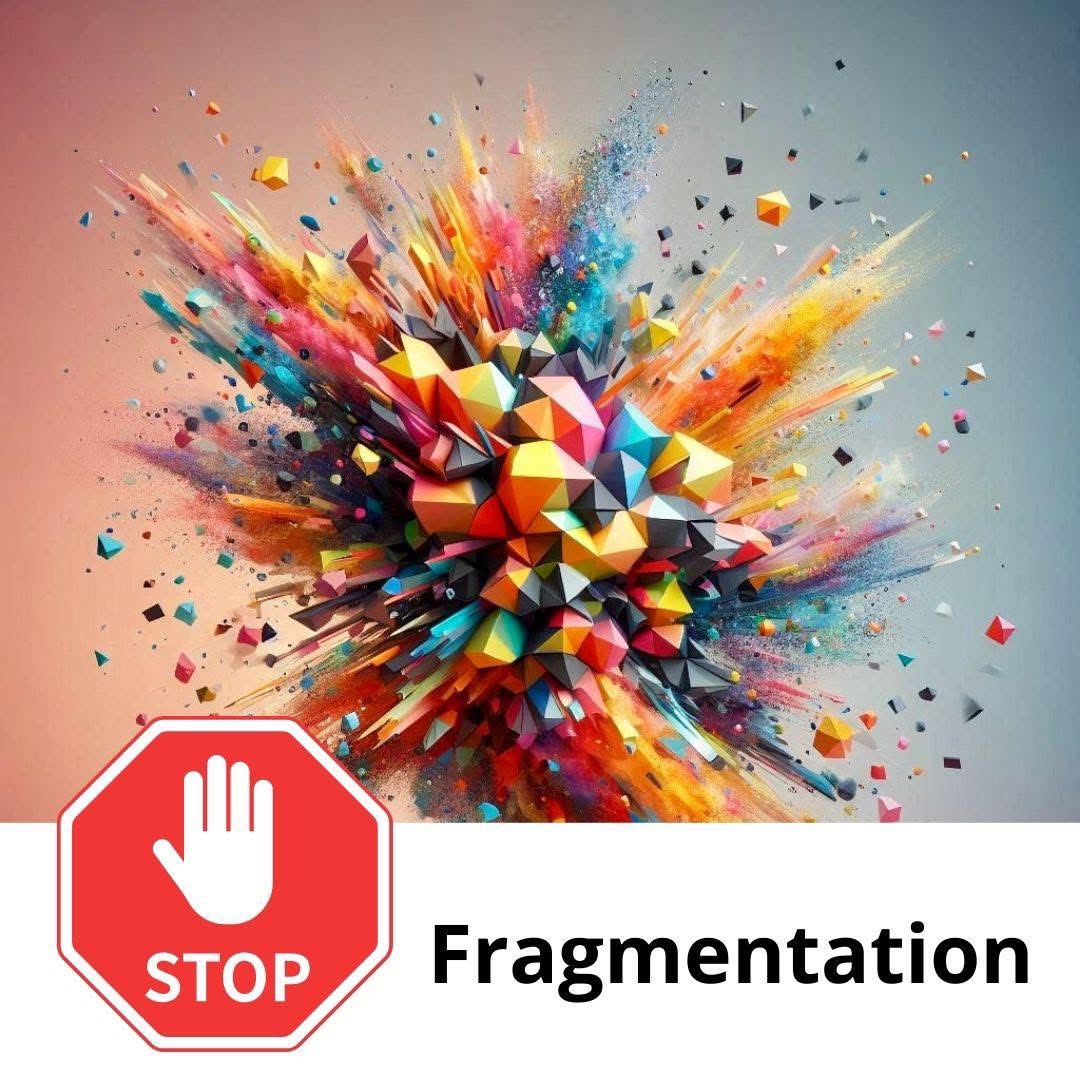
Do we keep fragmenting our communities through suspicion and side chats?
Or do we rebuild community spirit through honesty, credit, and direct communication?
The betrayal pattern nobody wants to name
It often starts innocently.
Someone joins a community and seems energetic, genuine, fun, helpful. They mirror the values. They collect trust. They show up in the right places. They build closeness fast.
Then, quietly, one of two things happens:
they replicate what they observed, without credit or consent
or they reshape the story so they look like the origin — and the original builder looks like the problem
And once the narrative flips, it becomes hard to reverse. People prefer the cleanest story, not the truest one.
A real-life pattern (names changed)
In Valencia, “Corina” — a single mother who seemed earnest and easy to like — joined a creative community. Her charm earned trust, and a potential leadership role was discussed.
She said she needed time to decide.
But behind the scenes, she was working to replicate the community’s ideas and structure. Despite limited experience, she launched her own venture — and with skilled marketing, she successfully turned the narrative in her favor, implying that the original creator was copying her.
The part that hurts most in stories like this is not only the copying.
It’s what the crowd does next.
People applaud what looks shiny.
They don’t ask questions.
They don’t check timelines.
They don’t speak to the original creator.
They choose the simplest story because it lets them stay comfortable.
And the innovator — the person who built first — gets isolated.
The copy claim (and the simplest way to check)
One of the most common weapons in community conflict is the copy claim: “She copied me.” “They stole my idea.”
And what’s wild is how often people accept it without checking anything.
But in group-based spaces, many claims are timestamped. You can often verify creation dates, first posts, and early activity. WhatsApp and Facebook groups, Telegram channels, Instagram accounts, newsletters — most platforms leave a trail.
Before you believe a rumor, ask one simple question: What do the dates say?
Because if timelines don’t match the narrative, the narrative doesn’t deserve your trust.
The group chat escalation: removed first, attacked after
If you’ve never experienced this, it can sound dramatic.
But if you have, you know it’s painfully predictable:
You’re removed or blocked (often without a direct conversation).
Your absence becomes a blank space the group fills with assumptions.
Side chats become “facts.”
People who never spoke to you suddenly have opinions about you.
The shitstorm starts — not in your presence, but in your absence.
The removal isn’t closure.
It’s permission.
Permission for others to rewrite you.
Removed. Blocked. Blamed.
Here’s what cuts deepest — the erasing.
You open your phone and you’ve been deleted.
Removed. Blocked. Gone.
No message. No “can we talk?” Just wiped like you never mattered.
And then there’s the second layer: the gatekeeping.
Some groups don’t even let you in. You’re blocked before you’ve joined.
No context. No explanation. Just a closed door.
So yeah, I’m going to ask the uncomfortable question: what are they protecting… and what are they hiding?
Because when a group needs secrecy to feel “safe,” it’s often not safety — it’s control. It’s keeping the narrative tidy by keeping certain people out.
I’m not against moderation. I’ve run a community since 2018. If you don’t filter spam and opportunists, the whole space becomes useless.
But there’s a difference between protecting a community and excluding people.
Protecting says: “We keep it clean. We have clear rules. We ask questions. We’re fair.”
Excluding says: “We block first, explain never, and decide your character without speaking to you.”
Protective gatekeeping keeps spammers out.
Punitive gatekeeping keeps people quiet.
And for someone like me — a single parent — this isn’t just “online drama.”
Sometimes
I just want to join a group, a picnic, a simple plan — to feel included, to make life lighter, to give my child connection; not as a Community Founder but as a human, participating without taking the lead.
So when doors close without a word — or you’re deleted without a sentence — it sends a brutal message:
You don’t get access. You don’t get community. You don’t even get the benefit of the doubt.
That’s why I’m speaking up. Community shouldn’t feel like a private club with hidden rules.
It should feel like clarity, fairness, and basic human respect.

Why this is rising?
Because modern communities are built on speed.
Fast bonding. Fast messaging. Fast opinions.
And where things move fast, a few dynamics thrive:
charisma becomes currency
gossip becomes “information”
marketing becomes “truth”
discomfort becomes something to remove, not resolve
accountability becomes optional
The result is a social environment where manipulation is rewarded — not because people love manipulation, but because they love certainty, belonging, and a simple story.
Disturbing cases of modern betrayal (you may recognize these)
These examples show up across industries and communities — different settings, same dynamic:
1) Work & Study Hub Sabotage
At a co-working space, two attendees inquire about opportunities, but quietly replicate the hub’s model and undercut the founder.
2) Startup Theft
A co-founder patents shared ideas behind the team’s back, leaving others in financial and emotional ruin.
3) Nonprofit Spotlight Theft
A manager takes credit for grassroots initiatives while erasing the team’s contribution.
4) Design Copycat
A junior designer leaks a colleague’s work and builds a reputation on borrowed creativity.
5) Research Vanishing Act
A mentor publishes a protégé’s work as their own — and the real author is left in the shadows.
6) Charity Hijack
A community member uses a charity’s work to build their personal brand, while the charity struggles to sustain itself.
7) The Picnic Trick
A mom joins a large community, privately contacts members (or adds them to a new chat), and then uses an existing event group to redirect everyone into her own picnic group.
Not collaboration — extraction.
8) Your Story ?
Because these patterns rarely happen only once.
What we do instead (the ICV standard)
If you take anything from this post, let it be this: community isn’t a vibe. It’s a set of behaviors.
Here’s the standard I’m committing to inside ICV — and the standard I hope more spaces adopt:
1) Talk to people, not about them.
If there’s an issue, we go directly to the person with respect.
2) Verify before you amplify.
No “I heard…” unless you’re willing to check facts and timelines.
3) Credit is culture.
If an idea, format, event concept, or structure was inspired by someone, we say so. Publicly. Clearly.
4) No removal without process.
If safety is not at risk, there is always a conversation first. Always.
5) Boundaries are not betrayal.
A “no” is not an attack. Leadership isn’t people-pleasing.
That’s how trust survives. That’s how community becomes real!
The missing skill in modern communities:
Repair
Most communities can build.
Very few know how to repair.
Repair looks like:
“I may have misunderstood. Can we talk?”
“We heard something. What’s your side?”
“We made a decision too fast. We want to revisit it.”
“Let’s address behavior, not character.”
The opposite of repair is what we’re seeing rise: remove, rewrite, recruit agreement.
If you’ve ever been on the receiving end, you know how destabilizing it is. The goal here isn’t to harden into suspicion. The goal is to build communities strong enough to handle conflict without sacrificing people.
Why I’m writing this (and how it connects to my mission)
I’ve been building International Community Valencia (ICV) from its baby Valencia Kids & Fun for one reason: to make life in Valencia easier, warmer, and more connected for international families and newcomers.
ICV was never meant to be a popularity contest. It’s meant to be a community driven support system.
A place where:
newcomers aren’t exploited for access or contacts
parents and founders aren’t punished for having boundaries
ideas can be shared without being extracted
people can disagree without being discarded
and community doesn’t depend on whisper networks to function
This is exactly why I’ve been developing the ICV Hub: a resource-based, values-led space that prioritizes clarity over chaos and support over social games.
An invitation (and what the ICV Hub is for)
ICV exists for the people who want something healthier.
Not perfect. Not performative. Just human.
If you’re tired of group-chat politics, whisper networks, and reputation games, I’m building the alternative: a practical, values-led support hub for international life in Valencia, where the focus is real help, real connection, and real community standards.
That’s what coff.ee/valenciaroots is for:
resources that reduce overwhelm
guidance that protects newcomers
spaces that don’t reward manipulation
and a community culture built on clarity, credit, and communication
If this post resonates, you’re welcome here.
And if you have a story, share it. Not to fuel drama — to help us name the pattern early and build better.
Share your story
Has this happened to you in a community, workplace, creative circle, or school network?
You can reply with your story. You can keep it anonymous. If there’s enough shared experience, I may compile themes (without identifying details) into a follow-up piece — so we can recognize these patterns earlier and build communities that don’t reward deceit.
Because we can’t build belonging on silence and suspicion.
We build it on truth, credit, communication — and the courage to talk to each other before we turn on each other.
💚