

ICV Community Update: Andalucía’s Tsunami Drill — What You Need to Know
Every now and then, Spain carries out a major safety exercise — not because danger is coming, but because preparing people before anything happens makes communities calmer, stronger, and more confident.
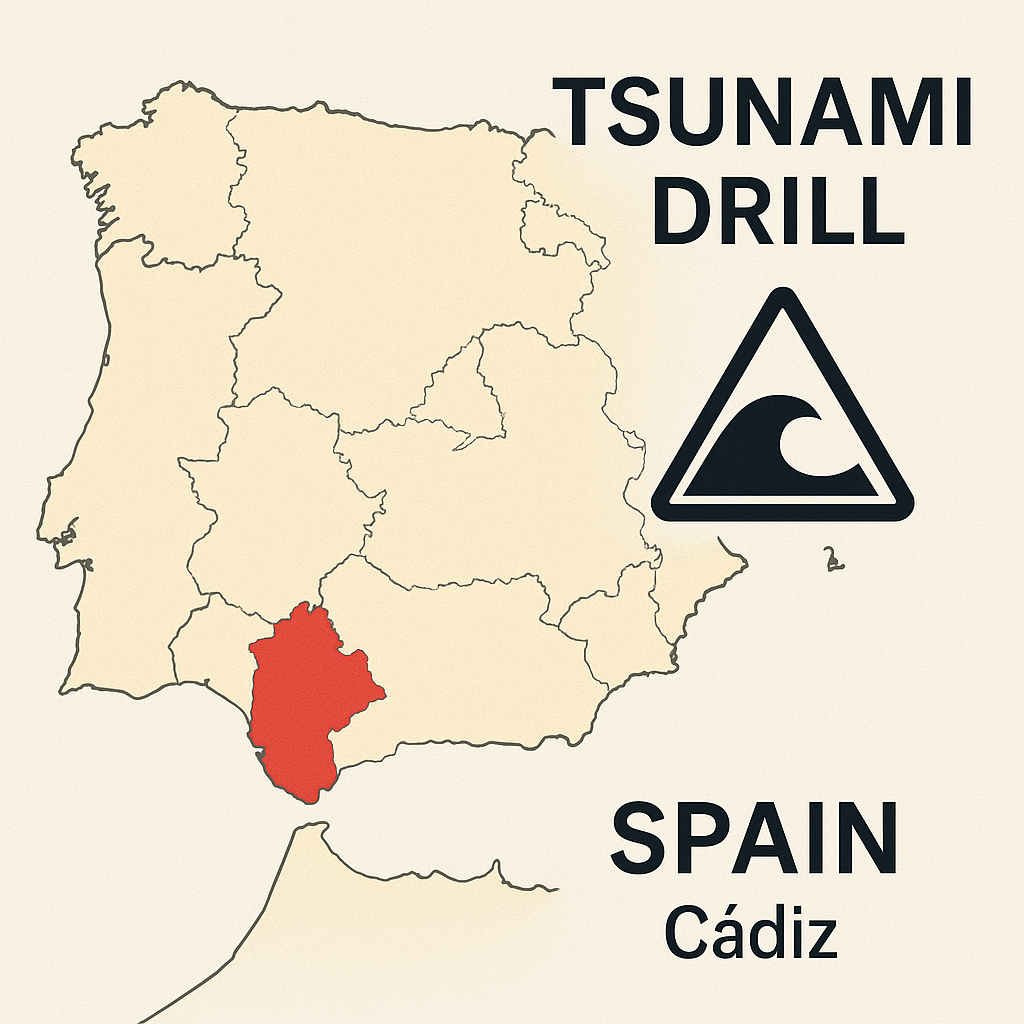
On Thursday, 20 November 2025, the region of Cádiz will host the largest tsunami preparedness drill ever held in Spain. If you live there, plan to visit, or know people in the area, here is your clear and friendly overview, written in our warm ICV style.
At around 10:03 a.m., mobile phones in the designated coastal zones will receive an ES-Alert message clearly marked SIMULACRO (drill). This is completely expected — part of a planned exercise designed so authorities can test how alerts reach residents, tourists, and international families.
This is not a real emergency.
It is not a prediction.
It is simply preparation.
So… why is Spain doing this? Is it to scare people?
Many people wonder this, especially those who didn’t grow up in regions that practice natural-disaster preparedness.
The answer is simple:
No — it is not to scare people. It’s to make people feel safer.
Why this matters for ICV families
Many of us arrived from places where tsunami or earthquake drills don’t exist. So when something like this shows up in the news, it can feel intense.
That’s why we share information like this: clear, warm, steady, and practical.
Why this matters for ICV families
Many of us arrived from places where tsunami or earthquake drills don’t exist. So when something like this shows up in the news, it can feel intense.
That’s why we share information like this: clear, warm, steady, and practical.
This drill is an opportunity to learn:
how Spain’s mass-alert system works
what “SIMULACRO” messages look like
how local authorities structure evacuations
what you would do if you ever received a real alert
Think of it as the emergency version of a school fire drill — routine, useful, and part of living in a well-prepared community.
If you are in Cádiz on 20 November
Here’s what to expect:
A mobile alert at around 10:03 a.m.
The message will clearly say SIMULACRO.
You do not need to evacuate unless your specific street/building is part of the official practice route.
Keep your phone on and with normal network settings.
Tell visiting friends or family so they aren’t confused by the alert.
Use this moment as a soft reminder to mentally check:
“Where is the nearest higher floor? Where is the nearest uphill route?”
Be aware of surroundings. If you’re in Cádiz or on the coast, know your building’s safe higher floor or nearby higher ground, and familiarise yourself with evacuation routes.
Stay informed. Knowing that the risk exists means you can pay attention when drills like the upcoming one happen (which you are).
No need to panic. Knowing the risk helps rather than scares — and preparedness is empowering.
Use drills as practice. The upcoming large-scale exercise is ideal to turn awareness into action — at least mentally.
For families in Valencia or inland: This doesn’t change daily life dramatically, but it’s a good reminder that nature has many facets and being community-ready is a positive.
If you’re in Valencia or elsewhere in Spain
You won’t receive the alert — the drill is specific to the Cádiz coastline.
But it’s still valuable awareness for anyone living in Spain, especially international families who may be unfamiliar with local safety systems.
⚠️ What the level of risk actually means
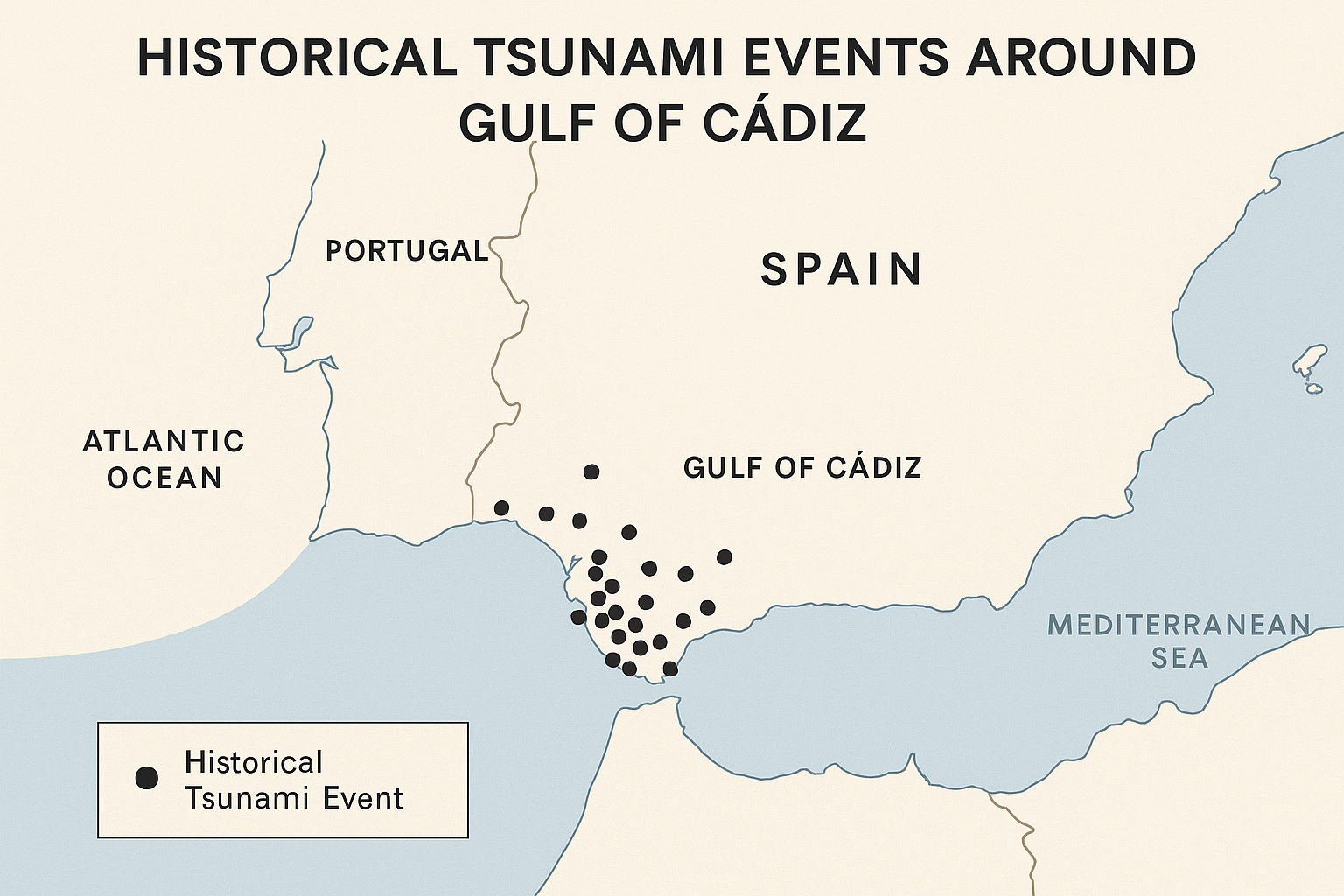
The region sits near the tectonic boundary between the African and Eurasian plates, and there are submarine faults and past events off the coast of the Gulf of Cádiz that can generate tsunamis.
Historical records and geological-sediment studies show tsunamis have happened in this area in the past. For example, one study quotes that the city of Cádiz has “a significant tsunami hazard and risk.”
According to the risk-assessment website Think Hazard, the tsunami hazard for Cádiz is classified as “medium” — meaning “more than a 10% chance of a potentially-damaging tsunami in the next 50 years.”
“Medium hazard” doesn’t mean an imminent large-scale tsunami like the one in Japan (2011) or the Indian Ocean (2004). The scientific papers emphasise that while the risk is real, the probability is relatively low and the worst-case scenarios are rare.
One study noted that their “worst‐case” scenario is likely exaggerated for planning purposes, and a more realistic scenario may have a much longer return period.
In simple terms: “Yes, it could happen — but it is not likely to happen tomorrow, and it is not inevitable.”
1. Prepared communities panic less
The southwest Iberian coast has a historic tsunami record — most famously the 1755 Lisbon earthquake — although events like this are extremely rare.
Practising before a crisis means people are less frightened, more coordinated, and better protected.
2. Alert systems must be tested with real conditions
Spain’s ES-Alert system can’t be tested silently. It needs to send messages to real phones in real zones. This ensures it works during a real emergency, especially in busy areas with tourism and multilingual communities.
3. International families need clarity
Many newcomers, Erasmus students, digital workers, and tourists don’t know Spanish emergency protocols.
Drills are essential for inclusiveness — they help everyone understand how Spain communicates in urgent situations.
4. Practising prevents confusion
A real tsunami warning leaves very few minutes to react.
Drills train:
when people should go upstairs (vertical evacuation),
when to head to higher ground (horizontal evacuation),
how schools, hotels, and services coordinate.
This prevents chaos later.
5. This is normal in countries with coastal risk
Japan, Italy, Portugal, Greece, the U.S., Chile… many nations regularly hold tsunami drills.
Spain is simply aligning with global best practices.
It’s responsibility — not fear.
Remember:
This drill is an opportunity to learn:
how Spain’s mass-alert system works
what “SIMULACRO” messages look like
how local authorities structure evacuations
what you would do if you ever received a real alert
Think of it as the emergency version of a school fire drill — routine, useful, and part of living in a well-prepared community.
If you are in Cádiz on 20 November
Here’s what to expect:
A mobile alert at around 10:03 a.m.
The message will clearly say SIMULACRO.
You do not need to evacuate unless your specific street/building is part of the official practice route.
Keep your phone on and with normal network settings.
Tell visiting friends or family so they aren’t confused by the alert.
Use this moment as a soft reminder to mentally check:
“Where is the nearest higher floor? Where is the nearest uphill route?”
If you’re in Valencia or elsewhere in Spain
You won’t receive the alert — the drill is specific to the Cádiz coastline.
But it’s still valuable awareness for anyone living in Spain, especially international families who may be unfamiliar with local safety systems.
Sources:
Cadena SER — El simulacro de tsunami de Cádiz movilizará a 20.000 personas en el casco antiguo:
https://cadenaser.com/andalucia/2025/11/17/el-simulacro-de-tsunami-de-cadiz-movilizara-a-20-000-personas-en-el-casco-antiguo-radio-cadiz/Cadena SER — Algeciras y La Línea protagonizarán el 20 de noviembre un simulacro de emergencias por maremoto:
https://cadenaser.com/andalucia/2025/11/14/la-linea-protagonizara-el-20-de-noviembre-un-simulacro-de-emergencias-por-maremoto-radio-algeciras/Meteorología en Red — Respuesta_25: simulacro de tsunami en Cádiz con cinco escenarios:
https://en.meteorologiaenred.com/respuesta25-simulacro-de-tsunami-en-cadiz-con-cinco-escenarios.htmlOnda Cero Cádiz — El mayor simulacro de emergencias de España se realizará este jueves en Cádiz:
https://www.ondacero.es/emisoras/andalucia/cadiz/noticias/mayor-simulacro-emergencias-espana-realizara-este-jueves-cadiz-conoce-como-desarrollara-respuesta25_20251117691b0169eba8bc0ece032e81.htmlOndaCádiz — El próximo 20 de noviembre Andalucía vivirá un simulacro de tsunami:
https://ondacadiz.es/noticias/2025-11/el-proximo-20-de-noviembre-andalucia-vivira-un-simulacro-de-tsunami