

Jul 16, 2025
In The Power of Unthinking, I wrote about the quiet intelligence of the body, how instincts, not thoughts, often hold the truth. And in Wellness is Missing Something, I explored how many self-care routines bypass the deeper need for connection. This piece continues that thread.
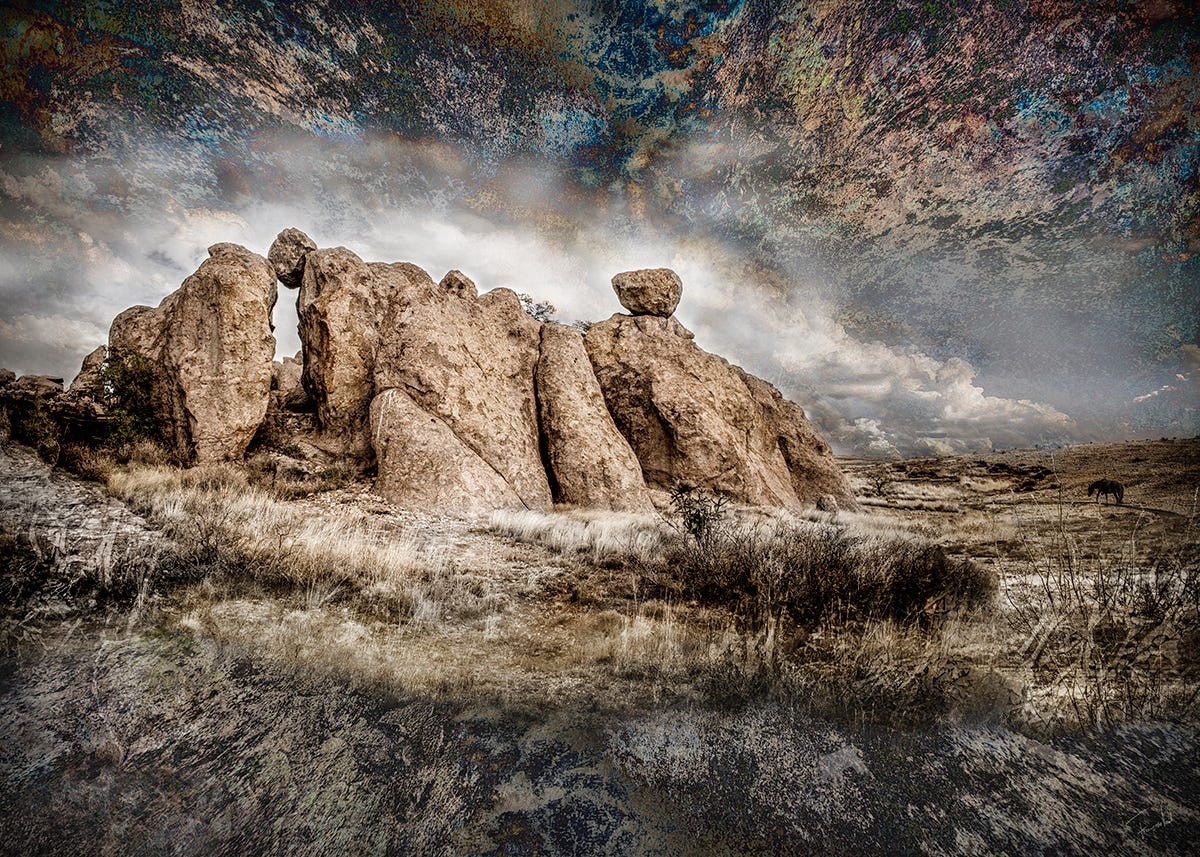 HIDEOUT © Françoise Vaal - mixed media digitally composed piece born from a longing to escape modern noise and return to nature’s quiet power.
Meet Jerry and Lisa, two people shaped by pressure, guilt, and performance. What changed wasn’t a perfect plan or new mindset. It was a tree, a cow, a long silence. When they stepped into nature and let their senses lead, they began to remember who they were, without needing to fix, prove, or achieve a thing.
JERRY - The Place He Chose for Eternity
When I first started working with Jerry, an illustrator who sought my help, he told me his body had begun to push back. His heart would skip a beat now and then. Even though he stayed active, he sometimes felt out of breath. He had random twitches, sore muscles. He chalked it up to his workouts, maybe he’d pulled something. But instead of listening to what his body was trying to tell him, he doubled down. He pushed harder, thinking that more exercise would fix it. What had once been a release now felt like a pressure. He had to keep moving. His logical mind insisted it was the only way to feel better. But it backfired. Deep down, he knew something else was going on. "I’m afraid it’s in my head," he admitted.
Jerry used the word must a lot. As if to balance it out, his mind often wandered to calmer places, memories of sailing holidays where he stood at the helm of a boat. He loved watching shows like Deadliest Catch or documentaries about the Sea Shepherd crews. Those were the only
things that still stirred something in him. They gave him a quiet kind
of hope. He felt those people were doing something meaningful. Maybe he
wanted to do that too.
Still, the next morning, he put his jacket back on, fought traffic, and made his way to the studio, dreaming of wild oceans. He thought of his childhood trips to an island with his parents. Hours spent wandering the beaches, beachcombing, watching the horizon. The idea of living and creating on one of the islands became more and more tempting. That, he said, would feel like real life.
During his recovery phase, we worked a lot on sensory awareness. One day I took him for a walking session in the woods. After some breathing exercises, I asked him to find a place where he could imagine staying forever. "Forever? That’s a long time," he laughed. He wandered off. First to a big beech tree, then to a bench on a hill. He lingered briefly, but neither place held him. I watched as he disappeared into the forest.
A few minutes later, Jerry returned. He stood beside me, turned slowly, and said, “This is the spot.”
I asked what had been off about the other places. “Too closed in,” he said. “There’s always something blocking the way. Here, everything’s open. I still have all options.”
I pointed out that it had been his senses, not his thoughts, that brought him here.
“So,” I asked, “what do your senses love most right now?” He smiled. “Space. Big space. Like the sea. Or those meadows that go on forever. That always makes me feel calm.” He paused, then added, “The wind on my face, walking for miles on the beach, like I did with my parent, that makes me happy.”
When I asked what that might mean for his life now, he didn’t miss a beat.
“It means I need freedom. I need room to move in every direction.”
“And how does it feel,” I asked, “to be led by your senses?”
His whole face lit up. “So normal!”
LISA – From shame and exhaustion to a moment of peace
By the time Lisa shared the truth, we’d already had a few emotional talks. She was a team leader at an educational institute and admitted she followed her boss’s orders without question. She worked hard to please him, did everything she could to get it right. But the calm she used to feel during her morning bike ride through the forest was long gone.
At home, things didn’t feel much better. After putting her kids to bed, she collapsed on the couch, too drained to move. Toys were everywhere. The kitchen was a mess. She blamed herself for not cleaning up. That shame quickly grew into something heavier. Maybe she was just a bad mother?
To escape the weight of that thought, she stayed up late watching soap operas. She liked the strong women on screen, their confidence, their clarity. But once she went to bed, she felt small. A failure. Her mother’s voice echoed: If it’s not a ten, you’ll never be anything. Lisa lay in bed with that thought and often slept badly.
Still, when the kids were off to school and she biked to work, her mind wandered. She imagined how it would feel if someone simply appreciated her. A kind word. A compliment. Or better yet, falling in love again—and someone falling in love with her. They’d go on a picnic in the countryside. Rent a cottage in the woods. Sit together and enjoy doing nothing at all.
She lit up when she talked about childhood weekends at a friend’s grandmother’s house. They played outside all day. Lunch was often served under the trees, just sandwiches and the sound of birds. “I could just be there,” she said with a faraway look in her eyes.
It didn’t take much to get Lisa to agree to an outdoor session. She relaxed almost instantly. Nature did what it always does. After a while, I asked her to find something in the landscape that pulled her in. She looked startled. “How do I do that?” she asked. She wanted the answer from me, but I told her to let her senses lead.
Nervous, she walked away. Glanced back once. Then kept going, slowly.
I gave her space, let her find her own pace without my presence shaping her experience. Ten minutes later, I found her on a bench. She was still. Calm. Staring across a wide ditch toward the meadows. A few cows stood nearby, looking our way.
She sighed. “This feels good,” she said. It reminded her of old walks with her friend.
“There’s space here. The water moves gently. The cows see me but don’t bother me. I don’t judge them. They don’t judge me.”
I let that sit for a moment. Then I asked, “What would you want those cows to know about you?”
She frowned. Didn’t answer. I left her alone again.
Later, when we met back up, I asked her if she’d told the cows anything. She smiled shyly. “I petted one,” she said. She hadn’t expected it to let her, but it had. “For the cow, I wasn’t a threat. It felt okay. I think it liked the attention.”
“And how are you different from those cows?” I asked.
She looked at me. Her eyes filled.
“I’m not,” she said softly. “They want the same things I do.”
“And you’re okay with them being just as they are,” I said.
“What does that say about you?”
She hesitated. Then, remembering what she’d said before, her voice cracked:
“Maybe I’m okay too?”
Letting Nature Reflect Us Back
Jerry didn’t need another plan. Lisa didn’t need another strategy. What they both needed was already in the, something their minds had overridden for years. What they found in the woods, in open space, in the steady gaze of a cow, wasn’t a fix. It was a recognition.
When we stop overriding our instincts, we start to hear again. Not in words, but in signals. In goosebumps. In longing. In the deep sigh that comes when we finally land somewhere that feels true.
Nature doesn’t give answers. It offers a space where we can hear our own. And sometimes, that’s all it takes to remember: I’m not broken. I’m just tired of pretending I’m not already whole.
Tip jar in liquid form—thank you for the boost!
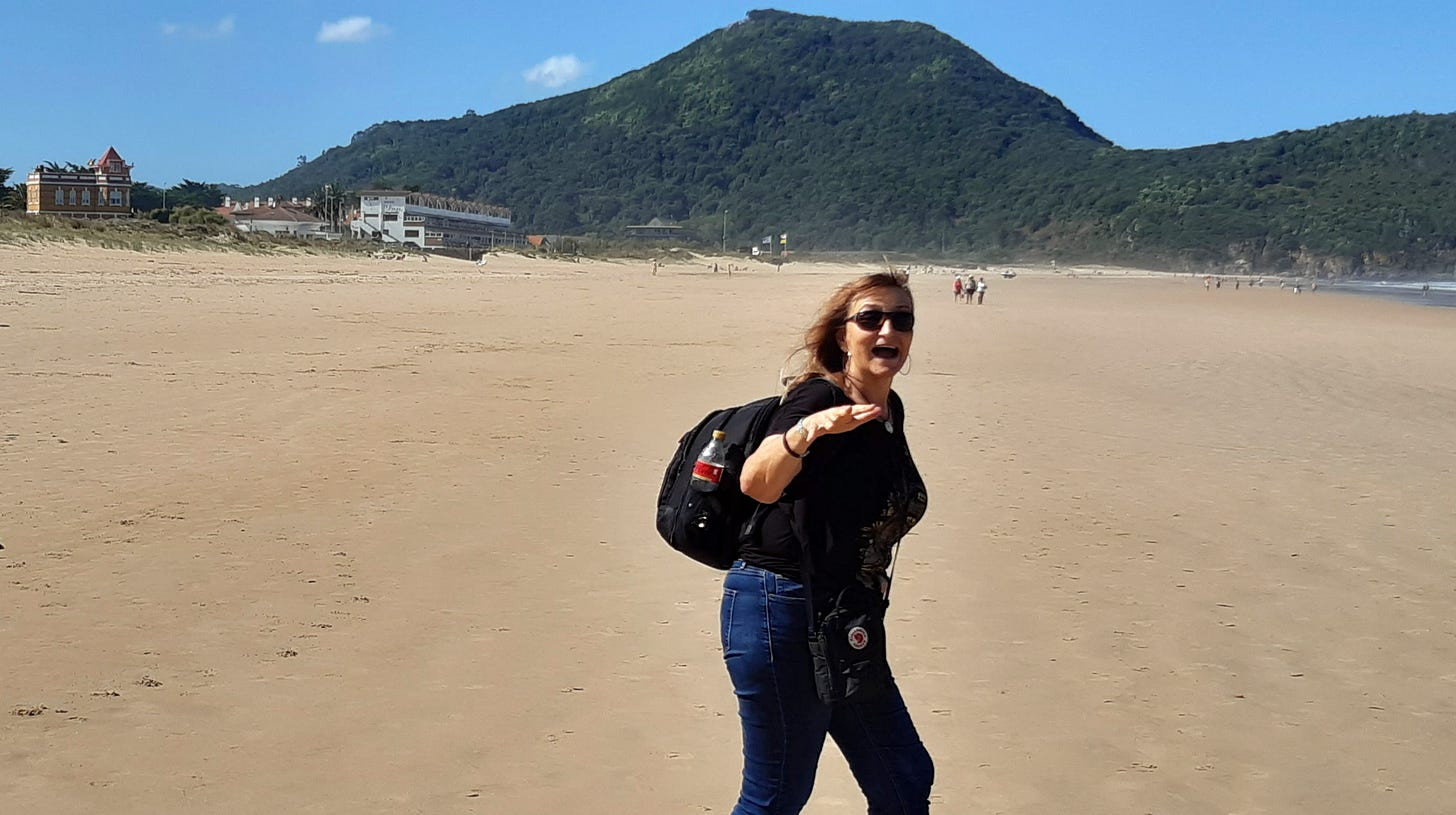
I’m Françoise. I began my career as a photo editor at Dutch national newspapers, until a quiet but persistent sense of purpose pulled me into marriage counseling. In my private practice, I realized that what most clients truly needed wasn’t more talking—it was time outside. I began using nature as a co-therapist, with powerful results. After a decade of helping others reconnect, my own creative voice grew louder. I listened, left the therapy chair, and returned to the arts—where I now explore the same themes with images instead of advice.
My art now centers on the wild, desolate landscapes that remind us how small—and how deeply embedded—we really are in the natural world. I work with photography, paint, and mixed media to evoke not just beauty, but belonging. My goal is to invite you into a deeper, more sensory relationship with land and self. A place where the body leads, and the thinking mind learns to follow.