

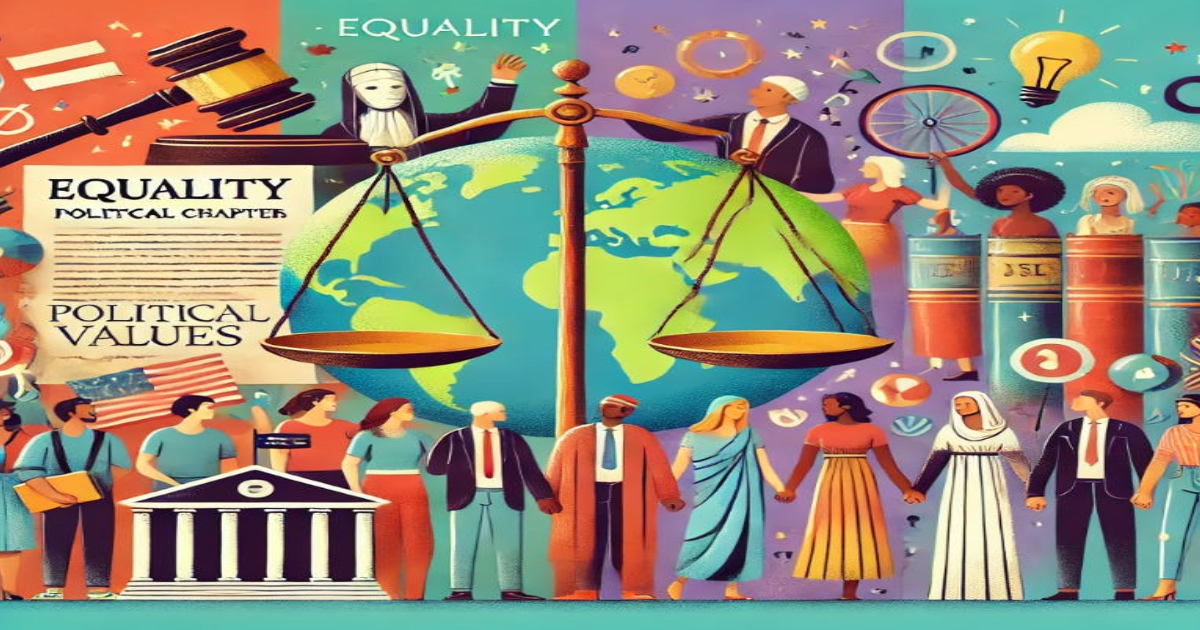
Equality is a foundational principle in political values, emphasizing that all individuals, regardless of their backgrounds, deserve the same rights, opportunities, and treatment. In this chapter, we explore the significance of equality, its historical context, its impact on contemporary society, and the ongoing challenges in achieving true equality.
The Essence of Equality
Equality, in the realm of political values, refers to the state of being equal in status, rights, and opportunities. It encompasses several dimensions, including legal equality, social equality, and economic equality. The principle of equality ensures that every individual has an equal chance to participate in the political, social, and economic life of their community, free from discrimination or prejudice.
Historical Context
The struggle for equality has been a central theme in history. Key milestones in the fight for equality include:
The Abolition of Slavery: The abolitionist movement, which led to the end of slavery in many parts of the world, including the United States with the 13th Amendment in 1865, marked a significant step towards legal equality.
Women's Suffrage: The women's suffrage movement fought for and achieved the right for women to vote, culminating in the 19th Amendment to the U.S. Constitution in 1920.
Civil Rights Movement: The civil rights movement of the 1950s and 1960s, led by figures like Martin Luther King Jr., sought to end racial segregation and discrimination, resulting in landmark legislation such as the Civil Rights Act of 1964 and the Voting Rights Act of 1965.
LGBTQ+ Rights: The fight for LGBTQ+ rights has led to significant legal and social changes, including the legalization of same-sex marriage in many countries and protections against discrimination based on sexual orientation and gender identity.
Equality in Contemporary Society
In today's world, equality remains a crucial political value, shaping policies and societal norms. Key aspects of contemporary equality include:
Legal Equality: Ensuring that laws and regulations do not discriminate against individuals based on race, gender, religion, sexual orientation, or other characteristics. Legal equality is foundational to a fair and just society.
Social Equality: Promoting equal treatment and opportunities in social interactions, education, and healthcare. Social equality aims to create an inclusive society where everyone feels valued and respected.
Economic Equality: Addressing disparities in income and wealth to ensure that everyone has access to basic necessities and opportunities for economic advancement. Economic equality involves policies such as progressive taxation, minimum wage laws, and social welfare programs.
The Impact of Equality
Promoting equality has far-reaching benefits for individuals and society as a whole:
Empowerment: Equality empowers individuals by providing them with the opportunities and resources needed to reach their full potential. When people are treated fairly, they are more likely to contribute positively to society.
Social Cohesion: Societies that prioritize equality tend to be more cohesive and harmonious. When individuals feel valued and included, social tensions decrease, leading to a more stable and peaceful community.
Economic Growth: Reducing economic disparities can lead to more sustainable economic growth. When more people have access to education, healthcare, and job opportunities, the overall productivity and prosperity of society increase.
Justice and Fairness: Equality is intrinsically linked to the concepts of justice and fairness. A society that values equality ensures that individuals are judged by their merits and not by arbitrary characteristics.
Challenges to Achieving Equality
Despite significant progress, achieving true equality remains a challenge. Some of the barriers include:
Systemic Discrimination: Deep-rooted biases and discriminatory practices in institutions and society can perpetuate inequality. This includes racism, sexism, and other forms of prejudice.
Economic Disparities: Income and wealth inequality continue to pose significant challenges. The gap between the rich and the poor can limit access to opportunities and perpetuate cycles of poverty.
Unequal Access to Education and Healthcare: Disparities in access to quality education and healthcare services can hinder social and economic mobility, reinforcing existing inequalities.
Political Inequality: Unequal representation and participation in political processes can result in policies that favor certain groups over others, undermining the principle of equality.
The Role of Advocacy and Policy
Addressing these challenges requires a multifaceted approach, including advocacy, education, and policy changes. Key strategies include:
Advocacy and Activism: Grassroots movements and advocacy organizations play a crucial role in raising awareness about inequality and pushing for change. Engaging in activism can help to highlight issues and mobilize public support.
Education and Awareness: Educating individuals about the importance of equality and the impact of discrimination can foster more inclusive attitudes and behaviors. Schools, media, and community programs all have roles to play in promoting equality.
Policy Reforms: Governments and institutions must implement policies that promote equality, such as anti-discrimination laws, affirmative action programs, and measures to address economic disparities.
Conclusion
Equality is a fundamental political value that underpins a just and fair society. By understanding its historical context, contemporary significance, and the challenges it faces, we can work towards creating a more inclusive and equitable world. Through advocacy, education, and policy reforms, we can promote equality and ensure that everyone has the opportunity to thrive. Let us commit to championing equality in all its forms, recognizing that our collective strength lies in our diversity and shared humanity.
Continue to Chapter 3 ➡️Democracy in Political Values