


Hi everyone, Kurova here.
To be honest, even now, it still feels like I’m living in a dream. Ever since last year, my journey in Digimon TCG has felt like a chain of unbelievable moments. I never imagined myself winning GAO Singapore, then placing second at GAO Finals, followed by third at Worlds. And this year second place at Singapore DC-1 Grand Prix Season 2, then second at the Asia Championship.
Going back to Worlds is already insane. Going back back-to-back is something I never dared to imagine — especially as someone who already stood on the Worlds podium once.
Singapore DC-1 Grand Prix Season 2
Honestly, I entered this event with a very light heart. I didn’t think I would win.
Back then, Hudie wasn’t considered BDIF yet. It was still in its early release phase, and most players were testing OTK builds that weren’t performing very well. So I decided to take a different approach and play it in a more tempo-oriented, control-style way. This was the list I brought.
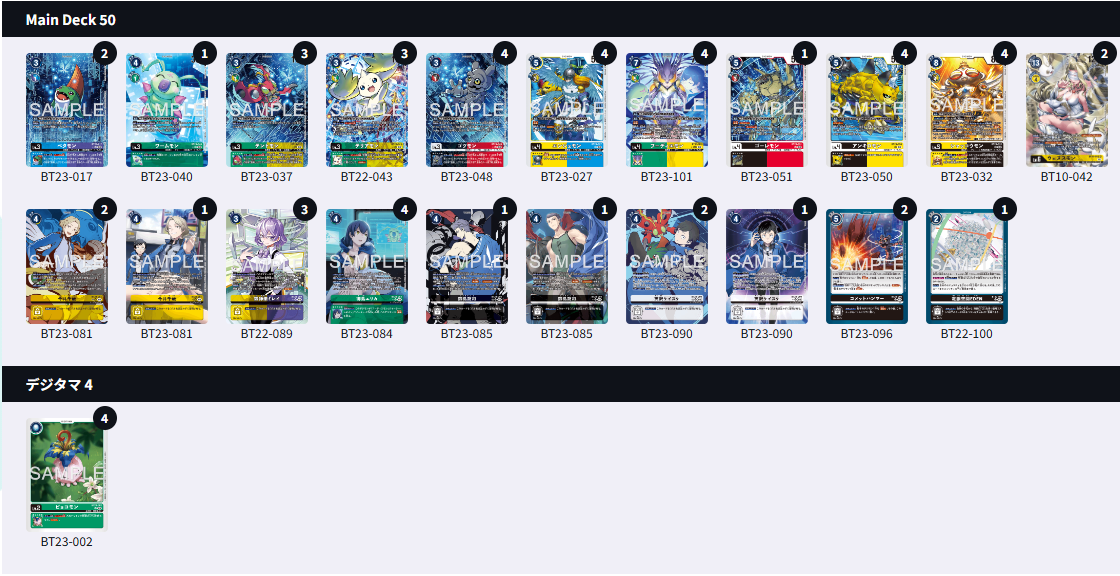 My match up are as follows:
Vs. Ghost
Vs. Jes
Vs. Royal Knight
Vs. Hudie
Vs. Deep Savers
Vs. Green Ranger
Top 8: Gallant
Top 4: Yellow Vaccine
Finals: Hudie Mirror
The concept of the deck was simple: control the board with Ryuji, Shakkoumon, and Venusmon, with Cyberspace EDEN as a backup in case I ran out of security.
I focused on conserving Mirei on board and keeping Chitose in hand, catching opponents off-guard when they thought I didn’t have any CS Digimon at the start of my main phase.
So why did I choose Hudie?
At that time, I honestly ran out of deck ideas. Hudie was new, cheap, and felt a bit like Masaru-con, since it could function almost like a hybrid deck. On top of that, it unexpectedly dealt ridiculous amounts of damage while generating insane value.
Even though I didn’t go in aiming to win, I also didn’t want to play something half-hearted and perform badly.
That said… I actually hate Hudie as a deck.
I’m not a fan of “flawless” decks, aka decks that seem to have answers for everything in the meta. But it helped me secure my Asia representative slot, so I really couldn’t complain. Still, right after the tournament, I posted about selling off all my Hudie cards.
Malaysia DC-1 Grand Prix Season 2
So after that, I was basically left without a proper deck. The meta also felt extremely stale.
Then I saw YsuKe’s notes.
My first thought was: What is this insane deck?
It looked incredibly strong. Even better, it featured one of my favourite Digimon — Mastemon.
If you know me, you’ll know I’ve been stuck in “Golden Hell” before. I even coined that term myself, after having to buy four useless Golden Mastemons back in BT11 when they weren’t even good.
This time was different.
On top of that, Japan’s top purple player, MISAO, refined the deck further and qualified with it.
I copied his list one-to-one.
No changes.
His build was impeccable. The ratios were carefully thought out.. Even small choices like Betamon for Mastemon recovery showed how much effort he put into the deck.
Without much prior practice, I brought it straight to Malaysia DC-1.
And that’s when I realised: the beauty of this deck isn’t in the card ratios.
It’s in the skill ceiling.
There are so many moving parts that many players misplay simply because too much is happening at once. Memory management, sequencing, trash, sources, timing = everything matters.
Here was my matchup spread:
During my match against Jes, when my opponent wasn’t fully familiar with his own effects, I realised just how explosive this deck could be. Even after shaving opponents down to three security, it could still launch multiple attacks in a single turn.
That’s when I truly understood its ceiling.
My match against Gallantmon was also a huge learning experience. He evolved into BT24 Gallant, which locked me from playing from trash. Instead of folding, I had to rely purely on hand and sources, and still managed to grind out the win.
That match taught me a lot.
And that’s when I really fell in love with this deck.
Not because it’s flawless, but because of its flaws.
Its complexity.
Its difficulty.
Its demand for precision.
It’s a deck that rewards mastery.
And that, to me, is beautiful.
After returning to Singapore, I started thinking seriously about how I could push myself further and find every possible way to win with this deck.
I grinded relentlessly — testing, reviewing my misplays, and refining my sequencing — until I slowly built real mastery over it. That effort eventually paid off, leading to three consecutive Evo Cup wins, which honestly still feels unreal to me.
After that streak, I genuinely felt like I had used up every bit of luck I had left.
At the same time, OTK Hudie had already been refined to near perfection. It felt like the “correct” choice in the meta, and I didn’t think I stood much of a chance against it. So I signed up for the tournament with that mindset and accepting my fate, and telling myself that at least I’d get to play another one of my favourite Digimon again.
Honestly, I wasn’t expecting to win.
I just wanted to play clean, be creative, and maybe pull off some flashy, stylish lines along the way.
Winning was never part of the plan.
Flying off with fellow Unkers:
Once again… was I properly prepared for this tournament?
Honestly, probably not.
I had stopped “hard training” and shifted into more casual testing. Similar to Dorugora last year, this deck demands a huge amount of strategic foresight and planning. There are always multiple paths to victory, and it’s very easy to tunnel into the one that looks perfect.
Sometimes, over-practising actually clouds my judgement. You start forcing lines instead of reading the board. On the other hand, playing too casually can also be mentally draining.
So I went in with a strange balance: experienced, but not over-rehearsed.
Asia Championship 2025-2026
Format:
4-Round Swiss → Top 16 Single Elimination
Participants (32):
Hong Kong ×6
Taiwan ×6
Malaysia ×6
Thailand ×6
Singapore ×4
Indonesia ×2
Philippines ×2
Round 1: Versus Taiwan - OTK Hudie
Super nice guy. He wore gloves because he had really sweaty palms — so serious that the judge eventually had to help him re-sleeve.
Because of us, Bandai even asked for an extra layer of matte sleeves to avoid card reflections.
We chatted a lot. He spent most of the early game digging for pieces, so I focused on farming and building tempo. Once he finally found Hudie, I pushed out and closed the game.
Round 2: Versus Malaysia - Bagra Hunter
Fellow Unker.
I was confident in this matchup because I knew where to disrupt his snowball turns. Unfortunately, I had a terrible hand.
Against Bagra Hunter, giving them even small windows to stack Yuu and Tagiru sources is deadly. Once that happened, I couldn’t catch up anymore.
Loss.
Round 3: Versus Malaysia - Hudie
A really nice guy I met through Benjamin from a Malaysian shop, and a loyal supporter of my Sakuyamon decks (blush).
He had a slow start, which gave me the space to pop off on my following turn.
Win.
Round 4: Versus Philippines - Royal Knights
Very friendly opponent. He told me he had only returned to the game recently and qualified through this one event.
My opening: Goblin + Training → pass.
He flipped Yggdrasil, played Magnamon for cheap, drew into Cool Boy, then passed me with 4 memory.
Back to my turn… I OTK’d him immediately.
I’m really sorry about that one 😅
After Swiss, I entered Top 16 as 8th seed.
And my opponent?
9th seed: Unker Rokufei.
Of course.
Top 16: Versus Singapore - OTK Hudie
He opened Pal → Ankylomon.
I built Goblin into Dober + K.
Then he pushed out, send down Ankylo, draw 1 gain 1 memory, used Gravity Crush, evolved into Hudie, played Mirei… and suddenly I was thinking:
“WTF, am I dead already?”
Hudie attacked into my Cerberus X in security.
Huge sigh of relief.
I OTK’d him the next turn.
Top 8: Versus Taiwan - OTK Hudie
You can watch it here:
Same opponent as Round 1.
We both farmed until Hudie appeared. Once he found it, I committed and went for the kill.
I’d like to apologise for this match.
I initially pointed to Cerberus for Rush, then realised I hadn’t fully resolved Mastemon’s on-evo effect. I went back to fix it before continuing.
When I attacked with SkullBaluchi, he declared that I hadn’t given Rush. I remembered doing so.
Since it was a compulsory effect, the judge gave me a warning and allowed play to continue.
My mistake, sorry again.
Top 4: Vs. Hong Kong - Seven Great Demon Lord
You can watch it here:
I honestly didn’t expect 7GDL here, and I was relieved not to face another Hudie.
My opening was mediocre… no Cerb line, no Maste.
I tried cycling with Dober X and set up SkullBaluchi with XPF as backup.
He played Beelze, trashed 4, devolved me.
I was still calm as I had Ogre in hand and Goblimon in breeding.
Then he used Rival’s Barrage.
Midway, judges stopped us: SkullBaluchi shouldn’t have devolved (trash <10).
I had completely forgotten about 7GDL mechanics.. The last time I played against it was last year.
Things got messy. I kept replaying lines in my head so I wouldn’t mess up.
At one point, the judge even asked me to replay Goblimon with XPF as source.
Chaos 😅
Eventually, everything stabilised and I closed the game.
Finals: Vs. Hong Kong - K.DA Maste
Watch here:
He told me he had read my article and trained hard for three weeks.
My deck decided: “Enough OT (Overtime) already.”
Yes, that’s him.
Decklist & Tech Choice
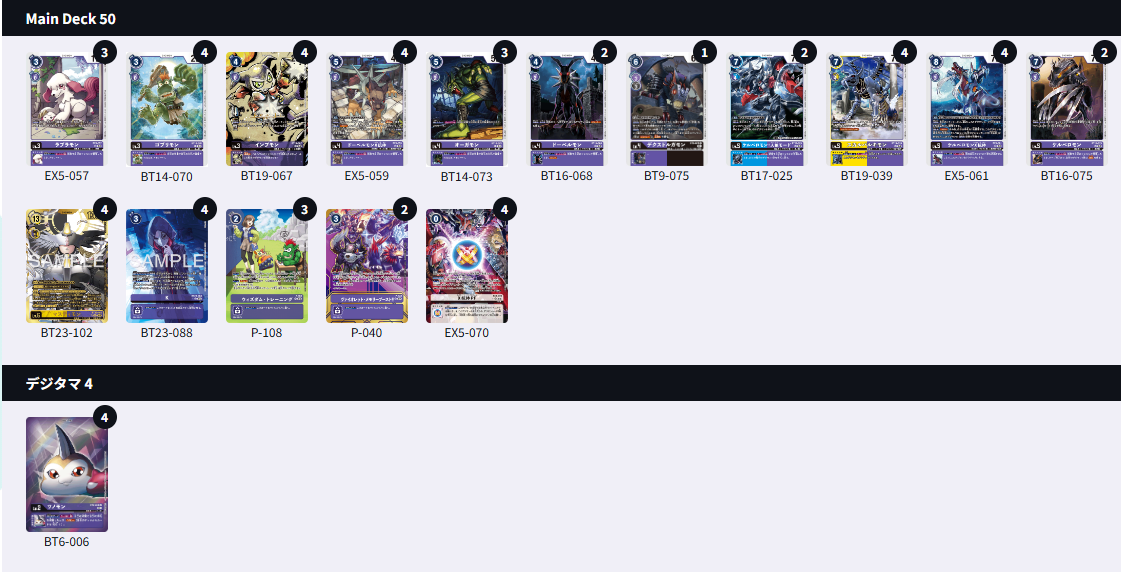 This is the list I used for the Asia Championship.
Honestly, I don’t mind sharing it.
Because this deck isn’t about the list.
It’s about the player.
I’ve seen many players use the exact same build and still misplay heavily.
One key inclusion: DexDorugamon.
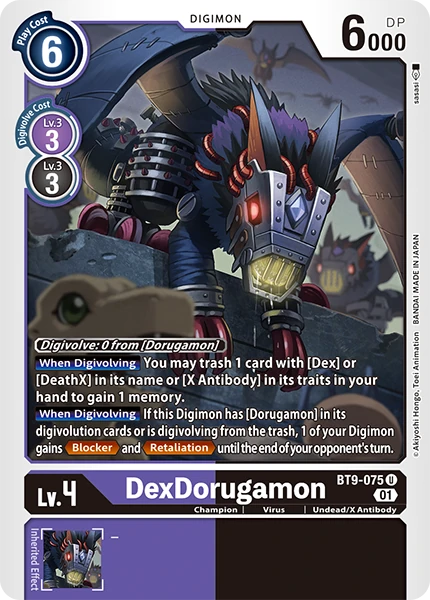
On paper, it’s bad:
No sources
Niche requirement
Expensive cost
But in clutch situations, it’s insane.
When I’m at 0 security, or need exactly +1 memory to avoid losing a turn, it becomes a miracle card.
With Goblimon passing to 1-2 memory, Dex lets me steal back turn with K, and go into SkullBaluchi without passing with a second K.
Then I can still DNA into Mastemon.
That alone has won me multiple games.
Running 4 XPF instead of 3 is also pure quality-of-life, and yes, to make the deck more expensive.
Like I said, my goal in this tournament was to play flashy.
So why not make it shiny too?
My deck name is 4K.
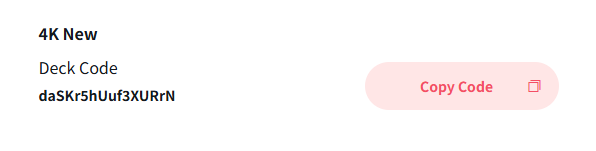 And it costs 4K USD.
As it should be. 😎
Closing Thoughts
K.DA Mastemon is an incredibly powerful combo deck, but it is also one of the most unforgiving and mentally taxing decks in the current meta. Every turn demands precision. Every misstep is punished.
When I play this deck, I always keep one motto in mind:
Squeeze every possible value from your sources before you DNA Digivolve.
If you watched my match against 7GDL on stream, you’ll know exactly what I mean. I constantly tried to extract every last source effect before committing to Mastemon, because once you DNA, many of those opportunities are gone forever.
Learning to recognise and maximise these small advantages is what separates “playing the deck” from truly mastering it.
And honestly, this habit doesn’t just apply to K.DA Mastemon.
If you can train yourself to manage resources, timing, and sequencing at this level, it will benefit you in any card game you play in the future.
Think of it as your first baby step into mastering this deck — and maybe, into becoming a better player overall.