
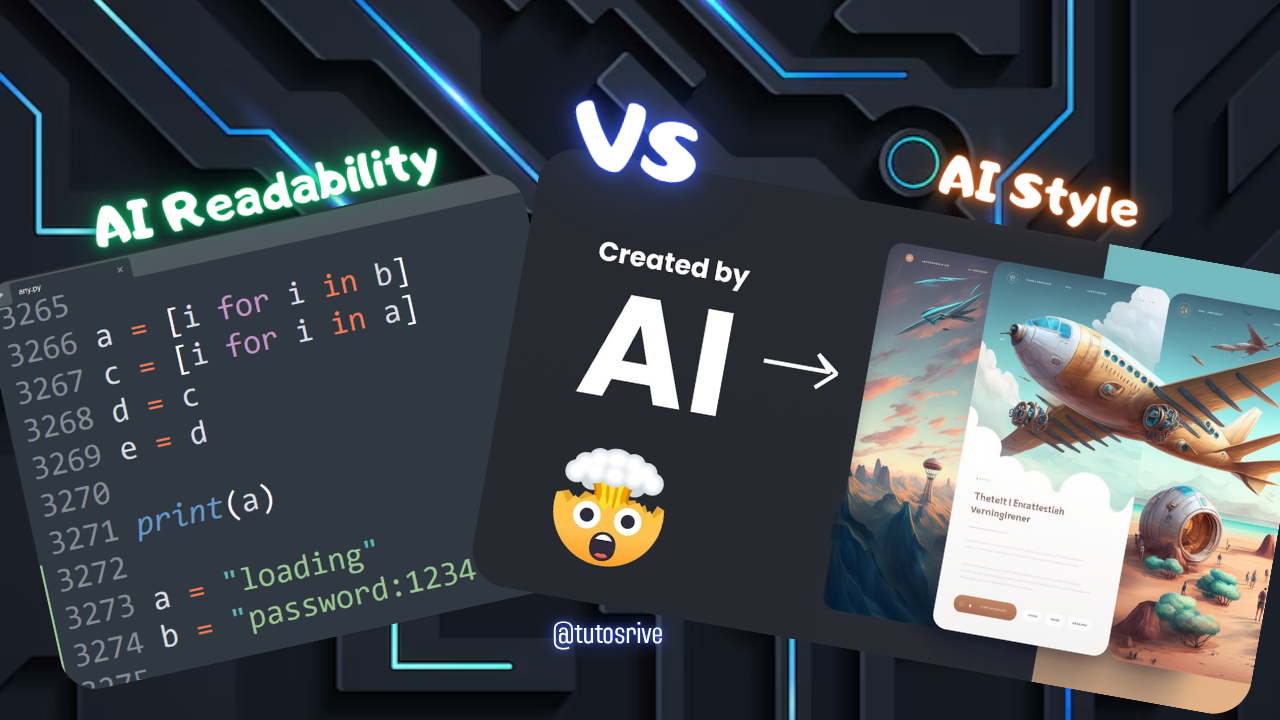
Inspired by:
AI Style vs. AI Readability: The Hidden Cost of “16 Minutes of Fame”
If you browse social media, the message is unanimous: “You no longer need to know how to code; you just need to know how to ask.” They show you a “cinematic” interface, a design that looks straight out of a science fiction film, and a speed that humiliates even the most seasoned developer. That is AI Style.
But today, let’s talk about what sits behind that smokescreen. Let’s talk about AI Readability (or the lack of it) and the real cost of letting a machine act as the “lead developer” of your project.
1. The illusion of “Style”: Makeup over ruins
The video above is impressive at first glance. A component moves, a colour changes, the UI “flows”. But that is the easy part. Style is cheap; logic is expensive.
AI is excellent at giving you what you want to see, but remarkably mediocre at giving you what you need to maintain. You can have an application with smooth animations, but if underneath it is a mess of nested tags, redundant CSS, and functions calling themselves uncontrollably, you do not have a product—you have a ticking time bomb.
2. Readability: Where AI “hallucinates” your technical bankruptcy
Look at the “AI Readability” image. It is satire, but it stings because it is true:
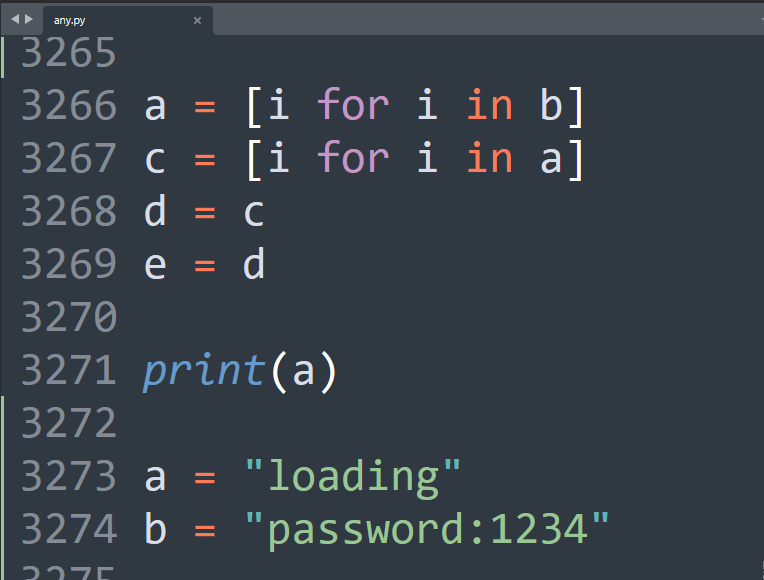
Soulless variables:
a = [i for i in b],c = [i for i in a]. AI does not understand purpose; it understands sequence. When you need to refactor that code in six months, you will spend more time trying to decipher whatdis than writing the new feature.Cardboard security: Hardcoding passwords or tokens (like that
password:1234) is commonplace when the “prompter” lacks best-practice knowledge.Optimisation debt: AI does not look for the most efficient path; it looks for the most probable one. That means for a simple task, you may end up with unnecessary “software obesity”, loading 2MB libraries just to move a button.
3. The real cost of “not knowing”
When you use AI as a replacement rather than a tool, the costs are not paid in a GPT subscription—they are paid in:
Refactoring cost: If you did not write the logic, you cannot improve it. You are stuck deleting and regenerating, hoping luck gives you a different result.
Debugging cost: A bug in an AI-generated system is a labyrinth. Without prior thought, there is no clear architecture to follow in order to locate the issue.
Scalability cost: What is generated in 16 minutes rarely survives the load of a real production environment.
Conclusion: It is not how it looks, it is how it is built
We can keep fooling ourselves with pretty interfaces and ten-minute tutorials, but software engineering remains a discipline of logical craftsmanship. A good developer uses AI to look up a syntax error (like using a dictionary), not to have it write the novel for them.
In my projects, from Why Sudo? to Omnia, the rule is non-negotiable: every line of code must have a reason to exist. I would rather have a 4KB file I fully understand than a 100MB repository generated by AI that “looks good” but that no one can explain.
If you value development that prioritises clarity, optimisation, and the programmer’s sovereignty over their machine, consider supporting me with a coffee. Your contribution helps keep software built with judgement alive—not prompts.
@tutosrive