

 Asia in 2026 is shaping up to be one of the most dynamic regions for travelers, driven by improved flight connectivity, expanding e-visa access, and a noticeable shift toward slower, more experience-driven trips. From temple towns in Cambodia to ski resorts in Japan, the continent covers almost every kind of travel style imaginable.
What makes 2026 particularly interesting is the number of destinations regaining or gaining tourist attention after years of infrastructure upgrades — new airports, better rail links, and revamped visa systems. Travelers are no longer choosing between "popular" and "offbeat"; many destinations now offer both in the same trip.
For travelers comparing options this year, browsing well-structured vacation packages can make it easier to shortlist destinations that match both budget and travel style, especially when a country has multiple regions worth visiting in one trip.
This guide walks through the destinations worth prioritizing in 2026, what's changed, and how to plan around seasons, visas, and realistic costs.
Key Takeaways
Japan, Vietnam, Sri Lanka, and Bali remain strong picks for 2026, backed by improved connectivity and stable tourism infrastructure.
Emerging destinations like Uzbekistan and parts of the Philippines are gaining traction due to new visa-free policies.
Shoulder-season travel (spring and early autumn) offers the best balance of weather, crowd levels, and pricing.
Sustainable and slow-travel trends are shaping itineraries, with travelers favoring fewer cities and longer stays.
Visa processes across most popular Asian destinations have become faster and more digital since 2024.
Why Asia Continues to Lead Global Travel Trends
Asia's appeal in 2026 comes from its sheer variety — beaches, mountains, ancient temples, modern megacities, and everything in between, often within a single country. This diversity means travelers rarely need to choose between adventure and relaxation.
Improved regional connectivity is another major factor. Budget carriers now connect smaller cities across Southeast Asia directly, reducing the need for long layovers. This has opened up destinations that were previously considered inconvenient to reach.
Digital-First Travel Infrastructure
Most major Asian tourism hubs have adopted digital arrival cards, e-visas, and QR-based payment systems, making on-ground travel smoother than it was even three years ago. This shift particularly benefits solo and first-time international travelers.
Top Asia Destinations to Explore in 2026
1. Japan
Japan continues to be one of Asia's most consistently strong destinations, thanks to its blend of ultra-modern cities and deep cultural heritage. Tokyo, Kyoto, and Osaka remain core stops, but 2026 is seeing growing interest in lesser-visited regions like Tohoku, largely due to newer rail connections.
2. Vietnam
Vietnam's mix of coastal towns, mountain treks, and historic cities keeps it firmly on the 2026 travel map. Ha Long Bay, Hoi An, and Sapa cover very different travel styles, making Vietnam suitable for both first-timers and repeat visitors.
3. Sri Lanka
Sri Lanka's compact geography makes it easy to combine beaches, wildlife safaris, and hill-country tea estates in a single short trip. Its continued investment in eco-tourism has made it a favorite for travelers prioritizing sustainability.
4. Bali, Indonesia
Bali remains a top choice for wellness travel, digital nomads, and honeymooners. In 2026, Indonesia's broader push toward "second Bali" destinations like Lombok is also drawing attention from travelers wanting Bali's vibe with fewer crowds.
5. Maldives
The Maldives continues to attract travelers seeking pure relaxation, particularly overwater stays and marine-focused experiences. While often seen as a premium destination, more accessible maldives travel packages have made shorter, budget-conscious trips increasingly common in 2026.
6. South Korea
South Korea's appeal has broadened beyond Seoul, with cities like Busan and Jeju Island gaining popularity for their food scenes and coastal landscapes. K-culture tourism continues to be a major draw for younger travelers.
7. Uzbekistan
Uzbekistan is one of the standout emerging destinations for 2026, driven by relaxed visa policies and growing interest in Silk Road heritage sites like Samarkand and Bukhara.
8. Nepal
Nepal remains essential for trekking and mountain tourism, with the Everest and Annapurna regions continuing to draw both serious trekkers and shorter-duration hikers.
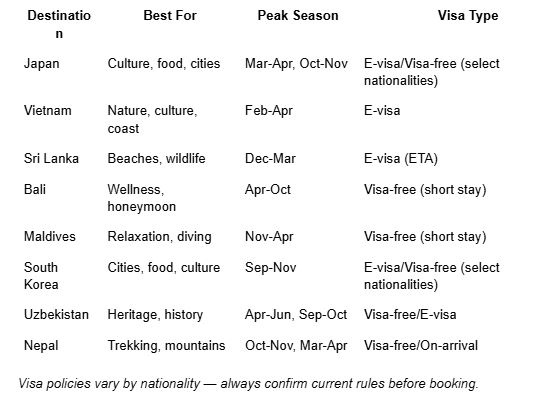
Quick Comparison: 2026 Destination Snapshot
 Benefits of Traveling to Asia in 2026
Wider destination choice thanks to new direct flight routes across the region
Faster visa processing, with most e-visas now approved within 3-5 business days
Improved digital infrastructure, from airport check-ins to local payments
Stronger focus on sustainable tourism, especially in Sri Lanka, Bhutan, and parts of Indonesia
More flexible trip lengths, with short 4-5 day getaways now easier to plan than before
Challenges Travelers Should Plan For
Overtourism in hotspots: Popular cities like Kyoto and Bali's Ubud region can feel crowded during peak months.
Seasonal weather extremes: Monsoons in South and Southeast Asia can disrupt travel plans between June and September in many regions.
Currency fluctuations: Exchange rates can shift trip costs noticeably, especially for longer stays.
Booking lead times: Popular destinations like Japan during cherry blossom season require booking 4-6 months in advance.
Language barriers: Rural areas in several countries still have limited English signage, making basic local phrases genuinely useful.
How to Choose the Right Asia Destination for 2026
Decision Checklist
Define your travel priority: culture, nature, relaxation, or adventure.
Check visa requirements for your passport well in advance.
Match destination climate with your travel window.
Compare direct flight availability versus layover routes.
Set a realistic daily budget based on destination cost tier.
Check if travel insurance covers your planned activities (diving, trekking, etc.).
Look at recent traveler reviews for on-ground infrastructure updates.
Travelers exploring multiple countries often start by comparing india vacation packages that bundle two or three nearby destinations, since regional flight networks within Asia make multi-country trips more efficient than in most other continents.
Asia vs Other Regions: A Quick Perspective
 This comparison highlights why Asia continues to dominate travel searches for 2026 — shorter flights, simpler visas, and lower daily costs combine to make it an efficient choice for most travel styles.
Real-Life Considerations Before Planning Your 2026 Trip
Timing Around Local Festivals
Several Asian destinations see major domestic travel spikes during local festivals — Japan's Golden Week, Vietnam's Tet holiday, and India's peak wedding season all affect hotel pricing and availability. Checking local calendars before booking avoids unexpected price surges.
Multi-Country Itineraries
Travelers increasingly combine two or three countries in one trip, such as Vietnam and Cambodia, or Sri Lanka with the Maldives. This works well given the short flight times between most Asian hubs, but requires careful sequencing to avoid backtracking.
Budget Planning Across Destinations
Not every Asian destination fits the same budget category. Travelers looking at more cost-conscious options alongside premium ones often compare regional budget asia tour packages to understand how far their travel budget can realistically stretch across different countries.
Solo and Group Travel Suitability
Japan and South Korea are considered very solo-traveler-friendly due to safety and infrastructure, while destinations like Nepal's trekking routes are often better suited to small groups for safety and cost-sharing reasons.
Future Trends Shaping Asia Travel Beyond 2026
Sustainable tourism certification is expanding across Southeast Asia, with more resorts and tour operators adopting verified eco-practices. Additionally, digital nomad visas in countries like Thailand and Malaysia are expected to influence longer-stay travel patterns, blurring the line between tourism and semi-permanent relocation.
Frequently Asked Questions
1. Which Asian country is best to visit in 2026?
It depends on travel style — Japan suits culture and food-focused trips, Sri Lanka and Bali suit relaxation, and Nepal suits trekking. There's no single "best," only the best fit for your priorities.
2. Is 2026 a good year to visit Japan due to cherry blossom season?
Yes, but early booking is essential. Cherry blossom season (late March to early April) sees some of the highest demand and prices of the year.
3. Are visas becoming easier for Indian travelers to Asian countries?
Generally yes. Several countries have simplified e-visa processes, and a few, like Sri Lanka and Thailand, offer visa-free short-stay access for Indian passport holders under current policies.
4. What is the cheapest Asian destination to visit in 2026?
Nepal and parts of Vietnam remain among the most budget-friendly, especially outside peak trekking or holiday seasons.
5. Can I combine multiple Asian countries in one trip?
Yes, and it's increasingly common. Popular combinations include Vietnam-Cambodia, Sri Lanka-Maldives, and Thailand-Malaysia, given short inter-country flight times.
6. Is overtourism a concern for popular destinations like Bali or Kyoto?
Yes, in peak season. Traveling during shoulder months or exploring nearby lesser-known areas helps avoid the worst crowding.
7. What's the best time of year to travel across Asia generally?
Spring (March-May) and early autumn (September-November) tend to offer the best balance of weather and manageable crowds across most of the continent.
Conclusion
Asia's 2026 travel landscape reflects a region that's matured without losing its diversity. Established favorites like Japan, Vietnam, and Bali continue to perform strongly, while destinations like Uzbekistan are opening up new possibilities for travelers seeking something different.
The right destination ultimately comes down to matching personal travel priorities with practical factors — visa access, seasonal timing, and realistic budgeting. With careful planning, 2026 offers some of the most accessible and rewarding travel opportunities Asia has had in years.