

As part of the Scottish Beekeepers Convention a few years back, I hosted a trip to the heather and as this followed an energetic Ceilidh the night before, it was just the ticket to blow the cobwebs away. A group of 30 intrepid beekeepers, including our main lecturers, professors Tom Seeley and Francis Ratnieks, met up on Sunday morning to make the 1 hour trek to the heather. Blessed by sunshine and blue sky we jumped into the waiting 4 x 4 vehicles and set off in convoy in the direction of Dufftown, the self-acclaimed ‘malt whiskey capital of the world’.
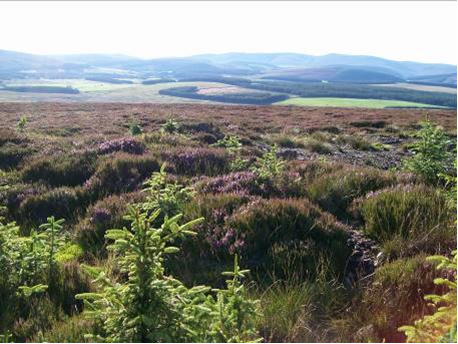
Glorious heather! Photo: Tony Harris
The purple-topped mountains where still to be seen on the journey and although the heather blooms were fading the breath-taking scenery made up for the lack of colour. I had 32 hives at the heather stance on the slopes of Ben Rinnes (841 metres high) which is very popular with walkers. We headed to the hives on the other side of the mountain where it is possible to drive to the summit, passing through 4 gates to keep in the hardy mountain sheep and cattle.
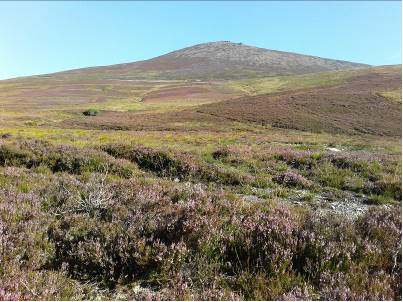
The summit of Ben Rinnes. Photo: Tony Harris
I gave a short talk to the group on heather and heather honey and then bee suits donned, provided by Moray Beekeepers Association, we approached the hives. Unaccustomed to the local Scottish strain of bees, professor Seeley had brought a very flimsy head veil with him while professor Ratnieks thought he would be quite safe with no protection at all. We talked Tom into wearing a full bee suit (although it did have a hole in the veil) but Francis thought he knew better.
I opened up the supers of my Buckfast bees first and as usual, they were very calm on the comb and well –behaved. The wet weather in May and June had ‘wet the heather’s feet’ and it had been absolutely glorious for weeks, the bees working it avidly. The group were delighted to see full supers and the creamy/grey colour heather pollen was still going into the hives.
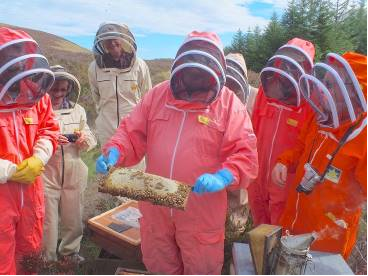
Tony shows the group a full frame of heather honey! Professor Tom Seeley in the background. Photo: F. Ratnieks.
However, when we moved along and approached the local Scottish bees, they did what all of the local beekeepers knew they would. Bees poured out of the entrance to protect their honey and Professor Ratnieks did the 200 metre run back to the vehicles in Usain Bolt style. Although Professor Seeley was wearing a full bee suit he was stung on the face by a bee that had managed to get through the hole in his veil, ouch!
Ling heather (Calluna vulgaris) is the source of our most highly prized honey and will only thrive on poor acid soil so the clearing, burning, and grazing of the land over the centuries depleted it of nutrients making it an ideal environment in which heather may flourish
Heather honey is the Rolls Royce of honey and Scottish heather honey is known around the world as being the best (well I would say that, wouldn’t I?). It attracts premium prices, both in the jar and as a cut comb honey and the extra work involved is really worth the effort.
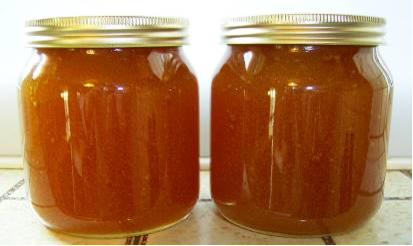
Ling Heather honey commands premium prices. Photo: Gerry Collins
Heather honey is different from the normal blossom honey we get from our hives in spring and summer and it has its own unique flavour. The other unique property of heather honey, due to its higher protein content, (about 3%, compared to less than 0.5% in ‘normal honey’) is that it is not a liquid, it is a jelly. If you like long words, it is known as ‘thixotropic’ which means that it is a jelly in its natural state but when agitated it becomes liquid for a few minutes only before returning to jelly.
And this means that it cannot be spun out of the comb like normal runny honey. Hobby beekeepers will use a honey press to harvest it or will use thin foundation to get cut comb honey that is simply cut up and sold as it is without any extracting. Commercial beekeepers will use a heather loosener, that agitates the honey in the comb with lots of needles, allowing it to be spun out with a tangential or swing basket extractor.
It also has a higher water content than normal honey which should legally be below 20%. Heather honey should be below 24% and while this is legal, it is more at risk of fermenting, and this can be a problem in the hive over winter!
Choosing a Heather Stance
A bit of thought must go into choosing a heather stance and it is definitely a ‘no,no’ to just plonk hives down in any old place. First of all, permission must be sought from the landowner, and consideration given to the welfare of members of the public who may be picnicking near by. Shelter from prevailing winds is important so if you can find a gully or sheltered valley it is beneficial. Ideally, the bees should be able to fly out up the hill and come down the hill loaded. Make sure the stance will not flood as there have been many occasions when hives have been partly submerged and even washed away after torrential downpours on the moorland tops.
As a general rule of thumb hives are moved to the heather for the month of August, give or take a week or two either side of the month. Although it is in flower for a couple of months, the nectar secretion can occur at any time, but given a couple of weeks of fine sunny weather each hive should produce at least 1 super of honey.
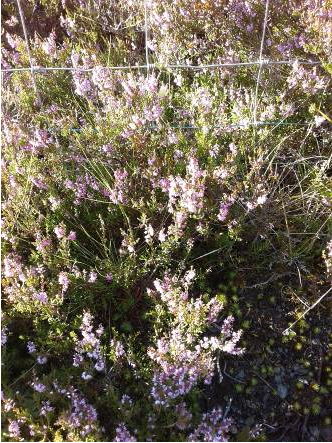
A Honeybee working the heather. Photo: Tony Harris
Preparing Hives for the Heather
The colonies have to be prepared for the heather to get a harvest. To put it in a nutshell, you need a young queen and a hive bursting with bees. A young queen will continue laying longer in the season while an old queen will not, and if there is too much space in the brood box, this will be filled with heather honey and not the super. It can be hard work for the bees at the heather and many of them will die, which is another reason we want the queen to continue laying, to provide the winter bees to get the colony through to spring.
Management
Ensuring a young queen (current year or no older than her first full season) can be sorted by re-queening earlier in the summer. There are a few things you can do to ensure the hive is bursting with bees. Some beekeepers place a few combs of sealed brood in from other hives, 3 or 4 weeks before the move. If you have hives in pairs, you can move one away to another part of the apiary and its flying bees will enter the remaining hive, and this is quite safe to do when there is a nectar flow on. You can also re-arrange the frames in the brood box to encourage the bees to store the honey in the supers.
This is what I do.
I keep my bees in double brood box hives and a week before the move, reduce the colony to 1 box of 12 or 13 frames with a queen excluder on top. I place the eggs on the outside of the brood box and emerging brood in the centre and I repeat this again the day before the move. This will cause the bees to store the nectar in the super, not on the outer frames of the brood box, and the emerging brood will leave space for the queen to continue laying. The day before the move I remove any honey supers (you can put these on other colonies or save to give back to the bees on their return) and place 1 super of drawn comb or 1 of thin foundation on the hive cut in strips for cut comb. I use full sheets of unwired worker foundation if I am after heather honey to press out for jarring. I place a ventilation screen on top (very important), secure the hives with straps, block the entrances with foam and move to the heather early the next morning. To avoid ‘comb slap’, which can stress the bees, the hive should be positioned in the vehicle with the frames facing ‘fore and aft’. If you are travelling any length of time you can pour half a cup of water through the ventilation screen to help cool the bees down, and leave the roof off during transit. At the heather, unload the hives, leaving the straps on, place the crown board on top, some insulation, and then the roof. Make sure you unblock the entrance before leaving!
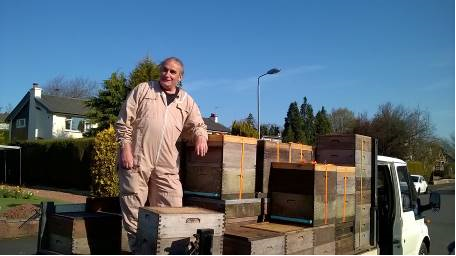
Moving hives to the heather. Photo: Tony Harris
Now if you have your bees in a single brood box select a really strong colony. A week before the move place honey and sealed brood in the centre of the box, and eggs on the outside. This should cause the bees to move the honey up into the super. Repeat the operation the day before the move, remove honey supers and add a super of drawn comb and/or foundation and maybe a second super of thin foundation, and proceed with the move as just described.
Bees can starve whilst at the heather so it is advisable to place a shallow frame of honey in the first super as a back up. If you mark this frame, you can use it every year.
Layout of Hives
If you place hives in rows at the heather you will find that drifting will be a problem and the hives on the end may have full supers whilst the others won’t. I set up the hives like you see here, on pallets, each facing different directions. The trees behind are giving important wind protection.
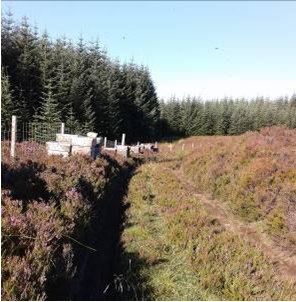
One of Tony’s heather stances, 32 hives with important wind shelter provided by the trees
Check the hive after a week or so and if necessary you can place a second super on top. Some beekeepers place 2 supers on from the outset but I would rather have 1 super full of sealed honey than 2 with some partially filled and unsealed frames.
I usually leave my hives at the heather till the second week of September but am flexible with this as in some years the heather will yield late and this could be in the middle or late September. Any supers should be removed at the heather and the hives taken to their winter site where they are given a gallon or two of syrup in a rapid feeder and treated for varroa with trickled oxalic acid.. Remember to place 1 or 2 empty supers back on the hive to provide space for the bees during the move home. Heather honey has a higher water content than normal honey which means there is a danger of fermentation in the comb, particularly if it has not been sealed by the bees. Also, over wintering bees solely on heather honey is said to cause dysentery so feeding heavily with syrup when you get home will get the brood combs sealed and will add a different mix to the stores.
Extracting Heather Honey
As heather honey is thixotropic, i.e. a gelly not a liquid, it cannot be spun out like normal runny honey.
Most beekeepers use a honey press to ‘press’ the honey from the comb. You simply cut the comb from the frame with a knife and place inside a linen cloth inside the press. As pressure acts on the comb it squeezes the honey out, is filtered by the cloth and flows into the honey bucket.
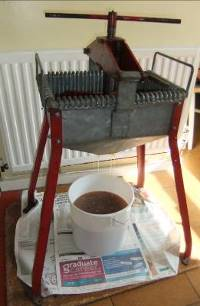
Heather Honey press. Photo: Gerry Collins
You can jar it straight away or store it in buckets for future use. It will have lots of air bubbles in it so make sure you fill the jar to the top. If you heat the honey excessively, you are in danger of spoiling it, but contrary to popular belief, warming it to 40C will enable you to fine filter it and at this temperature you won’t spoil it. You must continue to stir the honey when filtering it otherwise it will not pass through the filter.
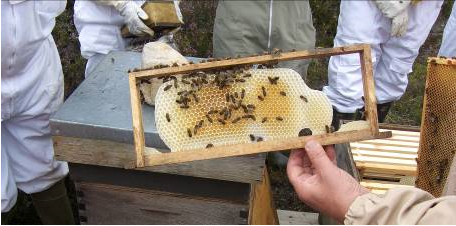
Strips of foundation are drawn out naturally and can be used for cut comb honey. Photo: Tony Harris
If you have used strips of foundation you can cut pieces of the comb and eat it or sell it as cut comb honey. You can buy attractive display boxes that enhance the attraction, or simply place it in a cut comb tray and lid. If selling it the usual labelling regulations apply.
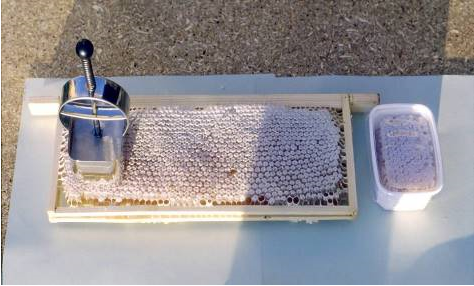
Honey production: cut comb. Photo: Gerry Collins
You don’t have to be in Scotland to take advantage of this premium honey as there are many areas of heather across the UK. Go on, give it a go! Not only will you reap a harvest of delicious heather honey but the planning, moving and management of the hives is a real adventure, one that I enjoy every summer!