

The control of swarming must be the greatest challenge to beekeepers and I know of several beginners who have given up after just one frustrating season spent chasing swarm after swarm around their apiary. Others battle on gamely, splitting hives when they find queen cells with no real understanding of what is going on inside the hive or simply knocking down queen cells and hoping for the best. This is a great shame as your beekeeping enjoyment will be vastly improved if you can control the swarming process in the hive and with a little understanding and practice, you can!
If you live in a rural location with no near neighbours and you do not want a honey harvest, you may choose to let your bees swarm in the hope that they will set up home in the nearby woods, thus helping the wild bee population. This seems to be a noble gesture but did you know that 80% of swarms that move into a natural cavity, such as a tree, do not survive their first winter (Seeley). There is also the possibility that the swarm will set up residence in your roof or chimney or more alarmingly, in the roof or chimney of the farmhouse a mile or two up the road. So, please be a responsible beekeeper and try and prevent swarms from your hive being a public nuisance and giving all beekeepers a bad name!
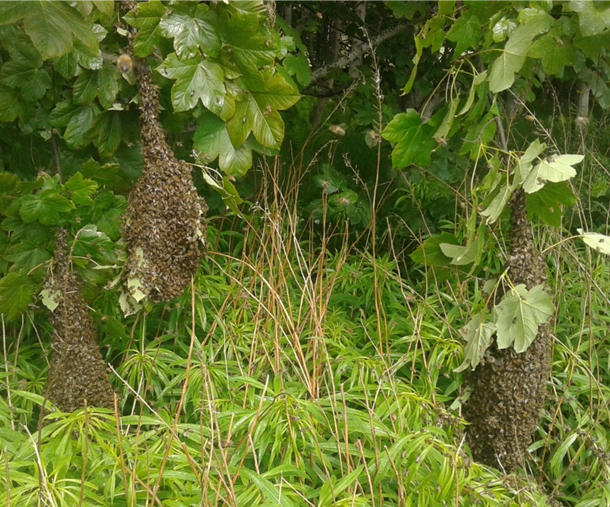
Swarm control has failed here! Photo: T. Harris
Someone said that swarming is like puberty. It’s not a very nice experience but we all have to go through it! To have any chance of ‘going through it’ without the frustration already mentioned, you need to understand what is going on inside the hive and use a swarm control management system that you are comfortable with. If you do this, YOU will be in control of the swarming process and not your bees and that will make life a lot easier for you! So, I will share with you what I have learned in the hope that it will help you if you struggle with swarm control measures. There are a couple of myths that have to be de-bunked at the start: 1. Continually knocking down queen cells is not an effective swarm control method, and 2. Clipping a queen’s wing will not prevent your bees from swarming. I also need to stress that if you discover sealed queen cells during an inspection, it is almost certain that the queen, along with a swarm has already left, so don’t panic and start knocking down all the queen cells. Assess the colony first and then take a measured decision based on what you can see. If the queen has left with a swarm and you destroy all the queen cells, and there are no eggs or larvae left for the bees to raise any more, you may well have sounded the death knell for your bees!
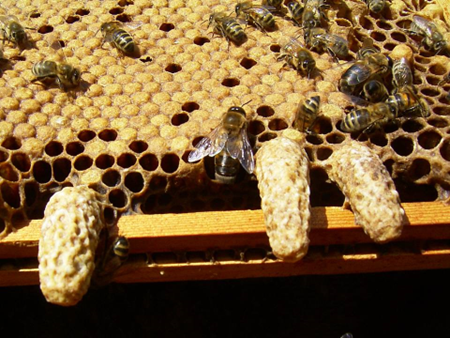
Sealed queen cells. Photo: G. Collins
I teach new beekeepers to carry out hive inspections every 7 days during which they should look for charged queen cells, i.e. queen cells with larvae inside, evident by lots of creamy white brood food liquid in the base of the cell. There is a reason why we recommend 7 day inspections. If the bees are not making queen cells at an inspection, but they start doing so immediately after you finish, it will usually be 8 days before a swarm will leave. This is because a queen cell, which takes 16 days from the laying of the egg, to the virgin queen emerging from the cell, is sealed on day 8 and this, or the next day, is usually the time when the original queen and swarm will leave. So, by inspecting your bees every 7 days during the swarming season (April to July) you should be able to spot any unsealed queen cells before a swarm leaves and carry out your chosen swarm control method.
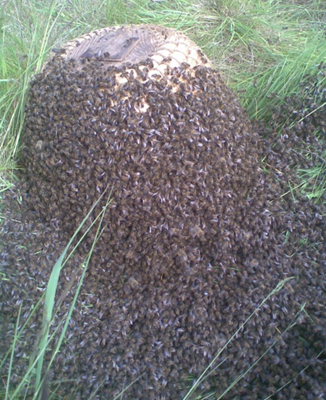
Luckily, I was able to retrieve this massive prime swarm! Photo: T. Harris
It is very important during these inspections to examine every nook and cranny of each frame and you can only do this effectively by shaking the bees off the frames back into the brood chamber. It will help if you can find the queen first before you do this as you can damage queen cells by shaking frames. If you know the queen is present because you have seen her, then this doesn’t matter but if you are unsure, again assess the whole colony and make a measured decision. The presence of eggs usually means the queen is present.
Although I have said that destroying queen cells is not an effective swarm control method, it just may dissuade the bees from swarming if you provide additional space, so you may want to do this the first time you see unsealed queen cells. Don’t, however, make the mistake of believing you will then have 8 days before a swarm can leave, i.e. 3 days as an egg and 5 days as a larva before it is sealed, as this can be a costly mistake and one that regularly caught me out until I figured out what was going on inside the hive!
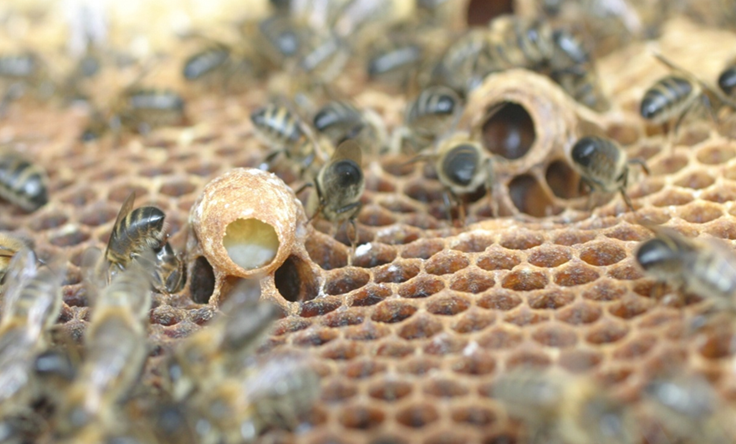
Unsealed queen cell on the right with a larva and brood food in it. Empty Queen cup on the right. Photo: T. Harris
Bees making queen cells are preparing to swarm and if you keep knocking down unsealed queen cells, they can select a 1, 2 or even a 3 day old larva and by changing its diet can transform it into a queen. So, if they do select a 2 day old larva (this will be 5 days from when the egg was laid remember!) immediately after you have destroyed unsealed queen cells, there could be sealed queen cells in the hive just 3 days later. The original queen will depart and you will have lost a prime swarm!
What about clipping a queen’s wings? The queen won’t be able to fly so surely she won’t be able to leave with a swarm, will she? Well, yes, that is true but again, you need to understand what is going on inside the hive if you are to remain in control of the situation. I have already stated that clipping a queen’s wings won’t prevent your bees from swarming but it will give you a few extra days between inspections. It is a vital part of what is known as the ’10 day inspection system’ as it allows 10 days between inspections rather than 7. This is very useful for a beekeeper with limited time or many hives and is the system I use when taking multiple hives to the oil seed rape.
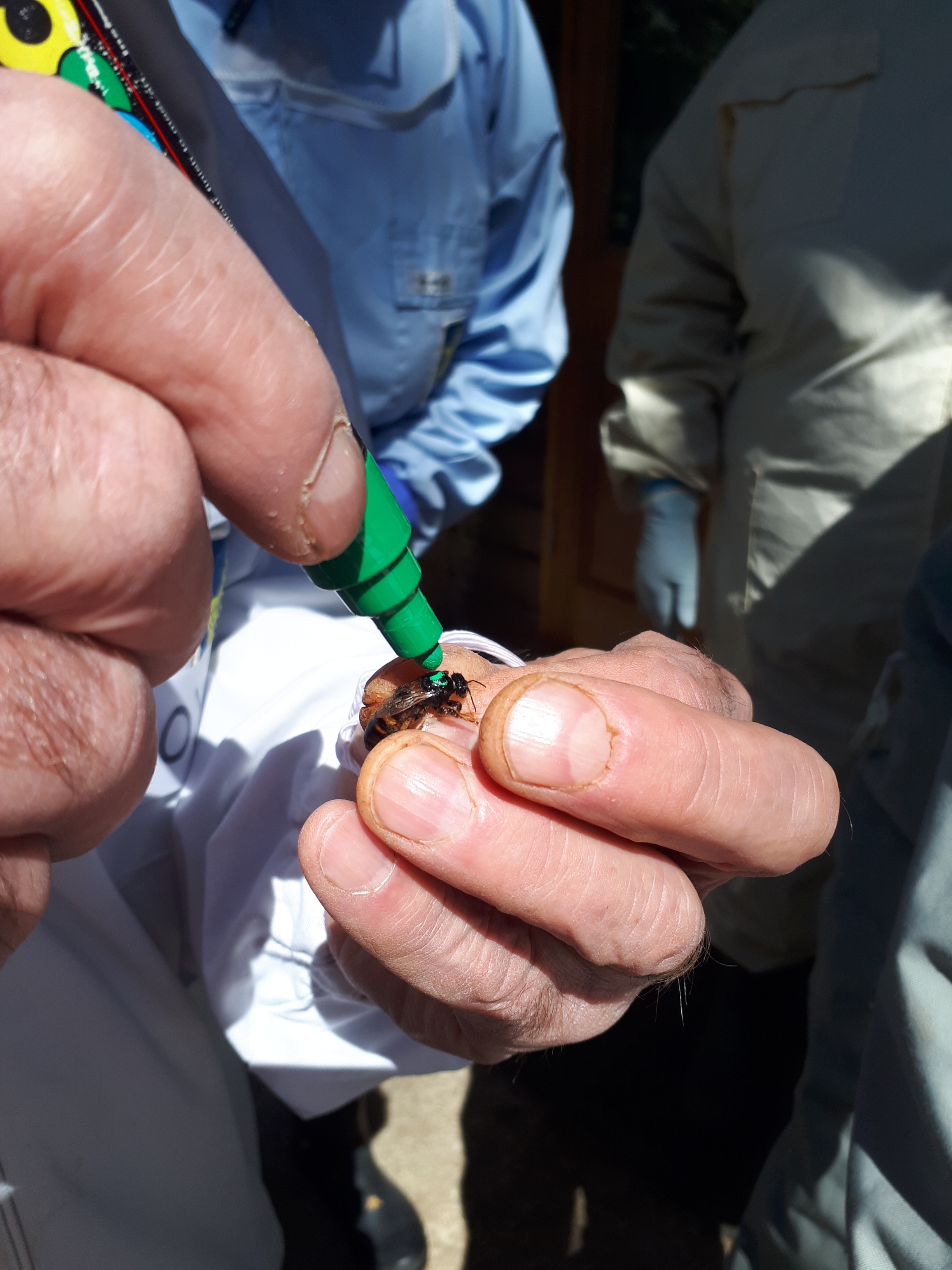
Queen marking. Photo: T. Harris
Most manipulations or management systems, including swarm control, involve finding the queen, so it is a good idea to mark the queen with a dot of paint on the visible part of her thorax. I do this and clip one third of one of the queen’s forewings (the big one) during the first inspection in the spring of her first full season, i.e. in the spring after she has emerged from the queen cell. This is generally a safer time to do it than in the summer as I have, on several occasions in the past, had new queens I had just marked and/or clipped, killed by the bees. It is also easier to find queens at the first spring inspection as there are less bees in the hive, no drones to confuse with the queen, and also, with no drones present for a new queen to mate with, the bees are less likely to replace her.
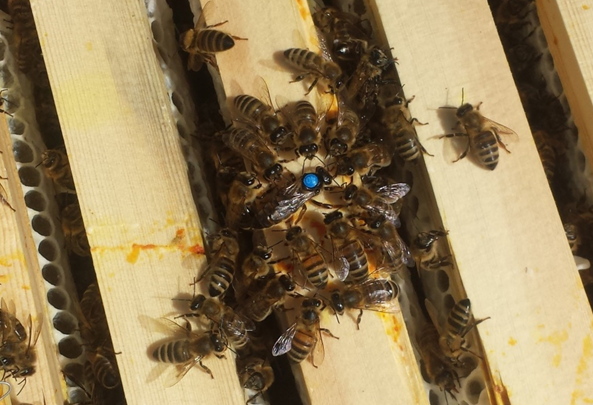
A marked queen is easier to spot! Photo: T. Harris
With a clipped queen the situation inside the hive is different than the 7 day system I have described. As soon as sealed queen cells are present the clipped queen is likely to emerge with the swarm but as she cannot fly she won’t make it very far from the hive entrance. She may be lost or the bees may cluster around her on the ground or under the hive or she may even make it back into the hive. The bees will return to the hive and they now have no choice than to wait for a virgin queen to emerge before they can leave and we know that is usually on day 16 after the egg was laid. The earliest this can be is 10 days after the first queen cells were destroyed, i.e. 3 days for the egg to hatch, plus the selection by the bees of a 2 day old larva, equals 5 days. As the first virgin queen emerges on day 16, the beekeeper will have 10 days grace before the colony is due to be inspected again. During this time no swarm will emerge as the bees won’t swarm without a queen!
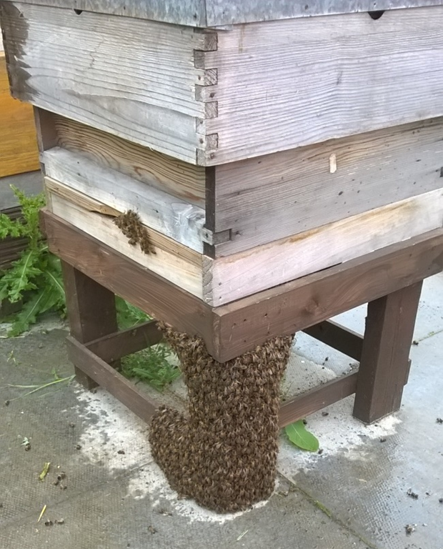
A clipped queen and swarm will often hang under the hive. Photo: T. Harris
So, I check the hive again, 10 days later, and if there are no queen cells, no further action is required. However, as is more likely, sealed queen cells are found, I carry out my chosen swarm control method, which varies according to the circumstances.
I move about 100 hives to the oil seed rape in late April and the 10 day inspection system, with a clipped queen in each hive, is invaluable in saving me time and ensuring a decent spring honey crop. Although the clipped queen may be lost, the foraging bees are not, and it is these that make the honey! Sometimes I find the original clipped queen is still present in the hive when I carry out the second inspection after destroying queen cells and this is a bonus if she is a young queen.
As confusing as it may seem, like most things in life, practice makes perfect, or in the case of swarming, almost perfect, as I have yet to meet a beekeeper who hasn’t lost a swarm or two. There may well be moral reasons for some beekeepers in clipping the wings of queens and that’s absolutely fine by me. I don’t advise new beekeepers to clip queens’ wings until they have tried and become competent with the 7 day system, and even then, wing clipping is not really necessary for the hobby beekeeper. My final advice to you is:
1. Have a plan in place for next year’s swarming season
2. Learn the principles and management technique behind the 7 day inspection system
3. Choose a swarm control method, stick with it, and have the necessary equipment ready for when it will be needed, and finally
4. Enjoy your beekeeping and don’t be dismayed if you lose the occasional swarm.
Adios Amigos!