
Childhood experiences play a crucial role in shaping an individual's personality, behavior, and perception of the world. Psychologists often analyze a person's upbringing to understand their emotional tendencies, attachment styles, and reactions to different life situations.

While Genetics play a role, the way a person is treated during childhood.whether with love, discipline, neglect, or abuse, has long-term effects on their mental and emotional well-being.
In this document we will explore some interesting points suggesting; the influence of parenting on childhood trauma, the way experiences shape our destiny and passions, the role of genetics, and how different childhood treatments impact adult behavior.
The Role of Parents in Childhood Trauma and Behavior
How Our Lives, Destiny, and Passion Are Shaped by Experience
The Role of Genetics in Behavior
Comparing Different Childhood Treatments and Outcomes
Visual Representation of Behavioral Outcomes
1. The Role of Parents in Childhood Trauma and Behavior
Psychologists often focus on childhood experiences because they provide a foundation for mental and emotional development. Parents influence:
Emotional Regulation: A child's ability to manage emotions is shaped by parental responses. Neglect or harsh reactions can lead to emotional instability.
Attachment Styles: Secure, avoidant, anxious, or disorganized attachment styles emerge based on how caregivers interact with a child.
Self-Worth: Constant criticism or neglect can lower self-esteem, making individuals feel unworthy of success or love.
Conflict Resolution: Witnessing violence or unhealthy conflict resolution methods can lead to poor interpersonal skills in adulthood.
While not all psychological challenges stem from parenting, research suggests that early experiences significantly influence behavior and personality.
2. How Our Lives, Destiny, and Passion Are Shaped by Experience
Every experience leaves an imprint on the brain. Neuroscience shows that learning forms neural pathways, reinforcing behaviors and thought patterns. Influences include:
Health Challenges (e.g., Sickle Cell Disease): Chronic illness can build resilience but also create feelings of limitation.
Breakups and Emotional Pain: Romantic failures can make a person more guarded or more empathetic in future relationships.
Media Consumption: TV shows, books, and cultural influences affect creativity, perception, and even career choices.
Social Norms: Society imposes a “one-size-fits-all” thinking model, despite people having unique perspectives based on individual experiences.
Since no two people have identical life experiences, their perspectives on the world will always differ.
3. The Role of Genetics in Behavior
While upbringing is crucial, genetics also influence behavior:
Inherited Traits: Aggression, impulsivity, and resilience may be inherited from parents.
Mental Health Risks: Anxiety, depression, and schizophrenia have hereditary links.
Personality Tendencies: Introversion and extroversion can be influenced by genetic predisposition.
Even when two individuals are raised in the same environment, their genetic makeup may lead to different reactions and behaviors.
4. Comparing Different Childhood Treatments and Outcomes
The way children are treated significantly impacts their future behavior and mental health. The table below outlines common parenting approaches and their likely outcomes:
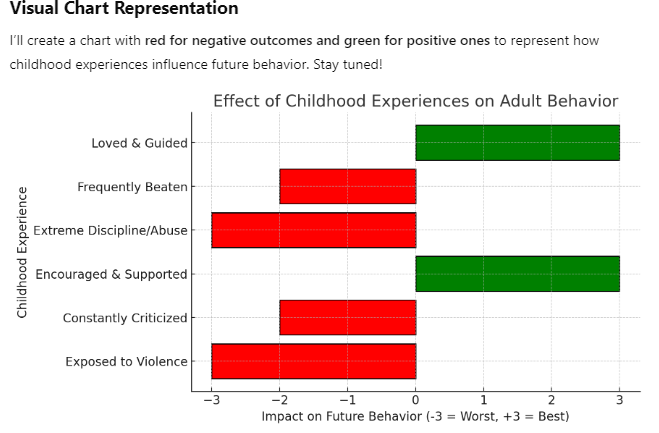
Childhood Experiences and Likely Adult Outcome:
When Treated with love, care, and verbal correction:
High self-esteem, strong emotional intelligence, and healthy relationships
When Frequently beaten for mistakes:
Prone to aggression, fear-based obedience, potential resentment
Extreme discipline and perfectionism:
They may develop an intense fear of making mistakes, leading to chronic self-doubt and excessive self-criticism.
Verbal insults everytime a mistake is committed:
Higher risk of repeating abuse, emotional suppression, difficulty in trust.
Encouraged and emotionally supported:
More likely to pursue passions, take risks, and be confident.
Constantly criticized or compared:
Struggles with self-worth, anxiety, and perfectionism.
Exposed to violence and hostility:
More likely to develop aggression or avoidance behaviors in relationships.
Childhood experiences, combined with genetics, shape an individual’s destiny, passions, and behavior. While society often expects everyone to think similarly, the truth is that each person’s unique past forms their worldview. Recognizing these differences is essential for understanding human behavior and fostering empathy in personal and social relationships.