
Occupation.
Occupation refers to a situation where one country's military or government controls and governs another territory or population, often against the will of the native inhabitants.
Occupations, though differing in context and scope, share common threads of systemic oppression, discrimination, and resistance, as seen in three popular and historical Scenatios thus..
The Nazi regime's treatment of Jews,
Apartheid in South Africa,
The Israeli-Palestinian conflict.
The Nazi regime's treatment of Jews.
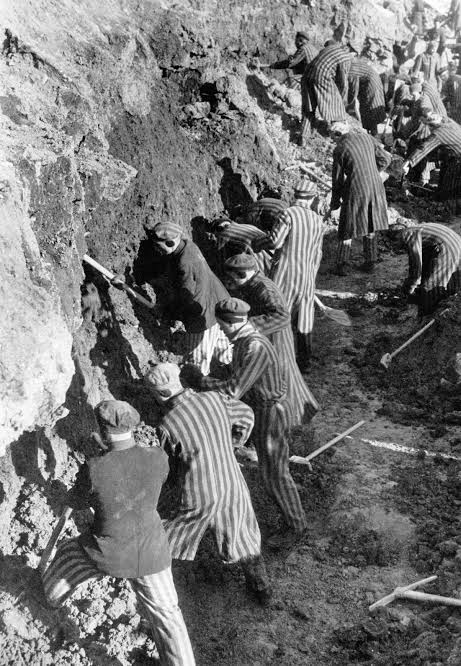
During World War II, the Nazis occupied many European countries, including areas with significant Jewish populations. The occupation led to severe persecution, forced labor, and ultimately, the Holocaust, where six million Jews were systematically murdered there were some Key aspects of Nazi occupation whivh included:
1. Persecution and discrimination: Jews faced laws restricting their rights, forced segregation, and violent attacks.
2. Ghettos and concentration camps: Jews were forcibly relocated to confined areas or imprisoned in camps.
3. Forced labor and deportations: Jews were subjected to forced labor, and many were deported to extermination camps.
The Nazi occupation had a devastating impact on Jewish communities, resulting in immense suffering, loss, and trauma.
The Apartheid In South Africa :
During the apartheid era in South Africa (1948-1994), occupation refers to the systemic oppression and domination of the black majority by the white minority government. Apartheid laws enforced segregation, restricted movement, and denied basic rights to non-whites.
Some Key aspects of apartheid occupation included:
1. Racial segregation: Separate areas for whites and non-whites, restricting social and economic interaction.
2. Pass laws: Non-whites required passes to enter certain areas, limiting movement.
3. Disenfranchisement: Non-whites denied voting rights and representation.
4. Economic inequality: Non-whites faced limited job opportunities and poor working conditions.
The Israeli-Palestinian conflict.
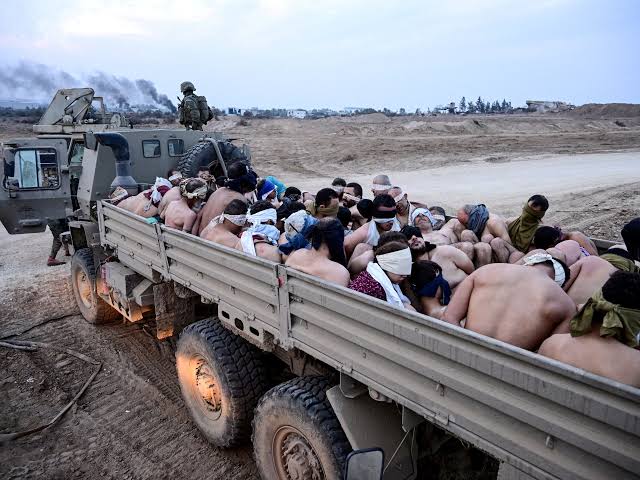
The Israeli - Palestinian occupation, it specifically refers to the Israeli military occupation of the West Bank, East Jerusalem, and the Gaza Strip, which began in 1967. This occupation has led to significant restrictions on Palestinian autonomy, movement, and economic development.
Some Key aspects of the occupation includes:
1. Military control: Israeli military forces have significant authority over Palestinian territories.
2. Settlement expansion: Israeli settlements have been built on Palestinian land.
3. Restrictions on movement: Palestinians face checkpoints, border controls, and other limitations.
The occupation has been a major point of contention and a significant obstacle to peace negotiations between Israelis and Palestinians.
Similarities:
These occupations share some similarities, but each has distinct historical, political, and social contexts
1. Systemic oppression: All three involve systemic oppression, where one group exercises control over another, often through violence, laws, or economic means.
2. Discrimination and marginalization: Each occupation involves discrimination, marginalization, and denial of basic rights to the oppressed group.
3. Resistance and activism: All three have sparked significant resistance and activism, both locally and internationally.
Contrasting this Occupations:
There are some notable Differences Between these Oppressions and Occupations like:
1. Historical context: The Nazi occupation of Jews during WWII was rooted in antisemitic ideology and aimed at genocide. Apartheid in South Africa was based on racial segregation and economic exploitation. The Israeli-Palestinian conflict is complex, with historical, religious, and territorial dimensions.
2. Scale and duration: The Nazi occupation lasted around 12 years, while apartheid in South Africa lasted nearly 50 years. The Israeli-Palestinian conflict has spanned over seven decades.
3. International response: The international community responded differently to each occupation. The Nazi atrocities led to the establishment of the UN and human rights law. Apartheid was widely condemned, and sanctions were imposed. The Israeli-Palestinian conflict remains contentious, with varying international responses.
4. Ideological underpinnings: Nazi antisemitism was rooted in pseudoscientific racism, while apartheid was based on Afrikaner nationalism and racial superiority. The Israeli-Palestinian conflict involves complex historical, religious, and territorial claims.
5. Level of violence: The Nazi occupation involved extreme violence, including genocide. Apartheid was violent, but not genocidal. The Israeli-Palestinian conflict has seen significant violence, including military operations and terrorism.
6. Outcomes and resolutions: The Nazi occupation ended with the Allied victory, while apartheid was dismantled through negotiations and democratic transition. The Israeli-Palestinian conflict remains unresolved, with ongoing negotiations and disputes.
These comparisons highlight the complexities and nuances of each occupation, emphasizing the need for context-specific understanding and solutions to Issues of Occupations.
For more, Click The Link Below To Check Out My Article:
Toba Ezekiel.