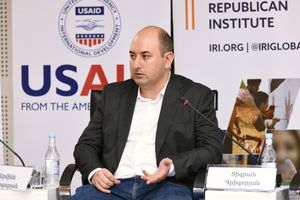

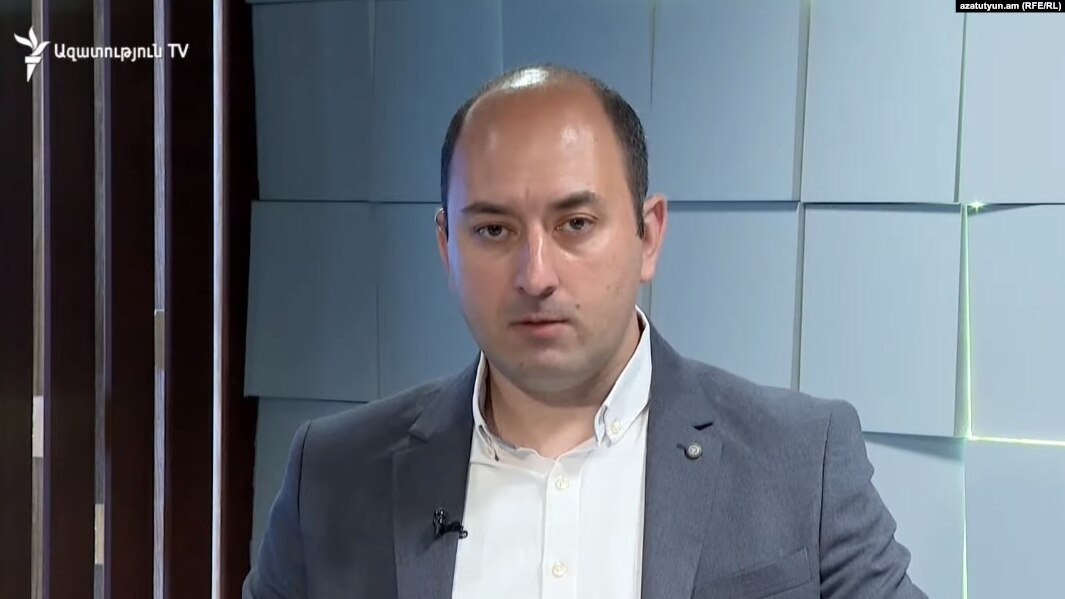
Prague – This week, the Armenian government continued navigating its place along the tense Moscow-West axis. Following a significant pivot toward the West – marked by the adoption of a bill initiating Armenia's EU accession process and the signing of a strategic partnership charter with the United States – Yerevan shifted its focus eastward. The visit of Foreign Minister Ararat Mirzoyan to Moscow added intrigue to the situation. The complexity of the moment was evident, with Russian Foreign Minister Sergey Lavrov acknowledging the challenges and Kremlin spokesperson Dmitry Peskov emphasizing that Armenia had not announced any intention to leave the CSTO (Collective Security Treaty Organization). This statement, however, sparked further questions. To address these uncertainties, we discussed the developments with Tigran Grigoryan, president of Yerevan's Regional Center for Democracy and Security.
– This political week seems to have roots in the previous one, with Armenia adopting a law to begin its EU accession and subsequently signing a strategic partnership charter with the United States. To what extent is this week’s outreach to Russia, including [Nikol] Pashinyan’s calls to [Vladimir] Putin and Ararat Mirzoyan’s trip to [Sergey] Lavrov, a consequence of these Western-focused actions?
– In general, as you know, there have been significant difficulties in Armenian-Russian relations recently, making this meeting relevant even without these preceding events. The two sides needed to meet to, as they say, align their positions on various issues. However, the signing of the charter with the U.S. and the government's approval of the EU accession bill also served as additional triggers for the meeting between the foreign ministers. In this sense, yes, I would say there is a certain connection between these events.
– What might have been discussed? We know nothing about Pashinyan’s call to Putin, and from Maria Zakharova's comments, we know that Mirzoyan and Lavrov had a candid conversation, during which the opening of a consulate in Syunik was reportedly discussed. While this may have been addressed, it’s unlikely to have been the main topic. It was probably part of a broader package and not the most significant issue. If that’s the case, what are your assumptions about this broader package, and what might have been the central theme of the conversation?
– I think that, following the recent events in Yerevan regarding Armenia’s potential EU membership, Moscow needed to understand Yerevan’s next steps in this direction. As we know, this bill is rather symbolic at this stage; it’s clear that Armenia is not joining the European Union anytime soon. Nor is there any indication that Armenia will leave the Eurasian Economic Union (EAEU), given the structural realities of Armenian-Russian relations – particularly economic and energy dependencies. It’s evident that this bill primarily addresses domestic political issues.
The 2026 elections are approaching, and the ruling party will likely campaign on a pro-Western platform, as its peace agenda has seen little success or progress. For Moscow, the focus was probably on economic issues, which have become the cornerstone of Armenian-Russian relations over the past two to three years, especially since the start of the war in Ukraine. These economic discussions, I believe, were the priority during this meeting.
– Just to clarify: do you mean economic issues or, let’s say, more delicate economic matters – such as sanctions evasion?
– It’s all part of the same package. Interestingly, Armenia has become an increasingly important trade and economic partner for Russia over the past few years. Previously, Armenia’s share in trade with Russia was negligible, and Moscow could have even considered imposing economic sanctions on Armenia without significant repercussions. Now, however, there’s a certain balance, and Armenia has gained some strategic importance.
For Russia, as I understand it, these economic issues are now a top priority. At this stage, it would likely be less painful for Moscow if Yerevan were to formally announce its withdrawal from the CSTO than if Armenia were to leave the Eurasian Economic Union (EAEU). During this meeting, it became clear that Yerevan has no plans for such a move. Armenian officials, including the Minister of Economy and other government figures, have stated repeatedly that Armenia does not intend to leave the EAEU in the near future.
This, in turn, renders Armenia’s statements about European integration somewhat insincere. To be frank, even Armenia’s European partners seem puzzled by this contradiction: how can Armenia remain in one economic union while simultaneously declaring aspirations for integration with another?
On other issues, it seems the two sides agreed to disagree, essentially acknowledging the differences that persist on a range of topics. Among these, Yerevan’s course toward closer ties with the West is a key point of contention.
The issue of regional communications was also discussed, and even after the meeting, the Russian side continued to emphasize the relevance of the trilateral statements from 2020–2021. For Moscow, these agreements remain a priority. However, for Yerevan, certain provisions, such as the so-called "corridor" through Syunik under the terms of the November 9 agreement or Moscow’s interpretation of it, constitute a red line.
In essence, there are several critical issues for which no common ground has been found yet. These disagreements underscore the complexities of the current Armenia-Russia relationship and the challenges in navigating such a politically sensitive environment.
Another important conclusion is that there seems to be an understanding that these issues should not be discussed publicly. For instance, there was the matter of the media. I’ll remind you that prior to Mirzoyan’s visit, Russian state television, on one of its federal channels—likely Kiselev’s program—aired a report about the so-called Zangezur Corridor. This led to the Russian ambassador being summoned to Armenia’s Foreign Ministry. This is a highly sensitive and painful topic for Armenia.
Mirzoyan also made comments on this issue during the meeting. It seems that, especially after Donald Trump’s election in the U.S. and the recent events in Georgia, the Armenian leadership has realized the importance of lowering the tone of public confrontation with Russia. Instead, it appears they aim to address existing problems and disagreements through more private and closed-door discussions.
This shift likely reflects a strategic approach by Yerevan to manage its relationship with Moscow carefully, balancing its Western aspirations with the realities of its reliance on Russia.
– As I understand it, both Moscow and Yerevan are aware of the symbolism behind these recent pro-Western moves you mentioned. However, isn’t it the case that Moscow’s primary concern isn’t this theoretical geopolitical alignment, but rather the very practical issue of logistics? For Moscow, the Zangezur Corridor is not abstract geopolitics but a matter of logistical survival. Let me expand the question: At one point, Armenia opposed placing the corridor under Russian control, as was previously suggested. Lately, it seems Azerbaijan is against such an arrangement as well, wanting to implement the corridor without Russia, having already extracted what it could from Moscow. What, then, defines these red lines?
– Yes, but I think it’s important to start with the two processes we discussed at the beginning of our conversation: the signing of the strategic partnership document with the U.S. and the law related to EU accession. These are fundamentally different initiatives. The law, primarily, is a pre-election maneuver, whereas the agreement with the U.S. opens up tangible opportunities for deepening cooperation.
For instance, one particularly sensitive issue for Russia could be the construction of a new nuclear power plant in Armenia. This agreement creates the potential for the U.S. to take the lead on that project, as the operational lifespan of Armenia’s current plant expires in 2036.
There are other significant aspects, too. For example, the U.S. will actively participate in reforming Armenia’s border services. This reform is aimed at replacing Russian border guards currently stationed on Armenia’s border with Iran with Armenian personnel. Such developments signal major shifts that could fundamentally alter the dynamics of Armenia’s relationship with Russia.
Regarding the so-called Zangezur Corridor, there were significant developments throughout last year. At some point, Russian involvement or control over this route became a red line for Yerevan. This shift was undoubtedly influenced by the ethnic cleansing in Nagorno-Karabakh, the disappearance of an Armenian presence there, and the loss of the Lachin Corridor, which was under Russian peacekeeper control. From Yerevan’s perspective, it no longer makes sense to discuss Russian or Azerbaijani control over this communication route.
Last year, the U.S. played an active role in this issue. Early in the year, there was a proposal for a private foreign company to facilitate oversight of these routes. As far as I understand, Armenia supported this option, but Azerbaijan ultimately rejected it. This dynamic highlights how the situation around the corridor has become a highly sensitive and contentious matter, with Yerevan seeking to limit both Russian and Azerbaijani influence while exploring alternative solutions with Western partners.
Following the recent meeting in Kazan between [Ilham] Aliyev and Pashinyan, there seemed to be some agreements regarding the opening of a railway under a simplified regime. This development sparked considerable optimism, especially within Armenia’s ruling circles, as they believed it could pave the way for at least some progress in opening regional communication routes. It was reported that Aliyev appeared open to the idea during the Kazan discussions.
However, as I understand it, no positive response was received from Azerbaijan following the meeting, leaving the sides at an impasse. For Armenia, as mentioned earlier, neither Azerbaijani nor Russian control over this communication route is acceptable. For Azerbaijan, on the other hand, who controls the communication is less critical as long as it’s not Armenia. Whether the control is Russian or another external entity, Azerbaijan’s priority appears to be securing special regulations for the transportation of their passengers and goods. This ongoing stalemate reflects the complexities of reaching a mutually acceptable arrangement between the two nations.
There are additional complexities regarding this potential communication route. For instance, if the route opens with a special regime, would this regime also apply to Armenian goods passing through Nakhichevan, connecting northern and southern Armenia? Numerous unresolved details remain, preventing the sides from reaching an agreement.
For Russia, however, this issue remains critical. Following the withdrawal of its peacekeeping contingent from Nagorno-Karabakh, this corridor is one of the few avenues left to ensure Russia’s long-term influence and presence in the South Caucasus. Beyond geopolitics, the corridor is also strategically appealing to Moscow from an infrastructure and economic standpoint, offering a land connection with Turkey and other regional opportunities. This highlights the multifaceted stakes Russia has in the negotiations over this route.
Let's return to the agenda you mentioned regarding Armenia's European course. How closely is the issue of the 2026 elections linked to the peace agenda, and to what extent is it truly a domestic political matter that benefits the ruling party? In Georgia, the European agenda didn't become a decisive factor...
Yes, in Armenia, this could become a key factor for the ruling party’s success because, as you probably know, after the 2020 war and particularly after the escalation in 2022, Russia's influence is at a very low point. There are no significant forces currently advocating for a pro-Russian stance. If such forces do exist, they are marginal. If we look at all the sociological surveys, it’s clear that the population supports the course of rapprochement with the West. In fact, Nikol Pashinyan has successfully seized the agenda of those smaller parties or organizations that initially initiated this process. And if, for example, by the time of the 2026 elections there has been no progress on the peace agenda, that could very well become the central issue in the elections. We recall that in the previous elections, the ruling party ran on a peace platform, promising peace with Azerbaijan, but that peace has yet to materialize.
Is this primarily a distancing from Russia based on resentment, or is it truly a rapprochement with the West? Which of these is more significant, and how would you balance the proportions?
In Armenia, this is often referred to as foreign policy diversification. There is certainly an emotional component, especially when we talk about public opinion—it’s driven by emotions. However, on the other hand, there is also an understanding that the strategy of relying on a single player, which was in place before the 2020 war and even after it—until the war in Ukraine—simply didn’t work. There is a realization that complete unilateral dependence on one major player ultimately leads to disaster. And now Armenia is trying to move toward a model of diversification. It’s important to note that it’s not just the ties with Western countries that are deepening; India has become Armenia’s largest defense partner, and most of Armenia’s armaments are now purchased from India.
The policy of distancing from Russia was, in fact, used by the Armenian government as a strategic card to strengthen ties with Europeans and Americans. For instance, Europeans needed assurance that Armenia was not de facto a member of the CSTO or an ally of Russia in the war against Ukraine. In exchange, the Armenian authorities received certain dividends. For example, France began selling arms specifically to Armenia, which is a direct result of this policy. Similarly, the process of visa liberalization with the European Union can also be considered a result of this policy. The same can be said about the document signed with the United States.
How concerned is Armenia about Aliyev's statements? It was a bit unusual that it was Armenia's foreign intelligence service making such statements, saying they assess the likelihood of an attack from Azerbaijan as low. Is this also an attempt to lower the rhetoric?
An escalation in Aliyev's rhetoric was expected since the end of last year. We remember that even in November, Azerbaijani officials were already saying that the negotiation process was entering a new phase. This is likely related to international events, such as the U.S. elections and the subsequent developments.
As for the assessments by the Armenian government, I think everyone is still in a wait-and-see mode. It's unclear, for example, what to expect from the new U.S. administration. If the U.S. completely distances itself from the region, it would open up more opportunities for Azerbaijan to use military force.
Regarding the foreign intelligence report, yes, one could say that the points made in the report reflect the views of the Armenian authorities—they are presenting their understanding of the situation in the region. And I think the general view is that there may be some small escalations, that Azerbaijan will use these escalations as leverage in the peace process, in the negotiations, but a full-scale war is probably not expected.
What is the political significance of the trial taking place in Baku against the leaders of Nagorno-Karabakh for Azerbaijan, and what is the political significance of the reaction to this trial in Yerevan?
We see that over the past year, Azerbaijan has been developing a narrative that portrays Armenia as a fascist state. This narrative seems to have been activated primarily to neutralize or attempt to neutralize the process of arms purchases by Yerevan. This process is probably also part of this narrative and part of the ongoing 'war of narratives' between Armenia and Azerbaijan. In a sense, it’s likely aimed at domestic politics, attempting to show that after all the troubles of the 1990s, some form of ''justice'' is now being restored. But I think, first and foremost, it is directed against Armenia, and I believe that such a passive, almost spineless reaction from Yerevan could eventually backfire. Because if, at this so-called trial, the conclusion is reached that Armenia was involved in all of this and had some kind of influence, it could become the basis for further hardening Azerbaijan's negotiating position.
From the perspective of the Armenian authorities, Azerbaijan is using the issue of prisoners of war as a tool to exert pressure on Armenia and to interfere in the country’s internal processes. At some point, I think it was in 2021, the Armenian government made a decision that, no matter what happens, we will not make the issue of prisoners of war a precondition for anything. In other words, if Azerbaijan tries to link the issue of prisoners of war to other processes, we won’t do that. We will continue to participate in negotiations on other tracks and will never make any demands specifically regarding prisoners of war as a precondition. This position still stands, and I believe Pashinyan deliberately refrains from reacting to these processes in a way that would make the issue of prisoners of war a bargaining chip, thinking that it could ultimately become a lever of pressure on Armenia.
The interview was originally published in Russian on Ekhokavkaza.com.